

Antiepileptic Drugs
Also known as: AEDs, Antiepileptic Drugs (AEDs)
Overview
Antiepileptic drugs (AEDs), also called anti-seizure medications (ASMs) in much of current clinical literature, are a broad class of medicines used to reduce the frequency, severity, or likelihood of seizures. They are central to the management of epilepsy, but they are also used in other conditions, including neuropathic pain, migraine prevention, bipolar disorder, and certain movement or pain syndromes, depending on the specific agent. Common examples include levetiracetam, lamotrigine, valproate, carbamazepine, oxcarbazepine, topiramate, phenytoin, lacosamide, gabapentin, pregabalin, and phenobarbital. Although grouped together under one label, these medications differ substantially in chemistry, mechanism, adverse-effect profiles, and clinical use.
Epilepsy is one of the most common serious neurologic conditions worldwide, affecting tens of millions of people globally, and anti-seizure medications remain the first-line therapy for most seizure disorders. Research suggests that a substantial proportion of people with epilepsy can achieve meaningful seizure control with medication, especially when the seizure type and epilepsy syndrome are accurately identified. At the same time, treatment can be complex: some patients continue to have seizures despite multiple medications, while others experience significant side effects such as sedation, dizziness, cognitive slowing, mood changes, rash, liver effects, bone health concerns, or drug-drug interactions.
AEDs act by modulating electrical signaling in the brain. Different drugs may stabilize neuronal membranes, enhance inhibitory signaling through GABA, reduce excitatory transmission involving glutamate, or alter ion channels such as sodium or calcium channels. Because seizure disorders are heterogeneous, the choice of medication in conventional care is usually based on the type of seizure, epilepsy syndrome, age, sex, reproductive considerations, coexisting conditions, other medications, and safety profile. Monitoring may include review of seizure frequency, side effects, laboratory testing for selected drugs, and attention to adherence and quality of life.
From a broader health perspective, AEDs are important not only because they can reduce seizure burden, but also because seizure control may affect injury risk, cognition, driving status, sleep, mental health, pregnancy planning, and social functioning. However, these medications require careful oversight, particularly because abrupt changes can be risky and because some agents carry notable warnings related to teratogenicity, psychiatric symptoms, severe skin reactions, or organ toxicity. For that reason, discussions about AEDs are generally most meaningful when individualized and conducted with a qualified clinician familiar with the patient’s neurological history.
Medical Perspectives
Two Ways of Seeing Health

Western
scientific · clinical
Western medicine applies science, technology, and clinical experience to treat symptoms through testing, diagnosis, and targeted intervention.

Eastern
traditional · alternative
Eastern medicine focuses on treating the body naturally by applying traditional knowledge practiced for thousands of years, emphasizing balance and whole-person wellness.
Gold Bamboo presents both perspectives side-by-side so you can make informed decisions. We don't advocate for one over the other — your health choices are yours.
Western Medicine Perspective
Western Medicine Perspective
In conventional medicine, antiepileptic drugs are understood as targeted pharmacologic tools for reducing abnormal, hypersynchronous neuronal firing that produces seizures. Modern neurology classifies seizures into categories such as focal, generalized, and unknown onset, and drug selection is shaped by this classification. Studies indicate that matching the medication to the seizure type is crucial, because some AEDs have broad-spectrum activity while others may be more effective for certain seizure patterns and less suitable for others. Conventional care also distinguishes between treatment of a first seizure, established epilepsy, status epilepticus, and seizure prevention in special settings such as after neurosurgery or certain acute brain injuries.
AEDs are typically discussed by mechanism of action and by clinical use. For example, sodium-channel modulators include carbamazepine, lamotrigine, phenytoin, and lacosamide; GABA-enhancing drugs include benzodiazepines, phenobarbital, tiagabine, and vigabatrin; calcium-channel or synaptic vesicle modulators include ethosuximide, gabapentin, pregabalin, and levetiracetam; and some agents such as valproate and topiramate have multiple mechanisms. Conventional medicine also emphasizes pharmacokinetics: some older AEDs are strong enzyme inducers or inhibitors, which can alter hormonal contraception, anticoagulants, psychiatric medications, and many other drugs. Newer agents often have fewer interactions, though tolerability and cost vary.
The medical approach to AED use includes balancing benefit, tolerability, long-term safety, and life-stage considerations. Important issues include effects on pregnancy and fetal development, bone density, mood, cognition, liver function, blood counts, and kidney function. Research has also highlighted the relevance of personalized treatment, including attention to genetic risk factors for severe cutaneous reactions with certain medications in specific populations. In patients whose seizures remain uncontrolled despite appropriate medication trials, conventional medicine may broaden evaluation to include epilepsy surgery, neuromodulation, ketogenic therapy, or reassessment of diagnosis, rather than relying on medication escalation alone. Because AEDs can have serious consequences if stopped suddenly or used inconsistently, changes are generally handled under medical supervision.
Eastern & Traditional Perspective
Eastern/Traditional Medicine Perspective
In traditional East Asian medicine, seizures have historically been interpreted through patterns involving internal wind, phlegm, heat, liver imbalance, disturbance of the spirit (shen), or congenital weakness, rather than through ion channels and neurotransmitters. Classical frameworks do not contain a one-to-one equivalent of modern antiepileptic drugs, but they do offer pattern-based ways of understanding recurrent convulsive episodes, altered awareness, irritability, sleep disturbance, and post-episode fatigue. Traditional treatment approaches have included herbal formulas, acupuncture, moxibustion, dietary regulation, and lifestyle harmonization, with the goal of reducing triggers, calming internal wind, resolving phlegm, and supporting constitutional balance.
In Traditional Chinese Medicine (TCM), seizure-like disorders may be viewed differently depending on presentation. An acute, intense episode might be associated with phlegm-fire stirring wind, while a chronic condition could be framed in terms of liver and kidney deficiency or lingering phlegm obstructing the orifices. In Ayurveda, seizure disorders are often discussed under concepts such as Apasmara, involving disturbances in doshas, mind, consciousness, and nervous system regulation. Naturopathic and integrative traditions may emphasize potential contributors such as sleep disruption, stress physiology, inflammation, nutritional status, and overall terrain, though these models vary widely and are not interchangeable with neurologic diagnosis.
From an evidence standpoint, traditional systems are most often used in an adjunctive, supportive context rather than as a replacement for prescribed anti-seizure medication. Some studies have explored acupuncture or traditional herbal approaches in epilepsy, but the quality of evidence is mixed, methods are heterogeneous, and herb-drug interactions are a meaningful concern because many AEDs have narrow therapeutic windows or important metabolic interactions. As a result, an integrative perspective generally places strong emphasis on coordination with neurology care, especially when patients are using both conventional medication and traditional therapies. This is particularly important in pregnancy, pediatric epilepsy, medically refractory epilepsy, and situations involving complex medication regimens.
Related Topics
Oral Contraceptives
Oral Contraceptives — medication topic in the Gold Bamboo health ontology.
How They Relate
Antiepileptic Drugs (AEDs) & Oral Contraceptives
Antiepileptic drugs (AEDs) and oral contraceptives influence each other’s effectiveness through well-characterized pharmacokinetic interactions. Several AEDs are potent inducers of hepatic enzymes ...
Supplements & Products
Recommended Products

Wyllie's Treatment of Epilepsy: Principles and Practice
Comprehensive, yet accessible, Wyllie’s Treatment of Epilepsy: Principles and Practice has provided <strong>a detailed and cohesive overview of seizure disorders and treatment options through six well

MedCenter 31-Day Monthly Pill Organizer with Talking Alarm Reminder
TALKING ALARM CLOCK: <strong>Alerts users it's time to take their medication along with the time and date using a repeating friendly female voice reminder up to 4 times daily (Morning, Afternoon,
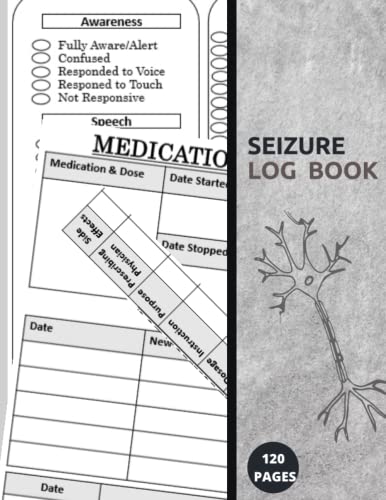
Seizure Log Book: Epilepsy Log Book, Seizure Information and Details Record Book For Children and Adults, Epilepsy Diary with Seizure Chart, ... seizure journal book, 120 Pages, 8.5x11 in: BOOK, BOOK: Amazon.com
Seizure Log Book: Epilepsy Log Book, Seizure Information and Details Record Book For Children and Adults, <strong>Epilepsy Diary with Seizure Chart</strong>, ... seizure journal book, 120 Pages, 8.5x1
Evidence & Sources
Supported by multiple clinical trials and systematic reviews
- International League Against Epilepsy (ILAE)
- American Academy of Neurology (AAN)
- National Institute for Health and Care Excellence (NICE)
- World Health Organization (WHO) Epilepsy Fact Sheets
- National Institute of Neurological Disorders and Stroke (NINDS)
- New England Journal of Medicine
- The Lancet Neurology
- Epilepsia
- Cochrane Reviews
- National Center for Complementary and Integrative Health (NCCIH)
This content is for informational purposes only and does not constitute medical advice. Always consult a qualified healthcare provider before starting, stopping, or changing any supplement or medication regimen.