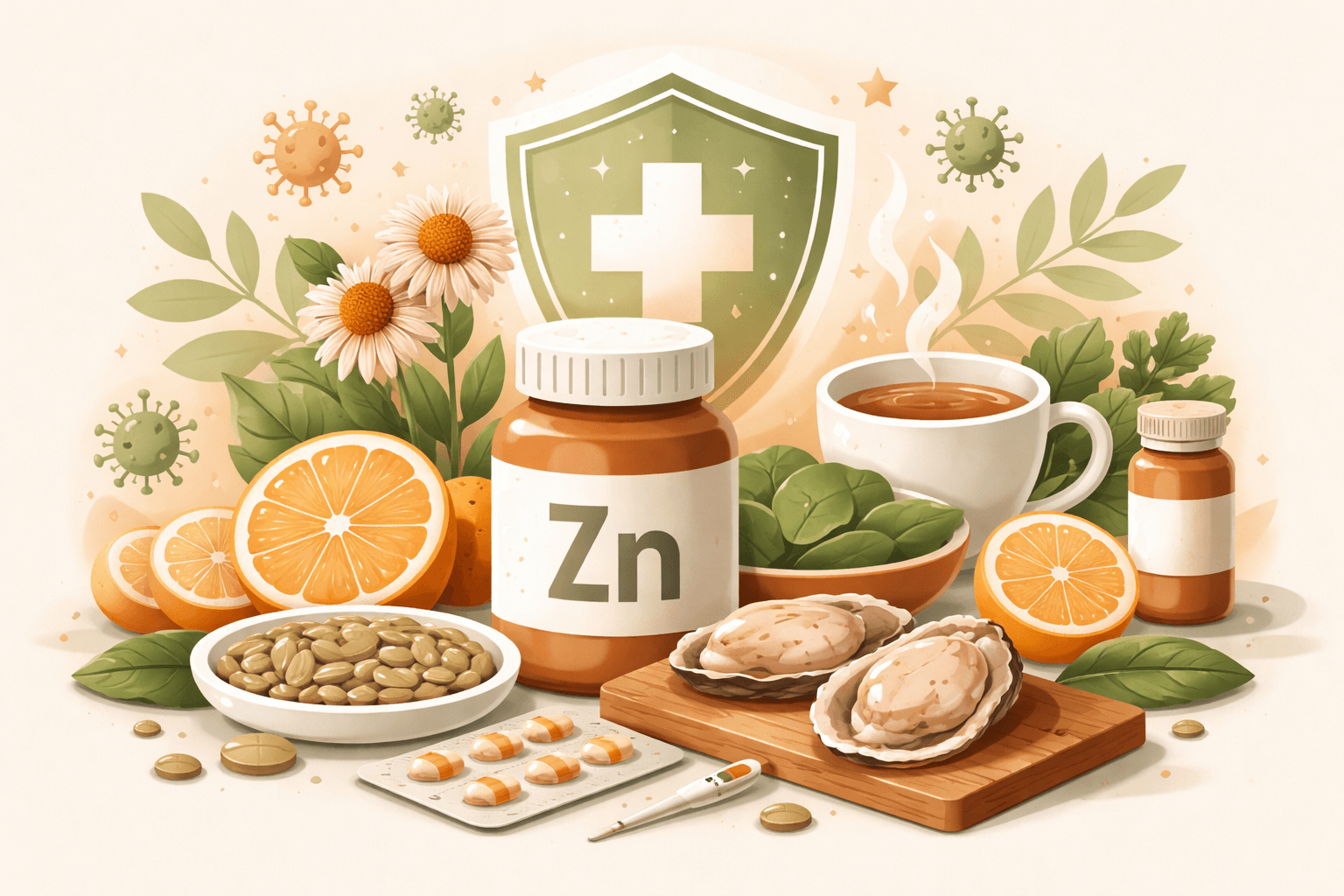
Zinc is often called the immune system’s gatekeeper. Research suggests it helps coordinate both innate and adaptive defenses, influences antiviral barriers, and may reduce the duration of the common cold when used as lozenges at the first signs of symptoms. This focused review unpacks how zinc supports immunity, what randomized trials and meta-analyses say about colds, how lozenge formulation may matter, and what traditional foodways have long known about zinc-rich fare.
Key points with evidence levels are highlighted throughout. This article does not offer medical advice or dosage recommendations.
Why zinc matters for immune defense
- Zinc is required for the development and function of neutrophils, natural killer cells, and T and B lymphocytes, and for maintaining epithelial barrier integrity. It acts as a structural and catalytic cofactor in numerous immune-signaling proteins and transcription factors. Evidence: strong (Ibs & Rink, 2003; Wessels et al., 2017; Prasad, 2008).
- Marginal zinc insufficiency may impair thymic hormone activity, skew cytokine balance toward prolonged inflammation, and blunt antibody responses. Evidence: moderate (Wessels et al., 2017; Prasad, 2008).
How might zinc influence cold viruses?
The common cold is most often caused by rhinoviruses, but coronaviruses and other agents contribute. Laboratory work has explored several plausible mechanisms by which zinc ions may influence these infections:
- Viral replication and protease activity: In vitro studies suggest zinc ions can inhibit key viral enzymes and interfere with replication in some RNA viruses. For example, zinc with an ionophore inhibited coronavirus RNA-dependent RNA polymerase in cell culture, and zinc has been shown to affect rhinovirus protease activity in experimental systems. Evidence: emerging (te Velthuis et al., 2010; assorted preclinical studies).
- Receptor interactions and mucosal barriers: Zinc may stabilize cell membranes and support tight junctions, potentially reducing viral entry across the nasal and oral mucosa. Evidence: emerging to moderate (Wessels et al., 2017 review; mechanistic data).
- Local effects in the oropharynx: Lozenges that release free zinc ions in the saliva may create an unfavorable environment for viral replication and modulate local inflammation in the upper airway. Evidence: emerging (Hemilä, 2017; formulation-dependent hypothesis).
Does zinc shorten the duration of the common cold?
The most studied application of zinc for immune function is acute use during colds, particularly as lozenges started soon after symptom onset.
- Systematic reviews/meta-analyses of randomized trials suggest zinc lozenges may shorten the duration of cold symptoms when initiated early, though effects vary by formulation and study quality. Evidence: moderate.
- A Cochrane review concluded that, in adults, zinc may reduce the duration of cold symptoms if started within 24 hours, while noting substantial heterogeneity and taste-related adverse effects in some trials (Singh & Das, 2013; update 2015).
- A meta-analysis focused on zinc acetate lozenges reported a roughly one-third reduction in cold duration across trials using formulations designed to release high levels of ionic zinc, again with notable variability (Hemilä, 2017, JRSM Open).
- A broad 2021 systematic review and meta-analysis found that, compared with placebo, zinc (primarily as lozenges or nasal sprays in included RCTs) was associated with shorter duration and reduced severity of acute respiratory infections in adults. Heterogeneity was high, and the authors emphasized uncertainty around optimal delivery routes and formulations (Hunter et al., 2021, BMJ Open). Note: intranasal products carry separate safety considerations (see below).
- Prevention vs treatment: Evidence for preventing colds is less consistent than for shortening duration once symptoms start. Some trials in specific populations suggest fewer colds with zinc, but conclusions are limited by study diversity. Evidence: emerging to moderate (Hunter et al., 2021; Cochrane 2013/2015).
Why lozenge formulation matters
Not all zinc lozenges behave the same in the mouth. The degree to which a lozenge releases free zinc ions in saliva appears critical.
- Acetate vs gluconate: Formulations using zinc acetate have been highlighted in several positive trials, while some gluconate products also showed benefit. However, lozenges that include certain flavoring agents or acids (such as citric acid, tartaric acid, or EDTA) may bind zinc and reduce free ionic zinc release. Evidence: emerging (Hemilä, 2017 analyses; formulation chemistry rationale).
- Nasal routes: Intranasal zinc has been associated with loss of smell in case reports and observational data, and regulators have warned against certain intranasal zinc products. Evidence: moderate (FDA public health advisory, 2009; postmarketing case series). Lozenges and oral tablets do not carry the same route-of-administration risk profile.
Zinc’s systemic role and immune biomarkers
Beyond colds, research suggests adequate zinc status supports balanced immune signaling.
- Trials in populations with low zinc status have shown improvements in immune markers (e.g., thymic function, T-cell responses) with zinc repletion. Evidence: moderate (Prasad, 2008; Wessels et al., 2017 reviews). Translation to fewer infections varies by context, baseline status, and comorbidities.
Do supplement forms matter for immune support?
For systemic zinc, several oral forms exist, including picolinate, citrate, bisglycinate, gluconate, sulfate, and oxide. Bioavailability can differ.
- Organic salts and amino acid chelates (e.g., citrate, gluconate, bisglycinate, picolinate) generally show better absorption than zinc oxide in human and animal studies. Evidence: moderate (narrative and small RCT data across decades; e.g., Barrie et al., 1987 for picolinate; broader reviews on zinc bioavailability).
- For colds specifically, most positive trials used lozenges designed to release free zinc ions locally; systemic bioavailability from tablets or capsules is a separate consideration. Evidence: moderate for the distinction (Cochrane 2013/2015; Hemilä, 2017).
Important interactions and safety notes
- Copper interaction: Long-term high zinc intake can reduce copper absorption and, over time, may contribute to anemia and neutropenia. Evidence: strong (case reports, mechanistic competition for intestinal transporters, clinical experience). Maintaining balance over the long term is important, especially with chronic use.
- Gastrointestinal tolerance: Some people report nausea or a metallic taste with certain zinc products, particularly lozenges. Evidence: moderate (Cochrane 2013/2015; trial adverse event reports).
- Intranasal products: As noted, intranasal zinc has been implicated in smell disturbances. Evidence: moderate (regulatory advisories and case data). Oral forms do not share this local nasal risk profile.
Traditional foodways: zinc-rich fare across cultures
Long before modern trials, many cultures emphasized zinc-rich foods—especially during colder months when respiratory illnesses rise.
- Oysters and shellfish: East Asian, European, and coastal Indigenous cuisines have long prized oysters and clams in broths, stews, and porridges. Oysters are among the richest natural sources of zinc. Evidence: traditional (culinary history) and strong for nutrient content (food composition databases).
- Red meats and organ meats: Mediterranean, Middle Eastern, and West African dishes often feature lamb or beef, including liver, which provide bioavailable zinc alongside iron and B vitamins. Evidence: traditional and strong for nutrient content.
- Seeds and legumes: Mesoamerican pepitas (pumpkin seeds), Middle Eastern sesame pastes, and South Asian dals have been used in nourishing dishes. While plant phytates can reduce zinc absorption, preparation methods like soaking, sprouting, fermenting, and long simmering may improve bioavailability. Evidence: moderate (nutrition science on phytates; traditional culinary practice).
References
- Ibs K-H, Rink L. Zinc-altered immune function. J Nutr. 2003;133(5 Suppl 1):1452S–1456S.
- Wessels I, Maywald M, Rink L. Zinc as a gatekeeper of immune function. Nutrients. 2017;9(12):1286.
- Prasad AS. Zinc in human health: effect of zinc on immune cells. Mol Med. 2008;14(5-6):353–357.
- Singh M, Das RR. Zinc for the common cold. Cochrane Database Syst Rev. 2013;(6):CD001364. (2015 update)
- Hemilä H. Zinc acetate lozenges may shorten the duration of colds: a systematic review and meta-analysis. JRSM Open. 2017;8(5):2054270417694291.
- Hunter J, et al. Zinc for the prevention or treatment of acute viral respiratory tract infections in adults: a rapid systematic review and meta-analysis. BMJ Open. 2021;11:e047474.
- te Velthuis AJW, et al. Zn2+ inhibits coronavirus and arterivirus RNA polymerase activity in vitro and zinc ionophores block the replication of these viruses in cell culture. PLoS Pathog. 2010;6(11):e1001176.
- U.S. Food and Drug Administration. Public Health Advisory: Intranasal zinc products (2009).
- Barrie SA, et al. Comparative absorption of zinc picolinate, zinc citrate and zinc gluconate in humans. Agents Actions. 1987;21(1-2):223–228.
Bottom line
- Zinc is fundamental to immune competence and mucosal defenses. Evidence: strong.
- Zinc lozenges started early in a cold may help shorten symptom duration; benefits depend on formulation and study quality. Evidence: moderate.
- Lozenges that release free zinc ions (e.g., some acetate or gluconate products without chelating acids) appear more promising. Evidence: emerging.
- For ongoing immune support, maintaining adequate zinc status—preferably from nutrient-dense foods traditional cuisines have relied on—may help keep defenses balanced. Evidence: moderate.
- Be mindful of copper balance with long-term, higher-intensity zinc use, and avoid intranasal zinc due to smell-related safety concerns. Evidence: strong for copper interaction; moderate for intranasal risk.