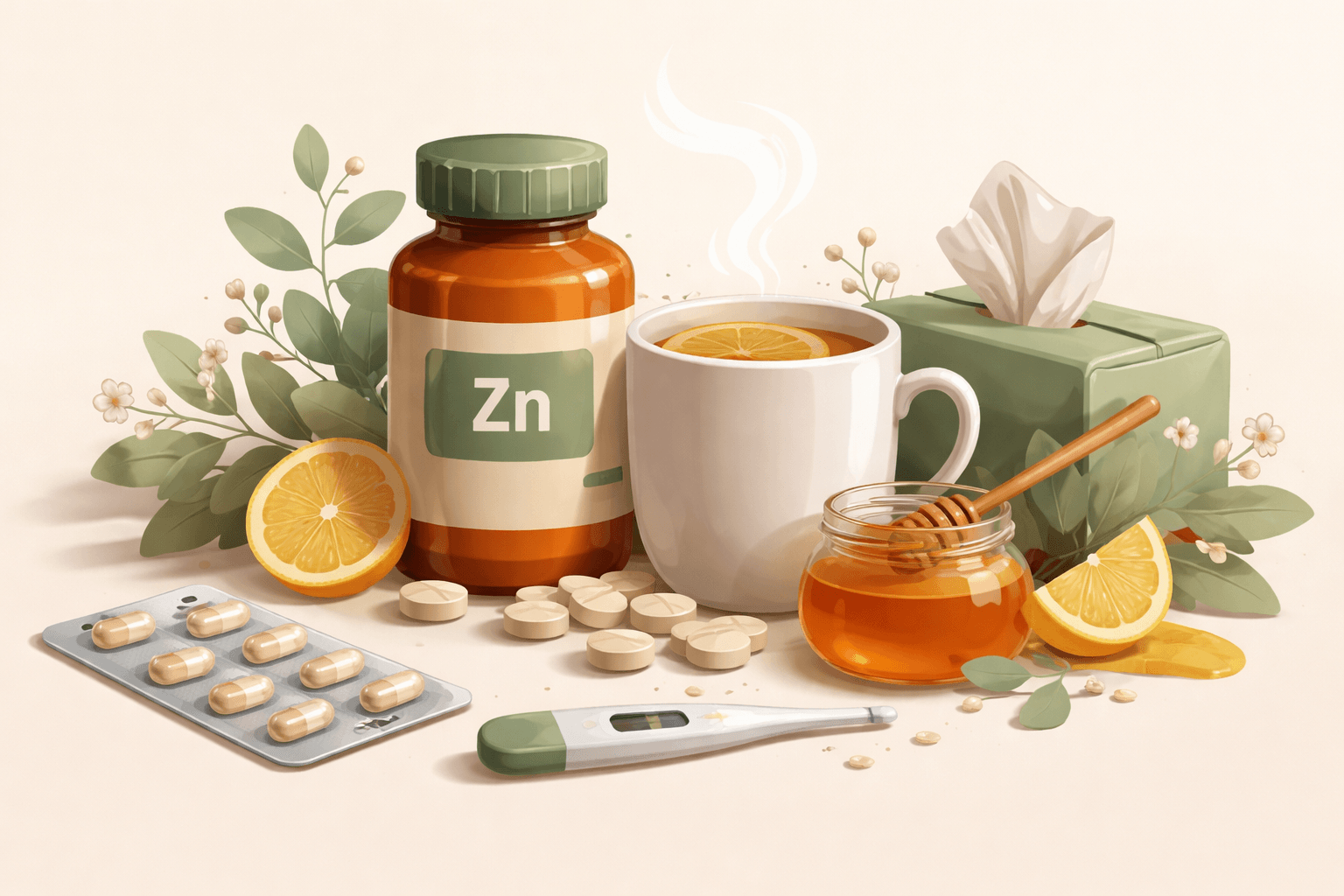
Zinc and Immune Function: Can It Really Shorten a Cold?
Zinc is a fundamental micronutrient for immune surveillance and repair. It serves as a structural or catalytic cofactor for more than 300 enzymes and numerous transcription factors, shaping innate and adaptive immune responses (evidence level: strong) [Gammoh & Rink, Nutrients 2017; Prasad, Mol Med 2008]. One of the most practical questions people ask is whether zinc can actually help you recover faster from a common cold. Here’s what current research suggests.
Why Zinc Matters to Your Immune System
- Orchestrates innate immunity: Zinc supports the integrity of skin and mucosal barriers and influences neutrophil and natural killer cell function (evidence level: strong) [Gammoh & Rink, Nutrients 2017].
- Tunes adaptive responses: Adequate zinc status is linked with healthy thymus function, T‑cell development, and balanced cytokine signaling (evidence level: strong) [Prasad, Mol Med 2008].
- Modulates inflammation: Zinc helps regulate NF‑κB and oxidative stress pathways, which may temper excessive inflammatory responses during infections (evidence level: moderate) [Gammoh & Rink, Nutrients 2017].
Can Zinc Shorten the Common Cold? The Clinical Evidence
Multiple systematic reviews and meta-analyses have evaluated zinc for the common cold, particularly in lozenge form taken early after symptoms begin.
- Cochrane Review: A Cochrane analysis reported that zinc initiated within 24 hours of symptom onset was associated with shorter cold duration and reduced symptom severity compared with placebo, though results varied across trials and formulations (evidence level: moderate) [Singh & Das, Cochrane Database Syst Rev 2013].
- CMAJ Meta-analysis: A systematic review of randomized controlled trials found that zinc was associated with a clinically meaningful reduction in cold duration, with more benefit seen when started early; taste disturbance and nausea were more common (evidence level: moderate) [Science et al., CMAJ 2012].
- Zinc Lozenges Analyses: Meta-analyses focusing on zinc acetate lozenges reported notable reductions in the duration of colds when used at sufficient lozenge strength and early in illness (evidence level: moderate) [Hemilä & Chalker, JRSM Open 2017; Open Forum Infect Dis 2015].
- Broader Viral Respiratory Infections: A 2021 living systematic review concluded that zinc (lozenges, nasal sprays, or oral supplements) may reduce the duration of acute viral respiratory tract infection symptoms and may lower the risk of developing symptomatic illness compared with placebo, although heterogeneity and formulation differences limit firm conclusions (evidence level: moderate) [Hunter et al., BMJ Open 2021].
Bottom line on efficacy: Research suggests zinc may help shorten how long a cold lasts—especially when taken soon after symptoms begin—and may lessen severity. However, findings vary by trial, likely due to differences in formulation, timing, and product chemistry.
How Might Zinc Work Against Cold Viruses?
- Direct antiviral effects: In vitro data suggest that increases in intracellular zinc can inhibit replication of some RNA viruses via effects on polymerases and proteases (evidence level: emerging) [Gammoh & Rink, Nutrients 2017].
- Local effects in the throat: Lozenges designed to release free (ionic) zinc in the oropharynx may reduce viral binding and replication locally and modulate inflammation, which could explain the greater consistency seen with certain lozenge formulations (evidence level: moderate) [Hemilä & Chalker, JRSM Open 2017].
- Barrier and mucosal immunity: Adequate zinc status supports epithelial barrier integrity and mucosal immune defenses—first-line protection relevant to upper respiratory infections (evidence level: strong) [Prasad, Mol Med 2008].
Formulations and Bioavailability: Why Product Chemistry Matters
- Lozenges and ionic zinc: The antiviral rationale for lozenges depends on releasing free zinc ions in the mouth and throat. Some flavoring agents and acids (for example, citric or tartaric acid) can bind zinc and reduce ion availability, potentially blunting benefits. Trials using zinc acetate (and some using zinc gluconate) lozenges without strong chelators have shown more consistent effects on cold duration (evidence level: moderate) [Hemilä & Chalker, JRSM Open 2017].
- Pills versus lozenges: Standard tablets or capsules may support overall zinc status but do not provide the same localized oropharyngeal exposure as lozenges, which may explain differences in cold-related outcomes (evidence level: emerging) [Science et al., CMAJ 2012].
- Zinc and the food matrix: Phytate—found in whole grains and legumes—binds zinc and reduces absorption. Soaking, sprouting, fermenting, and sourdough leavening can lower phytate and improve bioavailability from plant foods (evidence level: strong) [Hotz & Gibson, J Nutr 2007].
- Supplement forms: Organic salts and chelates (such as citrate, gluconate, or bisglycinate) are generally more soluble than zinc oxide and may be more bioavailable, though head-to-head human data vary by study and dose. For cold treatment specifically, lozenge chemistry and ion availability appear more critical than the generic label form (evidence level: emerging) [Roohani et al., J Res Med Sci 2013; Hemilä & Chalker, JRSM Open 2017].
Safety, Copper Interaction, and Sensitivities
- Copper interaction: Long-term high intakes of supplemental zinc can reduce copper absorption by inducing intestinal metallothionein, potentially leading to copper deficiency anemia and neurological issues. This interaction is well established; individuals using chronic, high-dose zinc should be monitored by a clinician (evidence level: strong) [Plum, Rink & Haase, Int J Environ Res Public Health 2010].
- Adverse effects: In clinical trials, taste disturbance, mouth irritation, and nausea were the most commonly reported side effects with lozenges; nasal zinc products have been linked in case reports to anosmia and are generally avoided in research settings (evidence level: moderate) [Science et al., CMAJ 2012; Hunter et al., BMJ Open 2021].
Who’s at Risk for Low Zinc—and Why That Matters for Colds
Marginal zinc status is common worldwide and may be more likely in people with limited intake of animal-sourced foods, malabsorption conditions, chronic gastrointestinal disease, or high phytate diets. Global estimates suggest that roughly 17% of the world’s population may be at risk of inadequate zinc intake (evidence level: moderate) [Wessells & Brown, PLoS One 2012]. Soil depletion and low-zinc soils reduce crop zinc content and contribute to dietary insufficiency in some regions, which has prompted biofortification efforts (evidence level: moderate) [Broadley et al., New Phytologist 2007]. Because immune tissues are zinc-sensitive, improving zinc status in deficient individuals may help reduce infection risk and severity (evidence level: moderate) [Prasad, Mol Med 2008].
Traditional, Zinc-Rich Foods That Support Immune Resilience
Many traditional diets emphasize zinc-dense foods, especially during illness or recovery.
- Shellfish and organ meats: Oysters are among the richest natural sources of zinc; traditional coastal cuisines across Asia, Europe, and the Americas feature oyster stews and broths during winter months. Liver and red meats, used in convalescent soups and porridges in various cultures, also supply highly bioavailable zinc (evidence level: strong for zinc content; traditional for usage) [USDA FoodData Central; culinary ethnography).
- Seeds and legumes with preparation: Pumpkin and sesame seeds appear in Middle Eastern and Mediterranean dishes; soaking, sprouting, or fermenting practices in traditional cuisines reduce phytate and may enhance zinc uptake (evidence level: strong for phytate reduction; traditional for practices) [Hotz & Gibson, J Nutr 2007].
- Fermented grains and pulses: Sourdough breads, idli/dosa, injera, and tempeh leverage fermentation to improve mineral bioavailability, including zinc (evidence level: strong) [Hotz & Gibson, J Nutr 2007].
Practical Takeaways (Without Medical Advice)
- For colds: Research suggests that zinc—particularly as properly formulated lozenges initiated early—may shorten the duration and reduce the severity of common cold symptoms (evidence level: moderate) [Cochrane 2013; Hemilä & Chalker 2017; Hunter et al. 2021].
- Choose formulations carefully: For lozenges, products that deliver free zinc ions in the mouth appear more effective; flavoring acids that strongly bind zinc may reduce benefits (evidence level: moderate) [Hemilä & Chalker, JRSM Open 2017].
- Mind the long game: Sustaining adequate zinc status through diet—emphasizing shellfish, lean meats, and well-prepared legumes, seeds, and whole grains—may help keep immune defenses resilient (evidence level: strong for status–immunity link) [Prasad, Mol Med 2008; Gammoh & Rink, Nutrients 2017].
- Use with awareness: Long-term, high supplemental intakes can impair copper status; individuals considering chronic use should consult a qualified clinician (evidence level: strong) [Plum, Rink & Haase 2010].
Bottom Line
Zinc plays a central role in immune function and may help shorten the common cold—especially when delivered as a well-formulated lozenge started soon after symptoms begin. Benefits likely depend on product chemistry and timing, and not all formulations are equal. Beyond acute use, maintaining adequate zinc status through nutrient-dense foods and traditional preparation methods remains a foundational strategy for immune resilience.
References (select)
- Gammoh NZ, Rink L. Zinc in infection and inflammation. Nutrients. 2017.
- Prasad AS. Zinc in human health: effect on immune system. Mol Med. 2008.
- Singh M, Das RR. Zinc for the common cold. Cochrane Database Syst Rev. 2013.
- Science M, Johnstone J, et al. Zinc for the treatment of the common cold: a systematic review and meta-analysis. CMAJ. 2012.
- Hemilä H, Chalker E. Meta-analyses of zinc acetate lozenges. JRSM Open. 2017; Open Forum Infect Dis. 2015.
- Hunter J, Arentz S, et al. Zinc for acute viral respiratory tract infections: a living systematic review and meta-analysis. BMJ Open. 2021.
- Hotz C, Gibson RS. Traditional food-processing practices to improve mineral bioavailability. J Nutr. 2007.
- Wessells KR, Brown KH. Global prevalence of inadequate zinc intake. PLoS One. 2012.
- Broadley MR, et al. Biofortification of cereals with zinc. New Phytologist. 2007.
- Plum LM, Rink L, Haase H. The essential toxin: impact of zinc on human health. Int J Environ Res Public Health. 2010.