Overview
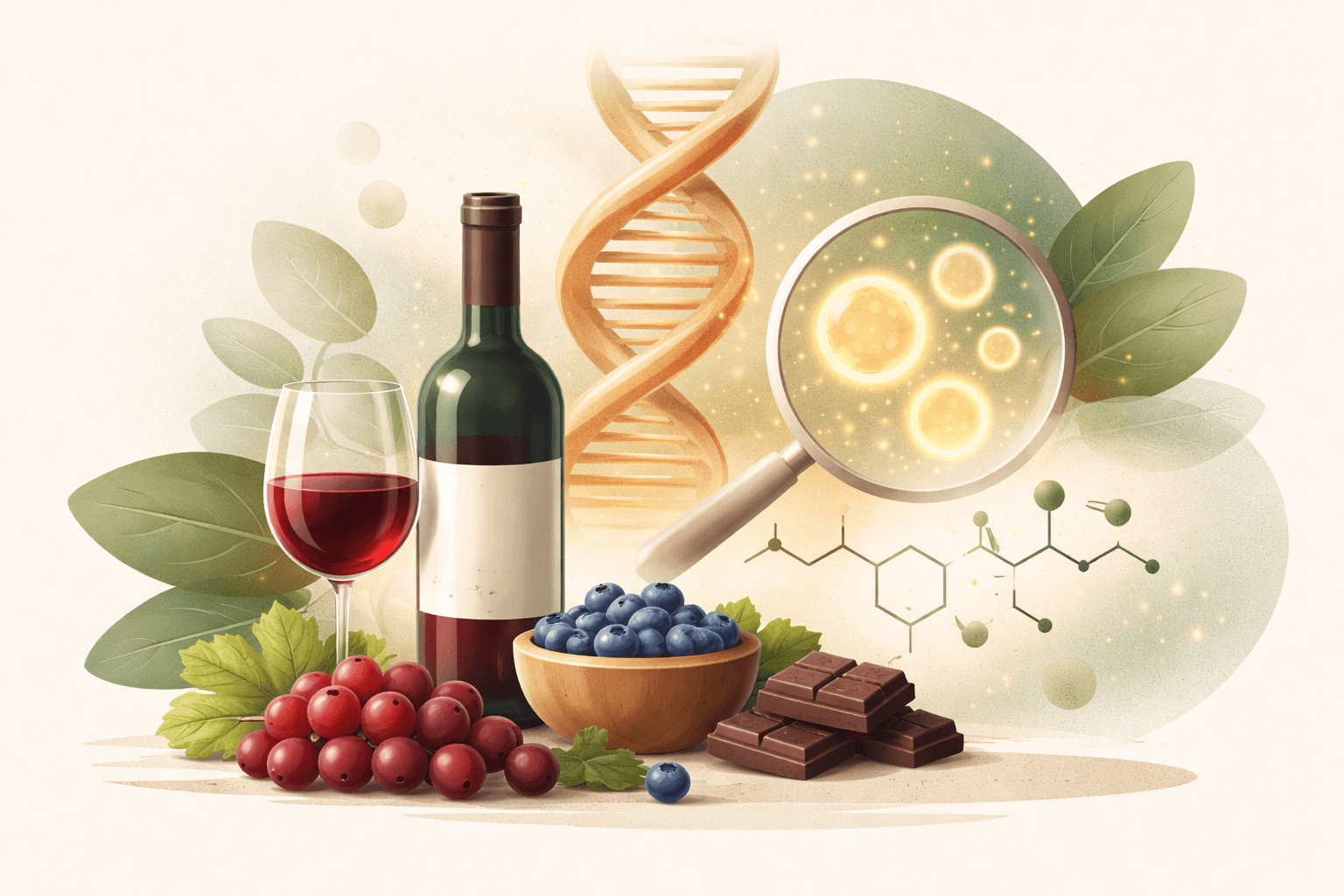
The “French Paradox” entered public consciousness in the early 1990s when researchers observed relatively low rates of heart disease in France despite higher saturated fat intake, with red wine frequently proposed as a protective factor (Renaud & de Lorgeril, 1992, The Lancet). This sparked interest in resveratrol, a grape and red wine polyphenol, as a potential longevity molecule. Soon after, high-profile lab studies suggested resveratrol could activate sirtuins—cellular enzymes linked to stress resistance and lifespan extension in yeast and animals—fueling the idea that it may help healthy aging in humans. Research since then has been mixed, with questions about mechanisms, bioavailability, and clinical relevance.
This focused review asks a narrow question: Does resveratrol activate sirtuins in a way that meaningfully affects human healthspan? And how does it compare to other polyphenols like EGCG, curcumin, and quercetin?
Key background: sirtuins and the resveratrol story
• Sirtuins (SIRT1–SIRT7) are NAD+-dependent enzymes involved in cellular stress responses, mitochondrial function, and metabolic regulation. Preclinical studies link sirtuin activity to longevity pathways in model organisms [Evidence: strong, preclinical].
• A 2003 Nature paper reported that resveratrol directly activated SIRT1 and extended yeast lifespan (Howitz et al., 2003). Subsequent papers challenged the assay methods, noting the effect depended on a fluorescently labeled substrate (Kaeberlein et al., 2005; Pacholec et al., 2010, J Biol Chem) [Evidence: mixed]. Later structural and biochemical work suggested context-dependent, substrate-selective SIRT1 activation and indirect pathways (e.g., AMPK activation via phosphodiesterase inhibition) (Park et al., 2012, Cell) [Evidence: moderate].
• The scientific debate—popularized by David Sinclair’s group and others—remains unresolved on whether resveratrol is a direct SIRT1 activator under physiological conditions, or whether indirect NAD+-linked or AMPK-mediated mechanisms are more relevant in vivo [Evidence: emerging].
Bioavailability: the elephant in the room
• Orally ingested resveratrol is rapidly metabolized to sulfate and glucuronide conjugates, leaving very low levels of free resveratrol in circulation (Cottart et al., 2010, Mol Nutr Food Res) [Evidence: strong].
• Enhanced-delivery strategies (micronized, nanoparticle, liposomal) can increase plasma exposure, but whether this translates to superior clinical effects is not yet established in robust human outcomes trials [Evidence: emerging].
• Dietary resveratrol intake from wine is typically far below amounts used in most human studies, which complicates inferences about the French Paradox being “explained” by resveratrol alone [Evidence: moderate].
Human trials: what changes—and what doesn’t?
Because directly measuring sirtuin activation in human tissues is challenging, most trials evaluate downstream markers—insulin sensitivity, lipids, inflammatory biomarkers, mitochondrial function—or disease-specific endpoints.
Metabolic health
• In obese but otherwise healthy adults, a crossover RCT found that resveratrol favorably altered some metabolic and mitochondrial markers—suggesting a calorie-restriction–like effect—though changes were modest and not universal (Timmers et al., 2011, Cell Metabolism) [Evidence: emerging].
• Meta-analyses indicate resveratrol may modestly improve fasting glucose and insulin measures in people with type 2 diabetes, but effects in non-diabetic or healthy individuals are inconsistent (Liu et al., 2014, PLoS One; Hausenblas et al., 2015, Crit Rev Food Sci Nutr) [Evidence: moderate for glycemic benefits in diabetes; limited in non-diabetics].
• A randomized study in older men reported that resveratrol blunted some of the cardiometabolic benefits of exercise training, hinting at context-dependent effects (Gliemann et al., 2013, J Physiol) [Evidence: emerging].
Cardiovascular markers
• Systematic reviews suggest small reductions in blood pressure and C-reactive protein in certain populations, though heterogeneity, short durations, and potential publication bias limit confidence (Sahebkar et al., 2015–2018 meta-analyses) [Evidence: emerging to moderate].
• There is no convincing evidence that resveratrol reduces hard cardiovascular events in humans; trials to date are underpowered and short-term [Evidence: limited].
Neurodegeneration
• In a phase 2 Alzheimer’s disease trial, resveratrol influenced cerebrospinal fluid biomarkers and neuroinflammation indices but did not improve cognition; brain volume changes raised additional questions (Turner et al., 2015, Neurology) [Evidence: emerging].
Longevity
• No human trial has demonstrated life-extension effects. Current evidence does not establish that resveratrol prolongs lifespan in humans [Evidence: limited].
Mechanistic plausibility vs. clinical reality
• Mechanistic studies support that resveratrol can engage nutrient-sensing pathways (SIRT1/AMPK/NAD+) under certain experimental conditions (Park et al., 2012, Cell) [Evidence: moderate].
• Translation to consistent clinical benefits likely depends on baseline metabolic status, tissue targeting, formulation, and co-interventions (e.g., exercise, diet) [Evidence: emerging].
• The sirtuin activation narrative remains attractive but incompletely validated in humans; observed benefits appear modest and population-specific so far [Evidence: emerging].
How does resveratrol compare with other polyphenols?
• EGCG (green tea catechin): Meta-analyses report modest reductions in LDL cholesterol and small effects on weight and glucose handling, alongside safety considerations for concentrated extracts (Zheng et al., 2011, Am J Clin Nutr; Cochrane reviews on green tea and weight) [Evidence: moderate for lipid effects].
• Curcumin (from turmeric): Systematic reviews indicate reductions in inflammatory markers (e.g., CRP) and improvements in osteoarthritis symptoms compared with placebo, though bioavailability and study quality vary (Sahebkar et al., 2014, J Med Food; Bannuru et al., 2018, Ann Intern Med) [Evidence: moderate for inflammation and osteoarthritis symptoms].
• Quercetin: Meta-analyses suggest small reductions in blood pressure, particularly in hypertensive individuals (Serban et al., 2016, Phytother Res) [Evidence: moderate for blood pressure].
Compared with these, resveratrol’s human evidence base shows promise in select metabolic contexts but is similarly constrained by bioavailability and inconsistent outcomes. No polyphenol has established longevity extension in humans; benefits, when present, tend to be domain-specific and modest [Evidence: strong for lack of lifespan data; moderate for domain-specific benefits].
Traditional medicine perspective
• Polyphenol-rich botanicals have been used for centuries. In Traditional Chinese Medicine, Hu Zhang (Polygonum cuspidatum), a natural source of resveratrol, has been used to “clear heat” and address circulatory and inflammatory complaints; in Ayurveda, turmeric (curcumin) has long been used for joint and digestive concerns; green tea (Camellia sinensis) is a TCM staple for alertness and metabolic balance [Evidence: traditional].
• Modern research echoes some of these uses—particularly for curcumin in joint health and green tea catechins in cardiometabolic markers—while also highlighting the importance of standardization and bioavailability [Evidence: moderate].
What to watch for in future studies
• Target populations: Benefits may be greater in individuals with metabolic dysfunction than in healthy adults [Evidence: moderate].
• Formulation science: Trials that tie pharmacokinetics (exposure) to pharmacodynamics (target engagement) and clinical outcomes can clarify bioavailability questions [Evidence: emerging].
• Mechanistic endpoints: Direct readouts of sirtuin/AMPK pathway activity in human tissues and longer follow-up will help determine real-world relevance [Evidence: emerging].
• Comparative effectiveness: Head-to-head or network meta-analyses across polyphenols could identify where resveratrol truly stands out—or doesn’t [Evidence: emerging].
Bottom line
• The sirtuin activation story that made resveratrol famous is biologically plausible but not definitively demonstrated as a driver of clinical benefit in humans. Effects, when seen, are modest and context-dependent [Evidence: emerging].
• Human trials show mixed results: potential improvements in glycemic markers among people with type 2 diabetes, small shifts in inflammatory and vascular markers, and limited or no effects in healthy individuals; no evidence for life extension in humans [Evidence: moderate for glycemic effects in diabetes; limited for longevity].
• Bioavailability remains a central challenge, and enhanced formulations have not yet delivered unequivocal superiority in clinical outcomes [Evidence: emerging].
• For specific health domains, other polyphenols—EGCG, curcumin, quercetin—currently have comparable or stronger human evidence for defined endpoints, though none are proven longevity agents [Evidence: moderate].
• Traditional medical systems have long used polyphenol-rich herbs. Modern research suggests some alignment with historical uses, but rigorous, standardized clinical trials are essential to guide expectations [Evidence: traditional to moderate].
This article is for informational purposes only and does not provide medical advice or dosing guidance.