

Promising research with growing clinical support
Folate vs Folic Acid for Methylation: What Research Suggests
A focused, evidence-based look at folate vs folic acid for methylation, MTHFR considerations, UMFA, homocysteine, and food-first strategies—without the hype.
This content is for informational purposes only and does not constitute medical advice. Always consult a qualified healthcare provider before starting, stopping, or changing any supplement or medication regimen.
Folate vs folic acid often gets framed as a simple “natural vs synthetic” debate. The truth is more nuanced—and important—because these forms feed the body’s methylation pathways, which help regulate DNA synthesis and repair, neurotransmitter production, detoxification, and homocysteine recycling. This focused guide explains how folate and folic acid differ, what that means for methylation, where MTHFR fits in, and how to think about food-first strategies alongside supplements.
Key takeaways at a glance
- Both folate (from foods) and folic acid (synthetic) support methylation and lower homocysteine; 5-methyltetrahydrofolate (5-MTHF) is the bioactive folate circulating in the body (strong evidence).
- Large population programs using folic acid fortification reduced neural tube defects substantially, including among people with common MTHFR variants (strong evidence).
- 5-MTHF and folic acid generally produce similar improvements in folate status and homocysteine; 5-MTHF may have modest advantages in individuals with reduced MTHFR activity (moderate evidence).
- Unmetabolized folic acid (UMFA) can appear in blood after higher intakes of folic acid, but its clinical significance remains uncertain (emerging evidence).
- Homocysteine is a useful functional marker of one-carbon metabolism, but lowering it with B vitamins has not consistently reduced cardiovascular events in folate-replete populations (strong evidence for marker utility; moderate for outcomes).
What are folate, folic acid, and 5-MTHF?
- Folate refers to a family of naturally occurring compounds in foods like leafy greens, legumes, citrus, and liver. These are reduced folates, many of which are readily converted to 5-methyltetrahydrofolate (5-MTHF), the form that donates methyl groups to remethylate homocysteine to methionine (strong evidence).
- Folic acid is a fully oxidized, synthetic form used in supplements and food fortification. It is not biologically active until it is reduced by dihydrofolate reductase (DHFR) and then converted along the folate cycle to 5-MTHF (strong evidence).
- 5-MTHF (also called L-methylfolate) is the primary circulating form of folate in human plasma and directly participates in methylation reactions (strong evidence).
How form affects methylation All three pathways ultimately converge on 5-MTHF, but the steps to get there differ:
- Food folate: Many food folates enter the one-carbon cycle closer to the 5-MTHF “finish line,” depending on the compound and processing losses (strong evidence).
- Folic acid: Requires DHFR-dependent reduction. Human DHFR has limited capacity and varies between individuals; when intake exceeds metabolic capacity, unmetabolized folic acid (UMFA) can appear in circulation (emerging evidence). The presence of UMFA has been repeatedly documented after fortification and supplementation, but studies have not established clear, consistent harms (emerging evidence).
- Direct 5-MTHF: Bypasses several upstream steps, providing the active methylated folate regardless of DHFR activity or common MTHFR variants (moderate evidence).
MTHFR polymorphisms: do they change the picture? The common MTHFR C677T variant reduces enzyme activity; individuals homozygous for the T allele (TT) often have higher homocysteine and lower folate status than CC carriers, especially with low folate intake (strong evidence). Prevalence of the TT genotype varies by ancestry and can approach 10–20% in some populations, with 30–40% carrying at least one T allele (strong evidence).
Clinical significance is often overstated. Professional societies do not recommend routine MTHFR testing for thrombophilia or recurrent pregnancy loss because evidence does not support it as a causal factor in most clinical scenarios (strong evidence; guidance from organizations such as ACMG and ACOG). Importantly, folic acid fortification has lowered neural tube defect (NTD) rates across populations regardless of MTHFR genotype (strong evidence), and individuals with MTHFR variants still respond to increased folate intake (strong evidence).
Folate vs folic acid: what trials show
- Homocysteine lowering: Randomized trials and systematic reviews generally find that folic acid and 5-MTHF both raise red blood cell/serum folate and lower homocysteine to a similar degree in the general population (moderate evidence). Some studies suggest 5-MTHF may produce slightly greater homocysteine reductions in people with the MTHFR 677TT genotype or in those with lower baseline folate (moderate evidence).
- Prevention of neural tube defects: Population fortification with folic acid is associated with 20–50% reductions in NTDs globally (strong evidence from large epidemiologic analyses and public health interventions). Most clinical prevention trials and policy successes involve folic acid, not 5-MTHF (strong evidence).
- Cardiovascular outcomes: Although folic acid and B vitamins reliably lower homocysteine, large randomized trials in folate-replete countries have not shown consistent reductions in major cardiovascular events. However, in regions without folic acid fortification and with low baseline folate, folic acid has reduced stroke risk in hypertensive adults (e.g., a large Chinese trial) (strong evidence for lack of benefit in replete settings; moderate-to-strong for benefit in low-folate settings).
Unmetabolized folic acid (UMFA): what we know and don’t know UMFA is detectable in many people after folic acid intake, especially above what the DHFR enzyme can process at one time (emerging evidence). Observational work has proposed potential concerns—masking of B12 deficiency–related anemia, altered immune function, or cancer promotion—but causal links and clinical impact remain uncertain and inconsistent across studies (emerging evidence). Current reviews emphasize the need for more high-quality research to clarify whether UMFA is a benign biomarker of exposure or a risk signal in specific contexts (emerging evidence).
Homocysteine: a practical marker of methylation status Homocysteine sits at the intersection of folate, B12, and B6 metabolism. Elevated levels can reflect inadequate status of these vitamins or impaired one-carbon metabolism (strong evidence). Interventions that improve folate/B12/B6 status consistently lower homocysteine (strong evidence). That said, homocysteine is best viewed as a functional nutrient marker and risk indicator rather than a guaranteed therapeutic target; lowering it has not reliably translated to fewer cardiovascular events in fortified settings (moderate evidence).
Food-first strategies to support methylation Traditional dietary patterns around the world emphasized folate-rich plants and nutrient-dense animal foods that supply complementary B vitamins. These choices remain relevant:
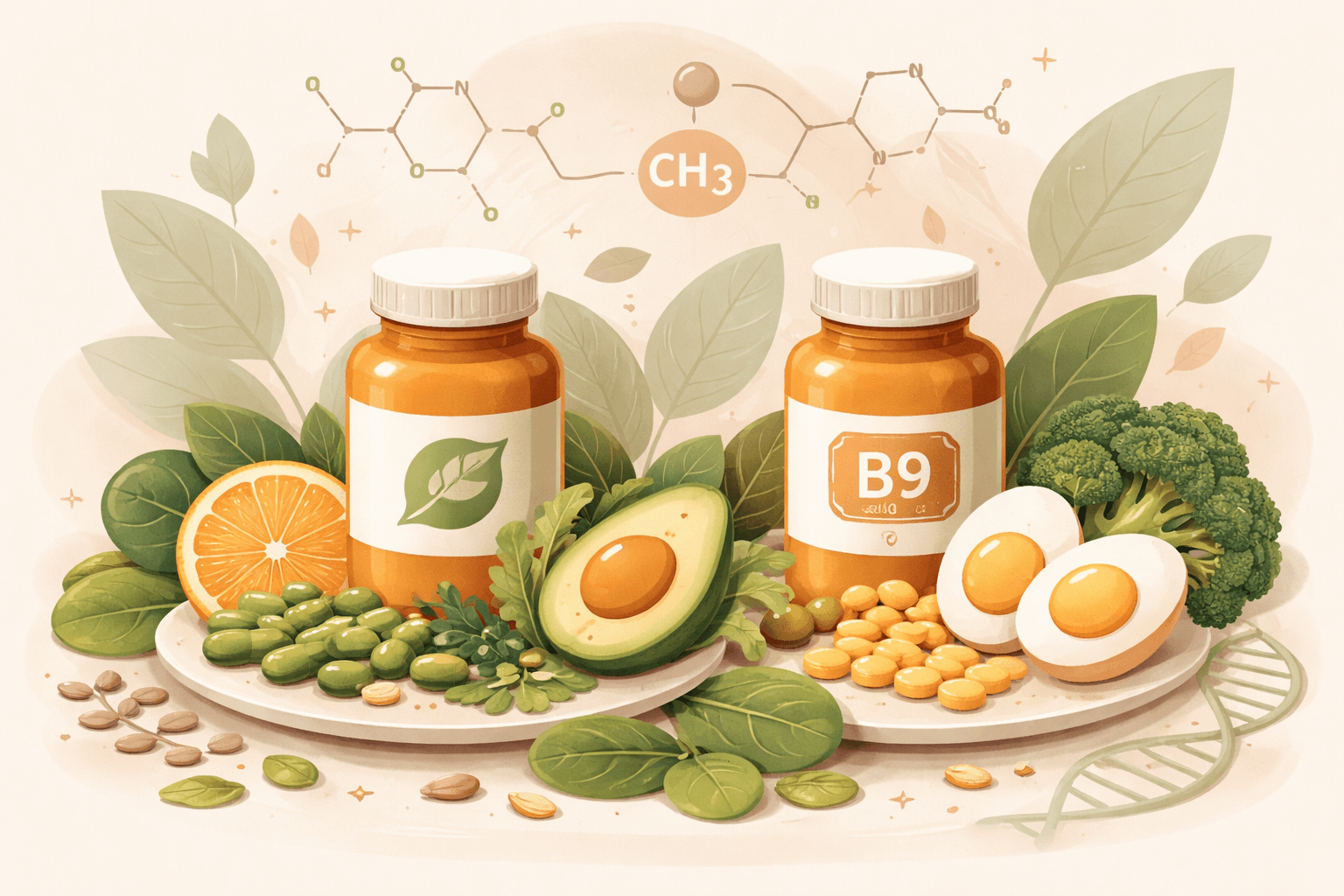
- Leafy greens (spinach, chard), herbs, asparagus, broccoli, Brussels sprouts, and avocado provide natural folates that enter one-carbon pathways efficiently (strong evidence; traditional dietary wisdom).
- Legumes (lentils, chickpeas, black beans) and citrus contribute folate and other supportive nutrients like magnesium and vitamin C (strong evidence; traditional dietary wisdom).
- Liver and eggs supply folate along with choline and B12, which work alongside folate in methylation pathways (strong evidence; traditional dietary wisdom). Individuals with specific dietary preferences can pair plant folate with B12 from fortified foods or supplements as needed.
- Minimize folate losses: Folate is water-soluble and sensitive to heat. Gentle cooking methods (steaming, sautéing) and consuming some raw or lightly cooked greens help preserve folate content (strong evidence).
Where supplements fit Supplement forms can be useful for targeted needs or when diet is insufficient:
- Folic acid is the form used in most public health programs and many clinical trials; it consistently improves folate status and reduces homocysteine (strong evidence).
- 5-MTHF provides the bioactive form directly and may be considered when genetic variants, medications, or individual tolerance are a concern; evidence suggests equivalence to folic acid for most outcomes and potential small advantages in select subgroups (moderate evidence).
- Folate works in concert with B12 and B6; assessing overall B vitamin status and homocysteine may offer a more complete view than focusing on folate alone (strong evidence). People on antifolate or antiseizure medications, and those with B12 deficiency risk, should consult a clinician for individualized guidance.
Bridging perspectives: modern science and traditional wisdom From a traditional medicine lens (Ayurveda, East Asian dietetics, Mediterranean heritage diets), nutrient-dense greens, legumes, and organ meats were staples for “blood-building,” fertility, and vitality—concepts that align with modern insights on methylation, DNA synthesis, and red blood cell production (traditional evidence supported by modern mechanisms). Today’s research-backed approach mirrors that wisdom: emphasize folate-rich whole foods, ensure adequate complementary B vitamins, and use supplements judiciously when diet, life stage, or medical factors warrant (moderate evidence).
Bottom line
- Folate from foods and folic acid from supplements both support methylation and lower homocysteine (strong evidence). 5-MTHF offers a direct, bioactive route and may be particularly helpful for some individuals with reduced MTHFR activity (moderate evidence).
- Public health wins in neural tube defect prevention primarily come from folic acid fortification and periconceptional use (strong evidence), and this benefit extends across common MTHFR genotypes (strong evidence).
- UMFA is a measurable byproduct of folic acid intake; whether it has clinical consequences is not yet clear (emerging evidence).
- A food-first pattern rich in leafy greens, legumes, citrus, eggs, and occasional organ meats supports one-carbon metabolism holistically, with supplements filling gaps when needed (strong and traditional evidence).
- Homocysteine can help assess functional B vitamin status, but improving numbers does not always change hard outcomes in folate-replete settings (strong evidence for marker role; moderate for outcomes).
This balanced view supports a practical strategy: build a folate-rich plate, ensure complementary B vitamins—especially B12—and choose folate supplement forms based on context rather than hype.
Health Disclaimer
This content is for informational purposes only and does not constitute medical advice. Always consult a qualified healthcare provider before starting, stopping, or changing any supplement or medication regimen.