

Tendonitis (Tendinopathy) and Cold Laser Therapy (Photobiomodulation)
Tendonitis—often used broadly to include chronic tendinopathy—refers to pain and dysfunction in a tendon. Acute inflammatory tendonitis usually follows an abrupt increase in load and features localized pain, warmth, and swelling. Chronic tendinopathy is more common: a degenerative, less inflammatory process with disorganized collagen, neovascularization, stiffness, and activity-related pain. Frequent sites include the Achilles tendon, lateral elbow (tennis elbow), rotator cuff, and patellar tendon. Symptoms limit work, sport, and daily activities. Core clinical goals are pain relief, load management, control of excessive inflammation in the acute phase, stimulation of collagen repair and tendon remodeling, restoration of strength and function, and safe return to activity. Cold laser therapy—also called low-level laser therapy (LLLT) or photobiomodulation (PBM)—uses red and near‑infrared light to influence cellular processes. Key variables include wavelength, total energy delivered, energy density at the tissue, treatment frequency, and whether light is continuous or pulsed. At the cellular level, photons are absorbed by chromophores such as cytochrome c oxidase in mitochondria, leading to increased ATP production, transient reactive oxygen species signaling, and nitric oxide release. Downstream effects observed in preclinical studies include reduced pro‑inflammatory cytokines, modulation of COX‑2, increased fibroblast activity and collagen synthesis, and angiogenesis—mechanisms that could translate into pain reduction and enhanced tendon healing. What does the clinical evidence say? Systematic reviews and randomized trials suggest PBM can reduce pain and improve short‑term function in some tendon conditions—particularly lateral epicondylitis and, in some protocols, Achilles tendinopathy—when appropriate wavelengths and dosing parameters are used. Results for rotator cuff and patellar tendinopathy are mixed or show minimal added benefit over exercise alone. Effects
Updated September 8, 2026This content is for informational purposes only and does not constitute medical advice. Always consult a qualified healthcare provider before starting, stopping, or changing any supplement or medication regimen.
Shared Risk Factors
Mechanical overload and repetitive strain
Moderate EvidenceHigh, poorly managed tendon load drives both acute tendonitis and chronic tendinopathy. Continued overload can also blunt the apparent clinical impact of PBM by perpetuating nociception and micro‑damage despite biological pro‑healing signals.
Age‑related tendon degeneration
Emerging ResearchWith age, tendons exhibit decreased cellularity, cross‑linking changes, and slower remodeling. PBM’s reparative signaling may be influenced by tissue quality, with responses potentially slower or smaller in degenerative tissue.
Metabolic health (diabetes, dyslipidemia, obesity)
Moderate EvidenceMetabolic disorders increase tendinopathy risk via advanced glycation, lipid deposition, and impaired microcirculation. Oxidative stress and microvascular changes could also influence PBM responsiveness.
Smoking and impaired microcirculation
Emerging ResearchSmoking reduces tendon blood flow and collagen synthesis, impairing healing. PBM relies in part on microvascular and mitochondrial responses, which smoking may blunt.
Medication exposures (fluoroquinolones, systemic corticosteroids, statins)
Moderate EvidenceCertain medications increase tendinopathy risk and may predispose to tendon rupture. PBM has no known direct pharmacologic interaction but clinicians consider overall tendon integrity and risk profile when selecting modalities.
Overlapping Treatments
Eccentric loading and progressive tendon rehabilitation
Strong EvidenceStrongly supports tendon remodeling, pain reduction, and return to function across multiple tendinopathies.
Combines well with PBM; load‑based stimulus may complement PBM’s cellular effects for additive benefit.
Requires adherence and graded progression to avoid flares.
Activity modification and load management
Moderate EvidenceReduces provocative strain to allow healing and symptom control.
Helps reveal PBM’s analgesic/repair effects by minimizing ongoing micro‑trauma.
Over‑rest can decondition tissue; guided reloading is important.
Extracorporeal shockwave therapy (ESWT)
Moderate EvidenceUseful in chronic recalcitrant tendinopathies (e.g., Achilles insertional, plantar fascia).
May be alternated or staged with PBM in multimodal care when progress plateaus.
Short‑term discomfort; not for acute tears or coagulopathy.
NSAIDs and topical analgesics
Moderate EvidenceShort‑term pain relief, especially in acute inflammatory phases.
Can improve comfort during PBM treatment periods without known interference.
Systemic use may have GI/renal risks; prolonged use may not aid tendon remodeling.
Platelet‑rich plasma (PRP)
Emerging ResearchMixed evidence; some benefit in select chronic tendinopathies.
PBM may be scheduled before/after injections as part of a staged plan.
Variable preparation quality; cost and access considerations.
Acupuncture
Moderate EvidenceMay reduce pain and improve function in some musculoskeletal conditions; evidence for tendinopathy is mixed to moderate.
Conceptually synergistic with PBM in integrative protocols targeting pain and circulation.
Requires trained practitioner; responses vary.
Manual therapy and soft‑tissue mobilization
Moderate EvidenceCan address myofascial contributors and joint mechanics; may reduce pain and improve mobility.
Used adjunctively to prepare tissue for PBM or to consolidate gains after sessions.
Should be paired with active loading to retain benefits.
Bracing/orthoses or taping (site‑dependent)
Moderate EvidenceMay reduce strain on symptomatic tendons (e.g., patellar strap, counterforce elbow band).
Facilitates comfortable participation in PBM and exercise programs.
Short‑term aid; avoid over‑reliance.
Medical Perspectives
Two Ways of Seeing Health

Western
scientific · clinical
Western medicine applies science, technology, and clinical experience to treat symptoms through testing, diagnosis, and targeted intervention.
Surgeons · Pharmaceuticals · Clinical trials · Diagnostics 
Eastern
traditional · alternative
Eastern medicine focuses on treating the body naturally by applying traditional knowledge practiced for thousands of years, emphasizing balance and whole-person wellness.
Acupuncture · Herbal medicine · Yoga · Meditation
Gold Bamboo presents both perspectives side-by-side so you can make informed decisions. We don't advocate for one over the other — your health choices are yours.
Two Ways of Seeing Health
Western
scientific · clinical
Western medicine applies science, technology, and clinical experience to treat symptoms through testing, diagnosis, and targeted intervention.
Eastern
traditional · alternative
Eastern medicine focuses on treating the body naturally by applying traditional knowledge practiced for thousands of years, emphasizing balance and whole-person wellness.
Gold Bamboo presents both perspectives side-by-side so you can make informed decisions. We don't advocate for one over the other — your health choices are yours.
Western Perspective
Western clinical medicine views photobiomodulation (cold laser) as a nonthermal light therapy that modulates cellular signaling to reduce pain and support tissue repair. For tendinopathy, evidence is heterogeneous across tendon sites and highly dependent on wavelength and dosing parameters. Meta‑analyses suggest short‑term analgesic and functional gains in lateral epicondylitis and, under certain protocols, Achilles tendinopathy. Trials in rotator cuff and patellar tendinopathy show mixed or minimal added value over structured exercise. PBM is typically considered as an adjunct to load‑based rehabilitation rather than a stand‑alone cure.
Key Insights
- Parameter selection (wavelength, energy at tissue, treatment frequency) is pivotal; trials using recommended ranges show more positive results.
- Adjunctive use with eccentric loading programs appears more promising than PBM alone.
- Benefits tend to be short‑term (weeks) with uncertain durability unless paired with progressive rehab.
- Adverse events are uncommon and mild; eye protection and standard contraindications apply.
Treatments
- Eccentric and heavy‑slow resistance exercise
- Activity modification and education
- NSAIDs/topicals for short‑term symptom relief
- Adjunct modalities (PBM, ESWT, ultrasound) as individualized
- Injections (corticosteroid short‑term relief, PRP mixed evidence) and surgery for refractory cases
Deep Dive
Tendinopathy spans an acute inflammatory phase to a chronic degenerative state marked by disorganized collagen and altered tendon mechanics. Sta... Tendinopathy spans an acute inflammatory phase to a chronic degenerative state marked by disorganized collagen and altered tendon mechanics. Standard care in Western medicine prioritizes education and load management, then progressive tendon loading (eccentrics or heavy‑slow resistance) to drive remodeling. Analgesics and topical agents offer short‑term symptom control. For refractory cases, clinicians may employ adjunct modalities such as extracorporeal shockwave therapy, or consider injections and, rarely, surgery. Photobiomodulation (cold laser) introduces a nonthermal light stimulus to modulate cellular activity. Red to near‑infrared wavelengths interact with mitochondrial chromophores, boosting ATP availability, releasing nitric oxide, and triggering secondary signaling that can temper pro‑inflammatory cytokines and stimulate fibroblast activity, collagen synthesis, and angiogenesis. These mechanisms plausibly address key bottlenecks in tendon repair. Clinical evidence, however, is nuanced. Systematic reviews indicate that when wavelength and dose fall within recommended ranges, short‑term reductions in pain and improvements in function are more likely—especially in lateral epicondylitis and, in some protocols, Achilles tendinopathy. Trials in rotator cuff and patellar tendons report mixed findings, with several showing little or no added benefit over a well‑conducted exercise program. Across studies, durability of benefit depends on concurrent rehabilitation; PBM appears to lower pain and potentially accelerate early recovery, but without graded loading, long‑term structural change is uncertain. Safety is favorable, with few adverse events reported; standard precautions include eye protection and avoiding irradiation over the thyroid, active malignancy sites, or during pregnancy over the abdomen. Overall, Western evidence supports PBM as an adjunct for select tendinopathies within a structured rehab plan, while highlighting unresolved questions about optimal parameters, patient selection, and sustained outcomes.
Sources
- Tumilty S et al. Low level laser treatment for tendinopathy: systematic review with meta‑analysis. Photomed Laser Surg. 2010.
- Bjordal JM et al. Low‑level laser therapy for tendinopathies: systematic reviews/meta‑analyses (e.g., Photomed Laser Surg, 2006–2008).
- Green S et al. Laser therapy for shoulder pain. Cochrane Database Syst Rev. 2005/2009 update.
- Clijsen R et al. Low‑level laser therapy for musculoskeletal pain: systematic review/meta‑analysis. Lasers Med Sci. 2017.
- Hamblin MR. Mechanisms of photobiomodulation. Photobiomodul Photomed Laser Surg. 2016.
- World Association for Photobiomodulation Therapy (WALT) clinical recommendations.
Eastern Perspective
Traditional systems frame tendon pain within broader patterns of circulation, vitality, and tissue nourishment. In Traditional Chinese Medicine (TCM), tendinopathy commonly reflects Bi syndrome with Qi and Blood stasis, often layered on Liver–Kidney deficiency affecting sinews. Therapies aim to move Qi and Blood, resolve stasis, and strengthen underlying deficiencies. Ayurveda often interprets tendon disorders as Vata aggravation with mamsa‑dhatu (muscle/tendon) involvement and impaired agni (metabolic fire). Cold laser is readily incorporated into modern integrative practice as a form of noninvasive ‘light‑Qi’ stimulation that harmonizes with acupuncture meridians and supports local repair.
Key Insights
- Addressing systemic contributors (sleep, stress, digestion) is considered essential for durable recovery alongside local care.
- Local circulation enhancement—via acupuncture, moxibustion, massage, or PBM—is emphasized to disperse stasis and ease pain.
- Gentle, progressive loading (e.g., therapeutic yoga, functional exercises) is integrated to realign fibers and restore function.
- Herbal support (e.g., turmeric/jiang huang, boswellia/shallaki, notoginseng/san qi) is traditionally used for pain and microcirculation, with growing modern evidence for anti‑inflammatory effects.
Treatments
- Acupuncture (local and distal points along affected meridians)
- Tui na/guasha and cupping to promote circulation
- Topical or oral botanicals (e.g., turmeric, boswellia) under practitioner guidance
- Yoga therapy and mindful movement to restore balanced loading
- Integrative use of PBM at acupuncture points or tendon sites
Deep Dive
Traditional medicine frameworks approach tendon pain by restoring circulation, balancing constitutional patterns, and progressively re‑educating... Traditional medicine frameworks approach tendon pain by restoring circulation, balancing constitutional patterns, and progressively re‑educating the tissue. In Chinese medicine, tendons are governed by the Liver and nourished by Kidney essence; pain and stiffness often reflect Qi and Blood stasis. Treatment seeks to move stasis (acupuncture, cupping, tui na) and tonify underlying deficiencies. Ayurveda interprets many tendon disorders as Vata aggravation affecting the mamsa‑dhatu, calling for calming therapies (oil applications, gentle heat), digestive support, and botanicals with anti‑inflammatory and microcirculatory properties (e.g., turmeric/haridra, boswellia/shallaki, and guggulu). Cold laser integrates readily into these paradigms as a modern, targeted means of enhancing local circulation and cellular vitality—akin to introducing ‘light‑Qi’ to a stagnant area. Practitioners may direct PBM along meridian pathways or at tender points to harmonize with acupuncture’s analgesic and neuromodulatory effects. Combined with mindful movement and gradual loading (e.g., yoga therapy, rehabilitative exercise), PBM can help reduce pain and facilitate participation in the practices that ultimately restore tendon alignment and function. From an evidence standpoint, traditional modalities like acupuncture show moderate support for musculoskeletal pain, while PBM’s mechanistic rationale is strong and clinical data are promising but variable by tendon site. An integrative plan often layers local circulation techniques, botanical support for inflammation and tissue repair, and progressive exercise under practitioner guidance. This synthesis respects the traditional emphasis on whole‑person balance while aligning with modern rehabilitation science that prioritizes load management and functional restoration.
Sources
- WHO. Acupuncture: Review and Analysis of Reports on Controlled Clinical Trials. 2002.
- Vickers AJ et al. Acupuncture for chronic pain: individual patient data meta‑analysis. Arch Intern Med. 2012; update J Pain. 2018.
- Lauche R et al. Cupping for chronic pain: a systematic review. J Pain. 2012.
- Hamblin MR. Photobiomodulation mechanisms (supporting conceptual integration with acupuncture). 2016.
Evidence Ratings
PBM can reduce short‑term pain in lateral epicondylitis compared with sham when appropriate parameters are used.
Bjordal JM et al., Photomed Laser Surg, 2008 (systematic review/meta‑analysis).
Adjunct PBM combined with exercise may improve outcomes in some Achilles tendinopathy cohorts.
Tumilty S et al., Photomed Laser Surg, 2010 (systematic review with meta‑analysis).
Evidence for PBM in rotator cuff tendinopathy is mixed and overall insufficient for strong conclusions.
Green S et al., Cochrane Database Syst Rev, 2005/2009 update (shoulder pain, including LLLT trials).
PBM influences mitochondrial activity and inflammatory mediators in musculoskeletal tissues.
Hamblin MR, Photobiomodul Photomed Laser Surg, 2016 (mechanistic review).
Adverse events with PBM in musculoskeletal trials are uncommon and generally mild.
Clijsen R et al., Lasers Med Sci, 2017 (systematic review).
Combining PBM with load management and eccentric exercise is likely more effective than PBM alone.
Tumilty S et al., 2010; clinical practice patterns in rehabilitation literature.
Metabolic disorders (e.g., diabetes) increase the risk and slow recovery of tendinopathies.
Abate M et al., Muscles Ligaments Tendons J, 2013 (review on tendinopathy and metabolic disorders).
Sources
- Tumilty S, Munn J, McDonough S, Hurley DA, Basford JR, Baxter GD. Low level laser treatment for tendinopathy: a systematic review with meta‑analysis. Photomed Laser Surg. 2010.
- Bjordal JM, Lopes‑Martins RÁB, et al. Low‑level laser therapy for tendinopathies/lateral epicondylitis: systematic reviews with meta‑analysis. Photomed Laser Surg. 2006–2008.
- Green S, Buchbinder R, Hetrick S. Laser therapy for shoulder pain. Cochrane Database Syst Rev. 2005; update 2009.
- Clijsen R, Brunner A, Barbero M, Clarys P, Taeymans J. Effects of low‑level laser therapy on pain in musculoskeletal disorders: a systematic review and meta‑analysis. Lasers Med Sci. 2017.
- Hamblin MR. Mechanisms and applications of photobiomodulation. Photobiomodul Photomed Laser Surg. 2016.
- Abate M, Schiavone C, Salini V, Andia I. Occurrence of tendon pathologies in metabolic disorders. Muscles Ligaments Tendons J. 2013.
- World Association for Photobiomodulation Therapy (WALT). Clinical practice recommendations for PBM/LLLT (accessed via waltpbm.org).
- Vickers AJ et al. Acupuncture for chronic pain: individual patient data meta‑analysis. J Pain. 2018.
- Lauche R et al. Cupping for chronic pain: a systematic review. J Pain. 2012.
- Yousefi‑Nooraie R et al. Low level laser therapy for shoulder disorders (evidence within shoulder pain reviews). Cochrane Database Syst Rev. 2008/2009.
Related Topics
Recommended Products

Handbook of Low-Level Laser Therapy: Hamblin, Michael R., Agrawal, Tanupriya, de Sousa, Marcelo
"<strong>The book presents exhaustive and timely coverage of low-power laser light therapy and photobiomodulation</strong>, a subject gaining increasing acceptance from the scientific and medical
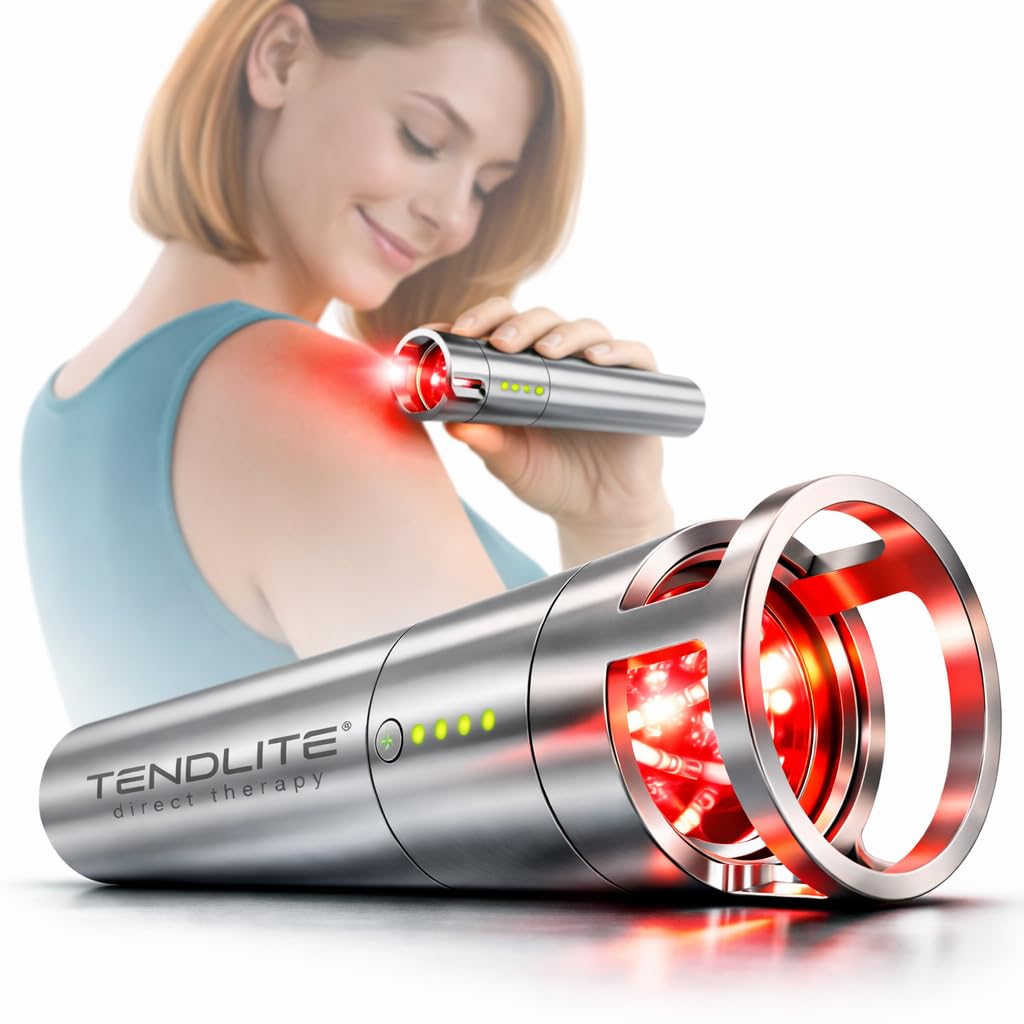
DEEP RED – Tendlite – Red Light Therapy Device ...
Buy DEEP RED – Tendlite – Red Light Therapy Device 660nm for Joint Pain Relief, Circulation Support & Skin Health | Professional-Grade for Home Use on Amazon.com ✓ FREE SHIPPING on qualified order

DGYAO Red Light & Infrared Light Therapy Belt for Knee Elbow Joint Pain Relief Flexible Wearable Wrap Deep Therapy Pad with Auto Off Timer
Buy DGYAO Red Light & Infrared Light Therapy Belt for Knee Elbow Joint Pain Relief Flexible Wearable Wrap Deep Therapy Pad with Auto Off Timer on Amazon.com ✓ FREE SHIPPING on qualified orders
Health Disclaimer
This content is for informational purposes only and does not constitute medical advice. Always consult a qualified healthcare provider before starting, stopping, or changing any supplement or medication regimen.