

Sleep Apnea and Hypertension
Sleep apnea—most commonly obstructive sleep apnea (OSA)—and hypertension have a bidirectional, clinically important relationship. OSA is highly prevalent among people with elevated blood pressure and is especially overrepresented in resistant hypertension. Repeated nocturnal airway collapse triggers intermittent hypoxia, arousals, large negative intrathoracic pressure swings, and sleep fragmentation. These events activate the sympathetic nervous system and the renin–angiotensin–aldosterone system (RAAS), impair endothelial function, increase oxidative stress and inflammation, and promote fluid shifts and arterial stiffness—all of which raise blood pressure, particularly at night. Epidemiologically, OSA independently increases the risk of developing hypertension, and 30–50% of individuals with OSA have coexisting hypertension. Among those with resistant hypertension, 60–80% may have undiagnosed OSA. Clinically, this comorbidity is associated with non-dipping nocturnal blood pressure patterns and greater cardiovascular risk. Treatment of OSA can modestly lower blood pressure. Continuous positive airway pressure (CPAP) typically reduces 24-hour blood pressure by about 2–4 mmHg overall, with larger effects in patients with resistant hypertension and in those who use CPAP for ≥4 hours per night. Oral mandibular advancement devices also improve OSA and may slightly reduce blood pressure in selected patients. Weight reduction is a cornerstone therapy that benefits both conditions; lifestyle changes, bariatric surgery, and newer anti-obesity medications (for example, GLP-1/GIP receptor agonists) improve apnea–hypopnea indices and reduce blood pressure. Management of hypertension should follow guideline-directed therapy; mineralocorticoid receptor antagonists are particularly effective in resistant hypertension and may also lessen OSA severity by reducing aldosterone-mediated upper airway edema. From a Western perspective, routine screening for OSA is recommended in those
Updated September 8, 2026This content is for informational purposes only and does not constitute medical advice. Always consult a qualified healthcare provider before starting, stopping, or changing any supplement or medication regimen.
Shared Risk Factors
Obesity and central adiposity
Strong EvidenceExcess pharyngeal fat narrows the airway; adiposity drives insulin resistance, RAAS activation, and sympathetic tone, elevating BP.
Male sex and postmenopausal status
Moderate EvidenceAnatomical and hormonal factors increase OSA risk; hormonal changes post-menopause increase both OSA and hypertension risk.
Age
Strong EvidenceUpper airway neuromuscular decline and vascular stiffening occur with age.
Alcohol and sedatives
Moderate EvidenceReduce upper-airway tone and impair ventilatory responses; increase sympathetic activity and BP variability.
Craniofacial anatomy and nasal obstruction
Moderate EvidenceRetrognathia, macroglossia, turbinate hypertrophy narrow airway; mouth breathing and poor sleep quality raise sympathetic tone.
Smoking
Moderate EvidenceAirway inflammation/edema worsens OSA; nicotine increases sympathetic tone and endothelial dysfunction.
Insulin resistance/Type 2 diabetes
Strong EvidenceMetabolic dysregulation links to OSA via fat deposition and to hypertension via RAAS/sympathetic activation.
High dietary sodium and low physical activity
Moderate EvidenceContribute to fluid retention and higher BP; rostral fluid shift at night can worsen OSA.
Chronic kidney disease
Moderate EvidenceVolume overload and uremic toxins worsen both OSA and BP control.
Hypothyroidism
Emerging ResearchMyxedema of upper airway and reduced ventilatory drive; dyslipidemia and diastolic hypertension.
Comorbidity Data
Prevalence
About 30–50% of individuals with OSA have hypertension; OSA is present in ~30–50% of hypertensive patients and in 60–80% of those with resistant hypertension.
Mechanistic Link
Intermittent hypoxia and arousals increase sympathetic activity and RAAS; negative intrathoracic pressure augments afterload; endothelial dysfunction, oxidative stress, inflammation, and nocturnal rostral fluid shifts promote non-dipping and sustained hypertension.
Clinical Implications
Screen for OSA in resistant or nocturnally non-dipping hypertension and in hypertensive patients with snoring, witnessed apneas, or daytime sleepiness. In OSA, assess ambulatory BP for nocturnal hypertension. Combine OSA therapy (CPAP, oral appliance, weight loss) with guideline-directed antihypertensives; consider mineralocorticoid receptor antagonists for resistant cases and emphasize sodium restriction, alcohol moderation, and exercise.
Sources (2)
- AHA Scientific Statement: Obstructive Sleep Apnea and Cardiovascular Disease. Circulation. 2021.
- Pedrosa RP et al. Obstructive sleep apnea: the most common secondary cause of resistant hypertension. Hypertension. 2011.
Overlapping Treatments
Weight loss (dietary changes, increased physical activity)
Strong EvidenceReduces AHI and improves sleep quality.
Lowers systolic/diastolic BP and improves dipping pattern.
Sustained adherence required; monitor for hypotension as weight drops.
CPAP therapy
Moderate EvidenceEliminates apneas/hypopneas and oxygen desaturations.
Reduces 24-h BP by ~2–4 mmHg overall; larger in resistant HTN/adherent users.
Effect size depends on nightly use ≥4 h; address mask fit and nasal symptoms.
Mandibular advancement device (oral appliance)
Emerging ResearchImproves airway patency in mild–moderate OSA.
Small BP reductions in selected patients.
Dental side effects; requires dentist oversight and follow-up titration.
Alcohol moderation and sedative review
Moderate EvidenceReduces upper-airway collapse and arousals.
Lowers BP variability and nocturnal hypertension.
Evaluate for dependence; taper sedatives safely with clinician.
Low-sodium, DASH-style diet
Moderate EvidenceLess nocturnal rostral fluid shift may lower AHI.
Clinically meaningful BP reductions.
Monitor electrolytes if combined with diuretics.
Mineralocorticoid receptor antagonists (spironolactone/eplerenone) for resistant HTN
Moderate EvidenceMay reduce AHI via decreased upper-airway edema.
Substantial BP reduction in resistant hypertension.
Monitor potassium and renal function; gynecomastia risk with spironolactone.
Bariatric surgery (for eligible patients)
Strong EvidenceLarge, sustained AHI reductions; some achieve OSA remission.
Improves BP control and can reduce medication burden.
Surgical risks; requires long-term nutritional follow-up.
GLP-1/GIP receptor agonists (e.g., tirzepatide) for obesity
Moderate EvidenceSignificantly lowers AHI and improves symptoms in obese OSA.
Reduces BP modestly via weight loss and metabolic effects.
GI side effects; monitor for gallbladder issues; cost/access considerations.
Positional therapy and myofunctional/oropharyngeal exercises
Emerging ResearchReduce supine-dependent OSA and strengthen upper-airway muscles.
May slightly improve BP by improving sleep continuity.
Adherence dependent; effects smaller than CPAP/weight loss.
Medical Perspectives
Two Ways of Seeing Health

Western
scientific · clinical
Western medicine applies science, technology, and clinical experience to treat symptoms through testing, diagnosis, and targeted intervention.
Surgeons · Pharmaceuticals · Clinical trials · Diagnostics 
Eastern
traditional · alternative
Eastern medicine focuses on treating the body naturally by applying traditional knowledge practiced for thousands of years, emphasizing balance and whole-person wellness.
Acupuncture · Herbal medicine · Yoga · Meditation
Gold Bamboo presents both perspectives side-by-side so you can make informed decisions. We don't advocate for one over the other — your health choices are yours.
Two Ways of Seeing Health
Western
scientific · clinical
Western medicine applies science, technology, and clinical experience to treat symptoms through testing, diagnosis, and targeted intervention.
Eastern
traditional · alternative
Eastern medicine focuses on treating the body naturally by applying traditional knowledge practiced for thousands of years, emphasizing balance and whole-person wellness.
Gold Bamboo presents both perspectives side-by-side so you can make informed decisions. We don't advocate for one over the other — your health choices are yours.
Western Perspective
Robust evidence links OSA to incident, sustained, and resistant hypertension via sympathetic, RAAS, endothelial, and mechanical pathways. Treating OSA—especially with adherent CPAP—and addressing excess weight and sodium intake improve blood pressure control, with the greatest BP benefits in resistant hypertension. Hypertension therapy remains guideline-directed, with attention to nocturnal BP and mineralocorticoid excess.
Key Insights
- OSA is an independent risk factor for hypertension and is highly prevalent in resistant hypertension.
- Intermittent hypoxia, arousals, and intrathoracic pressure swings drive sympathetic activation and RAAS upregulation.
- CPAP produces modest average BP reductions but larger effects in adherent and resistant-hypertension subgroups.
- Weight loss and sodium restriction benefit both OSA and hypertension; GLP-1/GIP agonists and bariatric surgery are effective options for eligible patients.
- Mineralocorticoid receptor antagonists improve resistant hypertension and can lessen OSA severity in some patients.
Treatments
- CPAP with adherence support and nasal care
- Weight management (DASH diet, calorie deficit, physical activity)
- Oral appliance therapy for CPAP-intolerant patients with mild–moderate OSA
- Mineralocorticoid receptor antagonists in resistant hypertension
- Ambulatory BP monitoring to detect nocturnal and masked hypertension
Deep Dive
From a Western medicine viewpoint, sleep apnea and hypertension share causal pathways centered on autonomic and hormonal dysregulation. Intermit... From a Western medicine viewpoint, sleep apnea and hypertension share causal pathways centered on autonomic and hormonal dysregulation. Intermittent hypoxia and sleep fragmentation heighten sympathetic output and RAAS activity, reduce nitric oxide bioavailability, and increase endothelin, fostering vasoconstriction and non-dipping nocturnal blood pressure. Negative intrathoracic pressure during obstructive events boosts left ventricular afterload, while rostral fluid shifts at night exacerbate peripharyngeal edema and airway collapsibility, reinforcing a vicious cycle of apnea and hypertension. Epidemiologic data show strong co-occurrence, especially in resistant hypertension. Clinical priorities include: 1) screening hypertensive patients—particularly resistant or nocturnal non-dippers—for OSA using validated tools and diagnostic sleep testing; 2) initiating CPAP for moderate–severe OSA with adherence support, recognizing average BP reductions of 2–4 mmHg (larger with high adherence and in resistant hypertension); 3) emphasizing weight loss via calorie control, physical activity, and reduced sodium intake; and 4) optimizing antihypertensive therapy per guidelines, with consideration of mineralocorticoid receptor antagonists. For CPAP-intolerant patients with mild–moderate OSA, oral appliances are reasonable, acknowledging smaller BP effects. Newer anti-obesity agents (e.g., tirzepatide) and bariatric surgery can deliver meaningful improvements in both apnea severity and blood pressure. Ambulatory BP monitoring helps reveal masked and nocturnal hypertension common in OSA. Together, these strategies reduce cardiovascular risk beyond symptom control.
Sources
- AHA Scientific Statement: Obstructive Sleep Apnea and Cardiovascular Disease. Circulation. 2021.
- HIPARCO Randomized Clinical Trial. JAMA. 2013.
- SAVE Trial. N Engl J Med. 2016.
- 2017 ACC/AHA Hypertension Guideline. Hypertension. 2018.
Eastern Perspective
Traditional Chinese Medicine (TCM) conceptualizes OSA as phlegm-damp accumulation with qi stagnation obstructing the airway, often compounded by Spleen qi deficiency or Kidney yang deficiency. Hypertension is frequently attributed to Liver yang rising, phlegm-heat, and yin–yang disharmony. Poor sleep and hypoxia aggravate internal wind and yang hyperactivity. Thus, strategies aim to resolve phlegm, soothe qi, tonify spleen/kidney, and calm Liver yang while improving sleep regulation.
Key Insights
- Shared TCM patterns include phlegm-damp obstruction and qi stagnation linking snoring/apneas with elevated yang and internal wind that raise BP.
- Acupuncture may modestly reduce AHI and lower BP in some patients, particularly with electroacupuncture at sympathetic-modulating points.
- Herbal formulas are individualized; classical choices target phlegm (e.g., Ban Xia Hou Po Tang) and Liver yang rising (e.g., Tian Ma Gou Teng Yin), but clinical evidence remains limited.
Treatments
- Acupuncture protocols including points such as LI4, ST36, ST40, SP6, KD3, Ren23; electroacupuncture for autonomic modulation
- Auricular acupuncture or acupressure for sleep and BP regulation
- Herbal approaches tailored to pattern (e.g., Ban Xia Hou Po Tang for phlegm/qi stagnation; Tian Ma Gou Teng Yin for Liver yang rising)
- Breathwork/qigong and weight-normalizing diet to transform phlegm-damp
Deep Dive
In Traditional Chinese Medicine, the co-occurrence of sleep apnea and hypertension is interpreted through pattern differentiation. Phlegm-damp a... In Traditional Chinese Medicine, the co-occurrence of sleep apnea and hypertension is interpreted through pattern differentiation. Phlegm-damp accumulation and qi stagnation obstruct the airway and oropharynx, leading to snoring, fragmented sleep, and daytime fatigue. Over time, impaired restorative sleep and recurrent hypoxia agitate Liver yang and generate internal wind, manifesting as headaches, irritability, and rising blood pressure. Underlying Spleen qi deficiency and, in some patients, Kidney yang or yin deficiency perpetuate phlegm formation and autonomic imbalance. Treatment aims to transform phlegm, rectify qi, calm Liver yang, and tonify deficiencies while restoring sleep architecture. Acupuncture—especially protocols incorporating points that modulate autonomic tone and resolve phlegm—has shown small reductions in apnea–hypopnea indices and blood pressure in preliminary trials, though methodological quality varies and effects are generally modest. Herbal prescriptions such as Ban Xia Hou Po Tang (phlegm/qi stagnation) or Tian Ma Gou Teng Yin (Liver yang rising/internal wind) may be considered within individualized care, with careful monitoring and coordination with biomedical therapy. Lifestyle guidance focuses on damp-transforming diets, weight normalization, breath regulation, and gentle qigong to improve airway tone and stress resilience. In practice, TCM is often used as an adjunct to CPAP, weight loss, and antihypertensives, aiming to improve adherence, sleep quality, and overall vitality while acknowledging that high-quality evidence remains limited compared with conventional treatments.
Sources
- Freire AO et al. Acupuncture for obstructive sleep apnea: randomized, sham-controlled trial. Sleep. 2007.
- Flachskampf FA et al. Acupuncture in patients with mild-to-moderate hypertension. Circulation. 2007.
- Zhang Y et al. Acupuncture for OSA: systematic review and meta-analysis. Sleep Breath. 2021.
- AHA Scientific Statement on Complementary/Alternative Therapies for Hypertension. Hypertension. 2013.
Evidence Ratings
OSA is an independent risk factor for developing and sustaining hypertension.
AHA Scientific Statement: OSA and CVD. Circulation. 2021.
OSA is present in the majority of resistant-hypertension patients.
Pedrosa RP et al. Hypertension. 2011.
CPAP therapy modestly lowers 24-hour blood pressure, with larger effects in resistant hypertension and adherent users.
HIPARCO Trial. JAMA. 2013; AHA Statement 2021.
Weight loss substantially improves OSA severity and lowers blood pressure.
AHA Statement 2021; Tirzepatide OSA SURMOUNT-OSA Trials. N Engl J Med. 2024.
Mineralocorticoid receptor antagonists improve BP and can reduce OSA severity in resistant hypertension.
Gaddam KK et al. J Clin Sleep Med. 2010.
Oral mandibular advancement devices provide small BP reductions while improving OSA in selected patients.
AASM/AADSM Oral Appliance Guideline. J Clin Sleep Med. 2015.
Acupuncture may modestly reduce AHI and BP, but evidence quality is low to moderate and heterogeneous.
Zhang Y et al. Sleep Breath. 2021; Flachskampf FA. Circulation. 2007.
Sources
- AHA Scientific Statement: Obstructive Sleep Apnea and Cardiovascular Disease. Circulation. 2021.
- Pedrosa RP et al. Obstructive sleep apnea: the most common secondary cause of resistant hypertension. Hypertension. 2011;58:811–817.
- Martínez-García MA et al. Effect of CPAP on blood pressure in patients with OSA and resistant hypertension (HIPARCO). JAMA. 2013;310:2407–2415.
- McEvoy RD et al. CPAP for OSA and cardiovascular outcomes (SAVE). N Engl J Med. 2016;375:919–931.
- Yu J et al. Effects of CPAP on blood pressure in OSA: meta-analysis of RCTs. J Clin Hypertens. 2017;19:1181–1191.
- Gaddam K et al. Spironolactone reduces severity of OSA in resistant hypertension. J Clin Sleep Med. 2010;6:363–368.
- Whelton PK et al. 2017 ACC/AHA/AAPA/ABC/ACPM/AGS/APhA/ASH/ASPC/NMA/PCNA Guideline for High Blood Pressure. Hypertension. 2018;71:e13–e115.
- Kompelli AR et al. Association of weight loss with OSA severity: systematic review and meta-analysis. Laryngoscope. 2019;129:197–205.
- Tirzepatide for obesity-related OSA (SURMOUNT-OSA). N Engl J Med. 2024.
- Ramar K et al. Clinical Practice Guideline for Oral Appliance Therapy. J Clin Sleep Med. 2015;11:773–827.
- Freire AO et al. Acupuncture in obstructive sleep apnea: randomized trial. Sleep. 2007;30:1532–1539.
- Flachskampf FA et al. Acupuncture in mild to moderate hypertension. Circulation. 2007;115:3121–3129.
- Zhang Y et al. Acupuncture for OSA: systematic review and meta-analysis. Sleep Breath. 2021;25:1219–1231.
Related Topics
Recommended Products

Sleep, Interrupted: A physician reveals the #1 reason why so many of us are sick and tired: Park MD, Steven Y.
Steven Y. Park MD ... Maybe you're stressed out and tired, and have put on a little weight. Or you have persistent pain you and your doctor can't explain. Man or woman, you may be fighting f
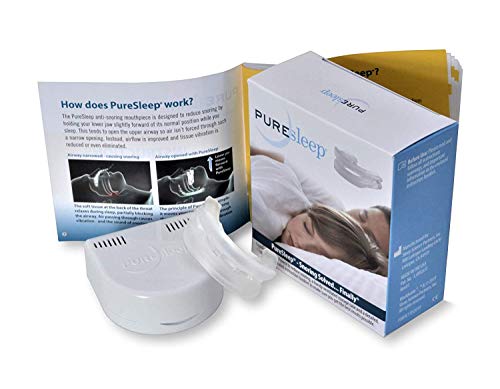
PureSleep, The Original Anti-Snoring Mouthpiece and #1 Solution Worldwide
PureSleep uses a technique called ‘mandibular repositioning’ whereby the device <strong>gently holds your lower jaw forward, opening the upper airway and eliminating the vibrations that cause snoring<
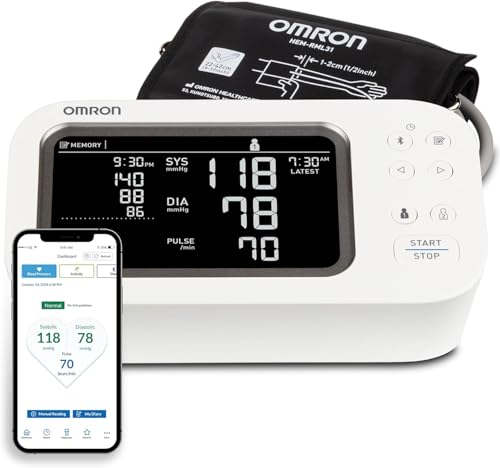
OMRON Platinum Blood Pressure Monitor for Home Use & Upper Arm Blood Pressure Cuff - #1 Doctor & Pharmacist Recommended Brand - Clinically Validated - AFib Detection - Connect App
CONFIDENCE IN EVERY READING: Monitor your heart health with the OMRON Platinum Upper Arm Blood Pressure Monitor's <strong>Advanced Accuracy with AFib Detection Technology</strong>; Store up to 10
Health Disclaimer
This content is for informational purposes only and does not constitute medical advice. Always consult a qualified healthcare provider before starting, stopping, or changing any supplement or medication regimen.