

Peripheral Neuropathy and Vitamin B12
Vitamin B12 is essential for healthy nerve function. It supports myelin maintenance, DNA synthesis, and one‑carbon (methylation) reactions that keep homocysteine and methylmalonic acid (MMA) in check. When B12 is low, MMA and homocysteine often rise, mitochondrial and axonal metabolism are disrupted, and myelin becomes vulnerable—changes that can manifest as peripheral neuropathy. Clinically, B12‑related neuropathy typically presents as symmetric numbness, tingling, and burning in a “stocking‑glove” distribution, often with loss of vibration and position sense and reduced reflexes. Gait unsteadiness and cognitive or mood changes may coexist, and severe deficiency can also affect the spinal cord (subacute combined degeneration). Compared with other causes, diabetic neuropathy often tracks with longstanding hyperglycemia and may include autonomic features; alcohol‑related neuropathy commonly includes gait ataxia and other nutritional deficits; toxin‑induced neuropathies relate to exposure history (e.g., chemotherapy, nitrous oxide); and immune etiologies (e.g., CIDP) are more likely to include progressive weakness, proximal involvement, or elevated CSF protein. Suspicion for B12 deficiency rises with vegan or very low–animal‑product diets, malabsorption (pernicious anemia, bariatric surgery), prolonged metformin or acid‑suppressing therapy, older age/atrophic gastritis, and nitrous oxide exposure. Evaluation generally includes a neurologic exam plus laboratory testing. Serum B12 is a useful screen, but levels in the low‑normal range can be misleading. If suspicion persists, MMA and homocysteine help detect functional deficiency; a complete blood count (macrocytosis) and, when indicated, intrinsic factor/parietal cell antibodies can clarify causes. Electrodiagnostic testing (EMG/NCS) is reserved for atypical, progressive, or diagnostically uncertain cases. Pitfalls include normal serum B12 despite tissue deficiency, spurious B12 elevations in liver or myeloprolifer—
Updated September 8, 2026This content is for informational purposes only and does not constitute medical advice. Always consult a qualified healthcare provider before starting, stopping, or changing any supplement or medication regimen.
Shared Risk Factors
Long-term metformin use
Strong EvidenceMetformin interferes with B12 absorption in the distal ileum, increasing risk of biochemical deficiency and neuropathic symptoms.
Chronic acid suppression (PPIs/H2 blockers)
Moderate EvidenceReduced gastric acid impairs release of food-bound B12, lowering absorption over time.
Vegan/vegetarian diets without reliable B12 sources
Strong EvidencePlant foods lack B12 unless fortified; inadequate intake gradually depletes stores.
Bariatric surgery and malabsorption (pernicious anemia, IBD, celiac)
Strong EvidenceReduced intrinsic factor or ileal absorption impairs B12 uptake.
Older age/atrophic gastritis
Strong EvidenceAchlorhydria and food‑cobalamin malabsorption become more common with age.
Nitrous oxide exposure
Strong EvidenceNitrous oxide oxidizes active cobalamin, functionally inactivating B12 enzymes.
Overlapping Treatments
Vitamin B12 replacement (high‑dose oral or intramuscular)
Strong EvidenceImproves or stabilizes deficiency‑related neuropathic symptoms; earlier treatment correlates with better recovery.
Restores biochemical sufficiency and normalizes MMA/homocysteine.
Neurologic recovery may be incomplete if deficiency is prolonged; monitor response and underlying causes.
Dietary counseling and fortified foods
Moderate EvidenceReduces recurrence risk of deficiency‑related neuropathy.
Supports adequate B12 intake in those avoiding animal products or with low appetite.
May be insufficient in malabsorption; ongoing monitoring needed.
Addressing causative factors (review metformin/acid suppression; avoid nitrous oxide misuse)
Moderate EvidencePrevents ongoing nerve injury due to persistent deficiency mechanisms.
Removes barriers to maintaining adequate B12 status.
Medication changes require clinician oversight; risks and benefits must be weighed.
Medical Perspectives
Two Ways of Seeing Health

Western
scientific · clinical
Western medicine applies science, technology, and clinical experience to treat symptoms through testing, diagnosis, and targeted intervention.
Surgeons · Pharmaceuticals · Clinical trials · Diagnostics 
Eastern
traditional · alternative
Eastern medicine focuses on treating the body naturally by applying traditional knowledge practiced for thousands of years, emphasizing balance and whole-person wellness.
Acupuncture · Herbal medicine · Yoga · Meditation
Gold Bamboo presents both perspectives side-by-side so you can make informed decisions. We don't advocate for one over the other — your health choices are yours.
Two Ways of Seeing Health
Western
scientific · clinical
Western medicine applies science, technology, and clinical experience to treat symptoms through testing, diagnosis, and targeted intervention.
Eastern
traditional · alternative
Eastern medicine focuses on treating the body naturally by applying traditional knowledge practiced for thousands of years, emphasizing balance and whole-person wellness.
Gold Bamboo presents both perspectives side-by-side so you can make informed decisions. We don't advocate for one over the other — your health choices are yours.
Western Perspective
Western medicine recognizes vitamin B12 as a neurotrophic cofactor essential to myelin integrity and axonal metabolism. Deficiency is a well‑established, reversible cause of peripheral neuropathy when treated promptly. Testing strategies combine serum B12 with functional biomarkers (MMA, homocysteine) to detect tissue‑level deficiency. Evidence supports high‑dose oral or intramuscular replacement, with adjunctive symptomatic management if neuropathic pain persists.
Key Insights
- B12 deficiency causes a predominantly sensory, length‑dependent neuropathy; severe cases may include myelopathy.
- MMA and homocysteine rise in B12 deficiency; normal serum B12 does not exclude functional deficiency.
- Metformin, long‑term acid suppression, older age, vegan diet, and malabsorption are major risk factors and justify low thresholds for testing.
- High‑dose oral B12 can be as effective as intramuscular replacement for many patients; malabsorption may require parenteral routes.
- If neuropathy persists after repletion, treat pain per guidelines (e.g., duloxetine, gabapentinoids) and reassess for alternative or coexisting causes.
Treatments
- Vitamin B12 repletion (oral high‑dose or intramuscular) with monitoring of symptoms and MMA/homocysteine
- Identify and manage underlying causes (pernicious anemia, medication‑related malabsorption, nitrous oxide exposure)
- Neuropathic pain pharmacotherapy (duloxetine, gabapentin/pregabalin, TCAs), topical lidocaine or capsaicin
- Physical therapy and fall‑prevention for proprioceptive loss
- Referral to neurology for atypical, rapidly progressive, or motor‑predominant cases and for EMG/NCS when indicated
Deep Dive
From a Western clinical lens, the relationship between vitamin B12 and peripheral neuropathy is mechanistically direct and clinically actionable... From a Western clinical lens, the relationship between vitamin B12 and peripheral neuropathy is mechanistically direct and clinically actionable. Cobalamin is required for methionine synthase and methylmalonyl‑CoA mutase—enzymes central to methylation capacity and fatty acid metabolism. When B12 is insufficient, homocysteine and methylmalonic acid accumulate, myelin maintenance falters, and distal sensory axons are particularly vulnerable. The typical presentation is a bilateral, length‑dependent sensory neuropathy with numbness, paresthesia, burning pain, and loss of vibration and proprioception; severe cases may extend to the spinal cord, producing gait ataxia and weakness. Diagnosis begins with history and examination, emphasizing diet, gastrointestinal surgery, autoimmune risk, medications (metformin, proton‑pump inhibitors), and nitrous oxide exposure. Serum B12 is a reasonable first test, but normal or low‑normal values can mask tissue deficiency; MMA and homocysteine improve diagnostic sensitivity. Macrocytosis on CBC and intrinsic‑factor/parietal cell antibodies suggest pernicious anemia. EMG/NCS and neurology referral are reserved for red flags—rapid progression, prominent motor involvement, marked asymmetry, or poor response to repletion—where alternative etiologies like CIDP, toxic, or compressive neuropathies must be excluded. Treatment centers on B12 repletion, either high‑dose oral or intramuscular, with monitoring of symptoms and biochemical markers. Evidence supports clinical improvement in neuropathic symptoms when deficiency is promptly corrected; however, the duration and severity of deficiency predict reversibility, and some patients have residual numbness or gait imbalance despite normalized labs. If pain persists, guideline‑supported agents (duloxetine, gabapentin/pregabalin, certain tricyclics) and topical lidocaine or capsaicin may be added. Fall‑prevention strategies and physical therapy help compensate for sensory loss. Prevention focuses on identifying at‑risk groups—older adults with atrophic gastritis, vegans without fortified foods, patients after bariatric surgery, and those on long‑term metformin or acid suppression—and ensuring reliable B12 sources or supplementation. Addressing causative factors (e.g., avoiding nitrous oxide misuse, reassessing chronic PPI use) reduces recurrence.
Sources
- Stabler SP. Clinical practice. Vitamin B12 deficiency. N Engl J Med. 2013;368:149-160.
- England JD et al. Practice parameter: evaluation of distal symmetric polyneuropathy. Neurology. 2009;72:185-192.
- Callaghan BC, Price RS, Feldman EL. Distal Symmetric Polyneuropathy. JAMA. 2015;314:2172-2181.
- Cochrane Review: Oral vs intramuscular vitamin B12 for deficiency. Cochrane Database Syst Rev. 2018 update of 2005 review.
- Kuzminski AM et al. Effective oral cobalamin therapy. Blood. 1998;92:1191-1198.
- Aroda VR et al. Metformin and B12 deficiency (DPPOS). Diabetes Care. 2016;39:564-572.
- Lam JR et al. Proton pump inhibitors and B12 deficiency. JAMA. 2013;310:2435-2442.
Eastern Perspective
Traditional medical systems do not use the biochemical category of vitamin B12, but they emphasize nourishment of the nervous system and vitality. In Ayurveda, neuropathic symptoms align with aggravated Vata and depletion of nervous tissue (majja dhatu), addressed with diet, tonics, and oiling therapies. Traditional Chinese Medicine (TCM) frames distal numbness and paresthesia as patterns of qi and blood deficiency or obstruction in the channels, treated with acupuncture and herbal formulas to restore flow and nourish the sinews. In East Asian biomedicine practice, methylcobalamin (a coenzyme form of B12) has been used as a neurotrophic agent, reflecting an integrative approach that blends modern pharmacology with traditional care.
Key Insights
- Dietary patterns that include nutrient‑dense animal products or fortified foods are viewed as restoring essence/jing or dhatu, conceptually resonant with preventing B12 deficiency.
- Acupuncture and moxibustion are used to improve microcirculation and nerve function in peripheral neuropathy; research suggests symptomatic benefit, though study quality varies.
- Rasayana (rejuvenative) approaches—gentle yoga, breathing practices, adequate sleep, and restorative herbs—aim to rebuild resilience and may complement biomedical B12 repletion.
- Methylcobalamin has been widely adopted in parts of Asia as a neurotrophic therapy; evidence for symptomatic improvement is mixed but suggests possible benefit in diabetic neuropathy.
Treatments
- Acupuncture and moxibustion for distal numbness and pain (often alongside biomedical B12 repletion)
- Ayurvedic dietary guidance with emphasis on nourishing, warm, easily digested foods and fortified sources when avoiding animal products
- Rasayana herbs (e.g., ashwagandha) and oil massage (abhyanga) to calm Vata and support nerve comfort (adjunctive)
- Mind‑body practices (qi gong, yoga, meditation) to reduce pain amplification and improve balance
Deep Dive
Traditional systems frame neuropathy through functional patterns rather than isolated nutrient deficits, yet their emphasis on nourishment and c... Traditional systems frame neuropathy through functional patterns rather than isolated nutrient deficits, yet their emphasis on nourishment and circulation aligns conceptually with modern B12 physiology. In Ayurveda, distal numbness and burning are expressions of aggravated Vata with depletion of nerve tissue (majja dhatu). Care aims to restore stability and lubrication via warm, grounding foods, oil therapies (abhyanga), and rasayana (rejuvenative) measures. For those avoiding animal products, modern integrative practitioners incorporate fortified foods or B12 supplementation alongside Ayurvedic diet to ensure biochemical sufficiency while honoring dietary ethics. Gentle yoga, pranayama, and adequate sleep are used to calm sensory hypersensitivity and support balance. Traditional Chinese Medicine interprets peripheral neuropathy as obstruction or deficiency within the channels—often a mix of qi and blood deficiency with damp or cold stagnation in the lower limbs. Acupuncture and moxibustion seek to restore flow, improve microcirculation, and modulate pain pathways. Contemporary clinical studies suggest acupuncture can reduce neuropathic symptoms for some patients, though heterogeneity and methodological limits temper certainty. In East Asian biomedicine, methylcobalamin is widely used as a neurotrophic agent, reflecting a pragmatic integration of traditional and modern methods; small trials suggest symptomatic benefit in diabetic neuropathy, especially when combined with lifestyle and glycemic measures. Across traditions, the most coherent integrative approach pairs assured B12 adequacy (through diet or supplements) with symptomatic modalities—acupuncture, mindful movement, massage—that may enhance comfort and function. Collaboration with biomedical clinicians ensures that red‑flag features are not missed and that persistent pain is managed with evidence‑based pharmacologic and nonpharmacologic options.
Sources
- Ju ZY et al. Acupuncture for diabetic peripheral neuropathy: meta‑analysis. Medicine (Baltimore). 2017;96:eXXXX.
- Wiffen PJ et al. B vitamins for neuropathic pain. Cochrane Database Syst Rev. 2014.
- Yamatsu M et al. Clinical experience with methylcobalamin in neuropathies. (Japanese literature, 1990s).
- Singh RH. Ayurvedic insights on Vata disorders (textbook sources).
Evidence Ratings
Vitamin B12 deficiency is a reversible cause of peripheral neuropathy; earlier treatment improves outcomes.
Stabler SP. Vitamin B12 deficiency. N Engl J Med. 2013;368:149-160; Healton EB et al. Medicine (Baltimore). 1991;70:229-245.
Methylmalonic acid and homocysteine are more sensitive than serum B12 for detecting functional deficiency.
Stabler SP. N Engl J Med. 2013;368:149-160; England JD et al. Neurology. 2009;72:185-192.
Long‑term metformin therapy increases risk of vitamin B12 deficiency; periodic assessment is advised.
Aroda VR et al. Diabetes Care. 2016;39:564-572; ADA Standards of Care (Neuropathy/Pharmacologic). 2022–2024.
Chronic proton pump inhibitor use is associated with higher odds of B12 deficiency.
Lam JR et al. JAMA. 2013;310:2435-2442.
High‑dose oral B12 can be as effective as intramuscular B12 for correcting deficiency in many patients.
Cochrane Review: Oral vs intramuscular B12. Cochrane Database Syst Rev. 2018 update; Kuzminski AM et al. Blood. 1998;92:1191-1198.
In diabetic neuropathy without clear deficiency, methylcobalamin may modestly improve symptoms, but overall evidence quality is low to moderate.
Wiffen PJ et al. B vitamins for neuropathic pain. Cochrane Database Syst Rev. 2014; additional small RCTs in East Asian literature.
Nitrous oxide exposure can precipitate functional B12 inactivation and acute neuropathy/myelopathy.
Stabler SP. N Engl J Med. 2013;368:149-160.
Delayed recognition of B12 deficiency (>6–12 months) is linked to incomplete neurologic recovery.
Healton EB et al. Medicine (Baltimore). 1991;70:229-245; Stabler SP. 2013.
Sources
- Stabler SP. Clinical practice. Vitamin B12 deficiency. N Engl J Med. 2013;368:149-160.
- Healton EB, Savage DG, Brust JC, Garrett TJ, Lindenbaum J. Neurologic aspects of cobalamin deficiency. Medicine (Baltimore). 1991;70:229-245.
- England JD, Gronseth GS, Franklin G, et al. Practice parameter: evaluation of distal symmetric polyneuropathy. Neurology. 2009;72:185-192.
- Callaghan BC, Price RS, Feldman EL. Distal Symmetric Polyneuropathy: A Review. JAMA. 2015;314:2172-2181.
- Vidal-Alaball J, Butler CC, et al. Oral vs intramuscular vitamin B12 for deficiency. Cochrane Database Syst Rev. 2018 update of 2005 review.
- Kuzminski AM, Del Giacco EJ, Allen RH, Stabler SP, Lindenbaum J. Effective oral cobalamin therapy. Blood. 1998;92:1191-1198.
- Aroda VR, Edelstein SL, et al. Metformin and vitamin B12 deficiency in DPPOS. Diabetes Care. 2016;39:564-572.
- American Diabetes Association. Standards of Medical Care in Diabetes—Neuropathy and Pharmacologic Treatment sections. 2022–2024.
- Lam JR, Schneider JL, Zhao W, Corley DA. Proton pump inhibitors and vitamin B12 deficiency. JAMA. 2013;310:2435-2442.
- Mechanick JI, et al. Clinical practice guidelines for perioperative nutrition in bariatric surgery. 2020.
- Pawlak R, Lester SE, Babatunde T. The prevalence of cobalamin deficiency among vegetarians. Eur J Clin Nutr. 2014;68:541-548.
- Wiffen PJ, Derry S, Moore RA. Vitamin B for neuropathic pain. Cochrane Database Syst Rev. 2014.
- NIH Office of Dietary Supplements. Vitamin B12 Fact Sheet. Updated 2022.
Related Topics
Recommended Products
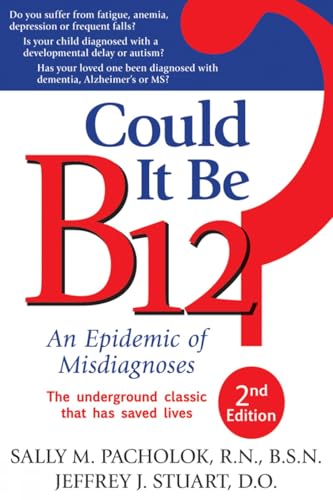
Could It Be B12?: An Epidemic of Misdiagnoses: Pacholok, Sally M, Stuart, Jeffrey J.
Sally M. Pacholok, RN, has worked as an emergency room nurse and paramedic for 25 years. A member of the Emergency Nurses Association, <strong>Pacholok diagnosed herself with vitamin B12 deficiency af

Jarrow Formulas Methyl Vitamin B12 5000 mcg - 60 Chewable Tablets, Naturally Fruit Flavored- Bioactive B12 Vitamin - Supports Cellular Energy Production, Brain Health & Metabolism - 60 Servings
Better Retained With Jarrow B12: ... and vegans (1) Convenient Chewable Tablet: <strong>Each naturally fruit flavored chewable tablet delivers 5000 micrograms (mcg) of methyl B-12</strong>; our B12 me

Life Extension B12 Elite, adenosylcobalamin, methylcobalamin, Two Active Forms for Brain Health & Dopamine Production, Non-GMO, Gluten-Free, Vegetarian, 60 lozenges
Bioactive forms of B12 – Our <strong>B12 Elite lozenges</strong> provide 500 mcg each of adenosylcobalamin and methylcobalamin, two neurologically active forms of B12. Ingredients matter – We use the
Health Disclaimer
This content is for informational purposes only and does not constitute medical advice. Always consult a qualified healthcare provider before starting, stopping, or changing any supplement or medication regimen.