

GERD and Asthma
GERD (gastroesophageal reflux disease) and asthma frequently coexist and can influence each other’s severity and management. Symptom-based studies suggest reflux complaints are very common in people with asthma, and objective testing often shows abnormal esophageal acid exposure. Mechanistically, refluxate can worsen airway hyperresponsiveness via two main pathways: microaspiration of gastric contents into the airways and a vagally mediated esophago-bronchial reflex that triggers bronchoconstriction. Conversely, asthma itself may promote reflux by increasing negative intrathoracic pressure during wheeze or cough, and some asthma medications (for example, beta-agonists and theophylline) can reduce lower esophageal sphincter tone. Shared risk factors such as obesity, obstructive sleep apnea (OSA), smoking, and late-night eating further connect the two conditions. Clinically, this relationship matters most in patients with nocturnal symptoms, refractory asthma, chronic cough, or frequent throat clearing where reflux is suspected. Treating typical GERD (heartburn, regurgitation) with lifestyle measures and acid suppression can improve reflux outcomes, but large randomized trials show that proton pump inhibitors (PPIs) do not reliably improve asthma control in the absence of clear reflux symptoms. Therefore, guidelines advise against routine empiric PPI therapy for uncontrolled asthma without GERD symptoms. When reflux is both documented (e.g., pH-impedance testing) and temporally linked to respiratory events, more targeted therapy—including lifestyle measures, optimized acid suppression, alginate therapy, or, in carefully selected cases, anti-reflux surgery—may reduce respiratory symptoms. Several overlapping interventions benefit both conditions: weight loss, smoking cessation, treating OSA with CPAP, elevating the head of the bed, and avoiding late meals can reduce nocturnal reflux and nighttime asthma awakenings. Diaphragmatic breathing and other breathing-based re
Updated September 8, 2026This content is for informational purposes only and does not constitute medical advice. Always consult a qualified healthcare provider before starting, stopping, or changing any supplement or medication regimen.
Shared Risk Factors
Obesity
Strong EvidenceExcess abdominal pressure promotes reflux by increasing gastroesophageal gradient and is an established risk factor for asthma incidence and poor control.
Hiatal hernia
Moderate EvidenceAnatomic disruption of the gastroesophageal junction facilitates reflux and microaspiration that can irritate airways.
Smoking and vaping
Strong EvidenceNicotine lowers LES tone and increases airway inflammation and hyperresponsiveness.
High-dose bronchodilators/theophylline
Moderate EvidenceThese agents can reduce LES tone or delay gastric emptying, potentially increasing reflux episodes.
Obstructive sleep apnea (OSA)
Moderate EvidenceNegative intrathoracic pressure swings and arousals in OSA promote nocturnal reflux and worsen asthma control.
Alcohol, large/late meals, trigger foods
Moderate EvidenceThese factors increase transient LES relaxations and gastric distention; alcohol may also provoke asthma in some individuals.
Psychological stress/anxiety
Emerging ResearchAutonomic arousal heightens reflux sensitivity and can trigger bronchospasm and hyperventilation.
Comorbidity Data
Prevalence
Symptoms of GERD are reported in roughly 30–60% of people with asthma; objective testing (pH or pH-impedance) shows abnormal acid exposure in about 30–50%. Meta-analyses suggest patients with GERD have higher odds of asthma (odds ratio ~1.6–1.7) compared with those without GERD.
Mechanistic Link
Two main pathways are implicated: (1) microaspiration of gastric contents causing airway inflammation and bronchospasm; (2) a vagally mediated esophago-bronchial reflex in response to distal esophageal acid that increases airway resistance. Asthma can also predispose to reflux via increased negative intrathoracic pressure during bronchospasm/cough, and certain asthma medications reduce LES tone.
Clinical Implications
Evaluate reflux in asthma patients with nocturnal symptoms, refractory cough/wheeze, or frequent throat symptoms. Treating symptomatic GERD improves GI outcomes and may reduce respiratory symptoms in selected patients, but routine PPIs do not improve asthma control without reflux symptoms. Consider lifestyle measures (weight loss, head-of-bed elevation, meal timing), optimize asthma therapy, assess for OSA, and use objective reflux testing before anti-reflux surgery.
Sources (4)
- ACG Clinical Guideline: Diagnosis and Management of GERD (Katz et al., 2022)
- Havemann et al., Gut, 2007
- GINA Strategy Report, 2024
- Mastronarde et al., N Engl J Med, 2009
Overlapping Treatments
Weight loss (5–10% body weight)
Strong EvidenceReduces reflux episodes, symptom burden, and can improve esophageal acid exposure.
Improves asthma control, symptoms, and quality of life; may reduce exacerbations.
Sustain with dietary quality, physical activity, and behavioral support; monitor for nutritional needs.
Head-of-bed elevation and avoiding late meals (2–3 h before sleep)
Moderate EvidenceLowers nocturnal reflux by using gravity and reducing postprandial acid exposure.
Can reduce nighttime cough/wheeze when reflux is a trigger, improving sleep quality.
Use blocks or a wedge pillow; extra pillows alone are less effective.
Treat OSA with CPAP when present
Moderate EvidenceDecreases nocturnal acid exposure and reflux episodes.
Improves asthma control and reduces nocturnal symptoms in patients with OSA.
Requires adherence; ensure mask fit and humidification to enhance tolerance.
Smoking cessation
Strong EvidenceImproves LES function and reduces reflux symptoms.
Improves lung function trajectory and reduces exacerbations.
Combine behavioral support with pharmacotherapy when appropriate.
Proton pump inhibitors (PPIs) for symptomatic GERD
Moderate EvidenceMost effective acid suppression for healing esophagitis and controlling typical GERD.
Do not consistently improve asthma control unless reflux is clearly driving respiratory symptoms.
Use the lowest effective dose; reassess need periodically; consider pH-impedance if symptoms persist.
Alginate therapy after meals/bedtime
Emerging ResearchForms a raft barrier to reduce postprandial reflux; helpful in regurgitation and LPR-like symptoms.
May lessen reflux-triggered cough/wheeze, especially nocturnally.
Adjunctive to lifestyle or PPI; limited data for direct asthma outcomes.
Diaphragmatic breathing exercises
Emerging ResearchCan reduce transient LES relaxations and reflux symptoms.
Improves dyspnea perception and anxiety; may aid asthma control as adjunct therapy.
Best taught by trained therapists; practice consistency matters.
Anti-reflux surgery (e.g., laparoscopic fundoplication) in selected, objectively proven reflux with respiratory correlation
Moderate EvidenceDurable control of regurgitation and acid exposure.
May improve cough/wheeze in a subset with reflux-related respiratory symptoms.
Requires careful selection and preoperative testing; carries surgical risks and potential gas-bloat/dysphagia.
Medical Perspectives
Two Ways of Seeing Health

Western
scientific · clinical
Western medicine applies science, technology, and clinical experience to treat symptoms through testing, diagnosis, and targeted intervention.
Surgeons · Pharmaceuticals · Clinical trials · Diagnostics 
Eastern
traditional · alternative
Eastern medicine focuses on treating the body naturally by applying traditional knowledge practiced for thousands of years, emphasizing balance and whole-person wellness.
Acupuncture · Herbal medicine · Yoga · Meditation
Gold Bamboo presents both perspectives side-by-side so you can make informed decisions. We don't advocate for one over the other — your health choices are yours.
Two Ways of Seeing Health
Western
scientific · clinical
Western medicine applies science, technology, and clinical experience to treat symptoms through testing, diagnosis, and targeted intervention.
Eastern
traditional · alternative
Eastern medicine focuses on treating the body naturally by applying traditional knowledge practiced for thousands of years, emphasizing balance and whole-person wellness.
Gold Bamboo presents both perspectives side-by-side so you can make informed decisions. We don't advocate for one over the other — your health choices are yours.
Western Perspective
Western medicine recognizes a bidirectional association between GERD and asthma mediated by microaspiration and vagal reflexes, with shared risk factors such as obesity and OSA. Management prioritizes evidence-based GERD care for typical symptoms and targeted evaluation when respiratory symptoms suggest reflux involvement. Routine PPIs for asthma without GERD symptoms are not recommended; instead, lifestyle measures, comorbidity control, and objective testing guide therapy.
Key Insights
- GERD symptoms are common in asthma, but causality varies by patient.
- PPIs heal esophagitis and relieve GERD but do not reliably improve asthma control absent reflux symptoms.
- Objective testing (pH-impedance) helps link reflux events to cough/wheeze before considering surgery.
- Weight loss, OSA treatment, head-of-bed elevation, and meal timing benefit both conditions, especially nocturnally.
- Some asthma medications can worsen reflux; mitigate with GERD measures if high-dose bronchodilators/theophylline are required.
Treatments
- Lifestyle: weight loss, smoking cessation, head-of-bed elevation, avoid late meals and triggers.
- Medical: PPIs for symptomatic GERD; consider alginates; H2 blockers at bedtime for nocturnal acid breakthrough in select cases; baclofen for refractory regurgitation with caution.
- Comorbidity management: diagnose/treat OSA with CPAP.
- Procedural: antireflux surgery only after objective confirmation and appropriate selection.
Deep Dive
From a Western standpoint, GERD and asthma share epidemiologic and mechanistic links. Refluxate can aggravate airway hyperresponsiveness by dire... From a Western standpoint, GERD and asthma share epidemiologic and mechanistic links. Refluxate can aggravate airway hyperresponsiveness by direct microaspiration or through an esophago-bronchial vagal reflex, while the mechanical and pharmacologic milieu of asthma (increased negative intrathoracic pressure during bronchospasm, frequent cough, and use of bronchodilators/theophylline) can promote reflux. Observational studies and pH monitoring document higher rates of reflux in asthma, but large randomized trials have tempered initial enthusiasm for routine antireflux therapy as an asthma treatment. Proton pump inhibitors remain first-line for typical GERD, yet they do not reliably improve lung function or reduce exacerbations when GERD symptoms are absent. As a result, modern guidance favors targeted evaluation: consider reflux when asthma is nocturnal, cough-predominant, or refractory despite guideline-directed therapy. Objective testing (esophageal pH–impedance) is valuable before contemplating anti-reflux surgery, especially if respiratory symptoms predominate. Pragmatically, management emphasizes shared, high-yield interventions. Weight loss (when overweight) and smoking cessation benefit both conditions. Address sleep-related contributors: elevate the head of the bed, avoid late meals, and diagnose/treat OSA with CPAP, which can lessen both nocturnal reflux and asthma symptoms. For patients with documented reflux-respiratory linkage, options include optimized acid suppression, alginate therapy, and, in carefully selected cases, anti-reflux surgery. Throughout, optimize asthma control per GINA (inhaled corticosteroid–containing therapy, trigger reduction, vaccines), and reassess GERD contributions if symptoms persist, rather than assuming a unidirectional cause-and-effect.
Sources
- ACG Clinical Guideline: Diagnosis and Management of GERD (Katz et al., 2022)
- GINA Strategy Report, 2024
- Mastronarde et al., N Engl J Med, 2009
- Chan et al., Am J Gastroenterol, 2011
- Green et al., Arch Intern Med, 2003
Eastern Perspective
In traditional Chinese medicine (TCM), GERD is often seen as rebellious Stomach Qi with patterns such as Liver Qi stagnation overacting on the Stomach, Phlegm-Heat, or Spleen Qi deficiency. Asthma is commonly attributed to Phlegm obstructing the Lungs, Lung Qi deficiency, or Kidney deficiency failing to grasp Qi. The two conditions intersect through impaired Spleen transformation leading to Phlegm, upward rebellion of Stomach Qi aggravating the chest and throat, and Liver–Lung–Stomach disharmony. Therapy seeks to rectify Qi flow, transform Phlegm, harmonize the Stomach, and support Lung/Spleen function.
Key Insights
- Pattern differentiation drives care; common combined patterns include Liver overacting on Stomach with Phlegm affecting the Lungs.
- Dietary modification (warm, cooked, less greasy/spicy, smaller evening meals) and stress regulation are foundational.
- Acupuncture is used to descend rebellious Qi and open the chest; breathing/Qigong complements this by smoothing Qi movement.
- Classical formulas may be modified to address overlapping presentations (e.g., descend Stomach Qi, transform Phlegm, relieve wheeze).
Treatments
- Acupuncture points often considered: Ren12, Ren13, PC6, ST36 for GERD; LU7, ST40, BL13, Dingchuan for asthma (individualized).
- Herbal strategies tailored to pattern: Xuan Fu Dai Zhe Tang (rebellious Stomach Qi), Ban Xia Hou Po Tang (plum-pit Qi/Phlegm), Ding Chuan Tang (Phlegm-Heat wheeze), Liu Jun Zi Tang (Spleen Qi deficiency).
- Breathwork/Qigong and abdominal/diaphragmatic breathing to smooth Qi and support the diaphragm.
- Diet and meal-timing adjustments to reduce nighttime symptoms.
Deep Dive
Traditional Chinese medicine interprets GERD and asthma through interrelated imbalances of Qi, Phlegm, and organ systems. Rebellious Stomach Qi ... Traditional Chinese medicine interprets GERD and asthma through interrelated imbalances of Qi, Phlegm, and organ systems. Rebellious Stomach Qi rising upward (often from Liver Qi constraint or Spleen Qi deficiency generating Phlegm) can harass the chest and throat, aggravating cough or wheeze. Simultaneously, Phlegm obstructing the Lungs, or weakness of Lung/Kidney Qi, may predispose to breathlessness and poor containment of Qi, allowing gastric Qi to counterflow. Treatment seeks to harmonize the middle (support Spleen, descend Stomach Qi), regulate the Liver to ease constraint, transform Phlegm, and support the Lungs. In practice, this may include acupuncture to descend Qi and open the chest (e.g., PC6, Ren12/13, ST36 for the Stomach; LU7, ST40, BL13, Dingchuan for the Lungs), breathwork and diaphragmatic training to coordinate the diaphragm, and individualized herbal formulas that address combined patterns (such as Xuan Fu Dai Zhe Tang for rebellious Stomach Qi, Ban Xia Hou Po Tang for Phlegm-constrained counterflow, or Ding Chuan Tang for Phlegm-Heat wheeze). Dietary and lifestyle guidance—smaller evening meals, warm cooked foods, avoidance of greasy/spicy triggers, and stress regulation—align with both TCM principles and Western reflux hygiene. While clinical experience in TCM supports these approaches, modern evidence remains limited and heterogeneous. Accordingly, TCM interventions are best viewed as adjuncts to, not replacements for, guideline-directed asthma and GERD care. Collaboration with qualified practitioners, attention to herb–drug interactions, and monitoring of objective outcomes (symptom diaries, nocturnal awakenings, rescue inhaler use) can integrate traditional strategies safely with conventional management.
Sources
- Maciocia G. The Foundations of Chinese Medicine, 2nd ed.
- NCCIH: Acupuncture—In Depth (2022 update)
Evidence Ratings
GERD symptoms and abnormal esophageal acid exposure are more common in people with asthma than in the general population.
Havemann et al., Gut, 2007
PPIs do not consistently improve asthma control in patients without typical GERD symptoms.
Mastronarde et al., N Engl J Med, 2009
Weight loss improves both GERD symptoms and asthma control.
ACG Guideline 2022; GINA 2024
Treating OSA with CPAP reduces nocturnal reflux events and improves asthma control in patients with OSA.
Green et al., Arch Intern Med, 2003; GINA 2024
Head-of-bed elevation and avoiding late meals reduce nocturnal reflux and may lessen nocturnal asthma when reflux-triggered.
ACG Guideline 2022
Beta-agonists and theophylline can reduce LES tone and may exacerbate reflux.
ACG Guideline 2022 (medications affecting LES)
Alginate therapy reduces postprandial reflux; its effect on asthma is indirect.
Leiman et al., Dis Esophagus, 2017
Anti-reflux surgery can improve respiratory symptoms in carefully selected patients with objectively proven reflux-related respiratory disease.
ACG Guideline 2022; selected surgical series
Diaphragmatic breathing can reduce reflux symptoms and TLESRs and may aid asthma as adjunct therapy.
Eherer et al., Am J Gastroenterol, 2012
Sources
- Katz PO, Dunbar KB, Schnoll-Sussman FH, et al. ACG Clinical Guideline: Diagnosis and Management of Gastroesophageal Reflux Disease. Am J Gastroenterol. 2022.
- Global Initiative for Asthma (GINA). Global Strategy for Asthma Management and Prevention, 2024.
- Mastronarde JG, et al. Efficacy of Esomeprazole for Treatment of Poorly Controlled Asthma. N Engl J Med. 2009;360:1487-1499.
- Havemann BD, Henderson CA, El-Serag HB. The association between GERD and asthma: a systematic review. Gut. 2007;56:1654-1664.
- Chan WW, Chiou E, Obstein KL, et al. The effect of proton pump inhibitors on asthma: a meta-analysis. Am J Gastroenterol. 2011;106:973-980.
- Littner MR, et al. Lansoprazole for gastroesophageal reflux-associated asthma: a randomized, placebo-controlled trial. Chest. 2005;128:1128-1135.
- Green BT, Broughton WA, O’Connor JB. Marked improvement in nocturnal gastroesophageal reflux in patients with obstructive sleep apnea treated with CPAP. Arch Intern Med. 2003;163:41-45.
- Leiman DA, Riff BP, Morgan S, et al. Alginate therapy is effective treatment for GERD symptoms: systematic review and meta-analysis. Dis Esophagus. 2017;30:1-9.
- Eherer AJ, Netolitzky F, Högenauer C, et al. Positive effect of abdominal breathing exercise on gastroesophageal reflux disease: a randomized, controlled study. Am J Gastroenterol. 2012;107:372-378.
- Maciocia G. The Foundations of Chinese Medicine. 2nd ed. Elsevier; 2005.
- NCCIH. Acupuncture: In Depth. Updated 2022.
Related Topics
Recommended Products
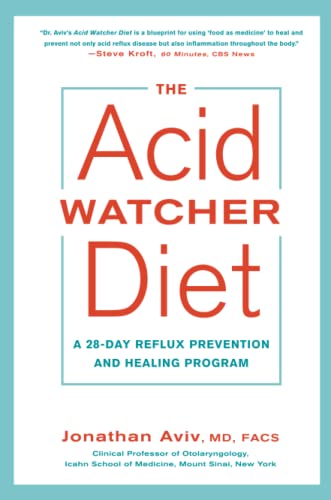
The Acid Watcher Diet: A 28-Day Reflux Prevention and Healing Program: Aviv MD FACS, Jonathan
Jonathan Aviv, <strong>a leading authority on the diagnosis and treatment of acid reflux disease</strong>, helps readers identify those often misunderstood symptoms while providing a proven solution f
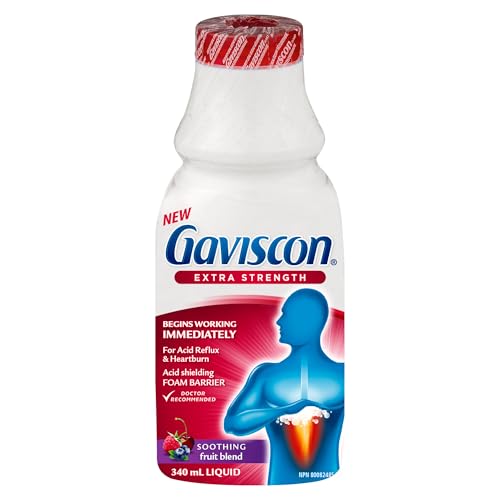
Gaviscon Gaviscon Extra Strength Liquid Fruit | Long-Lasting Acid Reflux and Heartburn Relief | 340ml 1 Count
Medicinal Ingredients: <strong>375 mg Sodium Alginate (Derived from Brown Seaweed),</strong> 150 mg Calcium Carbonate, 150 mg Aluminum Hydroxide/ Teaspoon (5 ml).

MedCline Reflux Relief System, Bed Wedge Pillow for Acid Reflux and GERD Relief, Therapeutic Body Pillow with Insert and Covers, Inclined Sleep Position with Arm Pocket, Large for 6'0" or Taller
<strong>It includes an acid reflux and GERD pillow, body pillow, small inserts, and removable, washable covers</strong>. Size large system fits individuals 6’0” or taller in height. Wedge dimensions a
Health Disclaimer
This content is for informational purposes only and does not constitute medical advice. Always consult a qualified healthcare provider before starting, stopping, or changing any supplement or medication regimen.