

Chemotherapy-Induced Peripheral Neuropathy (CIPN) and Acupuncture
Chemotherapy-induced peripheral neuropathy (CIPN) is a common side effect of agents such as taxanes, platinum compounds, vinca alkaloids, and bortezomib. Symptoms include burning or shooting pain, numbness, tingling, cold sensitivity, and loss of balance or dexterity. Meta-analytic estimates suggest up to two-thirds of patients experience CIPN during treatment and roughly a third have persistent symptoms months later, affecting function, safety, and quality of life. Acupuncture is a traditional East Asian therapy that stimulates defined points on the body—by manual needling, electroacupuncture (needles with gentle electrical current), or auricular (ear) acupuncture—to modulate pain and other symptoms. Why it might help: Experimental and clinical research indicates acupuncture can influence neuroplasticity and pain signaling, including endogenous opioid release, descending inhibitory pathways, and cortical processing. It may dampen neuroinflammation by modulating glial activity and cytokines, and locally can increase microcirculation and neurotrophic signaling—mechanisms that plausibly relate to neuropathic symptoms like pain and dysesthesia. What studies show: Small randomized and pilot trials, along with observational studies, suggest acupuncture may reduce CIPN pain and tingling and improve patient-reported function and quality of life. Some studies report benefits on standardized measures (e.g., FACT/GOG-Ntx, EORTC QLQ-CIPN20), with electroacupuncture showing promise. However, findings are mixed and often limited by small sample sizes, short follow-up, heterogeneity of acupuncture protocols, and challenges with blinding/sham controls. Systematic reviews conclude that acupuncture is a reasonable adjunct for select patients but the overall certainty of benefit remains low to moderate. Major oncology guidelines acknowledge interest and safety but stop short of firm recommendations due to limited high-quality evidence specific to CIPN. Safety and coordination: Acu
Updated September 8, 2026This content is for informational purposes only and does not constitute medical advice. Always consult a qualified healthcare provider before starting, stopping, or changing any supplement or medication regimen.
Medical Perspectives
Two Ways of Seeing Health

Western
scientific · clinical
Western medicine applies science, technology, and clinical experience to treat symptoms through testing, diagnosis, and targeted intervention.
Surgeons · Pharmaceuticals · Clinical trials · Diagnostics 
Eastern
traditional · alternative
Eastern medicine focuses on treating the body naturally by applying traditional knowledge practiced for thousands of years, emphasizing balance and whole-person wellness.
Acupuncture · Herbal medicine · Yoga · Meditation
Gold Bamboo presents both perspectives side-by-side so you can make informed decisions. We don't advocate for one over the other — your health choices are yours.
Two Ways of Seeing Health
Western
scientific · clinical
Western medicine applies science, technology, and clinical experience to treat symptoms through testing, diagnosis, and targeted intervention.
Eastern
traditional · alternative
Eastern medicine focuses on treating the body naturally by applying traditional knowledge practiced for thousands of years, emphasizing balance and whole-person wellness.
Gold Bamboo presents both perspectives side-by-side so you can make informed decisions. We don't advocate for one over the other — your health choices are yours.
Western Perspective
Western medicine views acupuncture for CIPN as a promising but still investigational adjunct. CIPN stems from neurotoxic injury to peripheral nerves and dorsal root ganglia, leading to pain, paresthesias, and sensory loss. Acupuncture may modulate nociceptive processing, neuroinflammation, and local perfusion, potentially easing symptoms. Clinical guidance emphasizes realistic expectations and integration with standard care (e.g., duloxetine for painful CIPN), while noting safety considerations unique to oncology.
Key Insights
- CIPN prevalence is high during chemotherapy and persists in a substantial minority of survivors, impairing function and quality of life.
- Mechanistically, acupuncture may engage endogenous opioids, serotonergic/noradrenergic pathways, and anti-inflammatory effects relevant to neuropathic pain.
- Randomized and pilot trials show symptom improvements versus sham/usual care in some studies, but results are inconsistent and often underpowered.
- Systematic reviews rate the evidence as low to moderate certainty due to small samples, heterogeneity, and blinding limitations.
- Safety in oncology populations appears acceptable with trained practitioners; attention to neutropenia, thrombocytopenia, lymphedema risk, ports/lines, and irradiated skin is essential.
Treatments
- Duloxetine for painful CIPN (guideline-supported)
- Acupuncture or electroacupuncture as adjunctive symptom management
- Physical/occupational therapy and balance training
- Topical agents (e.g., lidocaine/capsaicin), non-opioid analgesics as appropriate
- Exercise and functional rehabilitation
Deep Dive
From a western clinical standpoint, chemotherapy-induced peripheral neuropathy arises when neurotoxic agents injure peripheral sensory axons and... From a western clinical standpoint, chemotherapy-induced peripheral neuropathy arises when neurotoxic agents injure peripheral sensory axons and dorsal root ganglia. Patients typically report burning pain, tingling, numbness, cold sensitivity, and impaired balance or dexterity. Meta-analytic data indicate a high incidence during treatment and a meaningful proportion with persistent symptoms months to years later. In this context, the appeal of acupuncture is twofold: a favorable safety profile and plausible biological mechanisms for neuromodulation. Experimental studies show acupuncture can trigger endogenous opioid release, enhance descending inhibitory control (serotonergic and noradrenergic), modulate spinal cord and cortical pain processing, and reduce neuroinflammatory mediators—mechanisms that map onto known drivers of neuropathic pain and dysesthesia. Locally, needling can increase microcirculation and influence neurotrophic signaling, potentially relevant to numbness and cold sensitivity. Clinically, the evidence base for acupuncture in CIPN includes small randomized and pilot trials and observational cohorts. Several studies report improvements in patient-reported outcomes (e.g., FACT/GOG-Ntx, EORTC QLQ-CIPN20) and numeric pain ratings, with electroacupuncture sometimes demonstrating stronger effects. However, results are not uniformly positive, and the literature is limited by small samples, heterogeneity of acupuncture protocols and chemotherapy exposures, short follow-up, and the inherent difficulty of blinding with credible sham controls. Systematic reviews synthesize these data as suggestive of benefit but emphasize low to moderate certainty. Current guidelines endorse duloxetine for painful CIPN and recognize acupuncture as a reasonable adjunct when delivered by credentialed practitioners and coordinated with oncology care. Safety considerations for oncology patients are specific. With neutropenia or immunosuppression, meticulous sterile technique is mandatory; with thrombocytopenia or anticoagulation, shallow needling and pressure hemostasis may be necessary, and treatment may be deferred at very low platelet counts. Avoid needling through compromised skin (e.g., radiation dermatitis, active infection) and near central lines or tissue at risk for lymphedema. When used thoughtfully, reported adverse events are uncommon and mild. Overall, acupuncture can be considered as part of a multimodal CIPN strategy that also includes pharmacologic options, physical and occupational therapy, balance training, and exercise. Patients benefit from clear expectations about the uncertain but promising evidence and the need for ongoing evaluation of symptom change.
Sources
- Seretny M et al. Ann Oncol. 2014;25:843-850.
- Loprinzi CL et al. J Clin Oncol. 2020;38:3325-3348 (ASCO Guideline).
- NCCN Survivorship Guidelines. Version 2024.
- Support Care Cancer. 2021. Systematic review/meta-analysis of acupuncture for CIPN.
- MacPherson H et al. BMJ. 2017. Acupuncture safety review.
- Lavoie Smith EM et al. JAMA. 2013;309:1359-1367 (duloxetine for CIPN).
Eastern Perspective
Traditional Chinese Medicine (TCM) conceptualizes CIPN as a disturbance of Qi and Blood in the channels of the limbs, often involving patterns such as Qi and Blood deficiency, Liver–Kidney Yin deficiency, and obstruction by Cold-Damp or Wind. Needling along affected meridians aims to restore flow, nourish the channels, and dispel pathogenic factors. Electroacupuncture may be chosen to strongly stimulate distal channels; auricular points can calm the shen and modulate pain. Treatment is individualized to the patient’s pattern and cancer care context.
Key Insights
- Pattern differentiation guides point selection (e.g., tonify Spleen/Kidney for deficiency; move Qi/Blood to relieve stasis; warm channels if Cold is present).
- Distal points (e.g., LI4, LI11, SJ5, GB34, ST36, SP6, LV3) and local points on hands/feet (Baxie/Bafeng) are commonly used; electroacupuncture may enhance analgesia.
- Auricular acupuncture (e.g., Shenmen, Point Zero, sympathetic, lumbar/sciatic) is a gentle adjunct when distal needling is constrained.
- Moxibustion is traditionally used to warm channels but should be applied cautiously or avoided over insensate skin to prevent burns.
- Integration with biomedical care and strict sterile technique is emphasized in modern practice.
Treatments
- Manual acupuncture along upper/lower limb meridians
- Electroacupuncture targeting painful or numb areas
- Auricular acupuncture for pain modulation and anxiety/sleep
- Adjunctive TCM lifestyle guidance (gentle movement, warmth) with oncology coordination
Deep Dive
Within Traditional Chinese Medicine, CIPN is interpreted as a disruption of the harmonious flow of Qi and Blood through the channels of the limb... Within Traditional Chinese Medicine, CIPN is interpreted as a disruption of the harmonious flow of Qi and Blood through the channels of the limbs. The symptom constellation—numbness, tingling, stabbing pain, and cold sensitivity—may reflect patterns such as Qi and Blood deficiency (leading to poor nourishment of the channels), Liver–Kidney Yin deficiency (insufficient essence to moisten and soothe the sinews), or obstruction by Wind, Cold, and Damp (blocking the collaterals). Treatment seeks to restore free flow, warm and nourish the channels, and calm the shen. Point selection is individualized: commonly used points include LI4, LI11, SJ5, GB34, ST36, SP6, and LV3 for moving Qi and Blood and supporting Spleen–Kidney; local points on the hands and feet, such as Baxie and Bafeng, address distal paresthesias. Electroacupuncture is often chosen when stronger stimulation is appropriate, aligning with modern understandings of neuromodulation. Auricular acupuncture (e.g., Shenmen, Point Zero, sympathetic, and limb-related points) can complement body points, particularly when limb needling is limited by skin integrity or lymphedema risk. In contemporary integrative oncology, TCM principles are balanced with biomedical safety imperatives: strict single-use sterile needles, gentle techniques in frail or thrombocytopenic patients, and avoidance of needling through compromised skin or near ports. While moxibustion is traditionally applied for Cold patterns, practitioners exercise caution or avoid it over insensate skin to prevent burns. Clinical observations and emerging trials suggest patients may experience reduced tingling and pain and better function over a course of regular treatments. Practitioners monitor changes with standardized scales and adjust protocols based on patient response and evolving pattern differentiation. This collaborative, individualized approach—rooted in TCM theory and informed by modern evidence—aims to relieve suffering and improve quality of life while remaining closely coordinated with the oncology team.
Sources
- WHO Standard Acupuncture Point Locations. 2008.
- Maciocia G. The Foundations of Chinese Medicine. 3rd ed. 2015.
- China Association of Acupuncture-Moxibustion practice guidelines (channel-based approaches).
- Support Care Cancer. 2021. Systematic review of acupuncture for CIPN.
Evidence Ratings
CIPN affects most patients during chemotherapy and about one-third months after treatment, impairing function and quality of life.
Seretny M et al. Ann Oncol. 2014;25:843-850.
Duloxetine reduces painful CIPN compared with placebo and is guideline-supported.
Lavoie Smith EM et al. JAMA. 2013;309:1359-1367; ASCO 2020 Guideline.
Acupuncture may reduce CIPN pain and tingling versus sham/usual care in small randomized and pilot trials, but overall certainty is low to moderate.
Support Care Cancer. 2021. Systematic review/meta-analysis of acupuncture for CIPN; NCCN Survivorship 2024.
Electroacupuncture shows signals of benefit for neuropathic symptoms and function in CIPN in early-phase trials.
Integr Cancer Ther. 2019–2022. Pilot studies summarized in systematic reviews.
Auricular acupuncture can modestly improve neuropathic pain in some studies, with limited CIPN-specific data.
Systematic reviews of acupuncture for neuropathic pain and small oncology pilots.
Acupuncture is generally safe when performed by trained practitioners using sterile technique; serious adverse events are rare.
MacPherson H et al. BMJ. 2017. Safety of acupuncture review.
Proposed mechanisms include modulation of endogenous opioids and descending inhibitory pathways relevant to neuropathic pain.
Zhang R, Lao L, Ren K, Berman BM. Anesth Analg. 2014. Mechanisms of acupuncture analgesia.
Acupuncture may attenuate neuroinflammatory signaling implicated in neuropathic pain.
Ji RR et al. J Clin Invest. 2018 (neuroinflammation in pain); mechanistic studies referenced by NCCIH/NIH.
Sources
- Seretny M, Currie GL, Sena ES, et al. Incidence, prevalence, and predictors of CIPN. Ann Oncol. 2014;25(4):843-850.
- Loprinzi CL, Lacchetti C, Bleeker J, et al. Prevention and Management of CIPN in Survivors of Adult Cancers: ASCO Guideline Update. J Clin Oncol. 2020;38(28):3325-3348.
- NCCN Clinical Practice Guidelines in Oncology: Survivorship. Version 2024.
- Supportive Care in Cancer. 2021. Systematic review and meta-analysis of acupuncture for CIPN.
- MacPherson H, et al. Adverse events of acupuncture: a systematic review and meta-analysis. BMJ. 2017.
- Bao T, Zhang R, Badros A, Lao L. Acupuncture for treatment of bortezomib-induced peripheral neuropathy: case series. Pain Res Treat. 2014.
- Zhang R, Lao L, Ren K, Berman BM. Mechanisms of acupuncture analgesia. Anesth Analg. 2014.
- Ji RR, Nackley A, Huh Y, Terrando N, Maixner W. Neuroinflammation and central sensitization in chronic pain. J Clin Invest. 2018.
Related Topics
Recommended Products

Integrative Oncology (Weil Integrative Medicine Library)
Donald I. Abrams Chief, Hematology-Oncology, San Francisco General Hospital Integrative Oncology, UCSF Osher Center for Integrative Medicine Professor of Clinical Medicine, University of California Sa

NAO Wellness Stainless Steel Ear Seeds - Auriculotherapy Seeds Self-Care Acupressure Beads with 40+ Solutions – 20 Ear Seeds Acupuncture Kit – Suitable for Adults and Kids of Any Age
NAO Wellness Stainless Steel Ear Seeds- Auriculotherapy Seeds Self-Care Acupressure Beads with 10+ Solutions – 60 Acupuncture Steel Ear Seeds – 5 Months of Supply · 1200Pcs Ear Seeds Acupuncture Kit,
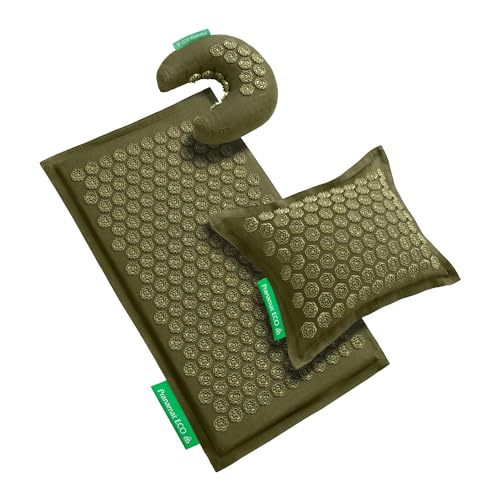
Pranamat Acupressure Large Mat with Regular & Moon Pillow Set, Premium Acupressure Therapy for Pain Relief and Relaxation, Handcrafted in Europe with Sustainable and Natural Materials (Amber)
HANDCRAFTED WITH PREMIUM, ECO-FRIENDLY MATERIALS: This acupuncture mat is <strong>ethically made using 100% natural linen, cotton, and coconut fiber</strong> for a sustainable, skin-safe experience.
Health Disclaimer
This content is for informational purposes only and does not constitute medical advice. Always consult a qualified healthcare provider before starting, stopping, or changing any supplement or medication regimen.