

Bell's palsy and Acupuncture
Bell’s palsy is an acute, usually unilateral facial nerve (CN VII) paralysis that causes sudden facial droop, inability to close the eye fully, altered taste, and hyperacusis. It is thought to result from inflammation and swelling of the facial nerve within the narrow facial canal, often after a viral prodrome. Diagnosis is clinical after excluding other causes of facial weakness. Most people begin to improve within a few weeks, and 70–85% recover fully within three to six months, though some have residual weakness or synkinesis. Early treatment matters: oral corticosteroids started within 72 hours improve the chance of complete recovery. Red flags that warrant urgent medical care include severe or atypical headache, double vision, limb weakness or numbness, chest pain, confusion, speech difficulty, vesicular rash around the ear (possible Ramsay Hunt syndrome), progressively worsening or bilateral facial weakness, or signs of corneal injury from incomplete eye closure. Acupuncture is a traditional East Asian modality used for facial paralysis with the aim of improving nerve function, circulation, and muscle activity. In Traditional Chinese Medicine (TCM), Bell’s palsy is often framed as “external wind” obstructing the channels of the face (primarily yangming and shaoyang). Practitioners commonly use local points (e.g., ST4, ST6, SI18, GB14, Taiyang, LI20, SJ17) and distal points (e.g., LI4, ST36, SJ5, GB34). Modalities may include manual acupuncture, electroacupuncture (EA), moxibustion/warm-needle techniques, scalp acupuncture, or, in some countries, acupoint injection. Typical clinical goals are to reduce acute nerve inflammation and restore symmetrical facial movement; early, frequent sessions in the acute phase are common in practice. Clinical research on acupuncture for Bell’s palsy includes small randomized trials and meta-analyses, many from East Asia. Several reviews suggest acupuncture—especially electroacupuncture—may improve facial nerve function and aD
Updated September 8, 2026This content is for informational purposes only and does not constitute medical advice. Always consult a qualified healthcare provider before starting, stopping, or changing any supplement or medication regimen.
Overlapping Treatments
Electroacupuncture (EA)
Emerging ResearchMay enhance facial nerve recovery, reduce synkinesis, and improve House–Brackmann grades compared with no/sham or standard care alone in some studies
A modality within acupuncture that provides consistent, adjustable stimulation to facial and distal points
Avoid in individuals with pacemakers/defibrillators; caution near the eye; requires trained practitioners
Manual acupuncture (local and distal points)
Emerging ResearchMay support earlier return of facial movement and symmetry; potential symptomatic relief (pain, tearing)
Core technique; allows individualized point selection based on TCM pattern differentiation
Quality of trials is variable; avoid aggressive needling in the acute phase to limit discomfort
Moxibustion / warm-needle
Traditional UseTraditionally used to ‘warm channels,’ potentially improving local circulation and comfort
Adjunct to acupuncture to tonify yang and dispel ‘wind-cold’ per TCM
Heat and smoke sensitivity; avoid near eyes and in inflammatory skin conditions
Acupoint injection (e.g., vitamin B12 at facial points; region-specific practice)
Emerging ResearchSome small studies suggest improved facial function versus conventional therapy alone
Integrative adjunct used in parts of Asia to potentiate point effects
Not standard in many countries; regulatory and training requirements vary; injection-related risks apply
Facial neuromuscular retraining/physical therapy
Moderate EvidenceCan improve symmetry and reduce synkinesis, especially in subacute/chronic phases
Often integrated with acupuncture plans to reinforce motor relearning between sessions
Should be guided by clinicians experienced in facial nerve disorders to avoid maladaptive patterns
Corticosteroids (e.g., prednisolone)
Strong EvidenceStrong evidence for improved complete recovery when started within 72 hours
Commonly co-administered; acupuncture may complement symptom control during recovery
Systemic steroid risks and contraindications; medical supervision required
Eye protection and lubrication
Strong EvidencePrevents corneal injury when eyelid closure is impaired
Acupuncture plans routinely coordinate with ocular surface protection strategies
Ophthalmology input may be needed for exposure keratopathy
Antiviral therapy (e.g., valacyclovir)
Moderate EvidenceLimited added benefit to steroids for recovery; may help selected high-risk cases
Can be used concurrently; acupuncture care proceeds alongside drug therapy
Best within early time window; clearer benefit in Ramsay Hunt syndrome than idiopathic palsy
Medical Perspectives
Two Ways of Seeing Health

Western
scientific · clinical
Western medicine applies science, technology, and clinical experience to treat symptoms through testing, diagnosis, and targeted intervention.
Surgeons · Pharmaceuticals · Clinical trials · Diagnostics 
Eastern
traditional · alternative
Eastern medicine focuses on treating the body naturally by applying traditional knowledge practiced for thousands of years, emphasizing balance and whole-person wellness.
Acupuncture · Herbal medicine · Yoga · Meditation
Gold Bamboo presents both perspectives side-by-side so you can make informed decisions. We don't advocate for one over the other — your health choices are yours.
Two Ways of Seeing Health
Western
scientific · clinical
Western medicine applies science, technology, and clinical experience to treat symptoms through testing, diagnosis, and targeted intervention.
Eastern
traditional · alternative
Eastern medicine focuses on treating the body naturally by applying traditional knowledge practiced for thousands of years, emphasizing balance and whole-person wellness.
Gold Bamboo presents both perspectives side-by-side so you can make informed decisions. We don't advocate for one over the other — your health choices are yours.
Western Perspective
Western medicine views Bell’s palsy as an acute, likely post-viral neuritis of the facial nerve causing lower motor neuron facial weakness. High-quality evidence supports early oral corticosteroids to improve complete recovery. Antivirals add little to steroids for idiopathic palsy but are considered when risk of herpes zoster oticus is suspected. Acupuncture is considered a complementary option; small randomized trials and meta-analyses suggest potential benefit, particularly with electroacupuncture, but overall certainty is low due to risk of bias and heterogeneity. Safety of acupuncture is generally acceptable when performed by trained practitioners, with mostly minor adverse effects reported.
Key Insights
- Most patients recover substantially; steroids within 72 hours improve chances of full recovery (strong evidence)
- Antivirals provide minimal additional benefit for idiopathic Bell’s palsy but may reduce sequelae in selected cases (moderate evidence)
- Acupuncture may modestly improve functional scores versus no/sham or standard care; electroacupuncture signals are somewhat stronger (low-certainty/emerging evidence)
- Early initiation of rehabilitation (PT, neuromuscular retraining) helps reduce synkinesis in persistent cases (moderate evidence)
- Safety profile of acupuncture is favorable, with rare serious adverse events when proper technique is used (strong evidence)
Treatments
- Oral corticosteroids started within 72 hours
- Eye protection and ocular surface care
- Selective antivirals during the acute phase
- Physical therapy/neuromuscular retraining
- Botulinum toxin for synkinesis in chronic phase
Deep Dive
From a western clinical standpoint, Bell’s palsy is an acute peripheral facial paralysis most consistent with a post‑viral inflammatory neuropat... From a western clinical standpoint, Bell’s palsy is an acute peripheral facial paralysis most consistent with a post‑viral inflammatory neuropathy. Swelling within the fallopian canal compromises microcirculation, causing conduction block and, at times, axonal injury. The natural history is favorable: most patients improve over several weeks, and the majority recover fully by three to six months. Strong evidence supports initiating oral corticosteroids within 72 hours of onset to increase the likelihood of complete recovery. Antivirals provide limited additional benefit for idiopathic palsy, though clinicians may add them for patients at higher risk of herpes zoster oticus. Essential supportive care includes ocular surface protection to prevent corneal injury, and, in cases with prolonged deficits, neuromuscular retraining and sometimes botulinum toxin to manage synkinesis. Where does acupuncture fit? Randomized trials and meta-analyses—many conducted in East Asia—suggest that acupuncture, particularly electroacupuncture, may accelerate facial motor recovery and improve functional grading compared with no treatment, sham, or standard care alone. However, methodological limitations (small samples, unclear allocation concealment, variable outcome measures, and inconsistent use of blinding) temper confidence in effect estimates. Western researchers propose plausible mechanisms: increased regional blood flow, modulation of neuroinflammation, and facilitation of cortical reorganization and motor unit recruitment. Safety profiles in large prospective surveys indicate that acupuncture is generally well tolerated when performed by trained professionals, with mostly minor adverse events (transient soreness, bruising) and rare serious complications. In practice, an integrative plan can coordinate early steroid therapy with eye protection and, when desired by the patient, a course of acupuncture. Physical therapy is often added in the subacute or chronic phase to reduce synkinesis and to retrain coordinated facial movement. Patients should be counseled that spontaneous recovery is common, that acupuncture’s benefits are promising but not definitively established, and that urgent medical evaluation is warranted for red‑flag symptoms such as limb weakness, severe headache, confusion, or vesicular ear rash.
Sources
- Sullivan FM et al. Early treatment with prednisolone or acyclovir in Bell’s palsy. N Engl J Med. 2007;357:1598-1607.
- Gagyor I et al. Corticosteroids for Bell’s palsy (idiopathic facial paralysis). Cochrane Database Syst Rev. 2016.
- Lockhart P et al. Antiviral treatment for Bell’s palsy. Cochrane Database Syst Rev. 2015.
- AAO–HNSF Clinical Practice Guideline: Bell’s Palsy. Otolaryngol Head Neck Surg. 2013 (with guideline updates).
- Teixeira LJ et al. Physical therapy for Bell’s palsy. Cochrane Database Syst Rev. 2011.
- MacPherson H et al. The York acupuncture safety study. BMJ. 2001;323:485-486.
- He L et al. Acupuncture for Bell’s palsy. Cochrane Database Syst Rev. 2010.
- Kim JI et al. Acupuncture for Bell’s palsy: systematic review and meta-analysis. Laryngoscope. 2012;122:1738-1749.
Eastern Perspective
Traditional Chinese Medicine (TCM) classifies most acute idiopathic facial paralysis as an invasion of “wind,” often with “cold” or “damp,” obstructing the yangming (Stomach–Large Intestine) and shaoyang (Gallbladder–San Jiao) channels on the face. Treatment principles are to expel wind, warm and open the channels, move qi and blood, and restore muscle movement. In later phases, when stiffness or synkinesis appear, strategies shift toward nourishing qi and blood, softening adhesions, and retraining balanced movement. Acupuncture is individualized based on pattern differentiation and stage of illness, often combined with moxibustion or gentle electrostimulation.
Key Insights
- Early, frequent treatment is emphasized to disperse wind and prevent channel stagnation
- Local points (e.g., ST4, ST6, SI18, GB14, Taiyang, LI20, SJ17) are paired with distal regulators (e.g., LI4, ST36, SJ5, GB34) to harmonize facial and systemic qi
- Warm techniques (moxibustion, warm-needle) are chosen for wind-cold patterns; lighter techniques for acute tenderness or heat signs
- Scalp and motor-point needling, or low-frequency electroacupuncture, may be used to ‘wake’ affected muscles while avoiding over-stimulation
- Adjuncts may include tuina (gentle massage), cupping in the posterior neck, or regionally-accepted acupoint injection; herbs are sometimes added based on pattern
Treatments
- Manual acupuncture (local/distal channel approach)
- Electroacupuncture at facial and limb points
- Moxibustion or warm-needle therapy
- Scalp acupuncture and gentle tuina
- Cupping in the neck/shoulder region (as indicated)
Deep Dive
Traditional Chinese Medicine views sudden facial paralysis as a disruption of qi and blood flow in the channels that traverse the face—most prom... Traditional Chinese Medicine views sudden facial paralysis as a disruption of qi and blood flow in the channels that traverse the face—most prominently the yangming (Stomach–Large Intestine) and shaoyang (Gallbladder–San Jiao). External wind, often combined with cold or damp, is said to invade when the body’s defenses are momentarily weakened, obstructing these channels and leading to flaccidity and asymmetry. Early treatment is emphasized to expel wind and reopen the pathways. Practitioners typically combine local points that directly influence the affected muscles—such as ST4 (Dicang), ST6 (Jiache), SI18 (Quanliao), GB14 (Yangbai), Taiyang, LI20, and SJ17 (Yifeng)—with distal regulators like LI4 (Hegu), ST36 (Zusanli), SJ5 (Waiguan), and GB34 (Yanglingquan) to harmonize systemic and facial qi. Needle techniques are adapted to the stage: gentle, shallow needling and warm‑needle or moxibustion in acute wind‑cold presentations; low‑frequency electroacupuncture or scalp techniques in later stages to ‘awaken’ muscles and guide balanced movement. Treatment sessions often begin with a careful intake, tongue and pulse assessment, and inspection of eye closure and facial expression. Needles are retained for 20–30 minutes, with subtle manipulation to elicit deqi without causing pain. Practitioners may teach gentle home massage or guided facial movements to prevent stiffness and maladaptive patterns. In regions where it is customary, acupoint injection (for example, with vitamin B12) is used to potentiate local effects, though this is not standard everywhere. Throughout care, clinicians monitor for eye dryness and protect the cornea, recognizing this as a priority regardless of modality. From this perspective, integrating biomedical care is natural: corticosteroids reduce internal ‘wind’—interpreted as inflammation—while acupuncture restores channel flow and neuromuscular harmony. Expectations are calibrated: many patients recover spontaneously; acupuncture is used to support a smoother and potentially faster return of symmetry, with adjustments based on individual constitution and the evolving clinical picture. Safety and precision are paramount near the eyes and in sensitive facial tissues, and practitioners collaborate with medical providers when red‑flag signs suggest an alternate or more serious process.
Sources
- Deadman P, Al-Khafaji M, Baker K. A Manual of Acupuncture. Journal of Chinese Medicine Publications.
- WHO Standard Acupuncture Point Locations. World Health Organization, 2008.
- Cheng KJ. Neurobiological mechanisms of acupuncture for some common illnesses. Auton Neurosci. 2014.
- Chinese Acupuncture and Moxibustion (CAM). Foreign Languages Press, Beijing.
Evidence Ratings
Oral corticosteroids started within 72 hours improve the chance of complete recovery in Bell’s palsy.
Sullivan FM et al. N Engl J Med. 2007;357:1598-1607; Gagyor I et al. Cochrane Database Syst Rev. 2016.
Adding antivirals to steroids provides little to no additional benefit for complete recovery in idiopathic Bell’s palsy, though selected patients may benefit.
Sullivan FM et al. N Engl J Med. 2007; AAO–HNSF Clinical Practice Guideline: Bell’s Palsy (2013/update).
Acupuncture may improve facial nerve function compared with no/sham or standard care alone, but overall certainty is low due to study quality and heterogeneity.
He L et al. Cochrane Database Syst Rev. 2010; Kim JI et al. Laryngoscope. 2012;122:1738-1749.
Electroacupuncture may enhance recovery compared with manual acupuncture or standard therapy alone in small trials.
Kim JI et al. Laryngoscope. 2012;122:1738-1749; Cheng KJ. Auton Neurosci. 2014 (mechanistic support).
Most patients recover substantially without intervention; 70–85% achieve full or near-full recovery within months.
Peitersen E. Natural history of Bell’s palsy. Acta Otolaryngol Suppl. 2002;549:4-30.
Physical therapy/neuromuscular retraining reduces synkinesis and improves function in persistent Bell’s palsy.
Teixeira LJ et al. Physical therapy for Bell’s palsy. Cochrane Database Syst Rev. 2011.
Acupuncture performed by trained practitioners has a low rate of serious adverse events; most effects are minor and self-limited.
MacPherson H et al. BMJ. 2001;323:485-486; NCCIH. Acupuncture: What You Need To Know.
Beginning acupuncture early in the acute phase may be associated with better outcomes than delayed initiation, though evidence remains low-certainty.
Kim JI et al. Laryngoscope. 2012; He L et al. Cochrane Database Syst Rev. 2010.
Sources
- Sullivan FM, Swan IR, Donnan PT, et al. Early treatment with prednisolone or acyclovir in Bell’s palsy. N Engl J Med. 2007;357:1598-1607.
- Gagyor I, Madhok VB, Daly F, et al. Corticosteroids for Bell’s palsy (idiopathic facial paralysis). Cochrane Database Syst Rev. 2016.
- Lockhart P, Daly F, Pitkethly M, et al. Antiviral treatment for Bell’s palsy. Cochrane Database Syst Rev. 2015.
- Baugh RF, Basura GJ, Ishii LE, et al. Clinical Practice Guideline: Bell’s Palsy. Otolaryngol Head Neck Surg. 2013 (and subsequent updates).
- Peitersen E. Bell’s palsy: the spontaneous course of 2,500 peripheral facial nerve palsies of different etiologies. Acta Otolaryngol Suppl. 2002;549:4-30.
- Teixeira LJ, Valbuza JS, Prado GF. Physical therapy for Bell’s palsy (idiopathic facial paralysis). Cochrane Database Syst Rev. 2011.
- He L, Zhou MK, Zhou D, et al. Acupuncture for Bell’s palsy. Cochrane Database Syst Rev. 2010.
- Kim JI, Lee MS, Choi TY, et al. Acupuncture for Bell’s palsy: a systematic review and meta-analysis. Laryngoscope. 2012;122:1738-1749.
- MacPherson H, Thomas K, Walters S, Fitter M. The York acupuncture safety study. BMJ. 2001;323:485-486.
- National Center for Complementary and Integrative Health (NCCIH). Acupuncture: What You Need To Know. nccih.nih.gov
Related Topics
Recommended Products
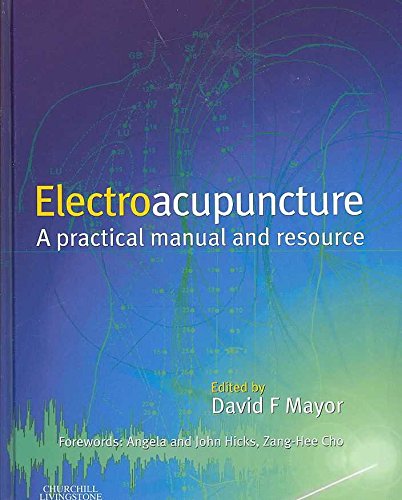
Electroacupuncture: A Practical Manual and Resource
<strong>This book presents an overview of the theoretical foundations of electroacupuncture, together with experimental and clinical evidence for the efficacy of electroacupuncture in its various form

Amazon.com. Spend less. Smile more.
Free shipping on millions of items. Get the best of Shopping and Entertainment with Prime. Enjoy low prices and great deals on the largest selection of everyday essentials and other products, includin

Kang HWA Stick-On Mini Moxa - Red
Haeng Lim Smokeless Stick-on Moxa 180per per box · Kang HWA Loose Moxa - Direct Use ·
Health Disclaimer
This content is for informational purposes only and does not constitute medical advice. Always consult a qualified healthcare provider before starting, stopping, or changing any supplement or medication regimen.