

Antihistamines
Also known as: Allergy medications, Allergy relief, Antihistamines
Overview
Antihistamines are a broad class of medications used to reduce symptoms caused by the body’s response to histamine, a signaling chemical involved in allergic reactions, inflammation, stomach acid secretion, and certain functions in the brain. In everyday use, the term most often refers to H1 antihistamines, which are commonly used for allergic rhinitis (hay fever), hives, itching, allergic conjunctivitis, and some cold-related symptoms. A separate group, H2 antihistamines, acts mainly in the stomach and has historically been used to reduce acid production.
When the immune system reacts to allergens such as pollen, dust mites, pet dander, foods, or insect stings, histamine can be released from mast cells and basophils. This release may contribute to sneezing, runny nose, watery eyes, skin itching, swelling, and rash. Antihistamines work by blocking histamine receptors, reducing the intensity of these responses. They do not remove the underlying cause of allergy, but they may lessen symptom burden and improve daily functioning for many people.
A major distinction within this category is between first-generation and second-generation antihistamines. First-generation agents, such as diphenhydramine and chlorpheniramine, more readily cross into the brain and are associated with drowsiness, impaired alertness, dry mouth, constipation, and urinary retention. Second-generation agents, such as cetirizine, loratadine, and fexofenadine, were developed to be less sedating for many users and are widely used in modern allergy care. The safety profile, duration of action, and likelihood of cognitive side effects vary across individual drugs.
Antihistamines are among the most widely used medications globally, available both over the counter and by prescription depending on the product and indication. Although generally familiar to the public, they are not universally benign. Conventional safety concerns include sedation, interaction with alcohol or other central nervous system depressants, age-related sensitivity in older adults, and caution in people with glaucoma, urinary obstruction, or certain heart conditions depending on the product. As with all medications, interpretation of symptoms and choice of therapy are best individualized with input from a qualified healthcare professional.
Medical Perspectives
Two Ways of Seeing Health

Western
scientific · clinical
Western medicine applies science, technology, and clinical experience to treat symptoms through testing, diagnosis, and targeted intervention.

Eastern
traditional · alternative
Eastern medicine focuses on treating the body naturally by applying traditional knowledge practiced for thousands of years, emphasizing balance and whole-person wellness.
Gold Bamboo presents both perspectives side-by-side so you can make informed decisions. We don't advocate for one over the other — your health choices are yours.
Western Medicine Perspective
Western Medicine Perspective
In conventional medicine, antihistamines are understood through receptor pharmacology. Histamine exerts its effects by binding to receptors, primarily H1, H2, H3, and H4. For allergic symptoms, the key target is the H1 receptor. H1 antihistamines function as receptor blockers or inverse agonists, helping reduce itching, sneezing, rhinorrhea, and urticaria-related symptoms. They are generally considered symptom-relieving medications rather than disease-modifying therapies.
Modern clinical practice typically distinguishes between first-generation and second-generation H1 antihistamines. First-generation drugs are effective but are more likely to cause sedation and anticholinergic effects, which is why many professional societies favor newer, less-sedating agents for routine allergy management. Studies and guidelines indicate that second-generation antihistamines are commonly preferred for allergic rhinitis and chronic spontaneous urticaria, largely because they offer comparable symptom control with a lower burden of cognitive and psychomotor impairment in many patients.
Conventional care also recognizes that antihistamines have limits. They may be less effective for severe nasal congestion than other therapies, and they are not a substitute for emergency treatment in anaphylaxis, where epinephrine remains the cornerstone intervention. In dermatology and allergy practice, antihistamines are often discussed as part of a broader strategy that may include allergen avoidance, intranasal therapies, immunotherapy, or evaluation for other causes of rash and itching. Special populations—including children, older adults, pregnant individuals, and people taking multiple medications—require closer attention to formulation choice and adverse-effect profile.
From a safety and evidence standpoint, antihistamines are well studied, but not all agents are equally favored. Some older medications remain in use because of availability and familiarity, while guideline-based care increasingly emphasizes safer, less-sedating options and awareness of medication misuse, duplication across combination cold products, and cumulative anticholinergic burden.
Eastern & Traditional Perspective
Eastern/Traditional Medicine Perspective
In Traditional Chinese Medicine (TCM) and related East Asian systems, the symptom patterns commonly treated with antihistamines in Western medicine—such as sneezing, runny nose, itching, rashes, and watery eyes—are not usually framed as a single “histamine problem.” Instead, they may be interpreted through pattern concepts such as Wind invasion, Wind-Heat, Wind-Cold, Lung qi imbalance, or Wei qi weakness, depending on the presentation. Skin manifestations like hives may be associated with patterns involving Wind in the exterior, Heat in the blood, or damp-heat, while recurrent allergy tendencies may be understood in the context of constitutional weakness.
From this perspective, treatment traditionally focuses less on blocking one chemical mediator and more on restoring systemic balance. Approaches may include herbal formulas, acupuncture, dietary pattern assessment, breathing practices, and lifestyle modification selected according to the individual pattern. Research into acupuncture and traditional herbal medicine for allergic rhinitis and urticaria is growing, and some studies suggest possible benefit for symptom relief or quality of life, but the quality of evidence remains mixed and methods vary widely.
In Ayurveda, allergy-like symptoms may be interpreted through imbalances involving doshas, digestive capacity, and tissue reactivity rather than receptor blockade. Practitioners may discuss these conditions using concepts related to Kapha accumulation, Pitta-related inflammation, or ama, depending on the symptom picture. Naturopathic and integrative traditions may similarly emphasize terrain, triggers, inflammation, immune regulation, and environmental exposures.
Traditional systems generally do not regard antihistamines as central therapeutic tools in the way conventional medicine does. Instead, they may be viewed as medicines that temporarily reduce outward manifestations while other therapies attempt to address broader constitutional or environmental contributors. Because herbal medicines and supplements can also cause adverse effects or interact with pharmaceuticals, integrative care is best approached with coordination among qualified practitioners.
Supplements & Products
Recommended Products

Allergic: Our Irritated Bodies in a Changing World: MacPhail, Theresa
“An important and deeply researched book by Theresa MacPhail, a medical anthropologist who memorably portrays the human face of disease . . . In Ms. MacPhail’s analysis, allergy is not only the evil t
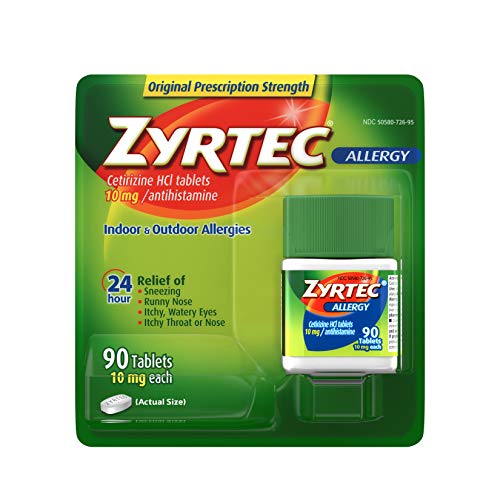
Zyrtec 24 Hour Allergy Relief Tablets - 10mg, 90 ct
Zyrtec 24 Hour Allergy Relief Tablets, Indoor & Outdoor Allergy Medicine with 10 mg Cetirizine Hydrochloride Antihistamine, Value Bundle of one, 90 ct Bottle & Three, 1 ct Travel Packs

Zaditor Antihistamine Eye Drops Twin Pack (2 bottles - 0.17 fl oz each) 0.34 fl o by Zaditor
Brand: Zaditor · Amazon's Choice · <strong>Provides fast relief from itchy eyes caused by allergies</strong> · Contains ketotifen fumarate 0.035% (equivalent to ketotifen 0.025%) Long-lasting eff
Evidence & Sources
Supported by multiple clinical trials and systematic reviews
- ARIA (Allergic Rhinitis and its Impact on Asthma) Guidelines
- EAACI/GA²LEN/EuroGuiDerm/APAAACI Urticaria Guideline
- American Academy of Allergy, Asthma & Immunology (AAAAI)
- National Institute for Health and Care Excellence (NICE)
- MedlinePlus / U.S. National Library of Medicine
- NCCIH (National Center for Complementary and Integrative Health)
- World Allergy Organization
- The Journal of Allergy and Clinical Immunology
This content is for informational purposes only and does not constitute medical advice. Always consult a qualified healthcare provider before starting, stopping, or changing any supplement or medication regimen.