

Amitriptyline
Also known as: Elavil, Depression treatment, Amitriptyline
Amitriptyline
Amitriptyline is a tricyclic antidepressant (TCA) that has been used in conventional medicine for decades. It was originally developed to treat major depressive disorder, but over time it has also become widely used for several non-depression indications, particularly neuropathic pain, migraine prevention, and certain functional or chronic pain syndromes. Its broad clinical role reflects the fact that amitriptyline affects multiple neurotransmitter systems, especially serotonin and norepinephrine, while also interacting with histamine, cholinergic, and other receptors.
Although newer antidepressants are often prescribed more frequently for depression because of their side-effect profile and safety considerations, amitriptyline remains clinically important. Research suggests it can be effective in carefully selected patients, especially when pain, sleep disturbance, and mood symptoms overlap. In practice, the doses used for chronic pain are often lower than those used historically for depression, which is one reason the medication appears across multiple specialties including psychiatry, neurology, pain medicine, and primary care.
Amitriptyline is also notable because its benefits and limitations are both well recognized. Common adverse effects can include dry mouth, constipation, urinary retention, blurred vision, sedation, dizziness, and weight gain, largely due to its anticholinergic and antihistamine actions. In some individuals, it may affect heart rhythm, contribute to falls, or worsen confusion, especially in older adults. Because of these concerns, clinical use generally involves consideration of age, other medications, cardiovascular history, and overall risk profile.
From a broader health perspective, amitriptyline represents an example of a medication with longstanding evidence, multiple off-label uses, and meaningful symptom overlap with integrative care settings. People exploring this topic often encounter it not only as an antidepressant, but as part of discussions about chronic pain, fibromyalgia, irritable bowel syndrome, vulvodynia, tension headaches, and insomnia-related symptom clusters. As with many long-established drugs, its role is best understood through both its conventional evidence base and the ways patients experience it within broader, whole-person models of care.
Medical Perspectives
Two Ways of Seeing Health

Western
scientific · clinical
Western medicine applies science, technology, and clinical experience to treat symptoms through testing, diagnosis, and targeted intervention.

Eastern
traditional · alternative
Eastern medicine focuses on treating the body naturally by applying traditional knowledge practiced for thousands of years, emphasizing balance and whole-person wellness.
Gold Bamboo presents both perspectives side-by-side so you can make informed decisions. We don't advocate for one over the other — your health choices are yours.
Western Medicine Perspective
Western Medicine Perspective
In conventional medicine, amitriptyline is understood as a medication that inhibits the reuptake of serotonin and norepinephrine, increasing the availability of these neurotransmitters in the central nervous system. It also has substantial activity at muscarinic cholinergic, histamine H1, and alpha-adrenergic receptors, which helps explain both some of its clinical effects and many of its side effects. For depression, this multi-receptor activity contributed to its historical importance, though it also makes the drug less tolerable for some patients than newer antidepressants such as SSRIs or SNRIs.
Studies indicate that amitriptyline has an established role in certain chronic pain conditions, especially neuropathic pain and some headache disorders. It has also been studied in fibromyalgia, functional gastrointestinal disorders, and other centralized pain conditions, with results that are often mixed but clinically relevant in selected populations. In pain medicine, the medication is generally viewed less as a simple analgesic and more as a neuromodulator that may influence pain processing, sleep architecture, and symptom amplification.
Safety is a central part of the western medical view of amitriptyline. It carries important cautions related to sedation, anticholinergic burden, cardiac conduction abnormalities, overdose toxicity, and drug interactions. For this reason, clinicians often evaluate factors such as suicidality risk, glaucoma, urinary retention, constipation, arrhythmia history, seizure disorders, liver function, and concurrent serotonergic or QT-prolonging medications. In older adults, organizations such as the American Geriatrics Society have highlighted TCAs as medications that may be inappropriate in many circumstances because of their cognitive and fall-related risks.
Current evidence supports amitriptyline as a well-established medication with a narrower, more individualized role than in past decades. In western practice, it is often framed as a medication with meaningful utility when symptom patterns match its strengths, but one that requires careful monitoring and contextual decision-making by a qualified healthcare professional.
Eastern & Traditional Perspective
Eastern and Traditional Medicine Perspective
In Traditional Chinese Medicine (TCM), a medication such as amitriptyline would generally not be classified according to neurotransmitters or receptor binding, but rather considered in relation to the pattern of imbalance present in the person taking it. Symptoms commonly associated with amitriptyline use—such as depression, insomnia, chronic pain, headaches, or digestive discomfort—may be interpreted through patterns including Liver qi stagnation, Heart shen disturbance, Spleen deficiency, Blood deficiency, or qi and blood obstruction in the channels. From this viewpoint, the medication may be seen as addressing part of the symptom picture, while traditional assessment seeks a broader understanding of constitution, emotional stress, sleep, digestion, and pain distribution.
In Ayurveda, comparable symptom clusters might be discussed in terms of imbalances involving Vata, often in pain, insomnia, nervous system hypersensitivity, or variable bowel function, along with potential Pitta or Kapha contributions depending on mood, lethargy, irritability, or heaviness. Rather than treating “amitriptyline” itself as a traditional category, Ayurveda would typically focus on the underlying functional disturbance behind the person's depressive or pain-related presentation. Traditional systems often place emphasis on digestion, routine, sleep rhythm, stress load, and mind-body resilience as part of the overall picture.
In naturopathic and integrative medicine, amitriptyline may be viewed as one component within a broader strategy for symptom management, particularly in chronic pain or functional disorders where sleep, mood, stress physiology, and central sensitization overlap. Practitioners in these settings may discuss the importance of understanding medication effects alongside lifestyle, nutrition, physical medicine, and mind-body factors. At the same time, responsible integrative care generally emphasizes that any medication changes require coordination with the prescribing clinician, especially with a drug such as amitriptyline that can produce withdrawal effects, interactions, or recurrence of symptoms if altered abruptly.
Overall, eastern and traditional frameworks tend to interpret the conditions for which amitriptyline is used through a whole-person, pattern-based lens. These systems do not replace the pharmacologic and safety knowledge established in conventional medicine, but they may offer additional ways of conceptualizing chronic pain, mood disturbance, sleep disruption, and functional syndromes in a more individualized context.
Supplements & Products
Recommended Products
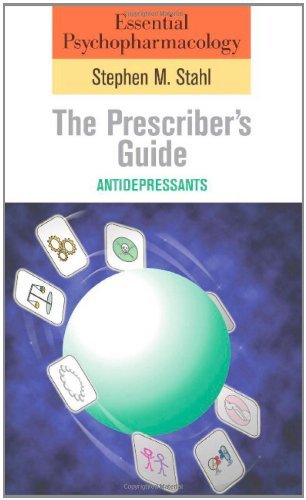
The Prescriber's Guide, Antidepressants (Stahl's Essential Psychopharmacology)
In response to rapid developments in psychopharmacology, this is a spin-off from Stephen M. Stahl’s new, completely revised and updated version of his much-acclaimed Prescriber’s Guide. It <strong>cov

Now Foods Magnesium Glycinate, 240 Tablets - Supports Healthy Muscle and Nerve Functions - Non-GMO
NOW Supplements, Magnesium Glycinate 100 mg, Highly Absorbable Form, 90 Tablets ... Brief content visible, double tap to read full content. Full content visible, double tap to read brief content. ...

TENS 7000 Digital TENS Unit with Accessories - Muscle ...
Explore a variety of products designed to provide relief from sciatica, back pain, and muscle discomfort, including TENS therapy and ergonomic cushions.
Evidence & Sources
Supported by multiple clinical trials and systematic reviews
- StatPearls
- National Center for Biotechnology Information (NCBI Bookshelf)
- Cochrane Reviews
- National Institute for Health and Care Excellence (NICE)
- NCCIH (National Center for Complementary and Integrative Health)
- American Geriatrics Society Beers Criteria
- British National Formulary
- The Lancet
- JAMA Psychiatry
This content is for informational purposes only and does not constitute medical advice. Always consult a qualified healthcare provider before starting, stopping, or changing any supplement or medication regimen.