

Portal Hypertension
Overview
Portal hypertension refers to abnormally increased pressure within the portal venous system, the network of veins that carries blood from the digestive organs and spleen to the liver. In conventional medicine, it is most often associated with cirrhosis and advanced chronic liver disease, where scarring distorts normal blood flow through the liver. However, portal hypertension can also arise from pre-hepatic causes such as portal vein thrombosis, hepatic causes beyond cirrhosis, and post-hepatic causes such as Budd–Chiari syndrome or certain forms of heart failure. The condition is clinically important because it can lead to serious complications including esophageal and gastric varices, gastrointestinal bleeding, ascites, splenomegaly, thrombocytopenia, hepatic encephalopathy, and hepatorenal dysfunction.
Portal hypertension is not usually discussed as a single isolated disease; rather, it is understood as a hemodynamic consequence of underlying liver or vascular pathology. As resistance to blood flow through the liver increases, the body develops collateral veins to bypass the blockage. These alternative pathways may reduce pressure in one sense, but they also create fragile enlarged veins—especially in the esophagus and stomach—that carry a risk of hemorrhage. In parallel, complex changes in vascular tone, inflammation, and neurohormonal signaling contribute to fluid retention and circulatory dysfunction.
Its significance is substantial because portal hypertension marks a transition from compensated liver disease to clinically significant complications in many patients. Research has increasingly focused on clinically significant portal hypertension (CSPH), often defined by a hepatic venous pressure gradient above a recognized threshold in research and specialty care settings. In practice, clinicians often infer the presence of significant portal hypertension based on imaging, laboratory features, endoscopic findings, and clinical manifestations rather than pressure measurement alone. Early recognition matters because the presence of portal hypertension influences prognosis, surveillance strategies, and risk of decompensation.
From a broader integrative health perspective, portal hypertension is an example of a condition in which system-wide imbalance becomes visible through vascular, digestive, metabolic, and fluid-regulation changes. While traditional medical systems did not define it in modern hemodynamic terms, they have long described syndromes involving abdominal fullness, fluid accumulation, enlarged organs, digestive stagnation, blood stasis, and severe chronic liver dysfunction. Any discussion of supportive care from eastern or traditional frameworks needs to be viewed in the context of the condition’s potential seriousness, particularly because complications such as variceal bleeding or infection require urgent conventional medical evaluation.
Medical Perspectives
Two Ways of Seeing Health

Western
scientific · clinical
Western medicine applies science, technology, and clinical experience to treat symptoms through testing, diagnosis, and targeted intervention.

Eastern
traditional · alternative
Eastern medicine focuses on treating the body naturally by applying traditional knowledge practiced for thousands of years, emphasizing balance and whole-person wellness.
Gold Bamboo presents both perspectives side-by-side so you can make informed decisions. We don't advocate for one over the other — your health choices are yours.
Western Medicine Perspective
Western Medicine Perspective
In conventional medicine, portal hypertension is understood primarily as a disorder of increased resistance to portal blood flow combined with changes in blood circulation that raise portal venous pressure. The most common cause in many regions is cirrhosis, where fibrosis, nodular regeneration, endothelial dysfunction, and altered intrahepatic vascular tone impede blood flow through the liver. Non-cirrhotic causes are also recognized, including schistosomiasis in endemic regions, portal or splenic vein thrombosis, nodular regenerative hyperplasia, congenital hepatic fibrosis, Budd–Chiari syndrome, and right-sided cardiac disorders. Clinical evaluation typically includes liver tests, blood counts, ultrasound with Doppler, cross-sectional imaging, elastography in appropriate settings, and endoscopy to assess varices.
Complications drive much of the clinical importance. Studies and society guidelines emphasize the risks of variceal hemorrhage, ascites, spontaneous bacterial peritonitis, hepatic encephalopathy, and progressive decompensated cirrhosis. Endoscopy remains central for detecting varices, while imaging helps identify portal vein patency, collateral circulation, splenomegaly, and ascites. In specialized centers, the hepatic venous pressure gradient (HVPG) is used in research and selected clinical settings to quantify portal pressure and help define clinically significant disease. Noninvasive tools, including liver stiffness measurement and platelet-based algorithms, are increasingly studied to estimate risk and reduce unnecessary invasive testing.
Conventional management is directed at the underlying cause and the prevention or control of complications, rather than treating portal pressure as an isolated number. Depending on the clinical situation, standard approaches may include surveillance for varices and liver cancer, medications such as nonselective beta-blockers in appropriate contexts, endoscopic therapies for varices, management of ascites and encephalopathy, and procedures such as TIPS (transjugular intrahepatic portosystemic shunt) for selected patients with refractory complications. In advanced disease, liver transplantation may become the definitive treatment pathway. Because the condition often reflects significant liver dysfunction, multidisciplinary hepatology care is considered important.
Research in this field is relatively robust compared with many integrative topics. Major liver societies such as the American Association for the Study of Liver Diseases (AASLD) and Baveno consensus workshops have published evolving frameworks for risk stratification, noninvasive assessment, and prevention of decompensation. Even so, outcomes vary widely depending on etiology, severity of liver disease, and access to specialty care, so individualized assessment by qualified clinicians remains central.
Eastern & Traditional Perspective
Eastern and Traditional Medicine Perspective
Traditional medical systems do not describe portal hypertension using modern vascular measurements, but they often interpret similar patterns through syndromes involving liver dysfunction, blood stasis, damp accumulation, phlegm-fluid retention, abdominal distention, and impaired digestive-spleen function. In Traditional Chinese Medicine (TCM), presentations resembling complications of chronic liver disease may be discussed under categories such as abdominal fullness, "drum distention," hypochondriac pain, edema, or blood stasis obstructing the channels. Depending on the pattern, practitioners may describe combinations of Liver qi stagnation, Spleen qi deficiency, damp-heat, blood stasis, or deficiency involving the Liver and Kidney systems. The framework is functional and pattern-based rather than anatomical.
In Ayurveda, manifestations that overlap with chronic liver disease and fluid accumulation may be interpreted through disturbances in Pitta, Kapha, and Vata, along with impairment of agni and involvement of channels related to digestion, blood, and fluid metabolism. Classical descriptions of abdominal enlargement, fluid retention, poor digestion, weakness, and altered liver-spleen function may be invoked depending on the presentation. Naturopathic and traditional herbal frameworks likewise tend to focus on systemic terrain—digestive burden, inflammatory processes, circulation, and fluid balance—rather than portal pressure itself.
The evidence base for eastern or traditional approaches specifically for portal hypertension is limited. Some herbal medicines, dietary traditions, mind-body practices, and supportive therapies have been studied in the broader context of chronic liver disease, fibrosis, symptom burden, or quality of life, but much less evidence directly evaluates their effect on portal pressure, variceal risk, or survival. Research quality is variable, and interpretation is complicated by differences in diagnostic criteria, herbal formulations, and concurrent conventional treatment. Because portal hypertension can lead to life-threatening complications, traditional approaches are generally discussed as adjunctive, supportive, or symptom-oriented frameworks, not substitutes for emergency or specialist hepatology care.
An integrative discussion may still be valuable in understanding how different healing systems conceptualize chronic liver-related illness, fatigue, digestive changes, edema, or stress-related symptom amplification. However, careful coordination with licensed healthcare professionals is important, particularly because some herbs or supplements may affect bleeding risk, liver metabolism, kidney function, or interactions with prescription medicines used in advanced liver disease.
Related Topics
Liver Cirrhosis
Liver Cirrhosis — condition topic in the Gold Bamboo health ontology.
How They Relate
Liver Cirrhosis & Portal Hypertension
Liver cirrhosis is advanced scarring of the liver from chronic injury (commonly long-term alcohol use, chronic viral hepatitis B or C, and nonalcoholic steatohepatitis/NASH). Portal hypertension is...
Supplements & Products
Recommended Products
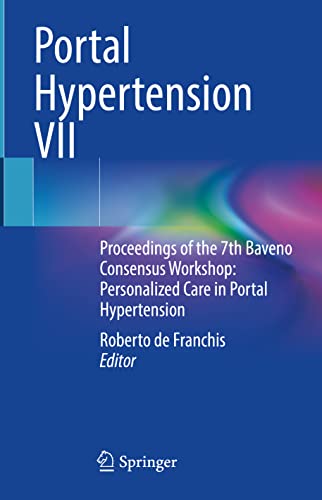
Portal Hypertension VII: Proceedings of the 7th Baveno Consensus Workshop: Personalized Care in Portal Hypertension: de Franchis, Roberto
<strong>Portal Hypertension VII</strong> offers a valuable reference guide for clinical and research fellows in Gastroenterology and Hepatology and will inspire new research projects in the promising

Florastor Probiotics for Digestive & Immune Health, 20 Capsules, Probiotics for Women & Men, 1 Probiotic Worldwide, Flush Out Bad Bacteria & Boost The Good with Our Strain Saccharomyces boulardii
Dual action support: Florastor ... and sugars* Unique strain: <strong>These probiotic supplements contain 250mg of the exclusive probiotic strain Saccharomyces boulardii CNCM I-745 for overall gut hea

Etekcity Digital Body Weight Bathroom Scale, Large Blue LCD Backlight Display, High Precision Measurements,6mm Tempered Glass, 400 Pounds : Everything Else
Buy Etekcity Digital Body Weight Bathroom Scale, Large Blue LCD Backlight Display, High Precision Measurements,6mm Tempered Glass, <strong>400 Pounds</strong> on Amazon.com ✓ FREE SHIPPING on qualifie
Evidence & Sources
Supported by multiple clinical trials and systematic reviews
- American Association for the Study of Liver Diseases (AASLD) Practice Guidance
- Journal of Hepatology
- Hepatology
- Baveno VII Consensus Workshop
- National Institute of Diabetes and Digestive and Kidney Diseases (NIDDK)
- National Center for Complementary and Integrative Health (NCCIH)
- World Health Organization (WHO)
- New England Journal of Medicine
This content is for informational purposes only and does not constitute medical advice. Always consult a qualified healthcare provider before starting, stopping, or changing any supplement or medication regimen.