

Supported by multiple clinical trials and meta-analyses
Exercise-Associated Hyponatremia: The Overlooked Risk in Endurance Hydration
Overhydration can dilute blood sodium and impair performance. Learn what research says about exercise-associated hyponatremia, who’s at risk, and how sodium-containing fluids fit alongside traditional options like coconut water and broths.
This content is for informational purposes only and does not constitute medical advice. Always consult a qualified healthcare provider before starting, stopping, or changing any supplement or medication regimen.
Electrolyte Balance for Performance — Supporting Article
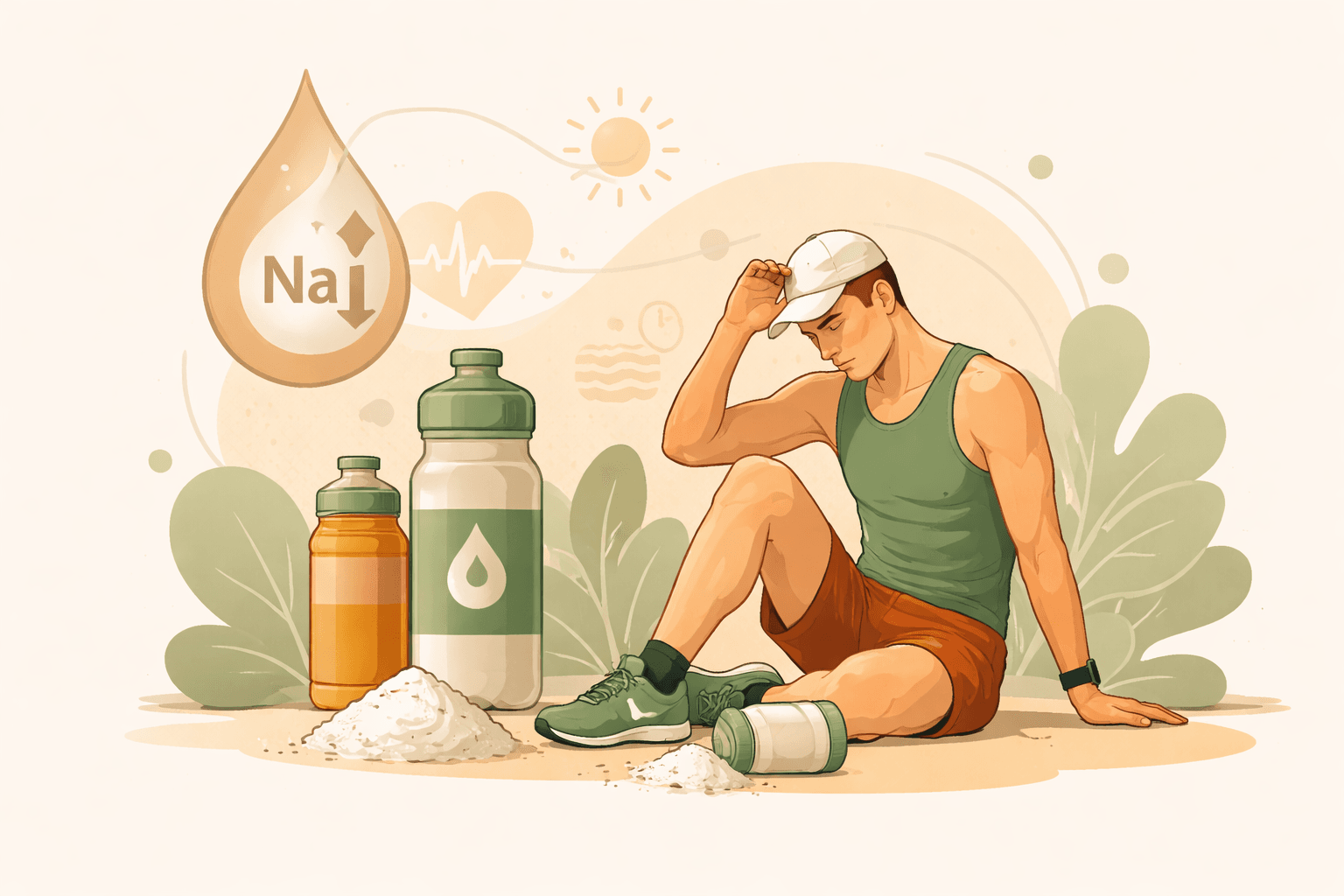
Exercise-associated hyponatremia (EAH) — a drop in blood sodium during or after activity — is an underappreciated risk for endurance athletes and active people who hydrate aggressively. While dehydration gets most of the attention, research suggests overconsumption of low-sodium fluids can dilute blood sodium, impair nerve and muscle function, and in rare cases become life-threatening. This focused guide unpacks what EAH is, why it happens, and how evidence-informed hydration choices may help you balance performance and safety.
What EAH Is and Why It Matters
- Definition: EAH refers to a serum sodium concentration below 135 mmol/L occurring during or up to 24 hours after physical activity (Evidence: strong; Hew‑Butler et al., Clinical Journal of Sport Medicine, 2015 consensus).
- Why it matters: Mild cases may cause nausea, headache, and confusion; severe cases can lead to seizures, pulmonary edema, or coma (Evidence: strong; Hew‑Butler et al., 2015 consensus).
- How common: Observational data from large road races show EAH can affect a notable minority of finishers, especially in long, slow events with frequent fluid access (Evidence: strong; Almond et al., New England Journal of Medicine, 2005).
The Physiology: Sodium, Water, and Sweat
- Sodium’s role: Sodium helps regulate plasma volume, nerve signaling, and muscle contraction. During exercise, sweating removes water and electrolytes; replenishment that replaces more water than sodium can dilute plasma sodium (Evidence: strong; ACSM Position Stand on Exercise and Fluid Replacement, 2007; updated guidance emphasizes individualized intake).
- Sweat composition isn’t one-size-fits-all: Research shows wide inter-individual variation in sweat sodium (roughly 20–80 mmol/L or more), influenced by genetics, training status, acclimation, and environment. Heat acclimation tends to reduce sweat sodium concentration, but higher sweat rates can still yield large total sodium losses (Evidence: strong; Baker, Sports Medicine, 2017; Stachenfeld, Comprehensive Physiology, 2014).
How Hyponatremia Happens
EAH most often arises from a combination of overdrinking and low sodium availability:
- Overdrinking: Consuming fluid faster than it’s lost through sweat, urine, and respiration can expand plasma water and lower sodium concentration (Evidence: strong; Almond et al., NEJM, 2005; Hew‑Butler et al., 2015 consensus).
- Low sodium intake relative to fluid: Replacing sweat with low- or no-sodium fluids increases dilution risk, especially over many hours (Evidence: strong; ACSM Position Stand, 2007; Hew‑Butler et al., 2015 consensus).
- Non-osmotic water retention: Exercise, stress hormones, and nausea can increase antidiuretic hormone (ADH), reducing the kidneys’ ability to excrete excess water (Evidence: strong; Hew‑Butler et al., 2015 consensus).
Who Is at Higher Risk
- Long duration events: Marathons, ultras, Ironman triathlons, long hikes, and military training lasting many hours (Evidence: strong; Almond et al., 2005; Hoffman & Stuempfle, 2015).
- Slower paces with more aid-station exposure: More opportunities to drink beyond thirst (Evidence: strong; Almond et al., 2005).
- Smaller body mass: Less total body water means a given fluid volume has a larger dilutional effect (Evidence: moderate; Almond et al., 2005; consensus notes risk across sexes when overdrinking occurs).
- Excessive pre-loading and during-event drinking “to stay ahead of thirst” (Evidence: strong; Hew‑Butler et al., 2015 consensus).
- NSAID use: Observational links between nonsteroidal anti-inflammatory drugs and EAH, potentially via kidney and ADH effects (Evidence: moderate; Stuempfle et al., Clinical Journal of Sport Medicine, 2013; Hoffman & Stuempfle, 2015).
Signs to Watch (Not a Diagnostic Tool)
- Mild to moderate: Bloating, nausea, headache, confusion, unusual fatigue, swollen hands, weight gain during the event (Evidence: strong; Hew‑Butler et al., 2015 consensus).
- Severe: Vomiting, seizures, altered consciousness, respiratory distress (Evidence: strong; Hew‑Butler et al., 2015 consensus). Note: Symptoms can overlap with heat illness; field assessment of body mass trends and clinical evaluation are essential.
Do Electrolyte Products Prevent EAH?
- Sodium can help maintain plasma volume and stimulate thirst appropriately when included with fluids and carbohydrate during prolonged exercise, but it is not a fail-safe against EAH if overall fluid intake is excessive (Evidence: moderate to strong; ACSM Position Stand, 2007; Hew‑Butler et al., 2015 consensus).
- Observational data from ultramarathons suggest sodium capsule use does not reliably predict serum sodium levels or prevent EAH when overdrinking occurs (Evidence: moderate; Hoffman & Stuempfle, 2015; 2019).
- Performance effects of extra sodium are mixed; some small RCTs show improved fluid retention and thermoregulation in the heat, while others show no clear performance benefit (Evidence: moderate; review: Desbrow et al., Sports Medicine, 2014; mixed small trials such as Sims et al., 2007; Coles & Luetkemeier, 2005).
Takeaway: Electrolytes may help when exercise is long, hot, and sweaty, but the primary protection against EAH is avoiding overconsumption of fluids relative to losses (Evidence: strong; Hew‑Butler et al., 2015 consensus).
Oral Rehydration Science: What Transfers to Sport
- Sodium–glucose co-transport: The small intestine absorbs water efficiently when sodium and glucose are present together via the SGLT1 transporter, a principle behind oral rehydration solutions (ORS) used in medical settings (Evidence: strong; foundational physiology; Cochrane reviews of ORS efficacy for dehydration due to diarrhea).
- Athletic context: Drinks containing both sodium and carbohydrate can enhance fluid absorption and help maintain blood volume during prolonged exercise, particularly in the heat (Evidence: moderate to strong; Shirreffs & Sawka, Sports Medicine, 2011; ACSM Position Stand, 2007). Still, even optimal formulations cannot offset the risks of overdrinking.
Traditional Hydration Wisdom — and Where It Fits
- Coconut water: Naturally rich in potassium and modest carbohydrate, but relatively low in sodium compared to many sports drinks. RCTs suggest coconut water rehydrates similarly to carbohydrate–electrolyte drinks after moderate dehydration, though its lower sodium may be suboptimal for high-sodium sweat losses in long, hot efforts (Evidence: moderate; Kalman et al., Journal of the International Society of Sports Nutrition, 2012; Ismail et al., 2007).
- Broths and salted foods: Many endurance traditions include broths or salted rice/porridge at aid stations to provide sodium, fluid, and easy calories. While composition varies, these options may help maintain sodium availability when consumed according to appetite and thirst (Evidence: traditional with supportive physiology; emerging quantitative data).
- Salt traditions: Various cultures use salted teas, pickled vegetables, or salted fruits in heat. These approaches align with the physiological need for both fluid and electrolytes but should be guided by comfort and conditions rather than fixed rules (Evidence: traditional; supportive physiology).
Science of Sweat Variability and Individualization
- Sweat testing: Laboratory or field sweat tests can help estimate sweat rate and sodium concentration, informing individualized strategies for long events (Evidence: moderate; Baker, Sports Medicine, 2017). Practical observation — such as visible salt stains on clothing or stinging sweat in the eyes — may hint at higher sodium losses but is not diagnostic (Evidence: emerging).
- Acclimation and training: Heat acclimation reduces sweat sodium concentration over time by increasing aldosterone-mediated reabsorption, though total sodium losses can still be substantial in high sweat rates (Evidence: strong; Stachenfeld, 2014; Wendt et al., Sports Medicine, 2007).
Evidence-Informed Strategies to Reduce EAH Risk (No Medical Advice)
- Respect thirst: Research-informed consensus recommends avoiding forced drinking “ahead of thirst,” especially during long events with cool conditions and easy fluid access (Evidence: strong; Hew‑Butler et al., 2015 consensus).
- Include sodium when it makes sense: For prolonged, sweaty efforts, sodium-containing foods or beverages may help maintain plasma volume and encourage appropriate fluid intake, but they do not eliminate EAH risk if overdrinking continues (Evidence: moderate to strong; ACSM Position Stand, 2007; Hoffman & Stuempfle, 2015).
- Plan for conditions: Hot, humid environments, high sweat rates, and very long durations increase the value of sodium-containing fluids and carbohydrate for maintaining performance (Evidence: moderate to strong; Shirreffs & Sawka, 2011; ACSM Position Stand, 2007).
- Be cautious with NSAIDs around long events unless advised by a clinician, as observational links with EAH exist (Evidence: moderate; Stuempfle et al., 2013).
- Monitor trends: Large body mass gain during an event suggests overdrinking, while stable or modestly reduced mass is more consistent with net fluid loss (Evidence: strong; Hew‑Butler et al., 2015 consensus). On-course medical support is essential for concerning symptoms, as EAH can mimic heat illness.
Bridging Eastern and Western Perspectives
- Traditional practices like salted teas, broths, and mineral-rich foods reflect an intuitive balance of fluids and electrolytes. Modern research on sodium–glucose co-transport and sweat chemistry provides a mechanistic rationale for why these approaches may feel restoring during long, hot efforts (Evidence: traditional with supportive physiology).
- Coconut water’s potassium emphasis may suit lighter sessions or post-exercise replenishment, whereas broths or salted foods may better match the sodium needs of extended endurance efforts in heat (Evidence: moderate; Kalman et al., 2012; physiology consensus).
Bottom Line
- EAH is primarily a problem of overdrinking relative to sodium losses, not a simple lack of electrolytes. Listening to thirst and avoiding forced fluid intake are central to prevention (Evidence: strong).
- Sodium-containing foods or beverages may help maintain plasma volume and performance in long, sweaty conditions, but cannot counteract excessive fluid intake (Evidence: moderate to strong).
- Sweat sodium losses vary widely between individuals. Research suggests personalized strategies — guided by conditions, experience, and, when available, sweat testing — are more effective than one-size-fits-all rules (Evidence: strong).
- Traditional hydration options like broths and salted foods align with modern physiology, while coconut water may complement recovery but is lower in sodium for very long, hot events (Evidence: moderate; traditional).
Selected References
- Almond CS et al. Hyponatremia among runners in the Boston Marathon. N Engl J Med. 2005.
- Hew‑Butler T et al. Statement of the Third International Exercise-Associated Hyponatremia Consensus Development Conference. Clin J Sport Med. 2015.
- American College of Sports Medicine. Position Stand: Exercise and Fluid Replacement. Med Sci Sports Exerc. 2007.
- Baker LB. Sweating rate and sweat sodium concentration in athletes: A review. Sports Med. 2017.
- Hoffman MD, Stuempfle KJ. Sodium supplementation and exercise-associated hyponatremia during ultramarathon running. Sports Med. 2015/2019.
- Shirreffs SM, Sawka MN. Fluid and electrolyte needs during exercise. Sports Med. 2011.
- Kalman DS et al. Comparison of coconut water and a carbohydrate-electrolyte sport drink on hydration and performance. J Int Soc Sports Nutr. 2012.
- Stuempfle KJ et al. Association of NSAID use with exercise-associated hyponatremia. Clin J Sport Med. 2013.
Health Disclaimer
This content is for informational purposes only and does not constitute medical advice. Always consult a qualified healthcare provider before starting, stopping, or changing any supplement or medication regimen.