Introduction
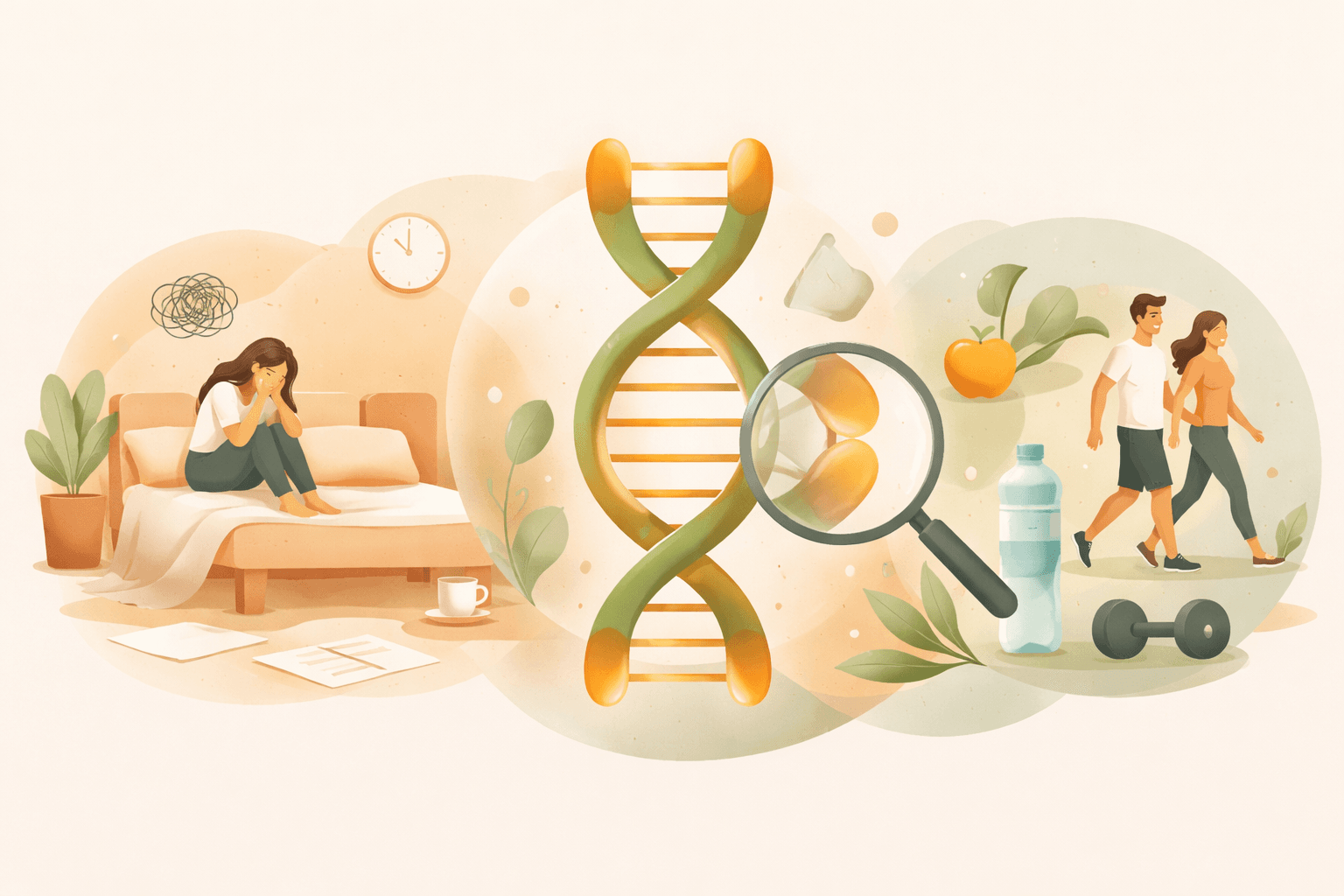
Telomeres—protective DNA caps at the ends of chromosomes—shorten as cells divide. When they become critically short, cells are more likely to enter senescence, a state linked with aging biology. Elizabeth Blackburn, Carol Greider, and Jack Szostak received the 2009 Nobel Prize for discovering telomerase, the enzyme that can extend telomeres, and for clarifying how telomeres safeguard chromosomes. Among lifestyle factors that may influence telomere dynamics, psychological stress stands out. This article focuses on what research suggests about chronic stress and telomere length—and where claims go too far.
Key takeaways up front
- Chronic psychological stress is associated with shorter telomeres in many observational studies, though effect sizes are generally small to moderate and not universal across studies (Evidence: moderate).
- Stress-reduction practices, including mindfulness-based interventions, may increase telomerase activity in some trials, but consistent increases in telomere length are less certain (Evidence: emerging).
- Multiple pathways—hormonal, inflammatory, oxidative, and behavioral—likely mediate the link between stress and telomeres (Evidence: moderate to strong for mechanisms; moderate for direct telomere outcomes).
- Telomere length is one piece of the aging puzzle; focusing solely on it oversimplifies the biology of stress and longevity (Evidence: strong, consensus-level caution in the field).
How stress may influence telomeres
- HPA axis and cortisol: Chronic stress activates the hypothalamic–pituitary–adrenal (HPA) axis, elevating cortisol. Persistently high cortisol can promote insulin resistance, visceral adiposity, and immune changes that increase oxidative stress—all of which may accelerate telomere shortening in leukocytes (white blood cells) (Evidence: moderate; supported by mechanistic and human observational data).
- Inflammation and oxidative stress: Stress is linked with higher inflammatory cytokines (e.g., IL-6) and reactive oxygen species, which can damage telomeric DNA that is particularly sensitive to oxidative injury (Evidence: strong for the oxidative/inflammatory response to stress; moderate for direct telomere consequences).
- Immune cell turnover: Chronic stress can alter immune cell dynamics, potentially increasing turnover of certain leukocyte populations and cumulatively shortening their telomeres more quickly (Evidence: emerging to moderate; human data suggest plausible links, but direct causal chains remain under study).
What the studies show
- High perceived stress and caregiving: A widely cited cross-sectional study of mothers caring for chronically ill children reported that greater perceived stress correlated with shorter telomere length and lower telomerase activity, approximating several years of “accelerated biological aging” compared with lower-stress peers (Epel et al., 2004, Proceedings of the National Academy of Sciences). While influential, it was observational and cannot establish causality (Evidence: moderate).
- Childhood adversity: A systematic review and meta-analysis found that adverse experiences in childhood (e.g., maltreatment, severe deprivation) are associated with shorter telomere length later in life, suggesting that stress early in development may leave a lasting biological signature (Ridout et al., 2018, Biological Psychiatry) (Evidence: strong for association; causality still inferred, not proven).
- Depression and major stress-related disorders: Meta-analyses report shorter telomeres in adults with major depressive disorder and post-traumatic stress disorder compared with controls, consistent with the role of chronic psychological burden (Evidence: moderate; confounding from medication, lifestyle, and comorbidities is possible).
- Occupational stress: Findings are mixed. Some cohorts link high job strain to shorter telomeres; others do not, or show effects only in subgroups (Evidence: emerging to moderate).
Do stress-reduction practices change telomeres?
- Mindfulness and meditation: RCTs of intensive meditation training (e.g., the Shamatha Project) reported increases in telomerase activity compared with controls, interpreted as a potential shift toward telomere maintenance. However, consistent increases in telomere length over short follow-up are uncommon, and meta-analyses suggest small or uncertain effects on length with a more consistent, though still variable, signal for telomerase activity (Jacobs et al., 2011, Psychoneuroendocrinology; Schutte & Malouff, 2020, meta-analysis) (Evidence: emerging for telomere length; moderate for telomerase activity).
- Multicomponent lifestyle programs: In men with low-risk prostate cancer, a small nonrandomized intervention including stress management, plant-forward diet, physical activity, and social support reported increased telomerase activity at three months and a modest increase in leukocyte telomere length at five years compared with controls (Ornish et al., 2008 & 2013, The Lancet Oncology). Because multiple behaviors changed together and sample sizes were small, results should be interpreted cautiously (Evidence: emerging to moderate).
- Traditional mind–body practices: Practices rooted in Eastern traditions—such as yoga, tai chi, and qigong—may reduce perceived stress and improve sleep and inflammation profiles. Small RCTs suggest possible increases in telomerase activity after such interventions, but telomere length findings are inconsistent (Evidence: emerging).
Context matters: confounders and effect sizes
- Lifestyle clustering: Stress often coexists with shorter sleep, lower physical activity, and dietary patterns that increase oxidative stress. Each of these factors is independently associated with telomere dynamics in observational research. Untangling the unique contribution of stress from these co-travelers is challenging (Evidence: strong for confounding in observational designs).
- Measurement variability: Studies use different tissues (most often blood leukocytes), assays (qPCR vs. TRF), and follow-up intervals. These choices influence sensitivity to change and between-study comparability (Evidence: strong).
- Small absolute changes: Even when statistically significant, differences in telomere length related to stress are often small. Their clinical significance for individual aging trajectories remains uncertain (Evidence: strong consensus-level caution).
From Western biology to Eastern wisdom
Western research highlights neuroendocrine-inflammation-oxidative pathways as key links between stress and cellular aging. Traditional East Asian frameworks have long emphasized the health impacts of chronic emotional strain—often described as disturbances in qi flow or “Liver qi stagnation” in Traditional Chinese Medicine (TCM). While concepts differ, both perspectives converge on the value of restoring balance through practices that calm the mind, regulate breath, and cultivate social connection. Modern studies of meditation, tai chi, and qigong reflect this bridge: they may reduce perceived stress and improve biomarkers that plausibly support telomere maintenance, even if definitive telomere length changes remain inconsistent (Evidence: emerging).
What about telomerase activators?
Some commercial products claim to counter stress-related telomere shortening by “activating telomerase.” Early-stage studies of compounds derived from Astragalus membranaceus (Huang Qi in TCM), such as TA-65, report increased telomerase activity in vitro and small human studies have suggested changes in certain immune parameters. However, large, long-term randomized trials demonstrating meaningful effects on telomere length or hard health outcomes in generally healthy adults are lacking. Moreover, unregulated telomerase activation is a theoretical cancer risk because many tumors upregulate telomerase to support unchecked growth. For stress-related telomere health, interventions that address the stress itself—sleep, physical activity, social support, and mind–body practices—currently have broader support than single-agent telomerase activators (Evidence: emerging for human efficacy; strong for theoretical safety considerations from oncology biology).
Common misconceptions to avoid
- “Stress instantly shortens telomeres.” Acute stress responses are normal and adaptive. It is chronic, unremitting stress and the behaviors that accompany it that are more consistently linked with shorter telomeres (Evidence: moderate).
- “Any stress-reduction technique will lengthen telomeres quickly.” Most trials are short, sample sizes modest, and telomere length changes slowly. Improvements in mood, sleep, and inflammation may appear before any measurable telomere change (Evidence: strong for slow dynamics; emerging for direct length changes).
- “Telomeres determine your lifespan.” Telomere biology is one contributor among many—genetics, cardiometabolic health, environment, and socioeconomic factors play major roles (Evidence: strong).
Practical, non-prescriptive ways to buffer stress biology
While individual needs vary, research suggests the following strategies may help lower chronic stress and the biological pathways that could influence telomeres:
- Build stress-awareness routines: Brief, regular mindfulness, breath work, or contemplative practice can reduce perceived stress and may increase telomerase activity in some contexts (Evidence: emerging to moderate).
- Guard sleep consistency: Regular, sufficient sleep supports HPA axis stability and reduces inflammatory load, factors relevant to telomere maintenance (Evidence: moderate to strong for pathway effects; emerging to moderate for telomeres specifically).
- Move regularly: Physical activity lowers perceived stress and oxidative stress, with observational links to longer telomeres in active adults (Evidence: moderate for telomere association; strong for stress and cardiometabolic benefits).
- Strengthen social connection: Supportive relationships buffer stress responses and are repeatedly associated with better health outcomes, with some studies linking higher social support to longer telomeres (Evidence: emerging to moderate).
- Seek professional support when needed: Chronic stress, anxiety, and depression are treatable; addressing them may improve quality of life and downstream biological markers (Evidence: strong for mental health outcomes; emerging for telomere outcomes).
Bottom line
Research suggests that chronic psychological stress is associated with shorter telomeres, likely through hormonal, inflammatory, and oxidative pathways. Stress-reduction interventions—especially those improving sleep, mood, and social connection—may help support telomere maintenance, with some trials showing increases in telomerase activity. However, findings for actual telomere length change are mixed, effect sizes are often small, and measurement challenges limit definitive conclusions. Telomeres are one lens on aging biology, not a stand-alone verdict on health. Focusing on sustainable stress management alongside foundational lifestyle practices remains a prudent, evidence-aligned approach for healthy longevity, regardless of telomere test results.