

Prolotherapy
Also known as: proliferative therapy, regenerative injection therapy
Overview
Prolotherapy is a regenerative injection therapy used in integrative and musculoskeletal medicine for certain forms of chronic pain, ligament laxity, tendon injury, and joint instability. The technique generally involves injecting an irritant solution—most commonly hypertonic dextrose—into or around ligaments, tendons, entheses, or joint spaces with the goal of stimulating a localized healing response. In clinical practice, prolotherapy has been discussed most often for conditions such as low back pain, osteoarthritis, plantar fasciopathy, lateral epicondylitis, sacroiliac dysfunction, and other chronic soft-tissue complaints.
The underlying concept is that some persistent musculoskeletal pain may reflect incomplete healing, degenerative change, or biomechanical instability rather than acute inflammation alone. Research suggests that targeted injections may promote a cascade of tissue repair through local inflammatory signaling, fibroblast activity, collagen deposition, and changes in pain processing, although the exact mechanisms remain under investigation. Modern prolotherapy overlaps conceptually with the broader field of orthobiologics and regenerative medicine, but it is distinct from treatments such as platelet-rich plasma (PRP) or stem cell-based procedures.
Interest in prolotherapy has grown because many chronic musculoskeletal conditions respond incompletely to rest, exercise therapy, medications, or standard injections. At the same time, the evidence base is mixed and highly condition-specific. Some studies indicate benefit for selected pain syndromes and osteoarthritis-related symptoms, while other reviews note methodological limitations, inconsistent protocols, small sample sizes, and uncertainty about long-term structural effects. As a result, prolotherapy is generally viewed as an adjunctive or investigational option rather than a universally established therapy.
Safety is an important part of the discussion. When performed by appropriately trained clinicians using sterile technique and image guidance when indicated, prolotherapy is generally described as relatively low risk, with temporary soreness, swelling, or bruising among the more common adverse effects. However, as with any injection-based procedure, risks can include infection, bleeding, nerve irritation, allergic reaction, and procedure-specific complications depending on the site treated. Evaluation by qualified healthcare professionals remains important, particularly to clarify diagnosis, rule out serious causes of pain, and determine whether regenerative injection approaches are suitable within a broader care plan.
Medical Perspectives
Two Ways of Seeing Health

Western
scientific · clinical
Western medicine applies science, technology, and clinical experience to treat symptoms through testing, diagnosis, and targeted intervention.

Eastern
traditional · alternative
Eastern medicine focuses on treating the body naturally by applying traditional knowledge practiced for thousands of years, emphasizing balance and whole-person wellness.
Gold Bamboo presents both perspectives side-by-side so you can make informed decisions. We don't advocate for one over the other — your health choices are yours.
Western Medicine Perspective
Western Medicine Perspective
From a conventional medical standpoint, prolotherapy is usually classified as a non-surgical injection therapy for chronic musculoskeletal pain, especially when symptoms may involve tendon degeneration, ligament insufficiency, enthesopathy, or mild-to-moderate osteoarthritic change. The most studied form uses dextrose prolotherapy, although other injectants have historically been used. Western clinicians typically frame the therapy in terms of tissue healing biology: controlled local irritation may trigger release of growth factors, recruit reparative cells, and support extracellular matrix remodeling. Some also propose neuromodulatory effects that could reduce pain independent of structural regeneration.
The strength of evidence varies considerably by condition. Systematic reviews and randomized trials suggest that prolotherapy may improve pain and function in knee osteoarthritis and may have potential in some chronic tendon and ligament-related disorders. However, findings are not uniform across studies, and comparison with physical therapy, corticosteroid injections, placebo injections, or other regenerative procedures remains challenging because protocols differ in solution concentration, injection sites, treatment intervals, and use of adjunct rehabilitation. Major guideline bodies in conventional medicine have generally not placed prolotherapy among first-line standard treatments, largely because of heterogeneous evidence and limited large-scale trials.
In practice, Western medicine emphasizes careful diagnosis, imaging when appropriate, functional assessment, and consideration of conservative care such as exercise-based rehabilitation, load management, and multimodal pain management. Within that framework, prolotherapy may be discussed as a complementary procedure for selected patients with chronic, refractory musculoskeletal symptoms. Clinicians also weigh contraindications and procedural risks, and there is ongoing interest in better defining which patient populations are most likely to benefit.
Eastern & Traditional Perspective
Eastern/Traditional Medicine Perspective
Traditional and integrative healing systems do not historically describe prolotherapy in modern biomedical terms, since it is a relatively recent injection-based procedure. However, its clinical intent—to strengthen weakened structures, restore function, and reduce chronic pain—aligns with longstanding themes in Traditional Chinese Medicine (TCM), Ayurveda, and naturopathic medicine. These systems often interpret persistent musculoskeletal pain as a manifestation of impaired circulation, tissue undernourishment, biomechanical imbalance, constitutional weakness, or unresolved injury patterns.
In TCM, chronic tendon, ligament, and joint pain may be understood through patterns such as Bi syndrome, stagnation of Qi and Blood, or weakness involving the Liver and Kidney systems, which are traditionally associated with the nourishment of sinews and bones. From this perspective, a therapy intended to create a localized reparative response may be viewed as complementary to approaches that aim to improve circulation and restore functional integrity, including acupuncture, moxibustion, bodywork, movement practices, and individualized herbal strategies. Integrative practitioners sometimes place prolotherapy alongside these methods as part of a broader effort to support structural resilience and pain recovery.
In Ayurveda, chronic musculoskeletal discomfort may be associated with aggravated Vata, tissue depletion, or impaired nourishment of deeper body tissues such as asthi dhatu (bone tissue) and related structures. A procedure like prolotherapy may be interpreted less as a stand-alone cure and more as one component within a broader restorative framework focused on function, stability, and tissue rebuilding. In naturopathic and functional medicine settings, prolotherapy is often discussed as a regenerative intervention that works best when paired conceptually with attention to inflammation, biomechanics, nutrition, and whole-person recovery.
These traditional perspectives are largely interpretive rather than evidence-equivalent to biomedical explanations. While Eastern systems may offer coherent frameworks for understanding chronic pain and tissue weakness, modern clinical evidence for combining prolotherapy with traditional modalities remains limited. Integrative care models generally emphasize individualized assessment and collaboration with licensed healthcare professionals.
Supplements & Products
Recommended Products
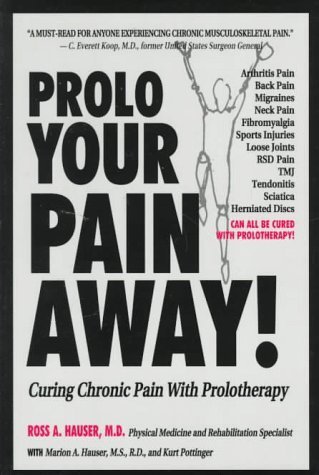
Prolo Your Pain Away! Curing Chronic Pain with Prolotherapy, 4th Edition: Ross A. Hauser, Marion A. Boomer Hauser
<strong>Prolotherapy is a safe and simple Regenerative Medicine technique that stimulates your body to repair painful areas</strong>. This cutting-edge, non-surgical treatment helps to stabilize joint

Vital Proteins Collagen Peptides Powder Advanced with Hyaluronic Acid & Vitamin C, 20oz Collagen Protein, Unflavored, 27 Servings
SUPPORTS COLLAGEN PRODUCTION: With 100% daily value of Vitamin C, this Vital Proteins Collagen Peptides Advanced Powder <strong>helps promote collagen production which is important for maintaining hea

Boiron Arnicare Gel for Joint Pain, Muscle Pain, Inflammation, Soreness, and Bruises - Non-greasy and Fragrance-Free - 2.6 oz
Made from this natural active ingredient, Arnicare <strong>helps to relieve muscle pain and stiffness and to reduce pain, swelling and, discoloration from bruises</strong>. Temporarily relieves muscle
Evidence & Sources
Promising research with growing clinical support from multiple studies
- National Center for Complementary and Integrative Health (NCCIH)
- Cochrane Database of Systematic Reviews
- PM&R
- Journal of Alternative and Complementary Medicine
- Pain Physician
- Mayo Clinic Proceedings
- American Journal of Physical Medicine & Rehabilitation
- The Journal of Prolotherapy
This content is for informational purposes only and does not constitute medical advice. Always consult a qualified healthcare provider before starting, stopping, or changing any supplement or medication regimen.