

Coffee Enemas
Also known as: coffee colon cleanse, coffee detox
Overview
Coffee enemas are a form of rectal infusion in which brewed coffee is introduced into the colon and retained for a period of time. They are most often discussed within detoxification, integrative cleansing programs, and some alternative cancer-support communities, particularly those influenced by the historical Gerson therapy model. Advocates commonly describe coffee enemas as a way to support the liver, stimulate bile flow, promote bowel evacuation, and enhance the body’s elimination of waste products. In popular wellness culture, they are often framed as a method for “cleansing” or “resetting” digestion, although these claims are interpreted differently across medical systems.
From a physiological standpoint, the proposed rationale centers on the idea that compounds in coffee may be absorbed through the hemorrhoidal veins and affect the liver, gallbladder, colon motility, or autonomic nervous system. Some alternative sources suggest that caffeine and related diterpenes, such as cafestol and kahweol, may stimulate glutathione-related detox pathways or trigger bile release. However, the degree to which these mechanisms occur via rectal administration in humans remains uncertain, and much of the discussion is based on theory, historical practice, or extrapolation from laboratory data rather than robust clinical trials.
Coffee enemas remain controversial because the concept of detoxification in conventional medicine differs substantially from wellness usage of the term. In mainstream medicine, the liver, kidneys, gastrointestinal tract, lungs, and skin continuously process and eliminate metabolic byproducts without requiring routine cleansing procedures in healthy individuals. At the same time, bowel-based cleansing rituals have a long history in many healing traditions, where they may be understood less as a biochemical detox intervention and more as a means of restoring internal balance, reducing stagnation, or preparing the body for fasting or other therapies.
Safety is a major part of any discussion of coffee enemas. Case reports and reviews have described potential adverse effects including rectal irritation, colitis, electrolyte imbalance, dehydration, infection risk from improper equipment sanitation, and in rare cases more severe complications. Because of these concerns, coffee enemas are generally regarded as a higher-risk cleansing practice than many other wellness interventions, and their use is best understood in the context of informed discussion with a qualified healthcare professional, especially for people with gastrointestinal disease, hemorrhoids, inflammatory bowel conditions, cardiovascular concerns, kidney issues, or frailty.
Medical Perspectives
Two Ways of Seeing Health

Western
scientific · clinical
Western medicine applies science, technology, and clinical experience to treat symptoms through testing, diagnosis, and targeted intervention.

Eastern
traditional · alternative
Eastern medicine focuses on treating the body naturally by applying traditional knowledge practiced for thousands of years, emphasizing balance and whole-person wellness.
Gold Bamboo presents both perspectives side-by-side so you can make informed decisions. We don't advocate for one over the other — your health choices are yours.
Western Medicine Perspective
Western Medicine Perspective
In conventional medicine, coffee enemas are not recognized as a standard treatment for detoxification, liver support, cancer care, or routine gastrointestinal health. The body’s detoxification systems are understood primarily through hepatic metabolism, renal excretion, bile production, and normal bowel function. Research has not established that coffee enemas meaningfully improve these processes in otherwise healthy individuals, and major medical organizations generally do not include them in evidence-based treatment guidelines.
The scientific literature on coffee enemas is limited and consists largely of case reports, observational discussions, and reviews of harms, rather than high-quality randomized controlled trials demonstrating clear benefit. Historical use in Gerson therapy has contributed to ongoing interest, but conventional oncology and gastroenterology do not accept coffee enemas as a validated supportive or disease-modifying intervention. When studies discuss coffee compounds such as caffeine, cafestol, and kahweol, the findings often relate to oral intake, animal models, or biochemical hypotheses rather than direct evidence for rectal administration.
From a risk standpoint, western medical literature has documented complications including proctocolitis, rectal burns from overheated solutions, electrolyte disturbances, sepsis related to contamination, and rare fatalities associated with frequent enema use or medically fragile patients. Repeated enemas of any type may also interfere with normal bowel habits in some individuals or worsen existing anorectal and colonic conditions. For these reasons, clinicians typically approach coffee enemas cautiously and may emphasize evaluation of the underlying reason a person is seeking detoxification or symptom relief.
A conventional assessment would therefore characterize coffee enemas as an unproven intervention with recognized potential harms. Where patients are interested in them, the medical focus is often on safety, contraindications, and ensuring that symptoms such as constipation, abdominal pain, fatigue, jaundice, or nausea are not signs of a condition requiring formal diagnosis and treatment.
Eastern & Traditional Perspective
Eastern / Traditional Medicine Perspective
In traditional and holistic systems, coffee enemas are not a core classical therapy in the way that acupuncture, herbal medicine, basti, or therapeutic purgation are. Instead, they are more commonly used in modern naturopathic and detox-oriented practice, where they are framed as a cleansing measure intended to reduce toxic burden, support elimination, and relieve internal stagnation. Within this lens, symptoms such as sluggish digestion, coated tongue, heaviness, headaches, or skin changes may be interpreted as signs that elimination pathways are overburdened.
From a Traditional Chinese Medicine (TCM) perspective, practitioners who incorporate colon-cleansing methods may loosely relate coffee enemas to patterns involving Liver Qi stagnation, Dampness, Heat accumulation, or impaired descending function of the Large Intestine. That said, coffee enemas are not a standard classical TCM intervention, and many TCM practitioners may prefer established methods such as dietary therapy, acupuncture, movement practices, or herbal formulas tailored to pattern differentiation. The TCM framework generally emphasizes restoring flow and organ harmony rather than “detox” in a purely biochemical sense.
In Ayurveda, direct parallels are also imperfect. Classical Ayurvedic medicine includes basti therapy, an important part of Panchakarma, but basti typically uses medicated oils, decoctions, or herbal preparations rather than coffee. An Ayurvedic interpretation might view cleansing practices through the concepts of ama (metabolic residue), digestive fire, and doshic imbalance, particularly involving Vata in the colon and Pitta in the hepatobiliary system. Even within holistic traditions, coffee’s stimulating and heating qualities may be seen as unsuitable for some constitutions or states of depletion.
Overall, the eastern and traditional perspective is best described as adjacent rather than foundational: coffee enemas are sometimes adopted into contemporary integrative detox models, but they do not hold the same longstanding, broadly codified place as many classical elimination therapies. Traditional practitioners who discuss them often place greater emphasis on individual constitution, digestive resilience, and the broader context of cleansing rather than viewing the practice as universally appropriate.
Supplements & Products
Recommended Products

The Gerson Therapy: The Proven Nutritional Program for Cancer and Other Illnesses: Charlotte Gerson, Morton Walker
One of the first alternative cancer therapies, The Gerson Therapy has successfully treated thousands of patients for over 60 years. Now, in this authoritative revised and updated edition, alternative

S.A. Wilson’s Organic Gold Roast Coffee – Premium Grind, 16 oz | Higher in Caffeine & Palmitic Acid | 100% Organic Coffee | Smooth, Balanced, Clean Energy | Product of Canada, USDA Certified Organic
PureLife Enema Coffee- 1 Lb - Organic ... ... S.A. Wilson’s Organic Gold Roast Coffee is <strong>a premium, 100% organic blend made for those who value purity, quality, and natural energy</strong>....
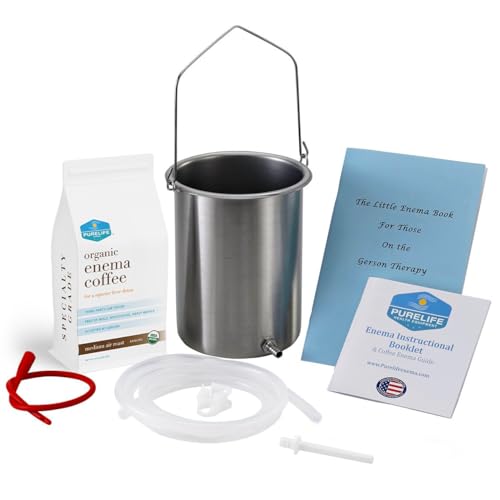
Purelife Coffee Enema Kit - Made in The USA Enema Bucket - Medical Grade Silicone Enema Hose - Non Toxic
Buy Purelife Coffee Enema Kit - Made in The USA Enema Bucket - Medical Grade Silicone Enema Hose - Non Toxic on Amazon.com ✓ FREE SHIPPING on qualified orders
Evidence & Sources
Early-stage research, mostly preclinical or preliminary human studies
- National Cancer Institute (PDQ) – Gerson Therapy
- NCCIH (National Center for Complementary and Integrative Health)
- American Cancer Society
- Journal of Clinical Gastroenterology
- The Journal of Alternative and Complementary Medicine
- CA: A Cancer Journal for Clinicians
- Mayo Clinic Proceedings
- World Journal of Gastroenterology
This content is for informational purposes only and does not constitute medical advice. Always consult a qualified healthcare provider before starting, stopping, or changing any supplement or medication regimen.