

Waist to Hip Ratio
Also known as: WHR, Waist Hip Ratio, Waist-to-Hip Measurement
Overview
Waist-to-hip ratio (WHR) is an anthropometric measurement that compares the circumference of the waist to that of the hips. It is used as a simple way to estimate body fat distribution, particularly the degree to which fat is concentrated around the abdomen rather than stored in the hips and thighs. In metabolic health discussions, WHR is often considered more informative than body weight alone because it reflects central adiposity, a pattern associated with higher cardiometabolic risk.
A higher WHR has been linked in many population studies to increased likelihood of conditions such as type 2 diabetes, hypertension, dyslipidemia, cardiovascular disease, and all-cause mortality. Research has suggested that abdominal fat, especially visceral fat surrounding internal organs, is metabolically active and may contribute to insulin resistance, inflammation, and altered hormone signaling. For this reason, WHR is commonly discussed alongside other measures such as body mass index (BMI), waist circumference, and body composition testing.
WHR is attractive in both clinical and public health settings because it is low-cost, noninvasive, and easy to obtain. At the same time, it has limitations. It does not directly measure visceral fat, can vary depending on measurement technique, and may not fully capture health status across all ages, ethnic groups, body types, or athletic populations. Many experts therefore view WHR as one useful screening marker among several rather than a stand-alone indicator of health.
Interest in WHR has grown as preventive medicine has shifted away from scale weight alone toward a broader understanding of metabolic risk, body composition, and fat distribution. In this context, WHR is often used to help frame conversations about long-term cardiometabolic health, while recognizing that laboratory markers, lifestyle patterns, family history, and overall clinical context remain important.
Medical Perspectives
Two Ways of Seeing Health

Western
scientific · clinical
Western medicine applies science, technology, and clinical experience to treat symptoms through testing, diagnosis, and targeted intervention.

Eastern
traditional · alternative
Eastern medicine focuses on treating the body naturally by applying traditional knowledge practiced for thousands of years, emphasizing balance and whole-person wellness.
Gold Bamboo presents both perspectives side-by-side so you can make informed decisions. We don't advocate for one over the other — your health choices are yours.
Western Medicine Perspective
Western Medicine Perspective
In conventional medicine, waist-to-hip ratio is primarily understood as a risk stratification tool. It helps estimate whether a person has a more android or central pattern of fat distribution, which has been associated with greater metabolic risk than a more gynoid pattern concentrated in the hips and thighs. Large epidemiologic studies have reported that WHR may predict myocardial infarction, stroke, diabetes, and premature mortality independently of BMI in some populations.
From a physiologic standpoint, the concern is less about body size itself and more about where adipose tissue is stored. Visceral adipose tissue is associated with inflammatory cytokine production, impaired glucose handling, lipid abnormalities, and increased cardiovascular risk. Studies indicate that measures reflecting abdominal adiposity, including WHR and waist circumference, may correlate more closely with these risks than total body weight alone. As a result, clinicians and researchers often use WHR as part of broader assessment for metabolic syndrome and preventive cardiology.
Conventional medicine also recognizes important caveats. Measurement methods are not perfectly standardized across settings, and cutoffs may differ by sex, age, and population. In practice, WHR is usually interpreted alongside blood pressure, fasting glucose or HbA1c, lipid markers, liver health, physical activity, nutrition patterns, and family history. It is considered a useful screening concept, but not a diagnostic test by itself. People with a lower WHR may still have metabolic disease, while some with a higher WHR may not show immediate clinical abnormalities.
Eastern & Traditional Perspective
Eastern and Traditional Medicine Perspective
In Traditional Chinese Medicine (TCM), Ayurveda, and many naturopathic traditions, waist-to-hip ratio is not a classical diagnostic category. However, the underlying idea of fat distribution, abdominal heaviness, and metabolic imbalance overlaps with longstanding traditional concepts. Rather than focusing on numerical ratios, these systems generally assess broader patterns such as digestive function, energy balance, fluid metabolism, appetite regulation, constitutional tendencies, and lifestyle rhythm.
In TCM, central weight gain may be interpreted through patterns involving the Spleen and Stomach systems, often described in relation to dampness, phlegm accumulation, and impaired transformation and transportation of food and fluids. Some practitioners may also consider the role of Liver qi stagnation, stress, and disrupted sleep in shaping metabolic patterns. These frameworks do not equate directly with biomedical obesity models, but they offer a traditional lens for understanding why abdominal fullness and sluggish metabolism may occur together.
In Ayurveda, body fat distribution may be viewed through the interplay of doshas, agni (digestive/metabolic fire), and ama (metabolic byproducts or incomplete digestion in traditional terminology). Central adiposity may be discussed in the context of kapha imbalance, weak agni, sedentary habits, or disrupted daily routine. Naturopathic approaches often similarly frame abdominal weight gain as part of a broader picture involving stress physiology, sleep, movement, digestive health, and inflammatory burden.
Traditional systems generally emphasize whole-person assessment over isolated measurement. While WHR itself is a modern metric, the traditional perspective may regard it as one observable sign among many rather than the central issue. Research on integrating WHR into traditional medicine frameworks remains limited, so these interpretations are best understood as pattern-based and historically rooted, not equivalent to validated biomedical diagnosis.
Supplements & Products
Recommended Products

Why We Get Sick: The Hidden Epidemic at the Root of Most Chronic Disease-and How to Fight It: Bikman, Benjamin
In Why We Get Sick, Benjamin Bikman <strong>unpacks the root cause of modern diseases and provides a concise road map to help you regain or maintain your health</strong>.” —Robb Wolf, New York Times a
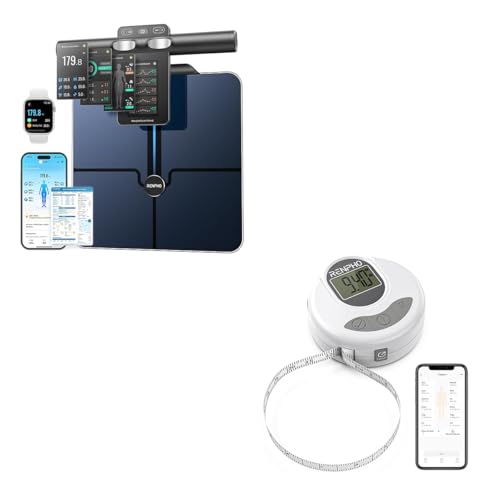
RENPHO Body Measuring Tape, Bluetooth Smart Tape Measure with Lock Hook & Retractable Function, Accurate Body Fat Measurement Device for Weight Loss, Muscle Gain, Fitness Bodybuilding, 60in /150cm
Achieve Your Fitness Goals: The RENPHO Smart Body Tape Measure is <strong>compatible with the Renpho Health App, which allows you to record the measurements of 12 key body areas, 6 customized parts an

seca Ergonomic Circumference Measuring Tape (Centimeters)
Because todayÔs circumference tapes also have to satisfy high medical demands, seca has developed the seca 201 which <strong>can measure girth to within 1 millimeters</strong>. The high-quality mechan
Evidence & Sources
Supported by multiple clinical trials and systematic reviews
- World Health Organization (WHO) Expert Consultation on Waist Circumference and Waist-Hip Ratio
- The Lancet - INTERHEART Study
- American Heart Association
- Centers for Disease Control and Prevention (CDC)
- National Institutes of Health (NIH)
- Nature Reviews Endocrinology
- NCCIH - National Center for Complementary and Integrative Health
This content is for informational purposes only and does not constitute medical advice. Always consult a qualified healthcare provider before starting, stopping, or changing any supplement or medication regimen.