

Vitamin B12 Test
Also known as: Cobalamin Test, B12 Serum Levels
Overview
A Vitamin B12 test is a laboratory assessment used to evaluate the level of cobalamin (vitamin B12) in the blood. Vitamin B12 is an essential nutrient involved in DNA synthesis, red blood cell formation, and normal neurological function. Because the body cannot produce B12 on its own, status depends on dietary intake, absorption in the stomach and small intestine, and adequate transport and storage. Testing is often considered when clinicians are evaluating fatigue, numbness or tingling, memory changes, balance difficulties, or certain forms of anemia, though interpretation depends heavily on the clinical context.
Vitamin B12 deficiency is clinically significant because it can affect both the hematologic system and the nervous system. Low B12 may contribute to megaloblastic anemia, glossitis, neuropathy, cognitive changes, and in some cases mood-related symptoms. Certain populations are more likely to have low levels, including older adults, people with pernicious anemia, individuals with gastrointestinal disorders affecting absorption, people who have had gastric or intestinal surgery, and those following strict vegetarian or vegan dietary patterns without reliable B12 sources. Long-term use of some medications, such as metformin or acid-suppressing drugs, has also been associated with lower B12 status in some studies.
A standard serum B12 test provides useful information, but it does not always capture functional deficiency perfectly. Some people may have borderline serum levels while still showing metabolic evidence of inadequate B12 activity. For this reason, conventional evaluation may also include methylmalonic acid (MMA), homocysteine, complete blood count (CBC), and sometimes intrinsic factor or parietal cell antibody testing when pernicious anemia is suspected. In practice, B12 testing is less about a single number and more about how laboratory findings align with symptoms, medical history, dietary pattern, and other biomarkers.
From a broader health perspective, the Vitamin B12 test sits at the intersection of nutrition, hematology, neurology, and digestive health. It is a common and important tool, but one that requires careful interpretation by a qualified healthcare professional. Research supports its role in identifying deficiency, while also recognizing the limitations of serum measurement alone.
Medical Perspectives
Two Ways of Seeing Health

Western
scientific · clinical
Western medicine applies science, technology, and clinical experience to treat symptoms through testing, diagnosis, and targeted intervention.

Eastern
traditional · alternative
Eastern medicine focuses on treating the body naturally by applying traditional knowledge practiced for thousands of years, emphasizing balance and whole-person wellness.
Gold Bamboo presents both perspectives side-by-side so you can make informed decisions. We don't advocate for one over the other — your health choices are yours.
Western Medicine Perspective
Western Medicine Perspective
In conventional medicine, the Vitamin B12 test is primarily used to assess whether a person may have B12 deficiency or, less commonly, abnormally elevated levels. A low result may prompt evaluation for causes such as reduced dietary intake, impaired absorption, autoimmune pernicious anemia, inflammatory bowel disease, celiac disease, pancreatic insufficiency, bacterial overgrowth, or prior gastrointestinal surgery. Clinicians may also investigate medication-related effects and age-related changes in gastric acid production, which can reduce the release and absorption of food-bound B12.
Western medicine also recognizes that serum B12 has diagnostic limitations. Borderline values may not clearly distinguish adequate from inadequate tissue status, and normal serum levels do not always exclude deficiency. For this reason, studies and clinical guidelines often support the use of MMA and homocysteine as adjunctive markers, especially when symptoms are present but serum B12 is inconclusive. A CBC and peripheral smear may show macrocytosis or megaloblastic changes, helping connect biochemical findings to blood cell production. If pernicious anemia is suspected, testing for intrinsic factor antibodies may be included because this autoimmune condition impairs B12 absorption.
Conventional interpretation is also shaped by symptom pattern and risk profile. Neurologic symptoms may appear even in the absence of severe anemia, and early identification is considered important because prolonged deficiency can be associated with persistent nerve-related effects. Elevated B12 levels, while often less clinically urgent, may sometimes reflect supplementation or, in some contexts, underlying liver, kidney, or blood-related disorders that warrant further evaluation. Overall, the Western approach views the Vitamin B12 test as a useful but context-dependent diagnostic tool, most informative when combined with history, examination, and complementary laboratory studies.
Eastern & Traditional Perspective
Eastern / Traditional Medicine Perspective
Traditional medical systems do not historically describe a laboratory Vitamin B12 test in biochemical terms, but many interpret its modern clinical significance through broader patterns of vitality, nourishment, and functional balance. In Traditional Chinese Medicine (TCM), symptoms that may overlap with B12 deficiency—such as fatigue, dizziness, numbness, poor memory, pallor, or weakness—might be understood through patterns involving Blood deficiency, Qi deficiency, or Kidney and Liver imbalance, depending on the presentation. The lab test itself is not a traditional diagnostic method, but modern integrative practitioners may use it alongside pulse, tongue, symptom, and constitutional assessment.
In Ayurveda, manifestations associated with low B12 may be viewed through concepts such as dhatu depletion, agni imbalance, or vata aggravation, particularly when neurological symptoms, weakness, or low vitality are prominent. Ayurveda classically emphasizes digestion, absorption, and tissue nourishment rather than isolated nutrient values, so a low B12 finding may be interpreted as part of a broader pattern involving impaired assimilation or reduced nutritional reserve. As in TCM, the laboratory test is a modern tool that can be incorporated into an integrative framework rather than replacing traditional assessment.
In naturopathic and other integrative models, the Vitamin B12 test is often seen as an example of how nutritional status and digestive function can influence systemic health. These traditions may place added emphasis on the relationship between gut health, dietary pattern, stress, aging, and metabolic resilience. While traditional systems can offer meaningful frameworks for understanding fatigue, neuropathic symptoms, and constitutional weakness, they do not replace the biomedical importance of identifying true deficiency through appropriate testing. A balanced integrative perspective generally treats the test as a valuable modern measure that can complement, rather than compete with, traditional diagnostic philosophies.
Supplements & Products
Recommended Products

Could It Be B12?: An Epidemic of Misdiagnoses: Pacholok, Sally M, Stuart, Jeffrey J.
Sally M. Pacholok, RN, has worked as an emergency room nurse and paramedic for 25 years. A member of the Emergency Nurses Association, <strong>Pacholok diagnosed herself with vitamin B12 deficiency af
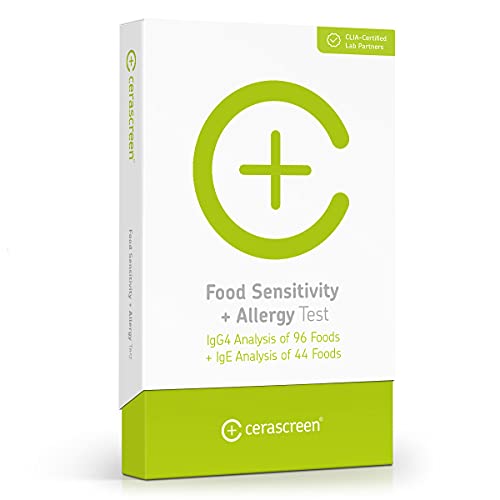
Improved Food Sensitivity + Allergy Test by CERASCREEN – Test for 96 Food Sensitivities + 44 Food Allergies | Professional CLIA-Certified Lab Analysis | Fast & Comprehensive Results Report'
The tray itself comes complete with everything you need: <strong>alcohol pads, gauze pad, bandaids, three lancets and test card</strong>. The rest requires 10 circles to be filled in on the blood card

Jarrow Formulas Methyl Vitamin B12 5000 mcg - 60 Chewable Tablets, Naturally Fruit Flavored- Bioactive B12 Vitamin - Supports Cellular Energy Production, Brain Health & Metabolism - 60 Servings
Better Retained With Jarrow B12: ... and vegans (1) Convenient Chewable Tablet: <strong>Each naturally fruit flavored chewable tablet delivers 5000 micrograms (mcg) of methyl B-12</strong>; our B12 me
Evidence & Sources
Supported by multiple clinical trials and systematic reviews
- National Institutes of Health Office of Dietary Supplements
- National Institute for Health and Care Excellence (NICE)
- American Academy of Family Physicians
- British Society for Haematology
- World Health Organization
- New England Journal of Medicine
- The Lancet Haematology
- NCCIH
This content is for informational purposes only and does not constitute medical advice. Always consult a qualified healthcare provider before starting, stopping, or changing any supplement or medication regimen.