

Lead Testing
Also known as: Lead Test, Blood Lead Level, Lead Toxicity Test
Overview
Lead testing refers to laboratory assessment used to identify exposure to lead, a heavy metal with no known physiologic benefit in the human body and a well-established potential for harm. Lead exposure can occur through older paint and household dust, contaminated soil or water, certain occupations, imported products, some traditional remedies, and industrial sources. Interest in lead testing commonly arises when there are concerns about older housing, workplace exposure, developmental issues in children, chronic unexplained symptoms, or broader questions about environmental toxic burden.
Lead is especially important in public health because even relatively low exposure has been associated with adverse effects. In children, research has linked elevated blood lead levels with neurodevelopmental and behavioral effects, including impacts on learning, attention, and cognition. In adults, lead exposure has been associated with hypertension, kidney dysfunction, reproductive effects, peripheral neuropathy, and cardiovascular risk. Because lead can accumulate in bone and other tissues, exposure may reflect both recent contact and longer-term body burden, depending on the test used and the clinical context.
The most widely used and clinically accepted test is the blood lead level (BLL), which helps estimate current or recent exposure. In some settings, additional testing may be considered, such as erythrocyte protoporphyrin or zinc protoporphyrin, which can reflect effects on heme synthesis, though these are less sensitive for low-level exposure and are not generally used as stand-alone screening tools. Other methods, such as urine provocation or nonstandard “heavy metal panels,” are more controversial and are not considered equivalent to standard blood testing in conventional toxicology.
Lead testing is significant not only as an individual diagnostic tool but also as part of population-level prevention and environmental health surveillance. Public health agencies use testing to identify at-risk communities, monitor trends, and trigger environmental investigations. Interpretation of results depends on age, symptoms, exposure history, occupational setting, and source identification, and clinical evaluation is often paired with efforts to locate and reduce ongoing exposure. Because no level of lead exposure is considered fully risk-free, testing is often discussed in the broader framework of prevention, environmental assessment, and long-term health monitoring.
Medical Perspectives
Two Ways of Seeing Health

Western
scientific · clinical
Western medicine applies science, technology, and clinical experience to treat symptoms through testing, diagnosis, and targeted intervention.

Eastern
traditional · alternative
Eastern medicine focuses on treating the body naturally by applying traditional knowledge practiced for thousands of years, emphasizing balance and whole-person wellness.
Gold Bamboo presents both perspectives side-by-side so you can make informed decisions. We don't advocate for one over the other — your health choices are yours.
Western Medicine Perspective
Western / Conventional Medicine Perspective
In conventional medicine, lead testing is grounded in toxicology, occupational medicine, pediatrics, and public health. The standard approach focuses on identifying who is at risk, measuring blood lead levels, and evaluating potential health consequences based on the degree and duration of exposure. Children living in older housing, pregnant individuals, workers in industries such as battery manufacturing or construction, and people with possible exposure from drinking water, soil, or imported goods are among the groups most commonly considered for assessment. Venous blood sampling is generally regarded as the most reliable confirmatory method, while capillary screening may be used initially but can be affected by surface contamination.
From a clinical standpoint, blood lead testing is the primary validated biomarker for current exposure. Additional evaluation may include complete blood count, iron studies, kidney function testing, blood pressure assessment, neurologic evaluation, and developmental screening, depending on age and presentation. In children, the emphasis is often on screening and early detection, because harmful effects may occur even in the absence of obvious symptoms. In adults, testing may be prompted by occupational health surveillance, symptoms such as cognitive changes or neuropathy, or concerns about chronic exposure.
Conventional medicine also distinguishes between evidence-based diagnostic testing and less validated approaches. Major medical and public health organizations generally recognize blood lead level measurement as the key test, while cautioning that some commercial “toxic burden” assessments or provoked urine tests may not accurately reflect clinically meaningful lead exposure. Management in the western model centers on exposure identification, source removal, monitoring, and medical treatment in selected cases of significant toxicity, often in collaboration with poison control, environmental specialists, or occupational health professionals. Interpretation is contextual, and healthcare providers typically consider both laboratory findings and the exposure environment when evaluating results.
Eastern & Traditional Perspective
Eastern / Traditional Medicine Perspective
Traditional medical systems generally do not frame health concerns in terms of blood lead levels as defined by modern laboratory science, but many have long recognized that environmental toxins, contaminated substances, and harmful accumulations can disturb health. In Traditional Chinese Medicine (TCM), symptoms that might accompany toxic exposure could be interpreted through patterns involving toxin accumulation, heat, phlegm, blood stasis, or organ system imbalance, particularly affecting the Liver, Kidney, and Shen. In this framework, cognitive changes, fatigue, irritability, or digestive disturbances are not viewed as evidence of lead specifically, but as manifestations of disrupted systemic harmony.
In Ayurveda, environmental contaminants may be discussed in relation to ama (a concept often translated as toxic or undigested burden), impaired agni (metabolic fire), and doshic imbalance. Traditional approaches historically emphasized purification, digestive support, rejuvenation, and avoidance of harmful exposures, rather than laboratory quantification of a specific metal. Some naturopathic traditions similarly discuss the body’s capacity for detoxification and resilience, often focusing on the broader terrain of nutrition, elimination, and environmental hygiene.
At the same time, contemporary integrative and traditional practitioners who work alongside biomedical systems often regard standard blood lead testing as essential when lead exposure is suspected. Eastern and traditional frameworks may be used to contextualize symptom patterns or support general well-being, but they do not replace validated toxicology testing. It is also important to note that some traditional remedies, supplements, cosmetics, or imported preparations have themselves been identified as potential sources of lead contamination in published reports. For that reason, both western and traditional perspectives increasingly converge on the importance of testing, source verification, and qualified professional oversight when toxic exposure is a concern.
Supplements & Products
Recommended Products

Non-Toxic: Guide to Living Healthy in a Chemical World (Dr Weil's Healthy Living Guides)
Dr. Aly Cohen and Professor Fred vom Saal <strong>lucidly explain how toxic chemicals hurt you and prescribe practical steps you can take to get them out of your life</strong>." -- Ken Cook, Pres
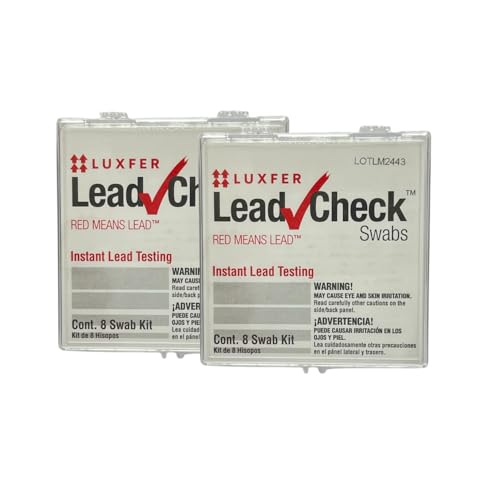
LeadCheck Swabs, Instant Lead Test, 8-Pack : Industrial & Scientific
Before testing painted areas for lead, prepare the surface by following these steps: Each 3M LeadCheck Swab <strong>contains two crushable vials, one with a lead-reactive dye, the other with a pre-mea

Safe Home® Lead in Drinking Water Test Kit – 1 Sample Tested at Our EPA Certified Lab – Home Inspections, Mortgage Loans, Real Estate Transactions – Detection to 1ppb
You can test either your water supply or the Lead being leached from your plumbing fixtures. Safe Home <strong>provides Quality Controls to handling and testing your water samples</strong>, that most
Evidence & Sources
Supported by multiple clinical trials and systematic reviews
- Centers for Disease Control and Prevention (CDC)
- World Health Organization (WHO)
- National Institute of Environmental Health Sciences (NIEHS)
- Agency for Toxic Substances and Disease Registry (ATSDR)
- U.S. Preventive Services Task Force (USPSTF)
- American Academy of Pediatrics (AAP)
- National Institute for Occupational Safety and Health (NIOSH)
- New England Journal of Medicine
This content is for informational purposes only and does not constitute medical advice. Always consult a qualified healthcare provider before starting, stopping, or changing any supplement or medication regimen.