

Homocysteine Test
Also known as: Hcy Test, Cardiovascular Risk Marker
Overview
A homocysteine test is a blood test that measures the amount of homocysteine, an amino acid produced during the metabolism of methionine, an essential amino acid obtained from dietary protein. Under normal conditions, homocysteine is recycled or converted into other compounds with the help of several nutrients—especially folate, vitamin B12, and vitamin B6. When these pathways are impaired, blood homocysteine levels may rise, a state often referred to as hyperhomocysteinemia.
The test has drawn attention because elevated homocysteine has been associated in many studies with cardiovascular disease, stroke, cognitive decline, pregnancy complications, and nutritional deficiencies, particularly low folate or vitamin B12 status. However, its role is complex: while higher homocysteine levels are linked to increased risk in observational research, lowering homocysteine does not always translate into clear reductions in cardiovascular events. For that reason, the homocysteine test is generally understood as a risk marker and metabolic clue, rather than a stand-alone diagnostic answer.
In clinical practice, homocysteine testing may be used as part of a broader evaluation when there is concern about vitamin deficiency, inherited disorders of homocysteine metabolism, premature vascular disease, or unexplained neurologic findings. Interpretation depends on context, since levels can be influenced by age, kidney function, genetics, medications, smoking, alcohol use, thyroid status, and overall nutritional intake. As with many laboratory tests, the value of homocysteine measurement is strongest when considered alongside medical history, other lab findings, and discussion with a qualified healthcare professional.
From an integrative health perspective, the homocysteine test is often viewed as a window into methylation, nutrient sufficiency, and long-term metabolic balance. This broader framing has made it relevant in functional and preventive health discussions, even as conventional guidelines remain selective about when the test meaningfully changes management.
Medical Perspectives
Two Ways of Seeing Health

Western
scientific · clinical
Western medicine applies science, technology, and clinical experience to treat symptoms through testing, diagnosis, and targeted intervention.

Eastern
traditional · alternative
Eastern medicine focuses on treating the body naturally by applying traditional knowledge practiced for thousands of years, emphasizing balance and whole-person wellness.
Gold Bamboo presents both perspectives side-by-side so you can make informed decisions. We don't advocate for one over the other — your health choices are yours.
Western Medicine Perspective
Western / Conventional Medicine Perspective
In conventional medicine, homocysteine is primarily understood through the lens of biochemistry and vascular risk. Elevated levels may result from deficiencies of folate, vitamin B12, or vitamin B6, reduced kidney function, hypothyroidism, certain medications, or inherited variants affecting enzymes involved in homocysteine metabolism, such as MTHFR or more severe disorders like classical homocystinuria. Markedly elevated homocysteine is well recognized in rare genetic disease, while mild to moderate elevation is more common and often multifactorial.
Research has consistently shown that higher homocysteine levels are associated with atherosclerotic disease, stroke, and venous thrombosis. Proposed mechanisms include endothelial dysfunction, oxidative stress, inflammation, and effects on coagulation. At the same time, large randomized trials of folic acid and B-vitamin supplementation have generally found that although these interventions can lower homocysteine levels, they do not always reduce major cardiovascular outcomes in broad populations. This has led many experts to view homocysteine as an important biomarker, but not necessarily a direct treatment target for cardiovascular prevention in all patients.
Homocysteine testing may also be considered when evaluating suspected vitamin B12 or folate deficiency, especially if standard markers are borderline or symptoms suggest functional deficiency. In some settings it is interpreted together with methylmalonic acid, complete blood count, serum B12, folate, and renal function tests. Conventional medicine therefore uses the homocysteine test selectively, with emphasis on identifying underlying causes and placing the result within the broader clinical picture rather than relying on it in isolation.
Eastern & Traditional Perspective
Eastern / Traditional Medicine Perspective
Traditional medical systems do not historically describe homocysteine as a named laboratory marker, but many integrative practitioners interpret the test as a modern reflection of broader patterns involving circulation, nourishment, digestion, and systemic balance. In this sense, the value of the test is not tied to an ancient diagnostic category, but rather to how a biochemical marker might correspond to traditional patterns recognized for centuries.
In Traditional Chinese Medicine (TCM), concerns related to elevated homocysteine may be discussed indirectly through patterns such as Blood stasis, Phlegm accumulation, or dysfunction involving the Spleen, Liver, and Kidney systems, particularly when symptoms involve poor circulation, fatigue, numbness, or cognitive changes. TCM does not use homocysteine itself to establish a pattern diagnosis; instead, an elevated lab value may be viewed as complementary information alongside pulse, tongue, symptom pattern, constitution, and lifestyle history.
In Ayurveda, elevated homocysteine may be interpreted through concepts such as impaired agni (digestive/metabolic fire), ama (metabolic waste or toxic residue), and imbalance in doshas affecting vascular and nervous system function. Integrative and naturopathic frameworks often connect the test with methylation capacity, nutrient assimilation, and whole-person metabolic resilience. These approaches traditionally emphasize nutrition, digestive function, and constitutional assessment, while acknowledging that modern lab testing can offer useful insight when incorporated thoughtfully.
Because traditional systems were not built around this biomarker, the eastern/traditional perspective on homocysteine testing is best understood as interpretive and integrative rather than classical. Any use of the test in these frameworks is typically considered alongside conventional evaluation, especially where cardiovascular risk, neurologic symptoms, pregnancy-related concerns, or possible nutrient deficiency are involved.
Supplements & Products
Recommended Products

The Homocysteine Revolution: McCully, Kilmer S.
More than 30 years ago, <strong>a young Harvard pathologist offered the medical community a theory for the cause of one of today's biggest killers-- heart disease</strong>. It is called the Homoc
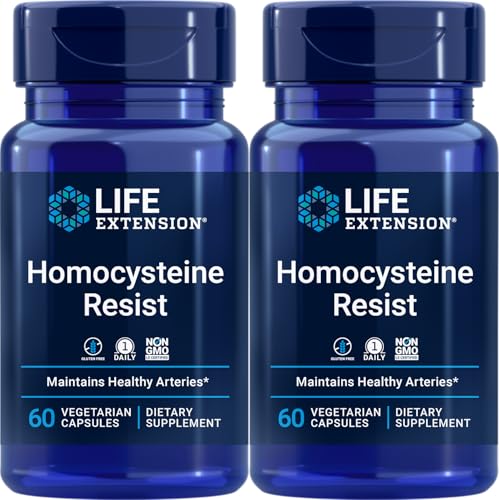
Life Extension Homocysteine Resist Vegetarian Capsules, 60 Count
Homocysteine Resist is <strong>a novel formula for heart and brain health</strong>. This B-complex includes vitamin B2, vitamin B6, vitamin B12 and folate (as L-5-MTHF) to help maintain already normal

THORNE - Methyl-Guard Plus - Active Folate (5-MTHF) with Vitamins B2, B6 & B12 - Supports Methylation & Healthy Level of Homocysteine* - Gluten, Dairy & Soy-Free - 30 Servings
THORNE - Methyl-Guard - <strong>Supports Methylation for Healthy Heart, Blood Vessels, Brain & Bones</strong>* - Vitamins B6 & B12, Folate (5-MTHF) & Betaine - Gluten, Dairy & Soy-Free
Evidence & Sources
Promising research with growing clinical support from multiple studies
- American Heart Association
- National Institutes of Health Office of Dietary Supplements
- National Center for Complementary and Integrative Health (NCCIH)
- The New England Journal of Medicine
- JAMA
- Circulation
- The Lancet
- StatPearls
This content is for informational purposes only and does not constitute medical advice. Always consult a qualified healthcare provider before starting, stopping, or changing any supplement or medication regimen.