

HbA1c Test
Also known as: Glycated Hemoglobin Test, A1c Test
Overview
The HbA1c test—also called hemoglobin A1c, A1c, or glycated hemoglobin—is a blood test that estimates a person’s average blood glucose exposure over roughly the previous 2 to 3 months. It measures the percentage of hemoglobin in red blood cells that has glucose attached to it. Because red blood cells circulate for about 120 days, the test offers a longer-term view than a single fasting or random glucose measurement. In modern diabetes care, HbA1c is widely used for screening, diagnosis, and ongoing monitoring of both prediabetes and diabetes.
Its importance lies in the way it captures chronic glycemic patterns, rather than day-to-day fluctuations alone. Research has shown that higher HbA1c levels are associated with a greater risk of diabetes-related complications, particularly microvascular complications such as retinopathy, nephropathy, and neuropathy. For this reason, HbA1c has become a foundational metric in endocrinology, primary care, and population health. Major organizations including the American Diabetes Association (ADA) and the World Health Organization (WHO) recognize HbA1c as a key laboratory tool when used in appropriate clinical settings.
At the same time, HbA1c is not a perfect stand-alone measure. Its interpretation may be affected by conditions that alter red blood cell lifespan or hemoglobin structure, including anemia, recent blood loss, pregnancy, kidney disease, liver disease, hemoglobin variants, and some transfusion-related states. Ethnicity, assay methodology, and coexisting illness can also influence results. For this reason, clinicians often interpret HbA1c alongside other information such as fasting plasma glucose, oral glucose tolerance testing, continuous glucose monitoring, or self-monitored glucose data.
From a broader health perspective, HbA1c functions as both a diagnostic biomarker and a risk indicator. In people already living with diabetes, trends in HbA1c can help assess whether glucose management strategies are aligning with care goals. In those without a diagnosis, it can identify elevated long-term glucose exposure before symptoms become obvious. Although highly standardized today, the test remains most meaningful when understood in the context of the whole person, overall metabolic health, and guidance from qualified healthcare professionals.
Medical Perspectives
Two Ways of Seeing Health

Western
scientific · clinical
Western medicine applies science, technology, and clinical experience to treat symptoms through testing, diagnosis, and targeted intervention.

Eastern
traditional · alternative
Eastern medicine focuses on treating the body naturally by applying traditional knowledge practiced for thousands of years, emphasizing balance and whole-person wellness.
Gold Bamboo presents both perspectives side-by-side so you can make informed decisions. We don't advocate for one over the other — your health choices are yours.
Western Medicine Perspective
Western Medicine Perspective
In conventional medicine, HbA1c is understood as a biochemical marker of glycation. When glucose circulates in the bloodstream, some of it binds nonenzymatically to hemoglobin within red blood cells. The higher the average glucose level, the greater the proportion of glycated hemoglobin. Standardized laboratory methods—aligned with programs such as the National Glycohemoglobin Standardization Program (NGSP) and international reference systems—allow HbA1c to be reported consistently across many settings. This standardization is one reason the test became central to diabetes diagnosis and monitoring.
Clinically, HbA1c is used to help identify normal glycemia, prediabetes, and diabetes, and to monitor long-term glycemic control in people with established disease. Research from landmark trials such as the Diabetes Control and Complications Trial (DCCT) and the UK Prospective Diabetes Study (UKPDS) found that lower long-term glucose exposure, reflected in lower HbA1c values, was associated with reduced risk of certain diabetes complications. As a result, HbA1c is often used as a surrogate marker in both routine care and diabetes research. Studies also indicate that HbA1c trends can provide useful prognostic information when interpreted over time rather than as a single isolated value.
However, conventional medicine also recognizes the test’s limitations. HbA1c may be less reliable when red blood cell turnover is abnormal, in some hemoglobinopathies, or when there is discordance between HbA1c and direct glucose measurements. It does not capture glycemic variability, post-meal spikes, or episodes of hypoglycemia as precisely as continuous glucose monitoring can. For that reason, current practice increasingly views HbA1c as one important tool within a broader assessment of metabolic health, rather than the sole determinant of diabetes status or control.
In evidence-based care, interpretation of HbA1c generally depends on laboratory quality, clinical context, and individualized assessment. Healthcare professionals may consider confirmatory testing and patient-specific factors before drawing conclusions, especially when results do not match symptoms or other glucose data.
Eastern & Traditional Perspective
Eastern / Traditional Medicine Perspective
In Traditional Chinese Medicine (TCM) and Ayurveda, the HbA1c test itself is not a classical diagnostic concept, since it is a product of modern laboratory medicine. However, many traditional systems have long described symptom patterns that overlap with what modern medicine recognizes as diabetes and chronic metabolic imbalance. In TCM, these patterns are often discussed under frameworks such as Xiao Ke (“wasting-thirst”) and may be interpreted through imbalances involving yin deficiency, internal heat, dryness, fluid depletion, spleen dysfunction, or kidney deficiency, depending on the presentation. In Ayurveda, diabetes-related patterns are often discussed in relation to Prameha and, in more advanced states, Madhumeha, with attention to disturbances in doshas, tissue metabolism, digestion, and systemic imbalance.
From an Eastern perspective, a laboratory value like HbA1c may be seen as a modern marker reflecting the longer-term state of metabolic harmony or dysregulation. Rather than focusing only on glucose chemistry, traditional approaches often place the result within a broader pattern-based assessment that includes energy, thirst, appetite, urination, digestion, sleep, stress, constitution, tongue or pulse findings, and lifestyle rhythms. Naturopathic and integrative practitioners may similarly view HbA1c as one data point within a systems-based picture involving inflammation, diet pattern, stress load, circadian disruption, and cardiometabolic risk.
Traditional and integrative systems have historically used dietary frameworks, herbal medicine, movement practices, mind-body regulation, and constitutional assessment in people with metabolic symptoms. Some herbs and traditional formulations used for glycemic balance are being studied in modern research, but the quality of evidence varies considerably, and findings are not always consistent across populations or preparations. For this reason, HbA1c is often valued in integrative settings as an objective measure that can be followed over time while broader lifestyle and pattern-based approaches are considered.
A balanced interpretation recognizes that traditional frameworks and modern biomarkers serve different but potentially complementary purposes. The HbA1c test offers quantifiable laboratory information, while Eastern systems contribute a holistic lens on function, balance, and lived experience. Any interpretation of abnormal results is best made with qualified healthcare professionals, especially because diabetes and prediabetes can carry significant long-term health risks.
Supplements & Products
Recommended Products
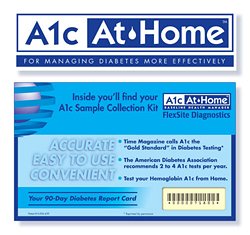
A1c Home Test Kit
Browse A1C home testing kits for ongoing diabetes management and health insights. Find convenient options with prepaid shipping and lab analysis included.

American Diabetes Association Complete Guide to Diabetes: The Ultimate Home Reference from the Diabetes Experts: Association, American Diabetes
The Amazon Book Review Book recommendations, author interviews, editors' picks, and more. Read it now · This item: American Diabetes Association Complete Guide to Diabetes: The Ultimate Home Refe

THORNE - Berberine - Dual Action Formula with Phytosome Plus Botanical Extract - Support Heart Health, Immune System, Healthy GI & Cholesterol* - Gluten-Free - 30 Servings
Buy THORNE - Berberine - Dual Action Formula with Phytosome Plus Botanical Extract - Support Heart Health, Immune System, Healthy GI & Cholesterol* - Gluten-Free - 30 Servings on Amazon.com ✓ FREE
Evidence & Sources
Supported by multiple clinical trials and systematic reviews
- American Diabetes Association. Standards of Care in Diabetes
- World Health Organization. Use of Glycated Haemoglobin (HbA1c) in the Diagnosis of Diabetes Mellitus
- National Institute of Diabetes and Digestive and Kidney Diseases (NIDDK)
- National Glycohemoglobin Standardization Program (NGSP)
- Diabetes Control and Complications Trial (The New England Journal of Medicine)
- UK Prospective Diabetes Study (The Lancet)
- NCCIH (National Center for Complementary and Integrative Health)
- International Expert Committee Report on the Role of the A1C Assay in the Diagnosis of Diabetes (Diabetes Care)
This content is for informational purposes only and does not constitute medical advice. Always consult a qualified healthcare provider before starting, stopping, or changing any supplement or medication regimen.