

Food Sensitivity Panel
Also known as: IgG Food Allergy Test, Food Intolerance Test
Overview
A food sensitivity panel is a laboratory test marketed to evaluate immune reactions to specific foods, most commonly by measuring IgG or IgG4 antibodies in the blood. These panels are often promoted as tools for investigating symptoms such as bloating, abdominal discomfort, headaches, fatigue, skin complaints, or other nonspecific concerns that some people associate with diet. In popular use, the term food sensitivity sits between two better-defined concepts: food allergy, which involves reproducible immune reactions that can be immediate and sometimes severe, and food intolerance, which generally refers to non-immune difficulties digesting or processing certain foods, such as lactose intolerance.
The topic is significant because many people experience chronic symptoms without a clear explanation and look to testing for answers. Food sensitivity panels have become widely available through clinics, direct-to-consumer services, and integrative health settings. However, the meaning of a positive result remains controversial. In particular, major allergy and immunology organizations have stated that food-specific IgG testing does not reliably diagnose food sensitivity or intolerance, and that IgG antibodies may simply reflect exposure to a food and normal immune recognition, not a harmful reaction.
From a broader health perspective, the appeal of these tests reflects a real clinical challenge: symptoms potentially linked to food can overlap with conditions such as irritable bowel syndrome, celiac disease, inflammatory bowel disease, migraine, reflux, functional dyspepsia, eczema, and true food allergy. As a result, understanding what a food sensitivity panel can and cannot show is important. The distinction matters because unnecessary food avoidance may contribute to nutritional gaps, anxiety around eating, or overly restrictive diets, especially in children or people already managing digestive or autoimmune concerns.
In practice, the interpretation of food sensitivity panels varies considerably across healthcare models. Conventional medicine generally places greater weight on a detailed clinical history, validated allergy testing when indicated, and structured elimination-and-reintroduction approaches. Integrative and traditional systems may view these panels as one piece of a larger pattern involving digestion, inflammation, and individual constitution. Across perspectives, the central issue is that testing exists in an area where patient demand is high, but scientific consensus is still uneven.
Medical Perspectives
Two Ways of Seeing Health

Western
scientific · clinical
Western medicine applies science, technology, and clinical experience to treat symptoms through testing, diagnosis, and targeted intervention.

Eastern
traditional · alternative
Eastern medicine focuses on treating the body naturally by applying traditional knowledge practiced for thousands of years, emphasizing balance and whole-person wellness.
Gold Bamboo presents both perspectives side-by-side so you can make informed decisions. We don't advocate for one over the other — your health choices are yours.
Western Medicine Perspective
Western Medicine Perspective
In conventional medicine, the first step in evaluating suspected food-related symptoms is usually clinical pattern recognition, not broad antibody screening. Physicians typically distinguish among IgE-mediated food allergy, non-IgE immune reactions, food intolerance, and symptoms unrelated to food. Validated tools may include a careful symptom history, food diary, supervised elimination and reintroduction, skin-prick testing, serum-specific IgE testing, celiac serologies, hydrogen breath testing for certain intolerances, or oral food challenges in selected settings. These methods are used because they have clearer diagnostic frameworks than broad IgG food panels.
The main scientific concern with food sensitivity panels is that food-specific IgG or IgG4 antibodies are not generally accepted markers of disease-causing sensitivity. Several professional organizations, including the American Academy of Allergy, Asthma & Immunology (AAAAI), the Canadian Society of Allergy and Clinical Immunology (CSACI), and the European Academy of Allergy and Clinical Immunology (EAACI), have cautioned against using IgG testing to diagnose food allergy or intolerance. Their position is that IgG responses often indicate tolerance or prior exposure, meaning a positive test may be found in healthy individuals with no symptoms.
That said, food-related symptom patterns remain an active area of research. Studies in conditions such as irritable bowel syndrome or migraine have explored whether antibody-guided elimination diets might help some patients, but results have been mixed, methodologies variable, and causation difficult to establish. For this reason, conventional medicine generally views food sensitivity panels as adjunctive at best and potentially misleading at worst when used without medical context. Clinicians are often concerned that overinterpretation can delay diagnosis of other conditions or lead to avoidant eating patterns rather than clarifying the cause of symptoms.
Eastern & Traditional Perspective
Eastern / Traditional Medicine Perspective
Traditional systems of medicine generally do not define health through antibody subclasses, but they do place strong emphasis on the relationship between food, digestion, and systemic balance. In Traditional Chinese Medicine (TCM), recurring digestive upset, heaviness, loose stools, mucus, skin flares, or fatigue after eating may be interpreted through patterns such as Spleen Qi deficiency, Dampness accumulation, Damp-Heat, Liver overacting on the Spleen, or Phlegm formation. The focus is less on isolating a single offending food by laboratory marker and more on understanding whether the digestive system is transforming and transporting food efficiently.
In Ayurveda, food reactions may be framed in terms of agni (digestive fire), ama (poorly processed metabolic residue), and individual constitution or dosha patterns. Symptoms after meals might be interpreted as signs that digestion is impaired, food combinations are unsuitable, meal timing is inconsistent, or certain foods are mismatched to the person’s current state. Naturopathic and functional traditions similarly often emphasize digestive integrity, stress, microbial balance, and inflammatory load, sometimes using food sensitivity panels as one data point among many.
Within these frameworks, a food sensitivity panel may be regarded as a modern adjunct rather than a traditional diagnostic standard. Practitioners who incorporate such tests may do so to generate hypotheses about patterns of reactivity, while still relying heavily on symptom history, dietary observation, and constitutional assessment. Traditional perspectives tend to stress that the same food may not affect every person equally, and that reactions can be shaped by preparation methods, season, quantity, digestive capacity, stress, and overall vitality.
At the same time, traditional and integrative practitioners often acknowledge the same cautions seen in conventional care: laboratory results do not necessarily equal clinical intolerance, and rigid interpretation may create unnecessary dietary restriction. A balanced traditional view typically centers on the person’s broader pattern of health rather than the test result alone.
Supplements & Products
Recommended Products

The Elimination Diet: Discover the Foods That Are Making You Sick and Tired-and Feel Better Fast (Audible Audio Edition): Tom Malterre, Alissa Segersten, Jeffrey Bland - introduction, Tom Malterre, Balance: Audible Books & Originals
Amazon.com: The Elimination Diet: Discover the Foods That Are Making You Sick and Tired-and Feel Better Fast (Audible Audio Edition): Tom Malterre, Alissa Segersten, Jeffrey Bland - introduction, Tom
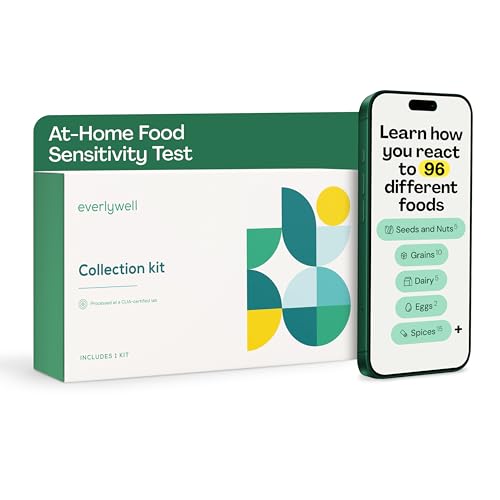
Everlywell Food Sensitivity Test - Learn How Your Body Responds to 96 Different Foods - At
AllergyHero Comprehensive Food Sensitivity Test Kit for Adults & Kids – Easy At-Home Use, Evaluates 286 Foods & Beverages and Identifies Dietary Triggers, Helps with Precise Dietary Choices &a

Elimination Diet Journal: 60-Day Symptom and Food Reintroduction Tracker: Morretti MS RD, Heidi
Food Diary and Symptom Log: Track ... ... The Elimination Diet: <strong>A 9-Week Plan to Identify Negative Food Triggers, Get Better Gut Health, Get Rid of Bloating & Brain Fog, and Live a Healthi
Evidence & Sources
Promising research with growing clinical support from multiple studies
- American Academy of Allergy, Asthma & Immunology (AAAAI)
- Canadian Society of Allergy and Clinical Immunology (CSACI)
- European Academy of Allergy and Clinical Immunology (EAACI)
- National Center for Complementary and Integrative Health (NCCIH)
- Journal of Allergy and Clinical Immunology
- Allergy
- World Allergy Organization Journal
- BMJ
- American College of Gastroenterology (ACG)
- NIAID Guidelines for the Diagnosis and Management of Food Allergy
This content is for informational purposes only and does not constitute medical advice. Always consult a qualified healthcare provider before starting, stopping, or changing any supplement or medication regimen.