

Continuous Glucose Monitoring
Also known as: CGM, Continuous Glucose Monitor, Glucose Sensor
Continuous Glucose Monitoring: An Overview
Continuous glucose monitoring (CGM) refers to wearable sensor-based technology that measures glucose levels in interstitial fluid throughout the day and night. Unlike a single fasting glucose test or occasional finger-stick measurement, CGM provides a dynamic picture of glucose patterns over time, including post-meal rises, overnight trends, variability, and episodes of low or high glucose. In conventional diabetes care, CGM has become an important tool for people with type 1 diabetes and many with type 2 diabetes, especially when glucose-lowering medications create a risk of hypoglycemia. More recently, CGM has also attracted attention in functional and preventive health settings for examining individual responses to meals, exercise, sleep disruption, stress, and other lifestyle factors.
The value of CGM lies in its ability to reveal patterns rather than isolated numbers. Metrics such as time in range, glycemic variability, average glucose, and glucose management indicator can help clinicians and researchers understand how stable or reactive glucose regulation may be. This is relevant because repeated large glucose excursions and chronic hyperglycemia are associated with insulin resistance, metabolic syndrome, cardiovascular risk, and progression toward diabetes. At the same time, interpretation requires nuance: glucose responses vary widely between individuals, and not every temporary rise after eating indicates disease. Context, symptoms, lab values, and overall metabolic health all matter.
In public health terms, CGM sits at the intersection of diabetes management, metabolic health screening, and personalized nutrition. Rates of prediabetes and type 2 diabetes remain high globally, which has increased interest in tools that may detect dysglycemia earlier or support behavior change. Research suggests CGM can improve engagement and self-awareness in some people, but the strongest evidence remains in established diabetes care rather than in generally healthy populations. For individuals without diabetes, questions remain about how best to interpret normal physiologic glucose variation and whether routine CGM use leads to meaningful long-term health improvements.
From a broader integrative perspective, CGM is often used as a biofeedback tool. It may help illustrate how sleep deprivation, psychological stress, meal composition, alcohol intake, circadian disruption, and physical activity influence glucose regulation. This aligns with functional medicine’s interest in personalized metabolic resilience and early signs of insulin resistance. Even so, experts generally note that CGM data are most useful when interpreted alongside clinical history, laboratory testing, and guidance from qualified healthcare professionals, rather than as a stand-alone measure of health.
Medical Perspectives
Two Ways of Seeing Health

Western
scientific · clinical
Western medicine applies science, technology, and clinical experience to treat symptoms through testing, diagnosis, and targeted intervention.

Eastern
traditional · alternative
Eastern medicine focuses on treating the body naturally by applying traditional knowledge practiced for thousands of years, emphasizing balance and whole-person wellness.
Gold Bamboo presents both perspectives side-by-side so you can make informed decisions. We don't advocate for one over the other — your health choices are yours.
Western Medicine Perspective
Western / Conventional Medicine Perspective
In conventional medicine, CGM is primarily understood as a validated monitoring technology for diabetes management. Professional organizations such as the American Diabetes Association and the Endocrine Society recognize CGM as an important tool for improving glycemic control, reducing hypoglycemia, and supporting day-to-day treatment decisions in appropriate patients. Real-time CGM and intermittently scanned CGM systems can help track patterns that hemoglobin A1c alone may miss, particularly glucose variability and overnight hypoglycemia. In people with type 1 diabetes, and in many with insulin-treated type 2 diabetes, studies indicate CGM can improve time in range and reduce clinically significant lows.
Conventional medicine evaluates CGM using standardized metrics. These include time in range, time below range, time above range, mean glucose, and glycemic variability. Clinicians often interpret these data in conjunction with A1c, fasting glucose, oral glucose tolerance testing, and clinical symptoms. While CGM can reveal early abnormalities in glucose handling, conventional medicine is cautious about overextending its use beyond validated indications. For individuals without diabetes, current evidence is still developing, and there is not yet broad consensus that routine CGM use improves hard clinical outcomes such as diabetes prevention, weight loss, or cardiovascular events.
From a research standpoint, CGM has expanded understanding of postprandial glucose responses and inter-individual variation in metabolism. Studies suggest that meal composition, microbiome features, sleep, exercise, and stress may shape glucose excursions. This has fueled interest in personalized nutrition and early metabolic risk detection. However, conventional experts also note limitations: sensor accuracy can vary, interstitial glucose lags behind blood glucose, and isolated spikes may be misinterpreted. In addition, consumer interest in CGM for wellness has grown faster than the evidence base. As a result, mainstream medicine generally views CGM as highly valuable in diabetes care and promising, but not yet fully established, for broader metabolic optimization in healthy populations.
Eastern & Traditional Perspective
Eastern / Traditional Medicine Perspective
Traditional medical systems do not historically describe continuous glucose monitoring in technological terms, but many of their core concepts overlap with the modern idea of observing the body’s patterns, rhythms, and responses over time. In Traditional Chinese Medicine (TCM), symptoms associated with disordered thirst, appetite, fatigue, or wasting have long been discussed under categories such as Xiao Ke (often translated as “wasting-thirst” syndrome). Rather than focusing solely on glucose numbers, TCM traditionally evaluates systemic patterns involving yin deficiency, internal heat, qi deficiency, digestive imbalance, and fluid depletion. From this perspective, CGM may be seen as a modern tool that tracks one measurable dimension of a broader physiologic pattern.
In Ayurveda, disturbances resembling metabolic imbalance may be understood through concepts involving agni (digestive/metabolic fire), ama (metabolic residue), and doshic imbalance, particularly kapha-related stagnation or meda dhatu disturbance in disorders of metabolism and weight. A device like CGM would not replace constitutional assessment, pulse, tongue, digestion, sleep, or emotional state, but some integrative practitioners may use it as contemporary feedback on how food timing, meal composition, stress, and daily routine influence metabolic steadiness. This is philosophically compatible with Ayurveda’s emphasis on individualized responses and circadian regularity.
In naturopathic and integrative settings, CGM is often framed as a biofeedback instrument that helps illustrate the relationship between lifestyle factors and metabolic resilience. Practitioners may explore how glucose patterns correspond with stress load, sleep quality, exercise tolerance, and meal composition, while also considering digestion, inflammation, and hormonal balance. The traditional and integrative view tends to place CGM within a bigger picture of whole-person health rather than treating glucose variation as an isolated problem.
At the same time, eastern and traditional frameworks generally emphasize that numbers do not equal the whole person. A glucose curve may be informative, but it does not capture all dimensions of vitality, constitutional tendency, or imbalance. This makes CGM potentially useful as a modern observational aid, while traditional systems continue to rely on broader pattern recognition and individualized interpretation. Evidence for CGM specifically within TCM or Ayurvedic practice remains limited, so its role there is best described as integrative and emerging rather than historically established.
Supplements & Products
Recommended Products

Practical CGM: Improving Patient Outcomes through Continuous Glucose Monitoring eBook : Scheiner, Gary: Kindle Store
To address this, diabetes educator ... <strong>to give healthcare providers the skill to make more effective use of the data generated by continuous glucose monitors, in both real-time and on a retros
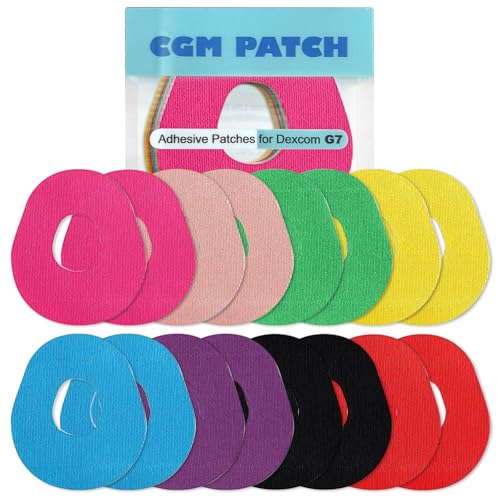
G7 Adhesive Patches Waterproof 45pack Full Cover Dexcom Overpatch Clear G7 Overlay Patch Easy Use, Strong Adhesion Long Lasting 10+ Days Breathable Skin Friendly & Latex-Free
Skin Grip Adhesive Patches Compatible with Dexcom G7 & Stelo CGM – <strong>Waterproof & Sweatproof Cover for Continuous Glucose Monitor Sensor, Stays Secure for 10-15 Days – 20 Pack, Tan</stro

Skin Grip Freestyle Libre 3 Sensor Covers-Waterproof & Sweatproof Adhesive Patches for 10-15 Days (Not for Libre2), Pre-Cut CGM Sensors Cover, Compatible with Instinct Sensors- 20 Pack, Basic Pack
Comfortable, Skin-Friendly & Pre-Cut to Fit Your Device: Our breathable diabetic overpatches are <strong>made of 100% medical-grade adhesive that is latex-free, zinc oxide-free, and hypoallergenic
Evidence & Sources
Promising research with growing clinical support from multiple studies
- American Diabetes Association. Standards of Care in Diabetes
- Diabetes Care
- The Journal of Clinical Endocrinology & Metabolism
- Nature Medicine
- National Institute of Diabetes and Digestive and Kidney Diseases (NIDDK)
- National Center for Complementary and Integrative Health (NCCIH)
- World Health Organization (WHO)
- Diabetologia
This content is for informational purposes only and does not constitute medical advice. Always consult a qualified healthcare provider before starting, stopping, or changing any supplement or medication regimen.