

Calprotectin Stool Test
Also known as: Fecal Calprotectin, Stool Calprotectin
Overview
The calprotectin stool test is a noninvasive laboratory test that measures the amount of calprotectin, a protein released largely by neutrophils, in a stool sample. Because calprotectin levels tend to rise when the intestinal lining is inflamed, the test is widely used as a marker of gastrointestinal inflammation rather than a diagnosis in itself. It is commonly discussed in the evaluation of chronic diarrhea, abdominal pain, rectal bleeding, suspected inflammatory bowel disease (IBD), and ongoing digestive symptoms where clinicians are trying to distinguish inflammatory conditions from more functional disorders.
In practice, fecal calprotectin has become especially important in helping separate inflammatory gut diseases such as Crohn’s disease and ulcerative colitis from conditions like irritable bowel syndrome (IBS), where symptoms may be significant but intestinal inflammation is typically absent. Research suggests that this distinction can reduce unnecessary invasive testing in some settings while also identifying patients who may need further evaluation, including colonoscopy or imaging. It is also used in people with established IBD to help assess whether inflammation may be active, whether relapse is more likely, or whether mucosal healing is occurring.
The test has limitations. Calprotectin can be elevated for many reasons besides IBD, including gastrointestinal infections, colorectal cancer, diverticular inflammation, celiac disease, use of certain medications such as NSAIDs, and other inflammatory conditions affecting the bowel. Results can also vary depending on the laboratory method, the patient’s age, and the cutoff used. For that reason, calprotectin is best understood as a useful triage and monitoring biomarker that must be interpreted in clinical context rather than a standalone answer.
From a broader health perspective, the calprotectin stool test reflects a shift toward less invasive assessment of gut inflammation. It sits at the intersection of symptom-based care and objective biomarker testing, making it relevant to both conventional gastroenterology and integrative approaches that seek clearer differentiation between inflammatory and noninflammatory digestive patterns. As with any test, interpretation is most meaningful when combined with medical history, other laboratory findings, and guidance from a qualified healthcare professional.
Medical Perspectives
Two Ways of Seeing Health

Western
scientific · clinical
Western medicine applies science, technology, and clinical experience to treat symptoms through testing, diagnosis, and targeted intervention.

Eastern
traditional · alternative
Eastern medicine focuses on treating the body naturally by applying traditional knowledge practiced for thousands of years, emphasizing balance and whole-person wellness.
Gold Bamboo presents both perspectives side-by-side so you can make informed decisions. We don't advocate for one over the other — your health choices are yours.
Western Medicine Perspective
Western / Conventional Medicine Perspective
In conventional medicine, fecal calprotectin is viewed as a validated biomarker of intestinal inflammation. The biological rationale is straightforward: when neutrophils migrate into the intestinal lumen during inflammatory activity, calprotectin is released and becomes detectable in stool. Studies indicate that fecal calprotectin has good clinical utility for distinguishing IBD from functional bowel disorders, particularly in patients with persistent lower gastrointestinal symptoms. It is therefore often used as part of the workup before proceeding to more invasive diagnostic testing.
A major clinical use is in screening and triage. In patients with symptoms such as chronic diarrhea, abdominal pain, weight loss, urgency, or blood in the stool, an elevated fecal calprotectin raises suspicion for an inflammatory process and may support further gastroenterology evaluation. In contrast, a low value makes significant intestinal inflammation less likely, though not impossible. Conventional practice also uses the test in monitoring known IBD, where trends in calprotectin may correlate with endoscopic inflammation, relapse risk, and response to therapy. Research suggests that serial measurements may help identify subclinical inflammation even when symptoms alone are unclear.
At the same time, conventional medicine emphasizes the test’s imperfect specificity. Elevated values do not point to a single diagnosis and may reflect infection, medication effects, malignancy, microscopic or macroscopic inflammation, or other organic bowel disease. Age-specific considerations also matter, as infants and young children may have naturally higher levels than adults. For these reasons, professional societies generally present fecal calprotectin as a decision-support tool rather than a replacement for endoscopy, biopsy, stool cultures, imaging, or clinician assessment. Consulting a healthcare provider is important for proper interpretation, especially when symptoms are persistent, severe, or accompanied by bleeding, fever, anemia, or weight loss.
Eastern & Traditional Perspective
Eastern / Traditional Medicine Perspective
Traditional systems of medicine do not historically describe calprotectin as a laboratory concept, but many do recognize patterns that overlap with what modern medicine would call intestinal inflammation, damp-heat, impaired digestion, mucosal irritation, or chronic bowel imbalance. In Traditional Chinese Medicine (TCM), symptoms such as urgent diarrhea, abdominal pain, mucus or blood in the stool, and tenesmus may be interpreted through pattern frameworks including damp-heat in the intestines, spleen qi deficiency, liver-spleen disharmony, or toxin-related dysentery patterns, depending on the overall presentation. The modern calprotectin result can therefore be seen as an additional biomedical data point that may complement traditional pattern differentiation, rather than replace it.
In Ayurveda, chronic inflammatory bowel symptoms may be discussed in relation to disturbed agni (digestive fire), ama (metabolic waste or toxic residue), and imbalance in pitta and vata, particularly when there is heat, urgency, pain, or irregular bowel function. Naturopathic and integrative frameworks similarly may interpret an elevated inflammatory stool marker as evidence that symptoms are not purely functional, prompting closer attention to mucosal integrity, inflammatory burden, infection, or food-related triggers. However, these traditions generally rely on broader constitutional assessment rather than a single test result.
From an integrative perspective, the calprotectin stool test can serve as a bridge between traditional symptom-pattern assessment and modern objective measurement. It may help clarify whether digestive complaints appear more consistent with an inflammatory process versus a functional disturbance, which can inform the depth of evaluation pursued by a healthcare team. Still, traditional and complementary systems vary widely in how they conceptualize digestive illness, and there is limited direct research linking calprotectin values to traditional diagnostic categories. For that reason, any interpretation within eastern or integrative care is best viewed as complementary and ideally coordinated with qualified medical evaluation.
Supplements & Products
Recommended Products

Crohn's and Colitis For Dummies: Ali, Tauseef, Rubin, David T.
Defining and diagnosing Crohn’s disease and ulcerative colitis · Seeking help from the right group of medical professionals ... Tauseef Ali, MD, is a <strong>consultant gastroenterologist and inflamma
![Vakly Graduated Specimen Collector Pans [Pack of 5] Toilet Nursing Hat for Urine, Vomit & Stool Collection Fits Over Toilets and Commodes - 30 oz for Women and Elderly (5) : Industrial & Scientific](https://m.media-amazon.com/images/I/51e3kYkD+oL.jpg)
Vakly Graduated Specimen Collector Pans [Pack of 5] Toilet Nursing Hat for Urine, Vomit & Stool Collection Fits Over Toilets and Commodes - 30 oz for Women and Elderly (5) : Industrial & Scientific
MULTIFUNCTION VERSATILITY - <strong>Bodily output collection unit can be used for catching all body specimens including vomit, urine, and stool feces</strong>. These large 30-ounce output catchers fit
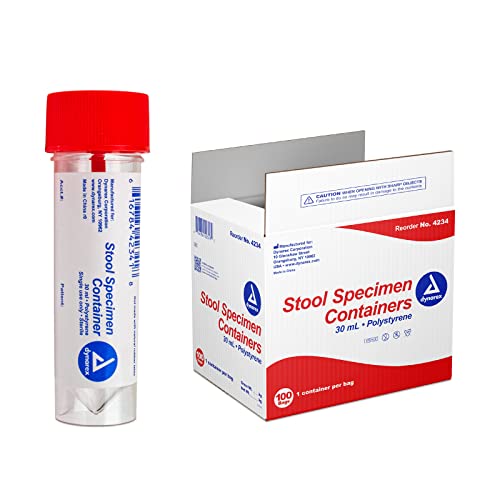
Dynarex Stool Specimen Containers, Non-Sterile, Bulk Packed, Specimen Cups with Spoon Cap Lids, Used for Fecal/Stool Specimen, Clear with Red Lid, 1 Box of 100 Dynarex Specimen Containers : Industrial & Scientific
This item: Dynarex Stool Specimen Containers, Non-Sterile, Bulk Packed, Specimen Cups with Spoon Cap Lids, Used for Fecal/Stool Specimen, Clear with Red Lid, 1 Box of 100 Dynarex Specimen Containers
Evidence & Sources
Supported by multiple clinical trials and systematic reviews
- National Institute for Health and Care Excellence (NICE) guidance on faecal calprotectin diagnostic tests
- American Gastroenterological Association (AGA) clinical practice guidance
- European Crohn’s and Colitis Organisation (ECCO) guidelines
- World Gastroenterology Organisation (WGO) guidance
- Cochrane Database of Systematic Reviews
- The Lancet Gastroenterology & Hepatology
- Clinical Gastroenterology and Hepatology
- Mayo Clinic Laboratories / Mayo Clinic Proceedings
- National Institute of Diabetes and Digestive and Kidney Diseases (NIDDK)
- National Center for Complementary and Integrative Health (NCCIH)
This content is for informational purposes only and does not constitute medical advice. Always consult a qualified healthcare provider before starting, stopping, or changing any supplement or medication regimen.