

Body Mass Index
Also known as: BMI, Body Mass Indicator
Overview
Body Mass Index (BMI) is a simple screening calculation derived from a person’s weight relative to height, typically expressed as kilograms per square meter (kg/m²). It is widely used in public health, clinical practice, and research to categorize general weight status into ranges such as underweight, normal weight, overweight, and obesity. Because it is inexpensive, fast, and standardized, BMI has become one of the most common population-level tools for estimating patterns associated with body weight.
BMI is significant largely because higher and lower BMI ranges are associated, at a population level, with differences in health risk. Research has linked elevated BMI—particularly in obesity ranges—with increased likelihood of conditions such as type 2 diabetes, cardiovascular disease, obstructive sleep apnea, osteoarthritis, fatty liver disease, and certain cancers. Very low BMI may also correlate with health concerns including undernutrition, frailty, lower bone density, or underlying illness. At the same time, BMI is not a direct measure of body fat, metabolic health, fitness, or disease. It does not distinguish between fat mass and lean mass, nor does it capture fat distribution, which may be clinically important.
This limitation is especially relevant in integrative and personalized care. Two individuals with the same BMI may have very different health profiles depending on waist circumference, visceral fat, muscle mass, age, sex, ethnicity, physical activity, diet quality, inflammatory burden, and metabolic markers such as blood pressure, lipids, and glucose regulation. For this reason, many clinicians and researchers view BMI as a useful screening indicator, but an incomplete standalone metric.
In broader health discussions, BMI remains both common and controversial. Supporters note its utility in epidemiology and risk stratification, while critics emphasize that it may oversimplify body size and health, particularly across diverse populations. A balanced view recognizes BMI as one data point among many, best interpreted in context and, when relevant, alongside professional assessment and additional measures of body composition and metabolic status.
Medical Perspectives
Two Ways of Seeing Health

Western
scientific · clinical
Western medicine applies science, technology, and clinical experience to treat symptoms through testing, diagnosis, and targeted intervention.

Eastern
traditional · alternative
Eastern medicine focuses on treating the body naturally by applying traditional knowledge practiced for thousands of years, emphasizing balance and whole-person wellness.
Gold Bamboo presents both perspectives side-by-side so you can make informed decisions. We don't advocate for one over the other — your health choices are yours.
Western Medicine Perspective
Western Medicine Perspective
In conventional medicine, BMI is primarily understood as a screening and risk-assessment tool, not a diagnostic test on its own. Major health organizations use standard BMI categories to support population surveillance and to help identify people who may benefit from further evaluation. In adult populations, higher BMI ranges are associated with greater statistical risk of cardiometabolic disease, while lower ranges may prompt assessment for malnutrition, chronic illness, or other contributing factors. Clinicians often use BMI alongside waist circumference, medical history, laboratory markers, blood pressure, and lifestyle assessment to develop a more accurate picture of health.
Western medicine also recognizes important limitations and sources of misclassification. BMI may overestimate body fatness in highly muscular individuals and underestimate risk in people with relatively normal body weight but excess visceral adiposity. It may also perform differently across age groups and ethnic populations, since associations between BMI and body fat or disease risk are not identical in all groups. For children and adolescents, BMI is interpreted using age- and sex-specific growth percentiles, reflecting developmental differences.
Current research increasingly emphasizes a broader framework that includes body composition, fat distribution, metabolic health, physical function, and social determinants of health. Studies indicate that waist-to-height ratio, waist circumference, and direct or indirect measures of adiposity can add clinically meaningful information beyond BMI alone. As a result, conventional medicine generally treats BMI as a practical starting point for screening, while acknowledging that comprehensive assessment is often needed for individualized interpretation.
Eastern & Traditional Perspective
Eastern/Traditional Medicine Perspective
In Traditional Chinese Medicine (TCM) and other traditional systems, health is generally not defined by a single numerical index like BMI. Instead, body size and weight patterns may be interpreted through broader functional frameworks involving balance, digestion, energy transformation, constitution, and fluid metabolism. In TCM theory, weight gain may be discussed in relation to patterns such as Spleen Qi deficiency, Dampness accumulation, or Phlegm, while low body weight may be viewed through patterns involving Qi deficiency, Blood deficiency, Yin deficiency, or poor nutrient assimilation. These interpretations are traditional concepts and do not correspond directly to biomedical diagnoses.
In Ayurveda, body habitus may be understood through the lens of dosha balance, agni (digestive/metabolic fire), ama (metabolic byproducts), and prakriti (constitutional type). Some individuals may be seen as naturally tending toward a leaner or heavier build based on constitution, while changes in body weight are interpreted in relation to digestion, tissue nourishment, and lifestyle rhythm. This perspective often places less emphasis on universal numerical cutoffs and more emphasis on overall vitality, function, appetite, elimination, sleep, and constitutional balance.
Naturopathic and integrative frameworks commonly bridge these views by acknowledging that BMI can be informative at a screening level while still being insufficient as a holistic marker of health. These approaches often place additional focus on diet quality, physical activity, stress physiology, sleep, inflammatory status, gut function, and metabolic resilience. Across traditional and integrative systems, a common theme is that body weight is best understood within the larger context of the whole person, and any interpretation is ideally individualized in consultation with qualified healthcare professionals.
Supplements & Products
Recommended Products
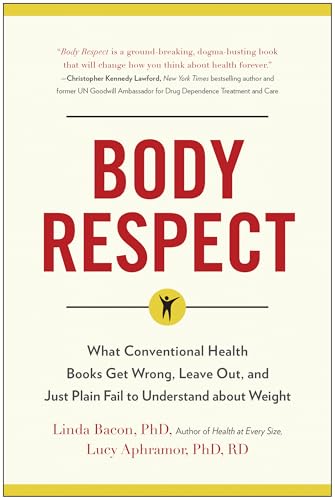
Body Respect: What Conventional Health Books Get Wrong, Leave Out, and Just Plain Fail to Understand about Weight
Lucy Aphramor's Body Respect <strong>debunks common myths about weight, including the misconceptions that BMI can accurately measure health, that fatness necessarily leads to disease, and that di

WITHINGS Body Smart - Accurate Scale for Body Weight and Fat Percentage, Body Composition Wi-Fi and Bluetooth Weight Scale, Baby Weight Scale, Smart Scale Apple Health Compatible, Bathroom Scale
ACHIEVE YOUR WEIGHT GOALS FASTER - <strong>Reliably track your weight to within 50 g and view your weight trends directly on the scale's high-resolution color display</strong>. INCREASE MUSCLE MA

MyoTape Body Measure Tape - Arms Chest Thighs or Waist Measuring Tape for Personal Trainer or Home Fitness Goals
This measuring tape <strong>provides the most accurate measurement of not just body circumference but also body fat</strong>. Use the tape for wrapping around and measuring your belly, arms, and chest
Evidence & Sources
Supported by multiple clinical trials and systematic reviews
- World Health Organization (WHO)
- Centers for Disease Control and Prevention (CDC)
- National Heart, Lung, and Blood Institute (NHLBI)
- National Institute of Diabetes and Digestive and Kidney Diseases (NIDDK)
- JAMA
- The Lancet
- The New England Journal of Medicine
- American Journal of Clinical Nutrition
- NCCIH
- Harvard T.H. Chan School of Public Health
This content is for informational purposes only and does not constitute medical advice. Always consult a qualified healthcare provider before starting, stopping, or changing any supplement or medication regimen.