

Basal Body Temperature Charting
Also known as: BBT Charting, Basal Temperature Tracking, Fertility Temperature Chart
Overview
Basal body temperature (BBT) charting is the practice of recording body temperature immediately upon waking, before significant movement or activity, to observe subtle cycle-related changes over time. In menstrual health and fertility awareness contexts, it is most commonly used to identify the small temperature rise that typically follows ovulation, reflecting the thermogenic effect of progesterone in the luteal phase. Because the pattern is retrospective rather than predictive, BBT charting is generally understood as a way to confirm that ovulation likely occurred rather than precisely forecast it in real time.
BBT charting has long been used in natural family planning, fertility awareness-based methods, and self-monitoring of menstrual cycles. Interest has also expanded within integrative and functional health communities, where chart patterns are sometimes discussed in relation to broader hormonal rhythms, cycle regularity, sleep quality, illness, stress, alcohol use, travel, and in some discussions, thyroid function. In practice, however, temperature data are influenced by many factors, and interpretation is most meaningful when viewed alongside other cycle signs such as cervical mucus patterns, cycle length history, and symptom tracking.
From a clinical standpoint, BBT charting occupies an in-between space: it is inexpensive, noninvasive, and potentially informative for cycle awareness, but it is also less precise than laboratory hormone testing or ultrasound-based ovulation assessment. Research and clinical guidance generally support its role as a low-cost observational tool, especially for retrospective ovulation confirmation, while also recognizing important limitations in accuracy, user consistency, and vulnerability to confounding factors. For people trying to understand menstrual timing, subfertility patterns, or changing cycles after hormonal contraception, BBT charting may offer useful context, but it is not considered a stand-alone diagnostic method.
In broader health conversations, BBT charting is sometimes linked to concerns about anovulation, luteal phase patterns, irregular cycles, perimenopause, or endocrine function. These interpretations are more nuanced than many consumer resources suggest. A temperature chart can reveal a pattern worth discussing with a clinician, but by itself it cannot diagnose conditions such as hypothyroidism, infertility, or hormone imbalance. Most evidence-based discussions emphasize that charting may be a helpful piece of the picture when integrated with medical history, symptoms, and, when needed, professional evaluation.
Medical Perspectives
Two Ways of Seeing Health

Western
scientific · clinical
Western medicine applies science, technology, and clinical experience to treat symptoms through testing, diagnosis, and targeted intervention.

Eastern
traditional · alternative
Eastern medicine focuses on treating the body naturally by applying traditional knowledge practiced for thousands of years, emphasizing balance and whole-person wellness.
Gold Bamboo presents both perspectives side-by-side so you can make informed decisions. We don't advocate for one over the other — your health choices are yours.
Western Medicine Perspective
Western Medicine Perspective
In conventional medicine, BBT charting is primarily understood as a fertility awareness and menstrual tracking tool. After ovulation, progesterone produced by the corpus luteum tends to raise resting temperature slightly, creating a biphasic pattern on the chart. Studies indicate that this post-ovulatory shift can correlate with ovulation, but the method is imperfect: the temperature rise usually occurs after ovulation has already happened, and the pattern may be obscured by inconsistent measurement timing, poor sleep, fever, alcohol, travel, shift work, or ambient conditions. For this reason, western clinicians typically view BBT as supportive information rather than a definitive test.
In fertility care, BBT charting may be used historically or as an adjunct to help patients understand cycle timing, but it has largely been supplemented by methods with greater precision, such as urinary luteinizing hormone (LH) testing, mid-luteal progesterone assessment, and transvaginal ultrasound monitoring. Professional organizations discussing infertility and fertility awareness generally note that BBT may help identify whether ovulation likely occurred over a series of cycles, yet it is less reliable for timing intercourse or procedures compared with other methods. Digital wearables and continuous temperature sensors have renewed interest in temperature-based ovulation tracking, though validation studies remain mixed and device performance varies.
BBT is sometimes discussed in relation to broader endocrine patterns, especially thyroid health, but conventional medicine does not consider basal temperature charting a validated diagnostic tool for thyroid disorders. Symptoms, thyroid-stimulating hormone (TSH), free thyroid hormone testing, and clinical assessment remain the standard framework. Similarly, while irregular or absent temperature shifts may raise questions about ovulatory dysfunction, polycystic ovary syndrome, hypothalamic amenorrhea, or luteal phase abnormalities, diagnosis requires more than chart interpretation alone.
Overall, the western perspective recognizes BBT charting as a low-risk, low-cost self-observation method that can increase body literacy and support cycle discussions with healthcare professionals. Its strongest role is retrospective cycle pattern recognition rather than diagnosis or real-time prediction, and clinicians generally encourage interpretation within the larger context of reproductive history, symptoms, and appropriate medical testing.
Eastern & Traditional Perspective
Eastern/Traditional Medicine Perspective
In Traditional Chinese Medicine (TCM) and other traditional systems, BBT charting is often valued as a practical way to observe the body’s cyclical rhythms rather than simply as an ovulation marker. TCM practitioners may interpret temperature patterns through concepts such as Kidney yang and yin balance, Liver qi regulation, Blood sufficiency, and the smooth transformation between follicular and luteal phases. In this framework, a chart that appears persistently low, unstable, or lacking a clear biphasic shift may be discussed as reflecting broader energetic imbalance, constitutional weakness, stress-related dysregulation, or impaired warming and transformative functions. These interpretations are traditional models rather than direct equivalents of biomedical diagnoses.
In integrative fertility settings, BBT charts are often considered alongside menstrual flow quality, cervical mucus, sleep, emotional stress, digestive patterns, and signs such as cold sensitivity or fatigue. TCM and naturopathic practitioners may see charting as a way to follow how lifestyle, stress burden, nourishment, and menstrual rhythm change over time. Ayurveda may place similar emphasis on daily rhythm, metabolic balance, reproductive tissue vitality, and the influence of stress on cycle regularity, though classical Ayurvedic assessment does not rely on BBT in the same formalized way found in modern fertility charting.
Traditional and integrative practitioners sometimes use chart trends to help contextualize discussions about fertility awareness, menstrual irregularity, postpartum recovery, or perimenopausal transition. From these perspectives, BBT is less about a single number and more about a pattern—including phase length, stability, and cyclical warmth. However, high-quality research validating traditional interpretations of specific chart shapes remains limited, and these systems generally rely on a broader pattern-based assessment rather than temperature alone.
A balanced integrative view acknowledges that BBT charting can serve as a bridge between conventional physiology and traditional pattern recognition. It may support patient engagement and self-awareness, but interpretations related to “yang deficiency,” “cold uterus,” or other traditional frameworks are best understood within those systems’ theoretical models and not as stand-alone medical conclusions.
Supplements & Products
Recommended Products

Taking Charge of Your Fertility: The Definitive Guide to Natural Birth Control, Pregnancy Achievement, and Reproductive Health
Since the publication of Taking Charge of your Fertility two decades ago, Toni Weschler has taught a whole new generation of women how to become pregnant, avoid pregnancy naturally and gain better con
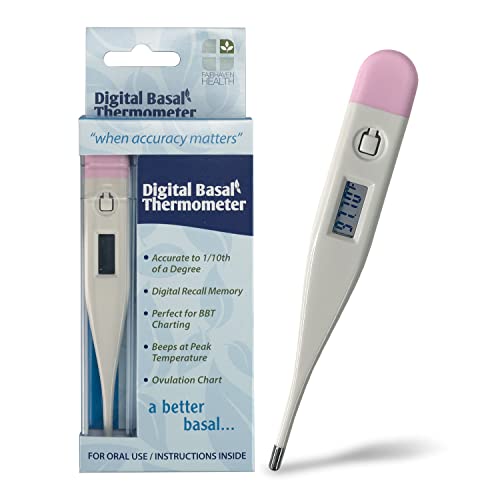
Fairhaven Health Digital Basal Thermometer, for Fertility Charting and Ovulation Tracker, Accurate at
Digital Basal Body Thermometer, ... Fairhaven Health Digital Basal Thermometer <strong>allows a woman to determine her body temperature for basal body temperature (BBT) charting purposes</strong>....
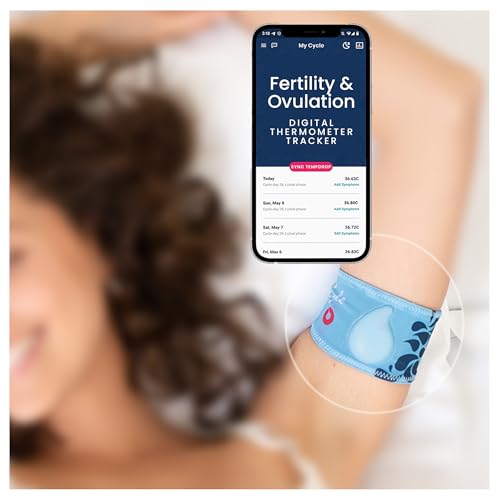
Tempdrop Fertility and Ovulation Digital Thermometer Tracker – Wearable Basal Body Temperature (BBT) Monitoring Sensor and Fertility Charting App Includes Comfortable Armband (S/M – 8.5-15.5 inch)
Buy Tempdrop Fertility and Ovulation Digital Thermometer Tracker – Wearable Basal Body Temperature (BBT) Monitoring Sensor and Fertility Charting App Includes Comfortable Armband (S/M – 8.5-15.5 inch)
Evidence & Sources
Promising research with growing clinical support from multiple studies
- American College of Obstetricians and Gynecologists (ACOG)
- American Society for Reproductive Medicine (ASRM)
- World Health Organization (WHO)
- National Institutes of Health (NIH)
- National Center for Complementary and Integrative Health (NCCIH)
- Fertility and Sterility
- Obstetrics & Gynecology
- Journal of Medical Internet Research
- Traditional Chinese Medicine journals on fertility awareness and menstrual charting
This content is for informational purposes only and does not constitute medical advice. Always consult a qualified healthcare provider before starting, stopping, or changing any supplement or medication regimen.