

Vitamin K2
Overview
Vitamin K2 is a fat-soluble nutrient within the broader vitamin K family, best known for its role in regulating how the body uses calcium. While vitamin K1 (phylloquinone) is found largely in leafy green vegetables and is classically associated with blood clotting, vitamin K2 (menaquinones) refers to a group of related compounds that appear to have broader activity in tissues such as bone, blood vessels, and possibly the heart. Vitamin K2 occurs in several forms, commonly identified as MK-4 and MK-7, which differ in food sources, metabolism, and how long they remain in circulation.
Vitamin K2 is naturally present in certain fermented foods, egg yolks, dairy products, and some animal-derived foods, with particularly high levels reported in natto, a traditional fermented soybean food. Interest in K2 supplementation has grown because research suggests it may help activate proteins such as osteocalcin and matrix Gla protein, both of which depend on vitamin K to function. These proteins are involved in directing calcium toward bones and teeth and away from soft tissues, including blood vessels.
From a public health perspective, vitamin K2 is not discussed as commonly as vitamin D or calcium, yet it has become a notable topic in bone and cardiovascular wellness. Researchers continue to explore whether inadequate vitamin K status contributes to reduced bone mineral quality, vascular calcification, or age-related changes in calcium metabolism. However, questions remain about which form of K2 is most relevant, what constitutes optimal intake, and how supplementation compares with obtaining vitamin K through food.
Vitamin K2 is also important in the context of medication safety. Because vitamin K directly affects clotting pathways, supplements containing K2 may interact with vitamin K antagonist anticoagulants, such as warfarin. For that reason, discussions of K2 typically include the need for individualized medical guidance, especially for people with cardiovascular disease, osteoporosis risk, or those taking prescription medications.
Medical Perspectives
Two Ways of Seeing Health

Western
scientific · clinical
Western medicine applies science, technology, and clinical experience to treat symptoms through testing, diagnosis, and targeted intervention.

Eastern
traditional · alternative
Eastern medicine focuses on treating the body naturally by applying traditional knowledge practiced for thousands of years, emphasizing balance and whole-person wellness.
Gold Bamboo presents both perspectives side-by-side so you can make informed decisions. We don't advocate for one over the other — your health choices are yours.
Western Medicine Perspective
Western Medicine Perspective
In conventional medicine, vitamin K is recognized primarily for its essential role in the gamma-carboxylation of vitamin K–dependent proteins, a biochemical process that allows certain proteins to bind calcium properly. This function is central not only to normal blood coagulation, but also to bone metabolism and vascular biology. Western research has focused on whether vitamin K2, especially MK-7 and MK-4, may support bone strength or influence markers of arterial calcification beyond the effects seen with vitamin K1.
Clinical and observational studies suggest that higher vitamin K status is associated with better activation of osteocalcin and other bone-related proteins, and some trials indicate potential benefits for bone mineral density, fracture-related outcomes, or bone quality, particularly in postmenopausal populations. Evidence for cardiovascular benefit is more mixed. Some studies have linked higher menaquinone intake with lower vascular calcification or cardiovascular risk, but interventional findings are not yet consistent enough for broad clinical consensus. As a result, K2 remains an area of active investigation rather than a universally established standard intervention.
Conventional safety discussions emphasize that vitamin K2 is generally well tolerated in healthy adults at commonly studied intakes, but it carries important drug-interaction considerations, particularly with anticoagulant therapy. Mainstream medicine also distinguishes between biological plausibility and clinical outcome evidence: while the mechanisms behind K2 are well characterized, the strength of evidence varies depending on the condition being considered. Healthcare professionals often evaluate K2 in the broader context of overall nutrition, vitamin D status, calcium balance, bone health, kidney function, and medication use.
Eastern & Traditional Perspective
Eastern and Traditional Medicine Perspective
Traditional medical systems generally do not describe vitamin K2 as an isolated nutrient in the modern biochemical sense. Instead, systems such as Traditional Chinese Medicine (TCM) and Ayurveda tend to interpret bone, circulation, and aging through broader functional patterns. In TCM, concerns that overlap with modern discussions of bone weakness or age-related degeneration may be understood through concepts such as Kidney essence, Liver blood, and the smooth flow of qi and blood. Foods that are mineral-rich, fermented, or traditionally strengthening may be viewed as supportive to these systems, even though classical texts do not identify K2 specifically.
In Ayurveda, tissue nourishment is often considered through the lens of dhatus (body tissues), digestive strength, and long-term vitality. Bone tissue, or asthi dhatu, is seen as dependent on proper digestion, absorption, and overall tissue metabolism. Fermented foods and nutrient-dense animal foods have been used in some traditional dietary frameworks, and modern integrative practitioners may interpret their value partly through nutrients now known to include vitamin K2. Naturopathic and functional traditions similarly tend to place K2 within a wider pattern involving bone remodeling, cardiovascular integrity, nutrient synergy, and whole-food nutrition.
Across these traditions, the emphasis is often less on a single standalone supplement and more on dietary patterns, digestion, vitality, and balance across body systems. Contemporary integrative medicine sometimes bridges traditional frameworks with modern nutrition science by discussing K2 alongside vitamin D, magnesium, gut health, and fermented foods. Even so, the traditional evidence base for K2 itself is limited, because the compound is a modern nutritional classification rather than a classical therapeutic category.
Supplements & Products
Recommended Products

Vitamin K2 and the Calcium Paradox: How a Little-Known Vitamin Could Save Your Life: Rheaume-Bleue, Kate
<strong>This is the first book to reveal how universal a Vitamin K2 deficiency is, and the risk (in the form of cancer and diabetes, among other ailments) the absence of Vitamin K2 poses</strong>.

Jarrow Formulas MK-7 90 mcg - Bioactive Form of Vitamin K2-120 Servings (Softgels) - for Bone & Cardiovascular Health - Vitamin K2 MK-7 Dietary Supplement - Gluten Free
Jarrow Formulas MK-7 (Menaquinone-7) is <strong>a bioactive form of Vitamin K2 derived from Natto through fermentation by Bacillus subtilis subsp. natto. Each softgel provides 90 mcg of of MK-7.</stro
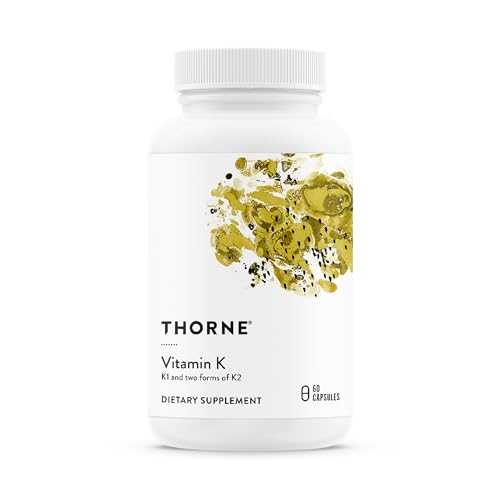
THORNE - Vitamin K - Vitamins K1 and K2 (as MK-4 and MK-7) Capsule Supplement - Supports Strong Bones* - Clinically Studied Ingredients - Third-Party Certified - Gluten, Dairy & Soy-Free - 60 Capsules
One Capsule Contains: Vitamin K 6,090 mcg, K2 (5 mg as MK-4), K1 (1 mg), K2 (90 mcg as MK-7).
Evidence & Sources
Promising research with growing clinical support from multiple studies
- National Institutes of Health Office of Dietary Supplements
- National Center for Complementary and Integrative Health (NCCIH)
- The American Journal of Clinical Nutrition
- Nutrition Reviews
- Osteoporosis International
- Thrombosis and Haemostasis
- Journal of Bone and Mineral Research
- Mayo Clinic Proceedings
This content is for informational purposes only and does not constitute medical advice. Always consult a qualified healthcare provider before starting, stopping, or changing any supplement or medication regimen.