

Nettle
Also known as: Stinging Nettle, Urtica Dioica, Nettle Leaf
Overview
Nettle most commonly refers to Urtica dioica, often called stinging nettle, a widely used botanical in both traditional herbalism and modern supplement practice. The plant is notable for its tiny hair-like structures that can cause a temporary stinging sensation on contact, yet once processed into teas, capsules, tinctures, extracts, or cooked foods, it has long been valued as both a nutritive herb and a functional botanical. Nettle leaves are naturally rich in minerals and plant compounds, while the root is often used separately in men’s health and urinary support formulas.
In contemporary wellness settings, nettle is frequently discussed for seasonal allergy support, joint comfort, urinary function, and general nourishment. Different parts of the plant are used for different purposes: the leaf is more commonly associated with allergy and nutritive use, while the root is more often studied in relation to lower urinary tract symptoms associated with benign prostatic hyperplasia (BPH). This distinction matters because research findings and traditional uses are not interchangeable across all preparations.
From a phytochemical standpoint, nettle contains a broad range of constituents, including flavonoids, phenolic compounds, lectins, polysaccharides, lignans, and minerals such as iron, calcium, magnesium, and potassium. Research suggests these compounds may contribute to anti-inflammatory, antioxidant, and mild diuretic effects, although the specific clinical significance depends on the preparation, dose form, and health context being studied. As with many botanicals, nettle occupies a space between food, traditional medicine, and supplement.
Interest in nettle remains strong because it sits at the intersection of traditional use and emerging clinical evidence. Some applications—particularly for urinary symptoms and inflammatory pathways—have been investigated in formal studies, while other uses remain supported more by historical practice and smaller trials. Because herbal products vary considerably in strength and formulation, interpretation of benefits and safety is best made in consultation with a qualified healthcare professional, especially for people with chronic conditions, medication use, pregnancy, or kidney-related concerns.
Medical Perspectives
Two Ways of Seeing Health

Western
scientific · clinical
Western medicine applies science, technology, and clinical experience to treat symptoms through testing, diagnosis, and targeted intervention.

Eastern
traditional · alternative
Eastern medicine focuses on treating the body naturally by applying traditional knowledge practiced for thousands of years, emphasizing balance and whole-person wellness.
Gold Bamboo presents both perspectives side-by-side so you can make informed decisions. We don't advocate for one over the other — your health choices are yours.
Western Medicine Perspective
Western / Conventional Medicine Perspective
In conventional medicine, nettle is generally viewed as an herbal supplement with several proposed biologic actions, rather than as a standard first-line therapy. Scientific interest has focused primarily on stinging nettle root for benign prostatic hyperplasia (BPH)-related urinary symptoms, and stinging nettle leaf or extracts for allergic rhinitis and inflammatory conditions. Laboratory and animal studies suggest nettle may influence inflammatory mediators, histamine-related pathways, and certain hormone-related mechanisms relevant to the prostate, but these effects do not always translate clearly into large-scale clinical outcomes.
For BPH, studies indicate that nettle root—often used alone or in combination with other botanicals such as saw palmetto—may be associated with modest improvement in urinary symptom scores in some men. However, evidence quality is mixed, and product formulations vary widely. Conventional clinicians generally distinguish symptom support from disease modification: herbal approaches may be studied for comfort or symptom burden, but they are not considered equivalent to full urologic evaluation, especially when symptoms such as urinary retention, blood in the urine, or recurrent infection are present.
For seasonal allergies, some small studies and mechanistic research suggest nettle leaf may have anti-inflammatory or antihistamine-like properties. Even so, the clinical evidence remains limited compared with standard allergy therapies. Nettle is also sometimes discussed in relation to joint discomfort, where its traditional use and preclinical anti-inflammatory data have drawn interest, but human evidence is still limited and not definitive.
From a safety standpoint, nettle is often considered generally well tolerated when used in processed supplement forms, though adverse effects such as gastrointestinal upset, sweating, rash, or fluid-balance changes have been reported. Because nettle may have diuretic, blood sugar–modulating, or blood pressure–modulating effects, theoretical or practical interactions may exist with medications used for diabetes, hypertension, anticoagulation, or diuresis. Conventional sources also note that raw fresh nettle can irritate the skin, and that any persistent urinary, allergic, or inflammatory symptoms warrant evaluation by a licensed healthcare provider.
Eastern & Traditional Perspective
Eastern / Traditional Medicine Perspective
In traditional Western herbalism and many naturopathic frameworks, nettle is often classified as a deeply nourishing, mineral-rich tonic herb. Rather than being viewed only through a single symptom lens, it has historically been used to support overall vitality, tissue nourishment, recovery during times of depletion, and healthy elimination. The leaf is especially valued as a food-like herb, often prepared as tea, infusion, or cooked green, reflecting the traditional belief that some plants support health through gradual nutritive effects rather than acute pharmacologic action alone.
Within traditional European herbal practice, nettle leaf has been used for seasonal respiratory irritation, spring cleansing traditions, fluid balance, and musculoskeletal comfort, while nettle root has been used more specifically for urinary and male reproductive wellness. Traditional use often distinguishes between the energetics and actions of different plant parts, with leaf considered more cooling, cleansing, and nutritive, and root regarded as more targeted to lower urinary tract patterns.
In Ayurvedic and naturopathic interpretations, nettle is sometimes understood as a plant that may help balance states associated with excess heat, irritation, or inflammatory burden while also replenishing minerals. Although nettle is not one of the classical cornerstone herbs of Traditional Chinese Medicine in the same way as some East Asian botanicals, practitioners in integrative and East-meets-West settings may still incorporate it based on functional qualities such as support for fluid metabolism, inflammatory balance, and constitutional nourishment.
Traditional systems also emphasize constitution, preparation, and context. An herb like nettle may be viewed differently when used as a food, a long infusion, a standardized extract, or as part of a formula. In these frameworks, nettle is rarely seen as a stand-alone answer; instead, it is typically one component of a broader strategy centered on pattern recognition, diet, lifestyle, and individualized care. As with any traditional or integrative approach, appropriate use depends on practitioner judgment and awareness of modern safety considerations.
Supplements & Products
Recommended Products

Medical Herbalism: The Science Principles and Practices Of Herbal Medicine: David Hoffmann
The author of seventeen books, including the highly regarded <strong>The Complete Illustrated Holistic Herbal, An Elders' Herbal, and The Herbal Handbook</strong>, Hoffmann teaches phytotherapy t
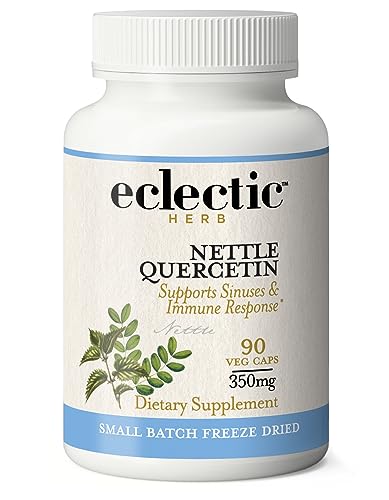
Eclectic Herb - Raw Freeze Dried Nettle Leaf Capsules | Supports Sinuses + Immune Response | Natural Herbal Supplement | Non-GMO, Vegan, Whole Herb (90 CT | 300 mg)
Each Capsule Contains: <strong>Stinging Nettle (Urtica dioica) leaf, wildcrafted and 100% fresh freeze-dried 300 mg.,1-3 capsules per day</strong>.

Now Foods Stinging Nettle Root Extract 250mg, Veg-Capsules, 90-Count (Pack of 3)
Buy Now Foods Stinging Nettle Root Extract 250mg, Veg-Capsules, 90-Count (Pack of 3) on Amazon.com ✓ FREE SHIPPING on qualified orders
Evidence & Sources
Promising research with growing clinical support from multiple studies
- National Center for Complementary and Integrative Health (NCCIH)
- Natural Medicines Database
- Cochrane Library
- Journal of Herbal Pharmacotherapy
- Phytomedicine
- Journal of Ethnopharmacology
- European Urology
- American Family Physician
- World Health Organization (WHO) monographs on medicinal plants
This content is for informational purposes only and does not constitute medical advice. Always consult a qualified healthcare provider before starting, stopping, or changing any supplement or medication regimen.