

Lemon Balm
Also known as: Melissa Officinalis, Melissa, Lemonbalm
Overview
Lemon balm (Melissa officinalis) is an aromatic herb in the mint family that has been used for centuries in European, Middle Eastern, and traditional herbal practice. It is best known for its association with calming the nervous system, supporting restful sleep, and easing mild digestive discomfort such as bloating or tension-related stomach upset. Modern supplement products commonly feature lemon balm as a tea, tincture, capsule, or extract, and it is frequently combined with other botanicals such as valerian, chamomile, or passionflower in formulas aimed at relaxation.
Interest in lemon balm is especially strong in the areas of stress, anxious mood, sleep quality, and cognitive calmness. Laboratory research has identified several active constituents, including rosmarinic acid, flavonoids, and volatile oils, which may help explain its traditional reputation. Some studies suggest lemon balm may influence GABA-related signaling, oxidative stress pathways, and inflammatory processes, though the exact mechanisms in humans remain under investigation. It has also attracted attention for topical use in cold sores, where antiviral activity against herpes simplex virus has been explored.
From a broader health perspective, lemon balm occupies an interesting middle ground between traditional herbal medicine and modern integrative care. It is widely perceived as a gentle herb, yet its effects can vary depending on preparation, dose standardization, and whether it is used alone or in combination products. Human studies suggest potential benefits for mild anxiety, restlessness, sleep disturbance, and functional digestive complaints, but research quality is mixed and not all findings are consistent.
Overall, lemon balm is best understood as a multifunctional traditional calming herb with moderate clinical interest. It is not regarded in conventional medicine as a primary treatment for major psychiatric, neurologic, or infectious illness, but it continues to be studied as a supportive option within self-care and integrative wellness contexts. As with any supplement, questions about interactions, suitability, and formulation are best discussed with a qualified healthcare professional, particularly for people who are pregnant, taking sedatives or thyroid-related medications, or managing chronic medical conditions.
Medical Perspectives
Two Ways of Seeing Health

Western
scientific · clinical
Western medicine applies science, technology, and clinical experience to treat symptoms through testing, diagnosis, and targeted intervention.

Eastern
traditional · alternative
Eastern medicine focuses on treating the body naturally by applying traditional knowledge practiced for thousands of years, emphasizing balance and whole-person wellness.
Gold Bamboo presents both perspectives side-by-side so you can make informed decisions. We don't advocate for one over the other — your health choices are yours.
Western Medicine Perspective
Western Medicine Perspective
In conventional and integrative medicine, lemon balm is generally discussed as a botanical supplement with possible mild anxiolytic, sedative, digestive, and topical antiviral properties. Research has examined it for stress-related symptoms, sleep disturbance, agitation, mild cognitive performance under stress, and herpes labialis (cold sores). Some small clinical trials and systematic reviews suggest that lemon balm, particularly in standardized extracts or combination formulas, may reduce subjective anxiety, restlessness, or sleep complaints. However, study designs vary considerably, and many trials are small, short-term, or evaluate multi-herb products rather than lemon balm alone.
Mechanistically, investigators have proposed that lemon balm may interact with the GABAergic system, which is relevant to relaxation and nervous system regulation. Rosmarinic acid and other phytochemicals may also contribute antioxidant and anti-inflammatory effects. In gastrointestinal contexts, lemon balm has been included in herbal combinations for functional dyspepsia, abdominal discomfort, and stress-sensitive digestive symptoms, reflecting a possible antispasmodic or soothing effect. Evidence here is promising but not definitive.
Topically, lemon balm has received attention for recurrent cold sores. Some studies indicate that creams containing Melissa officinalis extract may shorten symptom duration or reduce lesion progression when used early, likely related to in vitro antiviral activity against herpes simplex virus. Even so, it is generally viewed as an adjunctive or supportive botanical rather than a replacement for established antiviral therapies.
Safety data suggest lemon balm is often well tolerated in typical amounts, but conventional references note the possibility of drowsiness, gastrointestinal upset, or interaction concerns when combined with sedatives or other central nervous system-active substances. There has also been discussion in the literature about theoretical or possible effects on thyroid function, although the clinical significance remains unclear. From a western evidence standpoint, lemon balm is considered promising for mild stress, sleep, and cold sore support, but not established as a standalone treatment for diagnosed anxiety disorders, insomnia, or viral disease.
Eastern & Traditional Perspective
Eastern/Traditional Medicine Perspective
In traditional Western herbalism and naturopathic practice, lemon balm has long been regarded as a gentle nervine and carminative herb. A nervine is a plant traditionally used to calm tension, lift mood, and support resilience during periods of mental or emotional strain, while a carminative is used to ease digestive discomfort linked to gas, cramping, or nervous stomach symptoms. In this framework, lemon balm is often associated with states of overstimulation, irritability, restlessness, poor sleep, and digestive unease connected to stress.
Although lemon balm is not a major classical herb in Traditional Chinese Medicine in the same way that native Chinese medicinals are, integrative East-West practitioners may interpret it through functional patterns such as soothing constraint, calming shen disturbance, and easing digestive stagnation related to emotional tension. In practice, this places lemon balm conceptually near herbs or formulas used for mild agitation, tension, and stress-related digestive imbalance, though these analogies are interpretive rather than historically classical. Traditional use also values its pleasant aroma and uplifting quality, reflecting the long-standing view that aromatic herbs can influence both digestion and emotional state.
In Ayurveda, lemon balm is not among the most classical foundational botanicals, but modern Ayurvedic-inspired herbalism may view it as relatively suitable for excess tension, mental heat, or overstimulation, especially where digestion and sleep are affected. It is sometimes discussed as a plant that may gently support balance when the mind feels scattered, wired, or depleted, though these uses are based more on contemporary integrative herbal interpretation than on core ancient Ayurvedic texts.
Across traditional systems, the central theme is that lemon balm is considered a calming, aromatic, gently restorative herb rather than a highly forceful medicine. Traditional use emphasizes the whole-person connection between mind, sleep, digestion, and emotional state. As with all botanical traditions, individual constitution, formula context, and practitioner assessment are considered important, and traditional use does not substitute for medical evaluation when symptoms are severe, persistent, or medically complex.
Supplements & Products
Recommended Products

Medical Herbalism: The Science Principles and Practices Of Herbal Medicine: David Hoffmann
The author of seventeen books, including the highly regarded <strong>The Complete Illustrated Holistic Herbal, An Elders' Herbal, and The Herbal Handbook</strong>, Hoffmann teaches phytotherapy t
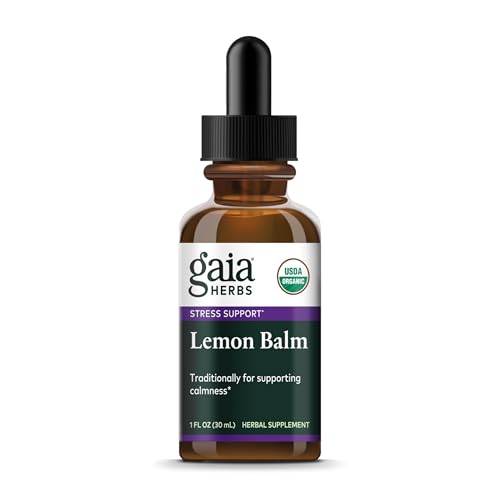
Organic Lemon Balm, 1 fl oz (30 ml), Gaia Herbs
Buy Organic Lemon Balm, 1 fl oz (30 ml), Gaia Herbs on Amazon.com ✓ FREE SHIPPING on qualified orders
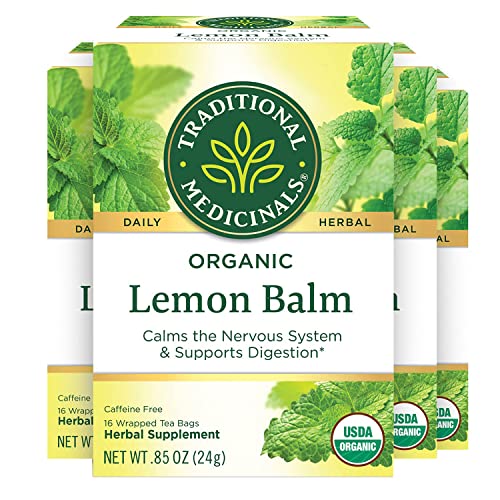
Traditional Medicinals Organic, Lemon Balm - Supports Stress Relief & Digestive Health - Kosher, Non-GMO, Caffeine-Free, Compostable - 16 Tea Bags : Herbal Teas : Everything Else
Inspired by tradition: Native to Southern Europe and known as the “bringer of gladness,” lemon balm is traditionally used to support digestive wellness and relieve nervous tension · Mindfully-made her
Evidence & Sources
Promising research with growing clinical support from multiple studies
- National Center for Complementary and Integrative Health (NCCIH)
- European Medicines Agency (EMA) Herbal Monograph on Melissa officinalis
- Journal of Ethnopharmacology
- Phytomedicine
- Nutrients
- MedlinePlus
- World Health Organization (WHO) monographs and herbal references
- Cochrane Library
This content is for informational purposes only and does not constitute medical advice. Always consult a qualified healthcare provider before starting, stopping, or changing any supplement or medication regimen.