

Lactase
Also known as: Lactaid Enzyme, Milk Sugar Enzyme
Overview
Lactase is a digestive enzyme that breaks down lactose, the natural sugar found in milk and many dairy products, into the simpler sugars glucose and galactose so they can be absorbed in the small intestine. When lactase activity is reduced, lactose may pass into the colon undigested, where it is fermented by gut bacteria. This process can contribute to symptoms such as bloating, gas, abdominal discomfort, and diarrhea—features commonly associated with lactose intolerance. Because of this role, supplemental lactase is widely discussed as a digestive support aid for people who have difficulty tolerating milk, ice cream, soft cheeses, and other lactose-containing foods.
Lactase deficiency is common worldwide, though its prevalence varies substantially by ancestry, age, and geography. In many populations, lactase production naturally declines after childhood, a pattern often called lactase non-persistence. This is a normal biologic variant rather than a disease in itself. By contrast, some individuals maintain high lactase activity into adulthood, while others may develop secondary lactose malabsorption due to conditions that affect the intestinal lining, such as gastrointestinal infection, celiac disease, inflammatory bowel disorders, or other causes of mucosal injury.
As a supplement, lactase is generally used in connection with meals or dairy-containing foods to help reduce lactose-related digestive symptoms. Research suggests that exogenous lactase can improve lactose digestion for some individuals, although its effects may vary depending on the amount of lactose consumed, the form and timing of the enzyme, and the degree of underlying lactase deficiency. It is important to distinguish lactose intolerance from cow's milk allergy, which involves the immune system and can cause very different and potentially serious reactions.
From a broader health perspective, interest in lactase also intersects with nutrition. Dairy foods are major sources of calcium, protein, vitamin D in fortified products, and other nutrients in many diets. For people limiting dairy because of lactose intolerance, the ability to improve tolerance may influence food choices and nutrient intake. At the same time, persistent gastrointestinal symptoms can have multiple causes, so evaluation by a qualified healthcare professional may be appropriate when symptoms are severe, new, or not clearly related to lactose intake.
Medical Perspectives
Two Ways of Seeing Health

Western
scientific · clinical
Western medicine applies science, technology, and clinical experience to treat symptoms through testing, diagnosis, and targeted intervention.

Eastern
traditional · alternative
Eastern medicine focuses on treating the body naturally by applying traditional knowledge practiced for thousands of years, emphasizing balance and whole-person wellness.
Gold Bamboo presents both perspectives side-by-side so you can make informed decisions. We don't advocate for one over the other — your health choices are yours.
Western Medicine Perspective
Western Medicine Perspective
In conventional medicine, lactase is understood primarily through the framework of enzymatic digestion and carbohydrate malabsorption. Lactase is produced by the brush border of the small intestine. When enzyme activity is low, lactose is not adequately split and absorbed, leading to osmotic fluid shifts in the intestine and bacterial fermentation in the colon. Diagnosis of lactose intolerance may involve clinical history, dietary correlation, hydrogen breath testing, or less commonly lactose tolerance testing, while clinicians also consider other explanations for bloating, abdominal pain, and altered bowel habits, including irritable bowel syndrome, celiac disease, infection, or small intestinal disorders.
Supplemental lactase is viewed as a symptom-management tool rather than a cure for the underlying physiology of lactase non-persistence. Studies indicate that orally administered lactase can reduce breath hydrogen production and improve tolerance to lactose-containing meals in at least some people with lactose malabsorption. However, responses are not uniform, and symptom relief may depend on dose, meal composition, and individual sensitivity. Conventional care also often discusses practical strategies such as lactose-reduced dairy, fermented dairy products that may be better tolerated, and assessment for secondary causes when symptoms change or appear abruptly.
Safety considerations are generally favorable, with lactase supplements considered low risk for most users when used as labeled. Still, persistent symptoms despite lactose reduction or enzyme use may warrant medical assessment, particularly if accompanied by weight loss, blood in stool, anemia, fever, or nocturnal symptoms. Western medicine also emphasizes the distinction between lactose intolerance and milk protein allergy, since enzyme supplementation does not address allergic reactions.
Eastern & Traditional Perspective
Eastern / Traditional Medicine Perspective
Traditional medical systems do not usually describe lactase as a discrete therapeutic concept in the modern biochemical sense, but they do address patterns of digestive weakness, food intolerance, and post-meal discomfort that may overlap with lactose-related symptoms. In Traditional Chinese Medicine (TCM), symptoms such as bloating, loose stools, abdominal distension, and discomfort after rich or damp-forming foods may be interpreted through patterns involving Spleen Qi deficiency, accumulation of Dampness, or disharmony of the Stomach and intestines. Dairy is often categorized as a food that can contribute to dampness or phlegm in susceptible individuals, particularly when digestion is already weakened.
Within Ayurveda, trouble digesting dairy may be discussed in relation to impaired agni (digestive fire), accumulation of ama (metabolic byproducts of incomplete digestion), or constitutional tendencies that influence how heavy, cooling foods are processed. From this perspective, digestive comfort depends not only on the food itself but also on timing, preparation, quantity, and the individual's underlying digestive resilience. Fermented or cultured dairy and warming culinary practices are traditionally regarded as more digestible for some people than cold or heavy milk products.
In naturopathic and integrative frameworks, lactase supplementation may be considered alongside broader attention to digestive function, food tolerance patterns, gut health, and nutrient adequacy. That said, traditional systems generally rely more on individualized dietary patterning and digestive support concepts than on enzyme replacement as a standalone historical practice. The eastern/traditional perspective is therefore best understood as complementary: it offers a broader interpretation of why dairy may be poorly tolerated, while modern lactase supplementation reflects contemporary enzymology rather than a classical traditional remedy.
Supplements & Products
Recommended Products
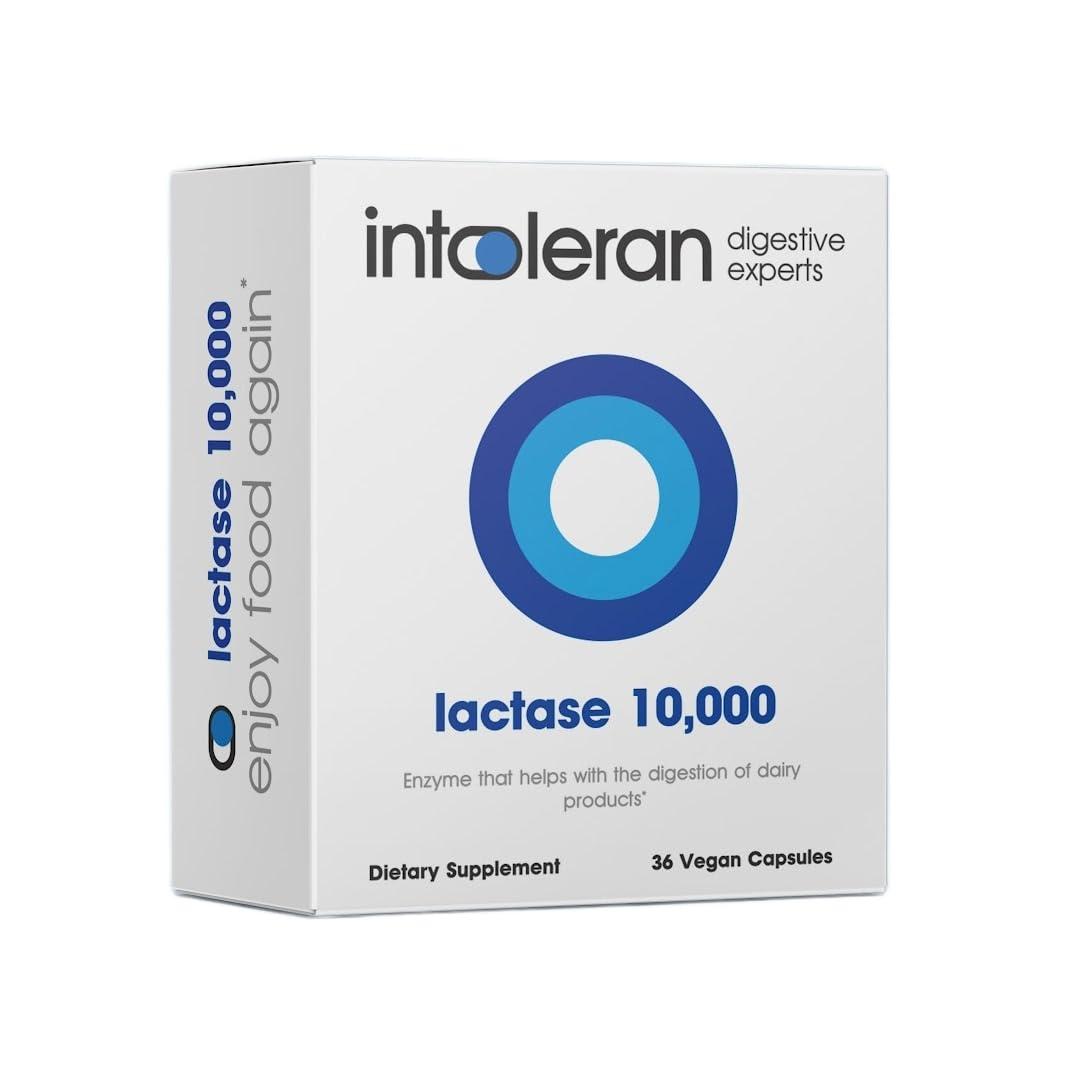
Intoleran Lactase 10,000 Digestive Enzymes - 36 Capsules | Supplement for Lactose Intolerance | Lactase Enzyme That Helps Digest Dairy & Lactose | High Dosed & Fast Acting | Pure & Vegan | Low FODMAP
<strong>HIGH-STRENGTH LACTASE ENZYME FOR LACTOSE INTOLERANCE</strong> – 36 fast-acting capsules with 10,000 FCC lactase enzyme units per serving to help break down lactose, the natural sugar in milk a

Lactaid Fast Act Lactose Intolerance Relief Caplets, Lactase Enzyme to Prevent Gas, Bloating and Diarrhea Due to Lactose Sensitivity, Single-Serve Supplements for Travel and On-The-Go, 60 Count
Lactose Intolerance Relief: 60-count single-dose travel packs of Lactaid Fast Act Lactose Intolerance Caplets <strong>to help prevent gas, bloating and diarrhea associated with lactose intolerance</st

Carlyle Lactase Enzyme Tablets 9000 FCC | 180 Pills | Max Strength Dairy Relief | Fast Acting Formula | Vegetarian, Non-GMO, Gluten Free
Puregen Labs Dairy Relief Fast Acting Lactase Enzyme 9000 FCC, Lactose Intolerance Pills 360 Tablets · NOW Foods Supplements, Dairy Digest Complete, Digests Lactose, Dairy Proteins and Fats*, Dairy To
Evidence & Sources
Promising research with growing clinical support from multiple studies
- National Institute of Diabetes and Digestive and Kidney Diseases (NIDDK)
- National Institutes of Health, Office of Dietary Supplements
- American College of Gastroenterology
- World Gastroenterology Organisation Global Guidelines
- NCCIH (National Center for Complementary and Integrative Health)
- The American Journal of Clinical Nutrition
- Alimentary Pharmacology & Therapeutics
- Gut
This content is for informational purposes only and does not constitute medical advice. Always consult a qualified healthcare provider before starting, stopping, or changing any supplement or medication regimen.