

L-Lysine
Also known as: Lysine, L Lysine
Overview
L-lysine is an essential amino acid, meaning the body cannot make it and must obtain it from food or supplements. It plays a central role in protein synthesis, collagen formation, tissue repair, and the production of compounds involved in growth and metabolism. Because collagen is a major structural protein in skin, connective tissue, and blood vessels, lysine is often discussed in relation to skin integrity, wound repair, and recovery support. It also contributes to the metabolism of carnitine, a molecule involved in fatty acid transport and energy production.
Public interest in L-lysine most commonly centers on herpes simplex virus (HSV) outbreaks, especially cold sores, as well as broader questions about immune support and healing. Its popularity in these areas comes from a mix of biological plausibility, older clinical studies, and long-standing supplement use. Researchers have also examined lysine in relation to nutritional adequacy, bone health, and anxiety or stress responses in certain populations, though these are less common reasons for general consumer use.
Dietary lysine is naturally present in animal proteins such as meat, fish, eggs, and dairy, and in some plant foods including legumes. In nutrition science, lysine is especially important because it can be a limiting amino acid in some grain-heavy dietary patterns. In people with inadequate protein intake, low lysine availability may affect normal growth, tissue maintenance, and overall nutritional status. For most healthy people eating a varied diet, overt lysine deficiency is uncommon, but marginal intake may still be relevant in specific settings.
Overall, L-lysine occupies an interesting place between basic nutritional science and targeted supplement use. Conventional medicine recognizes it as an essential nutrient with clear physiological functions, while supplement-focused use for cold sores and skin recovery remains an area where evidence is mixed but clinically discussed. As with many supplements, the context matters: underlying health status, diet quality, medication use, and the reason for considering lysine all shape how it is viewed by healthcare professionals.
Medical Perspectives
Two Ways of Seeing Health

Western
scientific · clinical
Western medicine applies science, technology, and clinical experience to treat symptoms through testing, diagnosis, and targeted intervention.

Eastern
traditional · alternative
Eastern medicine focuses on treating the body naturally by applying traditional knowledge practiced for thousands of years, emphasizing balance and whole-person wellness.
Gold Bamboo presents both perspectives side-by-side so you can make informed decisions. We don't advocate for one over the other — your health choices are yours.
Western Medicine Perspective
Western Medicine Perspective
From a conventional medical standpoint, L-lysine is first understood as a required dietary amino acid with established importance in protein building, collagen cross-linking, and tissue maintenance. This role is not controversial: lysine is fundamental to normal human physiology. In clinical nutrition, its significance is greatest in the context of protein adequacy, recovery from illness or injury, and dietary patterns where amino acid intake may be uneven. Western medicine also recognizes that lysine participates indirectly in processes relevant to skin and connective tissue health, although this does not automatically mean supplementation changes outcomes in otherwise well-nourished individuals.
The most discussed supplemental use in conventional literature is for recurrent herpes simplex infections, particularly herpes labialis (cold sores). The proposed mechanism is that lysine may influence the balance of lysine and arginine, an amino acid that HSV may rely on for replication. However, research findings have been inconsistent. Some studies suggest lysine may reduce the frequency or severity of recurrences in certain people, while others show limited or unclear benefit. As a result, lysine is often described in evidence reviews as a supplement with possible but not definitive value for cold sore prevention, and less certainty for treating active outbreaks.
Western research has also explored lysine in areas such as wound healing, bone metabolism, and stress-related physiology, often because of its roles in collagen and nutrient metabolism. These applications remain less established than its basic nutritional role. Safety data are generally considered favorable for short-term use in healthy adults, but conventional sources still note the importance of considering kidney health, pregnancy, underlying medical conditions, and potential interactions with other supplements or medications. In standard medical practice, questions about lysine are usually framed within broader nutritional assessment and evidence-informed symptom management rather than as a standalone therapy.
Eastern & Traditional Perspective
Eastern/Traditional Medicine Perspective
In Traditional Chinese Medicine (TCM) and other classical East Asian systems, L-lysine is not a traditional remedy in the historical sense, because amino acids are a product of modern biochemical understanding rather than ancient materia medica. That said, practitioners working in integrative medicine may interpret its actions through traditional frameworks. For example, because lysine is associated with tissue building, repair, and resilience, it may be discussed in relation to supporting Qi, Blood, and the nourishment of the body's structural substances. Concerns such as recurrent mouth or lip lesions might also be interpreted through pattern-based concepts involving heat, deficiency, or impaired defensive function, with lysine considered an adjunctive nutritional support rather than a classic TCM treatment.
In Ayurveda, lysine likewise does not originate as a traditional herbal or mineral substance, but its modern use may be viewed through the lens of dhatu nourishment and recovery. Because it contributes to growth and tissue integrity, some integrative Ayurvedic interpretations place it in the broader context of supporting mamsa dhatu (muscle tissue) and tissue rebuilding after stress. Recurrent inflammatory lesions around the lips or mouth may be understood according to patterns involving pitta aggravation, immune resilience, digestion, and overall constitutional balance, with lysine seen as one possible nutritional consideration among many.
In naturopathy and functional nutrition, lysine is often framed more directly as a targeted nutrient for cold sores, skin repair, and recovery support. These traditions frequently emphasize the relationship between diet quality, stress, immunity, and amino acid balance. While this perspective is more aligned with modern nutritional biochemistry than ancient doctrine, it reflects a broader traditional principle: the body heals best when foundational nourishment is adequate. Across these systems, an important distinction remains that lysine is generally treated as a supportive nutritional factor, while the individual's broader pattern, constitution, and triggers are considered central to interpretation.
Supplements & Products
Recommended Products

Nutritional Medicine: Alan R. Gaby, M.D.
Jonathan V. Wright, M.D. Nutritional Medicine should be on the desk of every healthcare practitioner." William Manahan, M.D. "This is the single most valuable reference book on natural remed

NOW Foods Supplements, (L-Lysine Hydrochloride) 1,000 mg, Double Strength, Amino Acid, 100 Tablets : Everything Else
Buy NOW Foods Supplements, (L-Lysine Hydrochloride) 1,000 mg, Double Strength, Amino Acid, 100 Tablets on Amazon.com ✓ FREE SHIPPING on qualified orders
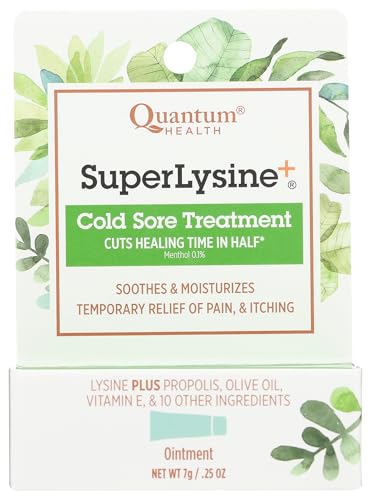
Quantum SuperLysine+ Cold Sore Treatment Ointment|Relieves Pain, Burning, and Itching|Cuts Healing Time in Half|0.25 Ounce
Quantum Super Lysine Plus Cold Sore Treatment Cream - 0.25 Oz · Quantum SuperLysine+ Cold Sore Treatment Ointment|Relieves Pain, Burning, and Itching|Cuts Healing Time in Half|0.75 Ounce
Evidence & Sources
Promising research with growing clinical support from multiple studies
- National Institutes of Health (NIH)
- National Center for Complementary and Integrative Health (NCCIH)
- Mount Sinai Health System
- Mayo Clinic Proceedings
- Alternative Medicine Review
- Advances in Nutrition
- World Health Organization (WHO)
- Journal of Nutrition
This content is for informational purposes only and does not constitute medical advice. Always consult a qualified healthcare provider before starting, stopping, or changing any supplement or medication regimen.