

Krill Oil
Overview
Krill oil is a marine-derived supplement made from small crustaceans, most commonly Antarctic krill (Euphausia superba). It is primarily valued as a source of the omega-3 fatty acids EPA (eicosapentaenoic acid) and DHA (docosahexaenoic acid), along with the carotenoid antioxidant astaxanthin. Unlike standard fish oil, a substantial portion of krill oil’s omega-3s are bound to phospholipids, a feature that has attracted interest for its potential effects on absorption, cell membrane function, and tolerability.
Krill oil is most often discussed in the context of cardiovascular health, particularly for support of normal lipid metabolism and broader interest in heart wellness. It is also commonly explored for inflammatory balance, joint comfort, brain health, and premenstrual symptoms, though the strength of evidence varies across these uses. Commercial interest has grown because krill oil is marketed as a more “bioavailable” omega-3 source than fish oil, but this claim remains an area of ongoing research rather than settled consensus.
From a nutrition science perspective, krill oil belongs to the larger category of omega-3 supplementation. Omega-3 fatty acids have been widely studied in relation to triglycerides, cardiovascular risk markers, and inflammatory pathways. However, it is important to distinguish the evidence for omega-3 fatty acids in general from the smaller and more specific body of research on krill oil itself. Some studies suggest favorable effects on blood lipids and inflammatory markers, but findings are not uniform, and study size, formulation, dose, and sponsorship can influence interpretation.
Krill oil is generally regarded as a supplement with promising but not uniformly definitive evidence for several health applications. It also raises practical considerations, including shellfish allergy risk, potential interactions with anticoagulant or antiplatelet therapies, and sustainability questions related to marine ecosystems. As with other supplements, clinicians and consumers often evaluate krill oil in the broader context of diet, cardiovascular risk profile, medication use, and overall health goals.
Medical Perspectives
Two Ways of Seeing Health

Western
scientific · clinical
Western medicine applies science, technology, and clinical experience to treat symptoms through testing, diagnosis, and targeted intervention.

Eastern
traditional · alternative
Eastern medicine focuses on treating the body naturally by applying traditional knowledge practiced for thousands of years, emphasizing balance and whole-person wellness.
Gold Bamboo presents both perspectives side-by-side so you can make informed decisions. We don't advocate for one over the other — your health choices are yours.
Western Medicine Perspective
Western / Conventional Medicine Perspective
In conventional medicine, krill oil is understood primarily as a delivery form of omega-3 fatty acids. The best-established biological rationale centers on EPA and DHA, which participate in cell membrane structure, lipid signaling, inflammatory mediator balance, and cardiometabolic physiology. Research suggests krill oil may help improve certain markers such as triglycerides, and some studies indicate possible effects on LDL, HDL, inflammatory biomarkers, or subjective symptoms in areas like joint discomfort and menstrual-related symptoms. That said, the clinical literature on krill oil is smaller than the literature on fish oil or prescription omega-3 products.
A key question in the medical literature is whether krill oil’s phospholipid-bound omega-3s offer meaningful advantages over triglyceride-form or ethyl ester-form fish oils. Some pharmacokinetic and comparative studies suggest similar or potentially enhanced incorporation of omega-3s into blood lipids and tissues at lower doses, while other analyses find the practical differences may be modest. As a result, mainstream medicine generally treats krill oil as one possible omega-3 source, rather than a clearly superior option.
Safety discussions in conventional care focus on quality, purity, and patient-specific risks. Krill oil may not be appropriate for individuals with shellfish allergy, and caution is commonly noted for those taking anticoagulants or antiplatelet agents because omega-3 supplements may influence bleeding-related parameters, although clinically significant effects are not consistently demonstrated at typical supplemental intakes. Gastrointestinal side effects can occur, though some users report krill oil is better tolerated than fish oil. Clinicians may also consider product standardization, oxidation stability, and third-party testing when evaluating marine oil supplements.
Overall, Western medicine views krill oil as a plausible adjunctive supplement with the strongest rationale in lipid and cardiometabolic support, but not as a substitute for established medical care. Research continues to clarify where krill oil may have distinct advantages, which populations may benefit most, and how its effects compare with fish intake, standard fish oil, and prescription omega-3 therapies.
Eastern & Traditional Perspective
Eastern / Traditional Medicine Perspective
In Traditional Chinese Medicine (TCM) and other classical East Asian systems, krill oil is not a major traditional remedy in the way that long-established herbs are. However, from an integrative perspective, it may be interpreted through the lens of nourishment, circulation, and balance of inflammatory processes. Its oily, nutrient-dense nature may be discussed as supporting the body’s foundational substances and helping maintain smooth physiological function, particularly where dryness, depletion, or constrained circulation are considered relevant patterns. These interpretations are modern extrapolations rather than classical krill-specific doctrine.
In Ayurveda, krill oil is likewise not a classical substance with a long textual history, but marine oils may be viewed through broader principles related to unctuousness, tissue nourishment, and inflammatory balance. Contemporary integrative practitioners may discuss omega-3-rich oils as supporting dhatu nourishment and helping moderate processes associated with excess heat or inflammatory burden, while also considering digestion, constitution, and overall dietary pattern. Such framing is individualized and rooted more in modern integrative adaptation than ancient krill-specific use.
In naturopathic and functional traditions, krill oil is often categorized as a foundational nutritional supplement aimed at supporting cardiovascular, cognitive, and inflammatory health. The phospholipid structure and astaxanthin content are commonly highlighted as potentially relevant features, and the supplement may be considered within a systems-based view that includes diet quality, metabolic health, stress, and inflammatory load. This approach typically emphasizes that no single oil acts in isolation from broader lifestyle and constitutional factors.
Across traditional and integrative frameworks, krill oil is generally seen less as a stand-alone remedy and more as a supportive nutritional agent. Because its use is largely modern rather than deeply rooted in classical medical systems, traditional interpretations are best understood as contemporary applications of older principles rather than historically established krill oil therapeutics.
Supplements & Products
Recommended Products

The Omega-3 Effect: Everything You Need to Know About the Supernutrient for Living Longer, Happier, and Healthier: Sears MD FRCP, William, Sears MD, James
James M. Sears ... We all want to live as healthfully as possible. In The Omega-3 Effect, Dr. William Sears <strong>turns his attention to the critical role that omega-3s play in the body</strong>. Dr

NOW Foods Supplements, Neptune Krill, Double Strength 1000 mg, Phospholipid-Bound Omega-3, 60 Softgels
SUPPORTS JOINT HEALTH*/100 PERCENT PURE NEPTUNE KRILL OIL: In addition, NKO naturally has astaxanthin, <strong>a powerful free radical scavenger and immune-supporting carotenoid</strong>.*
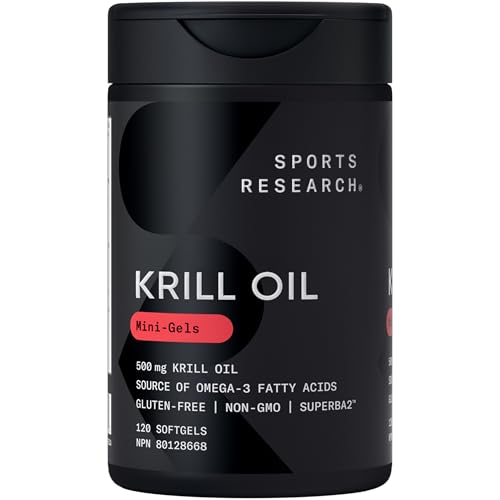
Sports Research Krill Oil Supplement with EPA & DHA Omega 3, Phospholipids & Astaxanthin from Antarctic Krill - Highest Concentration of Krill Oil for Men & Women - 1000mg, 60 Softgel Capsules
DOUBLE STRENGTH: Just one (1) liquid softgel contains 1000mg of Pure Antarctic Krill Oil featuring <strong>higher concentrations of naturally occurring Omega-3 fatty acids (EPA & DHA), Choline, Ph
Evidence & Sources
Promising research with growing clinical support from multiple studies
- National Center for Complementary and Integrative Health (NCCIH)
- National Institutes of Health Office of Dietary Supplements (Omega-3 Fatty Acids Fact Sheet)
- Journal of the American College of Nutrition
- Lipids in Health and Disease
- Nutrition Reviews
- Marine Drugs
- European Journal of Nutrition
- American Heart Association
This content is for informational purposes only and does not constitute medical advice. Always consult a qualified healthcare provider before starting, stopping, or changing any supplement or medication regimen.