

Eleuthero
Also known as: Siberian Ginseng
Overview
Eleuthero (Eleutherococcus senticosus), sometimes called Siberian ginseng, is a woody shrub native to northeastern Asia whose root and stem bark have long been used in traditional herbal systems. Despite the common nickname, it is not true ginseng and does not belong to the Panax genus. In modern supplement use, eleuthero is most often discussed as an adaptogen—a plant traditionally used to help the body respond to physical, मानसिक, and environmental stressors while supporting stamina, recovery, and resilience.
Interest in eleuthero grew substantially during the 20th century, particularly in Russia and East Asia, where it was studied for effects on fatigue, work capacity, exercise tolerance, and stress adaptation. Today, it appears in capsules, powders, teas, and combination formulas marketed for energy, immune support, and mental performance. Its main bioactive constituents are generally described as eleutherosides, along with polysaccharides and other plant compounds that may influence stress signaling, immune activity, and neuroendocrine function.
From a health perspective, eleuthero occupies a middle ground between traditional herbal use and modern functional supplementation. Research suggests potential roles in reducing subjective fatigue, supporting endurance under certain conditions, and modulating immune or stress-related pathways, but findings are mixed and not uniformly strong. Product quality, extract standardization, dosage differences, and study design have all made the evidence base harder to interpret.
Eleuthero is generally discussed as a supportive wellness herb rather than a disease-specific therapy. Conventional and traditional practitioners alike typically frame it as one part of a broader picture involving sleep, nutrition, recovery, and overall stress load. As with any supplement, its relevance may depend on a person’s health status, medications, and the quality of the preparation, so consultation with a qualified healthcare professional is appropriate when considering its use.
Medical Perspectives
Two Ways of Seeing Health

Western
scientific · clinical
Western medicine applies science, technology, and clinical experience to treat symptoms through testing, diagnosis, and targeted intervention.

Eastern
traditional · alternative
Eastern medicine focuses on treating the body naturally by applying traditional knowledge practiced for thousands of years, emphasizing balance and whole-person wellness.
Gold Bamboo presents both perspectives side-by-side so you can make informed decisions. We don't advocate for one over the other — your health choices are yours.
Western Medicine Perspective
Western / Conventional Medicine Perspective
In conventional medicine, eleuthero is usually categorized as a botanical supplement with possible adaptogenic and anti-fatigue properties. Laboratory and animal studies suggest that compounds in eleuthero may affect the hypothalamic-pituitary-adrenal (HPA) axis, stress hormone signaling, immune responses, and cellular energy regulation. Some studies also indicate possible effects on physical performance, mental alertness, and resistance to fatigue, especially during periods of exertion or stress. However, these mechanisms remain incompletely defined, and translating preclinical findings into clear clinical outcomes has been challenging.
Human research on eleuthero has examined fatigue, exercise performance, cognitive function, immune support, and quality of life, but results have been inconsistent. Some trials have reported modest improvements in stamina, perceived energy, or aspects of well-being, while others found little or no significant benefit. Reviews of adaptogenic herbs often note that the evidence for eleuthero is promising but limited by small sample sizes, variable extracts, and heterogeneous outcomes. For this reason, conventional medicine does not generally regard eleuthero as a first-line treatment for fatigue, stress disorders, or athletic enhancement.
From a safety standpoint, eleuthero is often considered reasonably well tolerated when used appropriately, but adverse effects such as insomnia, palpitations, headache, irritability, or gastrointestinal upset have been reported. Potential concerns may exist for people with certain cardiovascular conditions, sleep disturbance, hormone-sensitive conditions, or those taking medications that affect blood pressure, blood sugar, clotting, or the central nervous system. Because herbal products can vary in strength and purity, clinicians often emphasize the importance of evaluating drug-supplement interactions, underlying causes of fatigue, and product quality rather than viewing eleuthero as a standalone solution.
Eastern & Traditional Perspective
Eastern / Traditional Medicine Perspective
In Traditional Chinese Medicine (TCM), eleuthero is commonly associated with herbs that tonify qi, support the spleen and kidney systems, and strengthen overall vitality. It has traditionally been used in patterns characterized by fatigue, reduced endurance, weakness, poor stress tolerance, and convalescence after illness. Rather than focusing on a single symptom, TCM generally interprets low energy or depleted resilience as part of a broader pattern of imbalance involving constitutional strength, recovery capacity, and the body’s ability to adapt to external and internal stressors.
In this framework, eleuthero is viewed as a gentler tonic herb than some stronger stimulatory substances. Traditional use often emphasizes sustained support for those who feel worn down, overextended, or slow to recover. It may be discussed in relation to supporting defensive qi and overall resilience during times of seasonal challenge or prolonged exertion. As in many traditional systems, the herb is rarely considered in isolation; it is more often understood within a personalized formula, diet, lifestyle pattern, and assessment of an individual’s constitution.
In broader herbal and naturopathic traditions, eleuthero is one of the classic adaptogenic botanicals, used conceptually to support stress adaptation, endurance, and restorative capacity. Practitioners in these traditions may frame it as a plant that helps normalize function rather than strongly stimulating or sedating the body. While these traditional perspectives are longstanding and influential, their language and theory differ from biomedical models, and modern clinical evidence does not fully validate every traditional claim. Integrative care typically recognizes both the historical use and the need for individualized assessment by qualified practitioners.
Supplements & Products
Recommended Products

Adaptogens: Herbs for Strength, Stamina, and Stress Relief: Winston, David, Maimes, Steven
In this updated edition of the definitive guide to adaptogenic herbs, clinical herbalist David Winston and researcher Steven Maimes provide a comprehensive look at adaptogens: non-toxic herbs such as
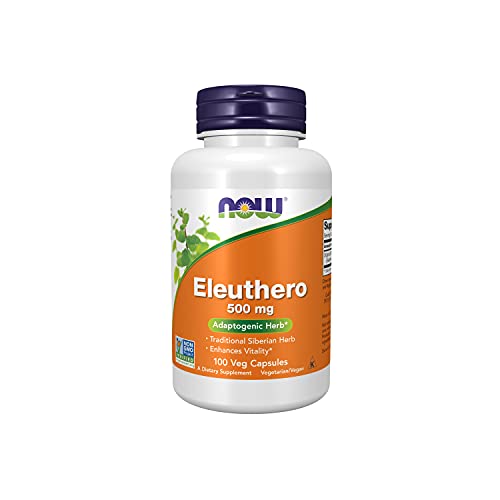
NOW Supplements, Eleuthero (Eleutherococcus senticosus) 500 mg, Adaptogenic Herb*, 250 Veg Capsules
Visit the NOW Foods Store · TRADITIONAL SIBERIAN HERB: 500 mg of organic eleuthero per vegetable capsule ·

Herb Pharm Eleuthero (Siberian Ginseng) Root Liquid Extract for Energy and Stamina, Cane Alcohol, 4 Ounce
Herb Pharm Eleuthero Extract is <strong>used to enhance physical & mental energy & stamina</strong>. Eleuthero Extract is from the roots of Eleutherococcus senticosus shrubs which are custom w
Evidence & Sources
Promising research with growing clinical support from multiple studies
- National Center for Complementary and Integrative Health (NCCIH)
- World Health Organization Monographs on Selected Medicinal Plants
- American Herbal Pharmacopoeia
- Phytomedicine
- Journal of Ethnopharmacology
- Drugs
- Cochrane Library
- European Medicines Agency (EMA) herbal monographs
This content is for informational purposes only and does not constitute medical advice. Always consult a qualified healthcare provider before starting, stopping, or changing any supplement or medication regimen.