

Dong Quai
Also known as: Angelica Sinensis
Overview
Dong quai (Angelica sinensis), sometimes called Chinese angelica, is a traditional herbal medicine most closely associated with Traditional Chinese Medicine (TCM). It has been used for centuries, especially in formulas related to women’s reproductive health, menstrual regulation, and recovery after childbirth. On modern supplement markets, dong quai is often discussed in connection with hormone balance, menstrual discomfort, menopausal symptoms, and circulation support, although its traditional use is broader than any single modern category.
Botanically, dong quai is a member of the Apiaceae family, and the root is the part most commonly used medicinally. Its major constituents include ferulic acid, ligustilide, polysaccharides, and coumarin-related compounds, which have attracted scientific interest for possible effects on blood flow, inflammation, smooth muscle activity, and immune signaling. Because herbal products vary in extraction methods, processing, and formula combinations, findings from one preparation do not always translate directly to another.
In public health and clinical discussions, dong quai is best understood as a traditional herb with selective modern research, rather than a fully validated stand-alone therapy. It is frequently marketed for menstrual cramps, irregular menstruation, menopausal complaints, and “blood building” support, but human evidence remains mixed and often limited by small study size or multi-herb formulations. Safety questions are also important, especially regarding pregnancy, bleeding risk, medication interactions, and photosensitivity.
Overall, dong quai occupies a space where traditional medical systems have long-established patterns of use, while conventional medicine evaluates it more cautiously based on the quality of clinical evidence. For people exploring herbal medicine, this makes dong quai a useful example of how historical use, pharmacology, and modern evidence can overlap without being identical. Any use is best discussed with a qualified healthcare professional, particularly when symptoms involve heavy bleeding, hormone-sensitive conditions, or concurrent use of prescription medicines.
Medical Perspectives
Two Ways of Seeing Health

Western
scientific · clinical
Western medicine applies science, technology, and clinical experience to treat symptoms through testing, diagnosis, and targeted intervention.

Eastern
traditional · alternative
Eastern medicine focuses on treating the body naturally by applying traditional knowledge practiced for thousands of years, emphasizing balance and whole-person wellness.
Gold Bamboo presents both perspectives side-by-side so you can make informed decisions. We don't advocate for one over the other — your health choices are yours.
Western Medicine Perspective
Western Medicine Perspective
From a conventional medicine perspective, dong quai is considered a botanical supplement with biologically active compounds, but with limited high-quality clinical evidence for many of its most advertised uses. Research has explored its potential role in menopausal symptoms, dysmenorrhea, circulation, and hematologic effects, yet many studies involve small populations, inconsistent formulations, or combination products rather than dong quai alone. As a result, major medical references generally describe the evidence base as insufficient or mixed.
Laboratory and preclinical studies suggest several plausible mechanisms. Components of dong quai may have vasodilatory, antispasmodic, anti-inflammatory, and antioxidant effects. Some data have also raised questions about phytoestrogen-like activity, which is one reason the herb is often linked to menopause and reproductive health. However, human research has not consistently shown clear estrogenic effects or reliable symptom improvement, and conventional medicine does not treat dong quai as an established hormone therapy. Its historic reputation as a “blood tonic” is also not equivalent to evidence that it corrects anemia or other blood disorders in standard clinical practice.
Safety is a central part of the western assessment. Dong quai may increase concern about bleeding, especially when combined with anticoagulants or antiplatelet drugs such as warfarin. It may also cause photosensitivity in some users, and because of its traditional uterine-related uses and limited safety data, it is generally approached cautiously in pregnancy and breastfeeding contexts. Conventional clinicians also note the importance of product quality, as dietary supplements can vary in concentration and purity.
In summary, western medicine views dong quai as a historically important but not fully substantiated supplement. It may be studied as part of integrative care, but it is not considered a first-line evidence-based treatment for menstrual, menopausal, or hormonal disorders. Persistent pelvic pain, abnormal uterine bleeding, severe menopausal symptoms, or fertility concerns warrant medical evaluation to rule out underlying conditions such as fibroids, endometriosis, thyroid disease, or other systemic causes.
Eastern & Traditional Perspective
Eastern / Traditional Medicine Perspective
In Traditional Chinese Medicine, dong quai (Dang Gui) is one of the most respected herbs for nourishing and invigorating the blood. It is traditionally said to enter the Liver, Heart, and Spleen meridians and is used in patterns involving blood deficiency, blood stasis, and menstrual imbalance. Rather than focusing on a single disease label, TCM uses dong quai within a pattern-based framework that may include symptoms such as scanty menstruation, irregular cycles, menstrual pain, pallor, fatigue, dizziness, dry skin, or recovery after childbirth.
A distinctive feature of the TCM view is that dong quai is often seen as both tonifying and moving blood. In classical herbal theory, this makes it especially valued when menstruation is painful or delayed in the setting of deficiency and stagnation. It is rarely considered a universal herb for every gynecologic concern; instead, it is commonly combined with other herbs in formulas tailored to the individual pattern. Traditional formulas may also use different preparations or parts of the root for slightly different actions.
In broader East Asian medicine traditions, dong quai is also associated with supporting circulation, easing discomfort, and restoring vitality after depletion. Similar ideas appear in integrative and naturopathic interpretations, where the herb may be described as supportive for reproductive wellness and constitutional weakness, though these descriptions are often modern translations of traditional concepts rather than direct biomedical claims.
From an Ayurvedic or naturopathic perspective, dong quai is not a foundational classical Ayurvedic herb in the same way it is in TCM, but it may be incorporated into contemporary herbal practice for women’s health, circulation, and menstrual comfort. Practitioners in these systems typically interpret its use through broader themes such as balance, nourishment, and systemic regulation, while also recognizing that traditional use does not replace the need for diagnostic evaluation when symptoms are severe, prolonged, or medically complex.
Supplements & Products
Recommended Products

Chinese Herbal Medicine: Materia Medica (Portable 3rd Edition)
by Dan Bensky (Author), Steve Clavey (Author), Erich Stoger (Author), Lilian Lai Bensky (Illustrator) & 1 more

Nature's Way Dong Quai Root - 100 Capsules / 565 mg
Buy Nature's Way Dong Quai Root - 100 Capsules / 565 mg on Amazon.com ✓ FREE SHIPPING on qualified orders
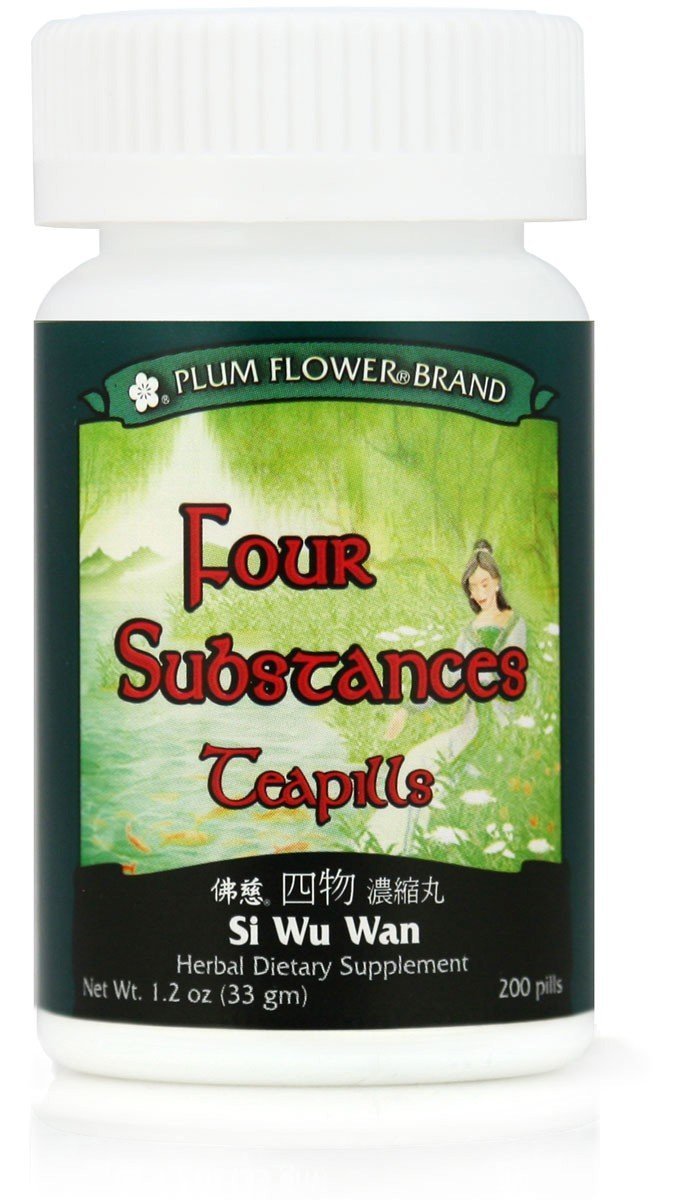
Four Substances For Women (Si Wu Wan), 200 ct, Plum Flower
Buy Four Substances For Women (Si Wu Wan), 200 ct, Plum Flower on Amazon.com ✓ FREE SHIPPING on qualified orders
Evidence & Sources
Promising research with growing clinical support from multiple studies
- National Center for Complementary and Integrative Health (NCCIH)
- Natural Medicines Database
- Memorial Sloan Kettering Cancer Center Integrative Medicine
- World Health Organization monographs on selected medicinal plants
- Journal of Ethnopharmacology
- Phytotherapy Research
- American Botanical Council
- European Medicines Agency (herbal monographs)
This content is for informational purposes only and does not constitute medical advice. Always consult a qualified healthcare provider before starting, stopping, or changing any supplement or medication regimen.