

Coenzyme Q10
Also known as: CoQ10, Ubiquinone
Overview
Coenzyme Q10 (CoQ10) is a naturally occurring, vitamin-like compound found in nearly every cell of the body. It plays a central role in mitochondrial energy production and also functions as an antioxidant, helping protect cell membranes and lipids from oxidative damage. CoQ10 exists in two major forms: ubiquinone, the oxidized form commonly used in older supplements, and ubiquinol, the reduced form that circulates in the body and participates directly in antioxidant activity. Highest concentrations are found in organs with high energy demands, such as the heart, liver, kidneys, and skeletal muscle.
CoQ10 levels can be influenced by age, genetics, nutritional status, and chronic disease states. Levels may also decline in people taking statin medications, because the body’s cholesterol-synthesis pathway overlaps with CoQ10 synthesis. For this reason, CoQ10 has become a widely discussed supplement in cardiovascular health, healthy aging, exercise recovery, migraine prevention, and fatigue-related conditions. Research interest has also extended to neurodegenerative disorders, fertility, metabolic health, and certain mitochondrial diseases.
From a public health standpoint, CoQ10 occupies an unusual place among supplements: it is both biologically plausible and clinically studied, but the strength of evidence varies substantially by condition. Some uses—such as support in heart failure populations or reducing the frequency of migraine episodes in some individuals—have more supportive clinical literature, while other uses remain preliminary or inconsistent. Bioavailability is another major issue, since CoQ10 is fat-soluble and absorption differs considerably across formulations.
Overall, CoQ10 is best understood as a cellular energy and redox support compound rather than a single-condition remedy. Conventional and integrative clinicians often discuss it in the context of mitochondrial function, oxidative stress, and medication-related nutrient depletion. As with all supplements, interpretation depends on the health context, formulation used in studies, and the quality of the evidence for a given indication. Consultation with a qualified healthcare professional is appropriate when CoQ10 is being considered alongside prescription medicines or complex medical conditions.
Medical Perspectives
Two Ways of Seeing Health

Western
scientific · clinical
Western medicine applies science, technology, and clinical experience to treat symptoms through testing, diagnosis, and targeted intervention.

Eastern
traditional · alternative
Eastern medicine focuses on treating the body naturally by applying traditional knowledge practiced for thousands of years, emphasizing balance and whole-person wellness.
Gold Bamboo presents both perspectives side-by-side so you can make informed decisions. We don't advocate for one over the other — your health choices are yours.
Western Medicine Perspective
Western / Conventional Medicine Perspective
In conventional medicine, CoQ10 is primarily understood through its roles in electron transport chain function and antioxidant defense. It is essential for ATP production within mitochondria, which makes it especially relevant to tissues with high metabolic demand. Western research has focused on whether supplemental CoQ10 can help when endogenous levels are reduced, when oxidative stress is elevated, or when mitochondrial function may be impaired. These mechanisms have made CoQ10 a subject of study in cardiovascular disease, migraine, statin-associated muscle symptoms, diabetes, infertility, and neurodegenerative conditions.
The strongest clinical attention has centered on heart failure and related cardiovascular endpoints. Some randomized trials and meta-analyses suggest that CoQ10 supplementation may improve certain symptoms, functional measures, or quality-of-life markers in select heart failure populations, though findings are not uniform across all studies. There is also evidence suggesting CoQ10 may modestly reduce migraine frequency in some patients. In statin users, research has produced mixed results regarding muscle pain or weakness; some studies indicate benefit, while others do not show clear improvement. Investigators have also examined CoQ10 in male and female fertility, where oxidative stress may play a role, but the evidence remains heterogeneous.
Safety data are generally favorable, with CoQ10 often described as well tolerated in clinical studies. Reported adverse effects are typically mild and may include gastrointestinal upset, appetite changes, or insomnia in some cases. However, clinically relevant interactions are possible—particularly with warfarin and other anticoagulant therapies, and potentially with blood pressure or glucose-lowering regimens depending on the individual context. Conventional medicine therefore tends to view CoQ10 as a supplement with promising adjunctive potential in certain areas, but not as a replacement for standard medical care. Healthcare supervision is especially important when underlying cardiovascular disease, polypharmacy, or pregnancy-related considerations are present.
Eastern & Traditional Perspective
Eastern / Traditional Medicine Perspective
Traditional East Asian medicine does not historically describe CoQ10 as a classical herb or standalone therapeutic category. However, its modern use is often interpreted through functional concepts that overlap with traditional frameworks—especially vital energy, endurance, recovery, and aging. In a Traditional Chinese Medicine (TCM)-informed view, a substance that supports cellular energy and resilience may be discussed in relation to Qi deficiency, diminished vitality, or weakened organ systems associated with fatigue and poor recovery, especially the Heart, Spleen, and Kidney functional networks. These parallels are conceptual rather than historical, since CoQ10 is a modern biochemical compound rather than a traditional materia medica item.
In integrative TCM and naturopathic settings, CoQ10 may be framed as a support for constitutional weakness, age-related decline, cardiovascular resilience, and stress adaptation, particularly when fatigue or low stamina are prominent themes. Practitioners may also interpret oxidative stress and mitochondrial dysfunction as biomedical reflections of imbalance that correspond, in broad terms, to depletion or impaired transformation of energy. Within this model, CoQ10 is rarely viewed in isolation; instead, it may be discussed as one component of a larger strategy involving diet, sleep, movement practices, stress regulation, and individualized herbal assessment.
From an Ayurvedic or broader traditional perspective, CoQ10 is likewise not a classical remedy, but contemporary integrative practitioners may loosely associate it with support for ojas (vital reserve), healthy aging, and tissue nourishment when energy production and recovery appear compromised. These interpretations are modern and cross-disciplinary rather than rooted in ancient textual use. As a result, eastern and traditional systems generally offer a functional lens for understanding where CoQ10 may fit, while relying on modern clinical research to assess its specific safety and efficacy.
Supplements & Products
Recommended Products
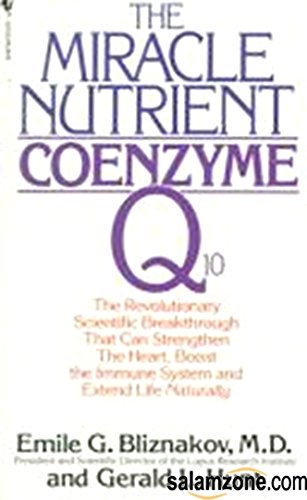
The Miracle Nutrient: Coenzyme Q10: Emile G. Bliznakov, Gerald L. Hunt
Unfortunately, many of us, especially as we age, lack sufficient CoQ10, putting us at risk of serious illness. now Dr. Emile G. Bliznakov and medical writer Gerald L. Hunt tell the whole remarkable st
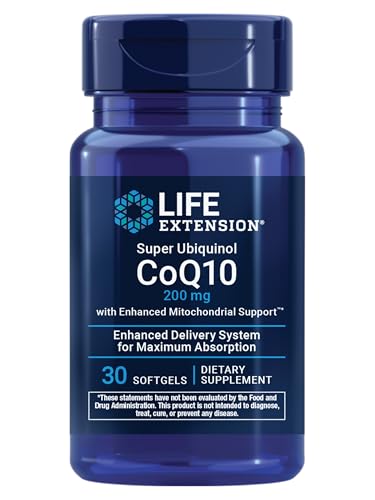
Life Extension Super Ubiquinol CoQ10 with Enhanced Mitochondrial Support™, Heart Health Supplement, Maximum Absorption, 100 mg, Non-GMO, Gluten-Free, 30 softgels
Calories 5 Total Fat 0.5 g Ubiquinol (as Kaneka Ubiquinol™) 100 mg Shilajit fulvic acid complex 100 mg Other ingredients: sunflower oil, gelatin, glycerin, purified water, beeswax, sunflower lecithin,

Qunol Ultra CoQ10 100mg, 3x Better Absorption, Patented Water and Fat Soluble Natural Supplement Form of Coenzyme Q10, Antioxidant for Heart Health, 120 Count Softgels
Qunol Ultra CoQ10 100mg Softgels- 3x Better Absorption, Antioxidant for Heart Health & Energy Production, Coenzyme Q10 Vitamins and Supplements, 3 Month Supply, 90 Count
Evidence & Sources
Promising research with growing clinical support from multiple studies
- National Institutes of Health Office of Dietary Supplements
- National Center for Complementary and Integrative Health (NCCIH)
- Mayo Clinic Proceedings
- Circulation: Heart Failure
- Journal of the American College of Cardiology
- Cochrane Database of Systematic Reviews
- Nutrients
- Antioxidants
- Neurology
- European Journal of Clinical Nutrition
This content is for informational purposes only and does not constitute medical advice. Always consult a qualified healthcare provider before starting, stopping, or changing any supplement or medication regimen.