

Chondroitin
Also known as: Chondroitin Sulfate
Overview
Chondroitin is a naturally occurring structural component of cartilage, the connective tissue that helps cushion joints and support smooth movement. In supplement form, it is most commonly sold as chondroitin sulfate and is frequently paired with glucosamine in products marketed for joint comfort, stiffness, and mobility support. Interest in chondroitin has been especially strong in the context of osteoarthritis, age-related joint wear, exercise-related discomfort, and long-term joint maintenance.
From a biological perspective, chondroitin is part of the extracellular matrix that gives cartilage its ability to retain water and resist compression. This has led to the theory that supplemental chondroitin may help support cartilage structure or influence the processes involved in joint degeneration and inflammation. Research has explored whether chondroitin can reduce pain, improve physical function, or slow structural joint changes, particularly in the knee and hand.
Use of chondroitin is widespread, but the scientific literature is mixed. Some clinical studies and meta-analyses suggest modest benefit for pain and function in osteoarthritis, while others report little difference compared with placebo. A major reason for this inconsistency is that supplement studies vary considerably in product quality, dose, formulation, study design, and whether chondroitin is tested alone or in combination with glucosamine. As with many dietary supplements, manufacturing standards and ingredient purity may influence real-world results.
Chondroitin is generally discussed as part of a broader joint-health conversation rather than as a stand-alone solution. Conventional medicine tends to evaluate it through outcomes such as pain scores, physical function, and imaging changes, whereas traditional systems may place it in the larger context of tissue nourishment, aging, mobility, and systemic balance. Because joint symptoms can have many causes, evaluation by a qualified healthcare professional remains important, particularly when pain is persistent, worsening, or associated with swelling, injury, or functional decline.
Medical Perspectives
Two Ways of Seeing Health

Western
scientific · clinical
Western medicine applies science, technology, and clinical experience to treat symptoms through testing, diagnosis, and targeted intervention.

Eastern
traditional · alternative
Eastern medicine focuses on treating the body naturally by applying traditional knowledge practiced for thousands of years, emphasizing balance and whole-person wellness.
Gold Bamboo presents both perspectives side-by-side so you can make informed decisions. We don't advocate for one over the other — your health choices are yours.
Western Medicine Perspective
Western Medicine Perspective
In conventional medicine, chondroitin is primarily studied as a symptom-modifying supplement for osteoarthritis, especially of the knee and hand. Researchers have proposed several mechanisms, including support of cartilage matrix integrity, effects on water retention in cartilage, and possible modulation of inflammatory mediators and cartilage-degrading enzymes. However, these mechanisms are still being interpreted within the limits of clinical evidence, and the degree to which oral chondroitin reaches joint tissues in meaningful amounts remains part of the discussion.
Clinical research has produced mixed findings. Some randomized trials and reviews have found small to moderate improvements in pain and joint function, while others have found minimal or no clinically significant benefit. Large guideline bodies have not always agreed on its role. For example, some rheumatology guidelines have been cautious or condition-specific, while certain European expert groups have been more favorable toward pharmaceutical-grade symptomatic slow-acting agents for osteoarthritis. This reflects an important distinction in the evidence base: prescription or pharmaceutical-grade chondroitin sulfate may not be equivalent to all over-the-counter products.
Safety data are generally reassuring. Chondroitin is often reported as well tolerated, with gastrointestinal upset among the more commonly noted adverse effects. Potential concerns are sometimes raised regarding product sourcing, contamination, and interactions with anticoagulant or antiplatelet therapy, although severe adverse effects are not commonly reported in the literature. As with other supplements used for chronic joint symptoms, clinicians typically emphasize that joint pain may result from osteoarthritis, inflammatory arthritis, injury, crystal disease, or other causes, and these require different evaluations and management approaches.
Overall, the western view is that chondroitin remains a plausible but variably supported option in joint-health research, with the strongest attention on osteoarthritis rather than generalized “joint support.” The evidence appears more favorable in some formulations and study settings than in others, but it does not support framing chondroitin as a universal or definitive answer for mobility problems.
Eastern & Traditional Perspective
Eastern/Traditional Medicine Perspective
In Traditional Chinese Medicine (TCM), symptoms such as joint stiffness, aching, heaviness, or reduced mobility are often understood through patterns rather than isolated biochemical deficiencies. Joint complaints may be associated with Bi syndrome, a category involving obstruction of the channels by factors such as wind, cold, dampness, or heat, often against a background of underlying weakness. In older adults or those with chronic degenerative symptoms, traditional interpretation may also involve decline in the systems associated with Liver and Kidney nourishment, which are classically linked to tendons, bones, and structural resilience.
From this perspective, a substance like chondroitin is not a classical TCM herb, but its modern use can be conceptually associated with efforts to nourish connective tissues, support structural integrity, and maintain comfortable movement over time. Rather than focusing solely on cartilage, traditional approaches often consider digestion, circulation, constitutional vitality, and environmental influences that may contribute to long-standing stiffness or discomfort. In integrative settings, chondroitin may be discussed alongside broader supportive strategies aimed at preserving function and reducing strain.
In Ayurveda, chronic joint discomfort and stiffness are commonly interpreted through patterns involving Vata imbalance, especially when dryness, cracking, degeneration, and age-related decline are prominent. Some presentations may also involve ama, a concept referring to impaired metabolic processing and accumulation that contributes to heaviness or inflammatory features. Chondroitin itself is not a classical Ayurvedic substance, but its popular role in modern supplement practice loosely aligns with the goal of supporting tissues affected by wear and reduced lubrication.
Naturopathic and integrative medicine often place chondroitin within a multimodal framework for musculoskeletal health, where the emphasis may include nutrition, physical function, inflammation balance, and long-term tissue support. These traditions generally regard it as one element of a broader joint-care strategy rather than a stand-alone remedy. As with conventional medicine, practitioners typically recognize that persistent or progressive joint symptoms warrant individualized assessment to clarify the underlying cause.
Supplements & Products
Recommended Products
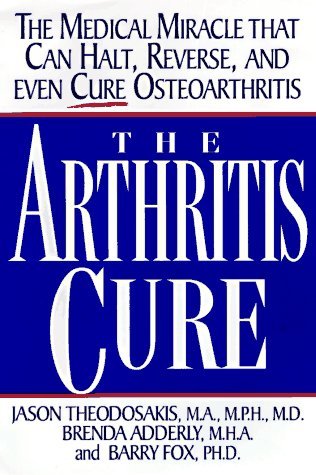
The Arthritis Cure: Theodosakis, Jason
By outlining a nine-point program that includes a new effective supplement, ASU, The Arthritis Cure Revised Edition <strong>describes a program that can halt, reverse, and possibly even cure degenerat

THORNE - Glucosamine & Chondroitin - Support to Maintain Healthy Joint Function and Mobility* - 90 Capsules
Trusted: Thorne is chosen by champions and trusted by 100+ professional sports teams, a proud partner of U.S. National Teams, and the #1 recommended clinical brand by health-care practitioners (2023 H

NOW Foods Supplements, Chondroitin Sulfate 600 mg (a Glycosaminoglycan), Joint Health*, 120 Capsules
Buy NOW Foods Supplements, Chondroitin Sulfate 600 mg (a Glycosaminoglycan), Joint Health*, 120 Capsules on Amazon.com ✓ FREE SHIPPING on qualified orders
Evidence & Sources
Promising research with growing clinical support from multiple studies
- National Center for Complementary and Integrative Health (NCCIH)
- Cochrane Database of Systematic Reviews
- Annals of the Rheumatic Diseases
- Osteoarthritis and Cartilage
- American College of Rheumatology guidelines
- European Society for Clinical and Economic Aspects of Osteoporosis, Osteoarthritis and Musculoskeletal Diseases (ESCEO)
- National Institutes of Health Office of Dietary Supplements
- GAIT trial (Glucosamine/Chondroitin Arthritis Intervention Trial), New England Journal of Medicine
This content is for informational purposes only and does not constitute medical advice. Always consult a qualified healthcare provider before starting, stopping, or changing any supplement or medication regimen.