

Borage Oil
Also known as: Starflower Oil, Borage Seed Oil
Overview
Borage oil is an oil extracted from the seeds of Borago officinalis, a plant traditionally known as starflower. Its main point of interest in nutrition and integrative health is its unusually high content of gamma-linolenic acid (GLA), an omega-6 fatty acid involved in the body’s production of signaling molecules related to inflammation, skin barrier function, and immune activity. Because of this profile, borage oil is commonly discussed in relation to eczema and other dry skin conditions, inflammatory complaints, breast discomfort, and menstrual or hormonal symptoms. It is also frequently compared with evening primrose oil, another GLA-rich supplement, though borage oil typically contains a higher proportion of GLA.
Interest in borage oil has grown from both traditional use and modern biochemical research. In supplement markets, it is often positioned as a plant-based option for supporting skin hydration, joint comfort, and cyclical hormonal wellbeing. Research has explored its role in conditions such as atopic dermatitis, rheumatoid arthritis, diabetic neuropathy, and infant development, though study findings have been mixed and are not uniformly conclusive. One reason for this inconsistency is that outcomes may depend on factors such as dosage, product quality, duration of use, and the specific condition being studied.
A key safety consideration is product purity. Raw borage plant materials may contain pyrrolizidine alkaloids (PAs), compounds associated with liver toxicity. Reputable borage oil supplements are therefore generally marketed as PA-free or certified free of unsaturated pyrrolizidine alkaloids. As with many supplements, quality control matters substantially, and the evidence base is stronger for the biochemical rationale of GLA than for broad claims about clinical benefit. For people exploring integrative approaches, consultation with a qualified healthcare professional remains important, especially during pregnancy, breastfeeding, or when liver disease, seizure disorders, or medication use are relevant concerns.
Medical Perspectives
Two Ways of Seeing Health

Western
scientific · clinical
Western medicine applies science, technology, and clinical experience to treat symptoms through testing, diagnosis, and targeted intervention.

Eastern
traditional · alternative
Eastern medicine focuses on treating the body naturally by applying traditional knowledge practiced for thousands of years, emphasizing balance and whole-person wellness.
Gold Bamboo presents both perspectives side-by-side so you can make informed decisions. We don't advocate for one over the other — your health choices are yours.
Western Medicine Perspective
Western / Conventional Medicine Perspective
From a conventional medicine standpoint, borage oil is understood primarily through its fatty acid composition, especially GLA. GLA can be converted in the body into dihomo-gamma-linolenic acid (DGLA), a precursor to eicosanoids that may have inflammation-modulating effects. This mechanism has made borage oil a subject of research in disorders where inflammatory signaling, skin barrier disruption, or altered lipid metabolism may play a role. In theory, increasing GLA intake could influence epidermal function, immune responses, and certain forms of pain or swelling, but mechanistic plausibility does not always translate into consistent clinical outcomes.
In dermatology, borage oil has been studied most often for atopic dermatitis (eczema). Some earlier trials suggested possible improvement in skin dryness, itching, or barrier integrity, while later systematic reviews and guideline-level evaluations have found the overall evidence to be inconsistent or insufficient for routine use. Similar uncertainty applies to PMS-related symptoms and mastalgia, where borage oil is sometimes discussed as an alternative to evening primrose oil, but high-quality evidence remains limited. In rheumatology, some studies have examined GLA-rich oils for rheumatoid arthritis, with findings suggesting possible reductions in tenderness or inflammatory symptoms in some participants, though these results have not established borage oil as a standard therapy.
Conventional safety assessments focus on liver risk from pyrrolizidine alkaloid contamination, potential gastrointestinal side effects, and possible interactions in specific populations. Healthcare professionals may also consider the broader context of fatty acid supplementation, including dietary intake and coexisting conditions. Overall, Western medicine views borage oil as a biologically active supplement with plausible mechanisms and selective but mixed clinical evidence, rather than as a definitive treatment for any single condition.
Eastern & Traditional Perspective
Eastern / Traditional Medicine Perspective
In traditional European herbalism, borage has long been regarded as a plant associated with cooling, soothing, and uplifting qualities, historically used for emotional strain, heat-related states, and dry or irritated tissues. While the modern supplement focus is on the seed oil, traditional systems more often described the plant in terms of its broader energetic actions rather than isolated fatty acids. This creates an important distinction: the current use of borage oil capsules is a modern nutraceutical application layered onto older herbal traditions.
Within an integrative Eastern and natural medicine framework, oils rich in essential fatty acids are often interpreted as helping to nourish dryness, support the skin, and moderate patterns associated with irritation or excess inflammatory activity. In Ayurveda-informed interpretation, a fatty, moistening oil may be seen as relevant when dryness and sensitivity predominate, though classical Ayurvedic texts do not center borage oil in the way modern supplement practice does. In traditional Chinese medicine-inspired integrative practice, borage as a plant may be described in terms related to clearing heat or supporting the spirit in historical Western herbals, but seed oil use is not a classical TCM staple and is better understood as a contemporary adjunct rather than a traditional materia medica mainstay.
In naturopathic and functional medicine circles, borage oil is often categorized as a source of building blocks for cell membranes, skin integrity, and inflammatory balance. It may be discussed alongside evening primrose oil, black currant seed oil, zinc, probiotics, and dietary strategies when addressing conditions such as eczema or cyclical breast tenderness. However, traditional and integrative perspectives generally emphasize individual constitution, digestive function, and overall dietary pattern rather than viewing one oil as universally appropriate. As with conventional care, qualified practitioner oversight is important because “natural” does not eliminate concerns about quality, contamination, or suitability for a given person.
Supplements & Products
Recommended Products

Fats That Heal, Fats That Kill: The Complete Guide to Fats, Oils, Cholesterol and Human Health: Udo Erasmus
Udo Erasmus <strong>exposes the manufacturing processes that turn healing fats into killing fats</strong>, explains the effects of these damaged fats on human health, and discloses the knowledge you n

NOW Foods Supplements, Borage Oil 1000 mg with 240mg of GLA (Gamma Linolenic Acid), 120 Softgels
This item: NOW Foods Supplements, Borage Oil 1000 mg with 240mg of GLA (Gamma Linolenic Acid), 120 Softgels
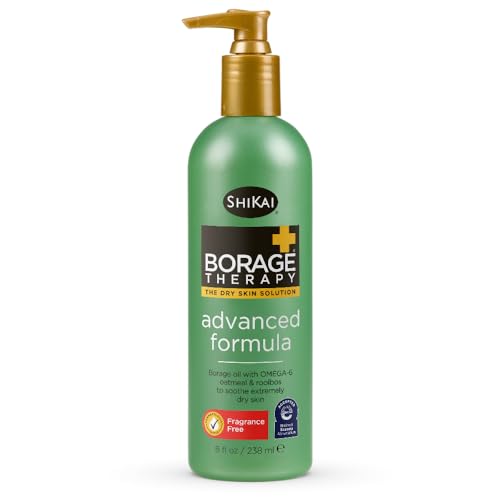
ShiKai Borage Therapy Body Moisturizer Advanced Formula (8 oz) | Fragrance Free | Hydrating Lotion for Dry Hands & Body | With Oatmeal & Shea : Bath Products
ShiKai Borage Therapy Dry Skin Lotion Body Moisturizer (8 oz) Unscented Skincare | Hydrating Lotion for Dry Hands & Body | With Oatmeal & Shea butter
Evidence & Sources
Promising research with growing clinical support from multiple studies
- National Center for Complementary and Integrative Health (NCCIH)
- European Medicines Agency (EMA) herbal monographs and safety information
- Cochrane Database of Systematic Reviews
- Journal of Dermatological Treatment
- American Journal of Clinical Nutrition
- Arthritis & Rheumatism
- Mayo Clinic Proceedings
- Phytotherapy Research
This content is for informational purposes only and does not constitute medical advice. Always consult a qualified healthcare provider before starting, stopping, or changing any supplement or medication regimen.