

Bacopa
Also known as: Bacopa Monnieri
Overview
Bacopa most commonly refers to Bacopa monnieri, a creeping marsh plant long used in Ayurvedic medicine as a medhya rasayana—a traditional class of rejuvenating herbs associated with intellect, memory, and mental resilience. It is widely marketed as a nootropic or cognitive-support supplement and is also discussed for its potential role in stress modulation, attention, and general nervous system support. Interest in bacopa has grown globally as consumers seek plant-based approaches to brain health, healthy aging, and emotional balance.
Modern research has focused primarily on bacopa’s bioactive compounds, especially bacosides, which are thought to influence neurotransmitter signaling, antioxidant activity, and neuronal communication. Studies suggest bacopa may have effects on memory formation, information processing, and anxiety-related symptoms, though findings vary depending on the extract used, dose, study length, and population studied. Many trials have been relatively small, and benefits—when observed—often appear after weeks rather than days, which distinguishes bacopa from stimulants that have more immediate subjective effects.
Bacopa is frequently discussed in the context of cognitive aging, student performance, stress response, and complementary support for attention or mood. At the same time, it is not considered a replacement for standard evaluation of memory loss, depression, anxiety disorders, or neurodegenerative disease. Potential adverse effects reported in research include gastrointestinal upset, nausea, cramping, diarrhea, and fatigue, and there may be theoretical or clinically relevant interactions with medications affecting the nervous system, thyroid function, or sedation. As with other supplements, product quality and standardization can differ substantially across brands.
From a broader health perspective, bacopa sits at the intersection of traditional herbal practice and modern integrative medicine. It has deep historical roots, a growing but still mixed clinical literature, and a profile that is promising enough to merit scientific attention while still requiring cautious interpretation. People considering bacopa, especially those who are pregnant, breastfeeding, managing chronic conditions, or taking prescription medications, are generally best served by discussing its use with a qualified healthcare professional.
Medical Perspectives
Two Ways of Seeing Health

Western
scientific · clinical
Western medicine applies science, technology, and clinical experience to treat symptoms through testing, diagnosis, and targeted intervention.

Eastern
traditional · alternative
Eastern medicine focuses on treating the body naturally by applying traditional knowledge practiced for thousands of years, emphasizing balance and whole-person wellness.
Gold Bamboo presents both perspectives side-by-side so you can make informed decisions. We don't advocate for one over the other — your health choices are yours.
Western Medicine Perspective
Western / Conventional Medicine Perspective
In conventional medicine, bacopa is viewed as a dietary supplement with possible neurocognitive and anxiolytic effects, but not as a standard treatment for any major neurological or psychiatric condition. Clinical research has explored bacopa for memory performance, processing speed, attention, stress, and anxiety, especially in healthy adults and older populations. Some randomized controlled trials and systematic reviews suggest modest improvements in certain domains of memory—particularly delayed recall or information retention—after sustained use. However, results are not fully consistent, and trial quality, sample size, and extract standardization vary.
Mechanistically, laboratory and animal studies suggest bacopa may act through several pathways, including antioxidant effects, modulation of cholinergic signaling, influence on serotonin and dopamine systems, and support of synaptic communication. Researchers have also examined possible anti-inflammatory and neuroprotective properties. These mechanisms are biologically plausible, but translating them into clear clinical benefit remains an ongoing area of investigation. Conventional researchers typically emphasize that outcomes may depend heavily on the specific extract, concentration of bacosides, duration of use, and the baseline cognitive status of the participants.
Safety data from human trials suggest bacopa is generally tolerated by many adults in the short term, but gastrointestinal side effects are among the most commonly reported. Because supplements are not regulated in the same way as prescription drugs in many countries, clinicians often note concerns about purity, potency, contamination, and label accuracy. Conventional medicine also stresses the importance of evaluating symptoms such as significant memory decline, confusion, anxiety, or depressed mood through standard medical assessment rather than relying on supplements alone. In integrative settings, bacopa may be discussed as an adjunctive option, but typically within the context of broader lifestyle, medical, and mental health care.
Eastern & Traditional Perspective
Eastern / Traditional Medicine Perspective
In Ayurveda, bacopa (Brahmi, though this name is also used for other herbs in some traditions) is one of the best-known herbs for supporting the mind, memory, intellect, and emotional steadiness. It is traditionally classified as a medhya rasayana, a rejuvenative herb said to nourish the nervous system, enhance learning, and promote clarity of consciousness. Ayurvedic texts and modern Ayurvedic practice often associate bacopa with balancing mental overactivity, supporting concentration, and calming the effects of stress. Rather than being viewed as a quick stimulant, it is traditionally understood as a restorative tonic for the mind.
From an Ayurvedic framework, bacopa is often discussed in relation to the balance of doshas, particularly when excess vata is thought to contribute to restlessness, scattered attention, poor recall, or nervous exhaustion. It has also been used traditionally in formulations intended to support sleep quality, mental composure, and long-term cognitive vitality. In this context, bacopa is rarely seen in isolation; traditional systems typically place it within a broader picture of digestion, daily routine, meditation, sensory balance, and individualized constitution.
Other traditional and integrative systems, including some forms of naturopathy and herbal medicine, similarly describe bacopa as a nervine and adaptogenic-style botanical, though the term adaptogen is used more broadly in modern herbal discourse than in classical Ayurvedic texts. Traditional practitioners may emphasize bacopa’s role in supporting resilience to mental strain and preserving cognitive function over time. As with many traditional herbs, contemporary use often blends historical knowledge with modern standardization practices, while acknowledging that traditional indications do not always map directly onto modern biomedical diagnoses.
Supplements & Products
Recommended Products

Adaptogens: Herbs for Strength, Stamina, and Stress Relief: Winston, David, Maimes, Steven
In Adaptogens, authors David Winston and Steven Maimes provide a comprehensive look into adaptogens, nontoxic herbs such as <strong>ginseng, eleuthero, and licorice</strong>, that produce a defensive
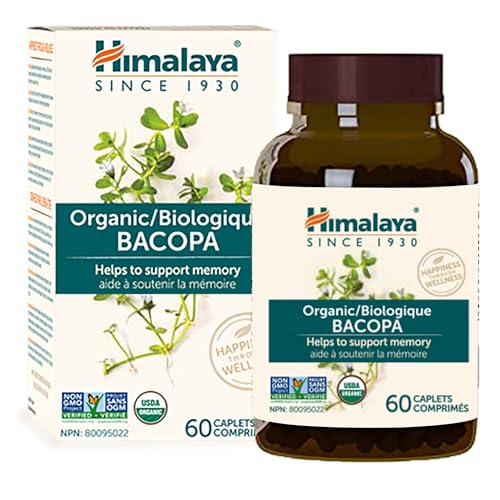
Himalaya Organic Bacopa Monnieri Nootropic Herbal Supplement, Supports Calm, Memory, Cognition, USDA Certified Organic, Non-GMO, 750 mg, 60 Plant-Based Caplets, 60 Day Supply
Amazon.com: Himalaya Organic Bacopa Monnieri Nootropic Herbal Supplement, Supports Calm, Memory, Cognition, USDA Certified Organic, Non-GMO, 750 mg, 60 Plant-Based Caplets, 60 Day Supply : Health &

NOW Foods Supplements, Bacopa Extract (Bacopa monnieri) 450 mg, Promotes Brain Health*, 90 Veg Capsules
Himalaya Organic Bacopa Monnieri ... Organic, Non-GMO, 750 mg, 60 Plant-Based Caplets, 60 Day Supply ... Nutricost Bacopa Monnieri 1,000mg, 120 Capsules (60 Servings) - Non-GMO, Gluten Free, and Veget
Evidence & Sources
Promising research with growing clinical support from multiple studies
- National Center for Complementary and Integrative Health (NCCIH)
- Memorial Sloan Kettering Cancer Center, About Herbs
- Journal of Ethnopharmacology
- Phytotherapy Research
- Evidence-Based Complementary and Alternative Medicine
- Journal of Alternative and Complementary Medicine
- Frontiers in Pharmacology
- Ayu
This content is for informational purposes only and does not constitute medical advice. Always consult a qualified healthcare provider before starting, stopping, or changing any supplement or medication regimen.