

Kidney Stones and Keto Diet
The ketogenic (“keto”) diet is a very low-carbohydrate, high-fat eating pattern that shifts the body’s metabolism into ketosis—using fat-derived ketones for fuel. This shift can bring initial natriuresis and diuresis, a lower insulin state, and changes in acid–base balance. Those same metabolic effects are directly relevant to kidney stone formation because stones crystallize when urine becomes concentrated and chemically favorable to crystal growth. Key urinary factors include volume, pH, calcium, uric acid, oxalate, and citrate. Mechanistically, several keto-related changes may raise stone risk. Early in keto, fluid and sodium losses can lower urine volume, increasing supersaturation of stone-forming salts. A high intake of animal protein (common in some keto variants) and excretion of ketoacids can acidify urine, lowering urine pH. Acidic urine increases the likelihood of uric acid stones. Metabolic acidosis also reduces urinary citrate, an important inhibitor of calcium stone formation, creating conditions favoring calcium oxalate and calcium phosphate stones. Sodium intake—sometimes elevated with processed, salty keto foods—can increase urinary calcium. Hyperuricosuria may rise with higher purine intake, further favoring uric acid stones. These effects are not inevitable; keto can be implemented with adequate hydration, moderated protein, controlled sodium, and more alkali from low-carbohydrate vegetables. Evidence is strongest in children using therapeutic ketogenic diets for epilepsy, where kidney stone incidence has ranged roughly 3–10% without preventive measures. Observational cohorts and program reports suggest empiric potassium citrate lowers that risk substantially. In adult weight-loss settings, controlled feeding studies show urine changes (lower pH, lower citrate, higher calcium and uric acid) that predict increased lithogenic risk, but direct stone incidence data are limited. Large population studies consistently link high animal protein, low alkx
Updated September 8, 2026This content is for informational purposes only and does not constitute medical advice. Always consult a qualified healthcare provider before starting, stopping, or changing any supplement or medication regimen.
Shared Risk Factors
Low urine volume (dehydration/diuresis)
Moderate EvidenceEarly keto induction increases natriuresis and diuresis, which can reduce urine volume if fluids are not increased. Low volume concentrates lithogenic solutes.
High dietary acid load from animal protein
Strong EvidenceAnimal protein increases net acid load and sulfate/uric acid production, lowering urine pH and citrate while increasing calcium and uric acid excretion.
Hypocitraturia (low urinary citrate)
Strong EvidenceMetabolic acidosis enhances renal citrate reabsorption, reducing urinary citrate—an inhibitor of calcium crystallization.
Acidic urine (low pH)
Strong EvidenceExcretion of ketoacids and high animal protein intake acidify urine.
Hypercalciuria (often sodium-related)
Moderate EvidenceHigh sodium intake increases urinary calcium; acidosis can increase bone calcium release, together elevating urinary calcium.
Medications/supplements that raise risk
Moderate EvidenceCarbonic anhydrase inhibitors (e.g., topiramate, zonisamide) and high-dose vitamin C can increase stone risk; vitamin D and calcium supplements interact with calcium balance.
Comorbidity Data
Prevalence
Pediatric therapeutic ketogenic diet cohorts report kidney stone incidence around 3–10% without preventive alkali; with empiric potassium citrate, incidence drops substantially (often below 1–2%). Adult weight-loss keto data on actual stone events are sparse; urine chemistry shifts indicate higher theoretical risk, but large prospective incidence data are lacking.
Mechanistic Link
Keto-associated diuresis (low urine volume), dietary acid load, hypocitraturia, acidic urine, increased urinary calcium and uric acid elevate lithogenic supersaturation (particularly uric acid and calcium oxalate).
Clinical Implications
For patients on keto—especially children on therapeutic diets or adults with prior stones—clinicians often consider hydration, moderation of animal protein, sodium reduction, citrate/alkali strategies, and urine monitoring. Co-prescribed carbonic anhydrase inhibitors increase risk; prophylactic citrate has reduced stones in pediatric programs.
Sources (4)
- Kossoff EH et al. Epilepsia. 2009;50: (kidney stones in ketogenic diet; risk factors and prevention).
- McNally MA et al. J Child Neurol. 2012;27: (potassium citrate in ketogenic diet cohorts).
- Siener R, Hesse A. J Urol. 2002–2003: (high-protein/low-carb diets and urinary lithogenic risk).
- Taylor EN & Curhan GC. Clin J Am Soc Nephrol. 2007: (dietary factors and kidney stones).
Overlapping Treatments
High fluid intake to maintain dilute urine
Strong EvidenceSupports hemodynamic stability during keto adaptation; may reduce headaches/fatigue from early diuresis.
Dilutes urine, lowering supersaturation of stone-forming salts and reducing recurrence risk.
Individuals with heart, liver, or kidney conditions require clinician guidance on fluid targets.
Potassium citrate or other alkali therapy (clinician-directed)
Strong EvidenceBuffers acid load, may mitigate keto-related acidosis and improve tolerability.
Raises urine citrate and pH, reducing calcium and uric acid stone risk; supported by RCTs in recurrent stone formers.
Not appropriate for everyone (e.g., risk of hyperkalemia, certain medications); requires monitoring.
Moderation of animal protein and inclusion of low-carb, alkali-rich vegetables
Moderate EvidenceMaintains ketosis while reducing net acid load; supports micronutrient intake.
Higher dietary alkali increases urinary citrate and pH, lowering lithogenic risk.
Carbohydrate limits vary; dietitian support helps balance ketosis with plant intake.
Sodium reduction
Strong EvidenceHelps maintain electrolyte balance and blood pressure on keto.
Lowers urinary calcium; recommended in stone prevention guidelines.
Monitor total sodium sources (processed meats, cheeses, broths).
Adequate dietary calcium with meals
Moderate EvidenceSupports bone health during keto; dairy and other low-carb sources can fit within macros.
Calcium with meals binds oxalate in the gut, reducing urinary oxalate and calcium oxalate risk.
Supplemental calcium should be individualized; excess may increase calciuria in some.
Citrate-containing beverages (e.g., lemon/lime) within carb limits
Moderate EvidenceProvides small amounts of carbohydrate and potassium; may be compatible with some keto plans.
May increase urinary citrate and reduce stone risk; supportive clinical data exist though less robust than with potassium citrate.
Carbohydrate content varies; dental enamel considerations with acidic beverages.
Review of concurrent medications (e.g., topiramate, zonisamide, acetazolamide)
Moderate EvidenceOptimizes epilepsy or migraine regimens alongside therapeutic keto.
These agents can promote stones; clinicians may add alkali or monitor urine chemistry.
Medication changes require prescriber oversight.
Medical Perspectives
Two Ways of Seeing Health

Western
scientific · clinical
Western medicine applies science, technology, and clinical experience to treat symptoms through testing, diagnosis, and targeted intervention.
Surgeons · Pharmaceuticals · Clinical trials · Diagnostics 
Eastern
traditional · alternative
Eastern medicine focuses on treating the body naturally by applying traditional knowledge practiced for thousands of years, emphasizing balance and whole-person wellness.
Acupuncture · Herbal medicine · Yoga · Meditation
Gold Bamboo presents both perspectives side-by-side so you can make informed decisions. We don't advocate for one over the other — your health choices are yours.
Two Ways of Seeing Health
Western
scientific · clinical
Western medicine applies science, technology, and clinical experience to treat symptoms through testing, diagnosis, and targeted intervention.
Eastern
traditional · alternative
Eastern medicine focuses on treating the body naturally by applying traditional knowledge practiced for thousands of years, emphasizing balance and whole-person wellness.
Gold Bamboo presents both perspectives side-by-side so you can make informed decisions. We don't advocate for one over the other — your health choices are yours.
Western Perspective
Western medicine views kidney stones as a crystallization disorder driven by urine chemistry (volume, pH, solute loads, inhibitors). Ketogenic diets can shift those parameters—lowering urine pH and citrate, changing calcium and uric acid excretion, and sometimes reducing urine volume—so clinicians consider keto a potential modifier of stone risk, especially when animal protein is high and alkali intake is low.
Key Insights
- Therapeutic keto in pediatric epilepsy is associated with a measurable increase in kidney stone incidence; empiric potassium citrate lowers that risk.
- Very-low-carb/high-protein diets acidify urine and reduce urinary citrate in controlled studies, increasing theoretical lithogenic risk.
- Low urine pH is a principal driver of uric acid stones; hypocitraturia promotes calcium stones.
- Sodium raises urinary calcium; adequate dietary calcium with meals reduces urinary oxalate.
- Hydration and alkali therapy are cornerstone strategies to prevent stones across etiologies.
Treatments
- Hydration to maintain dilute urine
- Dietary sodium and animal-protein moderation
- Adequate dietary calcium with meals
- Potassium citrate or other alkali therapy when appropriate
- Urine chemistry monitoring in higher-risk patients
Deep Dive
From a western clinical standpoint, kidney stones arise when urine becomes supersaturated with crystallizing salts such as calcium oxalate, calc... From a western clinical standpoint, kidney stones arise when urine becomes supersaturated with crystallizing salts such as calcium oxalate, calcium phosphate, or uric acid. The ketogenic diet can shift several components of this balance. During early keto adaptation, reduced insulin lowers renal sodium reabsorption, leading to natriuresis and diuresis; unless fluid intake keeps pace, urine volume may fall, concentrating lithogenic solutes. Concurrently, common keto patterns emphasize animal protein and may limit plant-derived alkali, increasing net endogenous acid production. Acid load and excretion of ketoacids lower urine pH and urinary citrate. Low urinary citrate removes a key inhibitor of calcium crystal aggregation, while acidic urine strongly favors uric acid stone formation. Sodium—often elevated with cured meats, cheeses, and broths—raises urinary calcium, and higher purine intake can increase uric acid excretion, compounding risk. These mechanisms are well documented in urine chemistry studies of low-carbohydrate and high-protein diets, and they align with large cohort findings linking high animal protein, low alkali intake, and low urine volume to stones. The most direct clinical evidence comes from pediatric epilepsy programs using therapeutic ketogenic diets, where kidney stone incidence is clearly elevated compared with background rates. Importantly, empiric use of potassium citrate in these programs reduces stones substantially, consistent with randomized evidence that citrate salts prevent calcium stone recurrence. In adults using keto for weight loss, direct incidence data are limited, but observed urine changes imply increased theoretical risk—especially for individuals with a prior stone history, low fluid intake, high animal protein, or high sodium. Western management emphasizes risk stratification, shared decision-making about the benefits of keto (e.g., seizure control, weight loss, glycemic improvements) versus potential stone risk, and pragmatic mitigation: maintain high fluid intake to keep urine dilute, moderate animal protein, reduce sodium, ensure adequate dietary calcium with meals, and consider alkali strategies such as potassium citrate when clinically appropriate. Monitoring with basic labs and, for higher-risk patients, periodic urine chemistry helps tailor interventions.
Sources
- AUA Medical Management of Kidney Stones Guideline (2014; 2019 update).
- Borghi L et al. N Engl J Med. 2002;346:77–84.
- Taylor EN & Curhan GC. Clin J Am Soc Nephrol. 2007;2: (diet and stones).
- Siener R et al. Ann Nutr Metab/J Urol. 2002–2003.
- Kossoff EH et al. Epilepsia. 2009;50:.
- Cochrane Review: Citrate salts for preventing and treating calcium stones (2015).
Eastern Perspective
Traditional systems frame kidney stones as the product of dietary excesses, concentrated urine, and impaired fluid-metabolism energetics. In Traditional Chinese Medicine (TCM), stone disease corresponds to Shí Lín (stone-strangury), often from Damp-Heat in the lower burner with Qi stagnation. Ayurveda describes Ashmari, commonly linked to aggravated Vata-Pitta and obstructed Mutravaha srotas. From these perspectives, a keto pattern high in heavy, heating, and greasy foods may foster internal heat and dryness, concentrating urine and promoting stone formation without balancing cooling, hydrating, and alkalizing elements.
Key Insights
- Hydration and urine dilution are emphasized across traditions to ‘wash out’ gravel and reduce stagnation.
- Foods that generate ‘heat’ or acidity (excess animal protein, salty and processed items) are seen as aggravating; alkalizing, bitter greens and citrus are balancing.
- TCM and Ayurveda use diuretic and ‘stone-dissolving’ botanicals to promote smooth urination and reduce discomfort.
- Mind–body practices and routine support digestion and fluid metabolism (Agni/transformative Qi), indirectly aiding stone prevention.
Treatments
- TCM herbs such as Jin Qian Cao (Lysimachia), Hai Jin Sha, Che Qian Zi; formulas to clear Damp-Heat (clinician-guided).
- Ayurvedic botanicals like Punarnava (Boerhavia diffusa) and Gokshura (Tribulus terrestris), and citrus preparations to increase urinary citrate.
- Dietary balancing: include cooling, non-starchy, low-oxalate vegetables and adequate fluids within keto constraints.
- Acupuncture and acupressure to support lower jiao fluid movement and discomfort management.
Deep Dive
Traditional frameworks interpret keto’s typical emphasis on rich, heating, and dense foods as potentially creating internal ‘heat’ and ‘dampness... Traditional frameworks interpret keto’s typical emphasis on rich, heating, and dense foods as potentially creating internal ‘heat’ and ‘dampness’ that thicken or stagnate fluids. In TCM, kidney stones fall under Shí Lín (stone-strangury), often driven by Damp-Heat in the lower burner with Qi stagnation. Signs of dryness and heat are addressed with formulas that clear heat and promote urination, using herbs such as Jin Qian Cao, Hai Jin Sha, and Che Qian Zi, alongside acupuncture to move water pathways. Ayurveda describes Ashmari as an interaction of aggravated Vata (movement/roughness) and Pitta (heat), obstructing Mutravaha srotas (urinary channels). Diets heavy in pungent, salty, and sour qualities, and low in hydrating, cooling, and bitter foods, are believed to predispose to stone formation. Remedies emphasize adequate hydration, inclusion of cooling, bitter, and alkalizing foods, and botanicals like Punarnava and Gokshura to support diuresis and urinary comfort. Citrus preparations and alkaline mineral waters are seen as balancing. Where eastern and western views converge is notable: both prize urine dilution through adequate fluid intake and recognize the value of balancing dietary ‘heat’ or acid load with more alkaline inputs (greens, citrus). The western idea of urinary citrate as a crystal inhibitor aligns with traditional use of citrus and plant-based alkalinizers. Eastern systems add individualized constitutional assessment—recognizing that some people may tolerate high-fat diets well if balanced with cooling, hydrating elements—while advising moderation of salty, processed meats and very spicy foods that map to ‘heating’ excess. Evidence for specific herbs remains limited in modern trials, so integration with conventional evaluation is prudent. In practice, an integrative approach may involve tailoring a keto pattern to include non-starchy, low-oxalate vegetables, mindful hydration, and clinician-guided use of citrate or traditional botanicals, with ongoing monitoring for safety and effectiveness.
Sources
- Bensky D, Gamble A. Chinese Herbal Medicine: Materia Medica.
- Sharma PV. Dravyaguna Vigyan; Ayurvedic concepts of Ashmari.
- Siener R et al. modern data on citrate and diet provide points of convergence.
- Small clinical studies on citrus juices and urinary citrate (urology literature).
Evidence Ratings
Therapeutic ketogenic diets in children are associated with higher kidney stone incidence than background rates.
Kossoff EH et al. Epilepsia. 2009;50: (kidney stones with ketogenic diet).
Empiric potassium citrate substantially reduces kidney stone incidence in pediatric ketogenic diet programs.
McNally MA et al. J Child Neurol. 2012;27: (potassium citrate prophylaxis).
High animal protein intake increases urinary acid load, lowers citrate, and raises stone risk.
Taylor EN & Curhan GC. Clin J Am Soc Nephrol. 2007;2: (dietary factors and stones).
Low urine pH is the primary driver of uric acid stone formation.
AUA Medical Management of Kidney Stones Guideline (2014; 2019 update).
Low-carbohydrate/high-protein diets reduce urinary citrate and pH and increase urinary calcium and uric acid in controlled settings.
Siener R & Hesse A. J Urol/Ann Nutr Metab. 2002–2003 (urine chemistry under high-protein/low-carb regimens).
Higher fluid intake reduces recurrence of kidney stones.
Cochrane Review: Increased water intake for preventing urinary stones (2012/2017 updates).
Citrate therapy reduces recurrence of calcium stones.
Cochrane Review: Citrate salts for preventing and treating calcium-containing kidney stones (2015).
Carbonic anhydrase inhibitors (topiramate/zonisamide) increase kidney stone risk by lowering urinary citrate and altering pH.
Welch BJ et al. Urology/Neurology pharmacovigilance reports on topiramate-associated nephrolithiasis.
Sources
- AUA Medical Management of Kidney Stones: American Urological Association Guideline (2014; 2019 update).
- Borghi L, Schianchi T, Meschi T, et al. Comparison of two diets for the prevention of recurrent stones in idiopathic hypercalciuria. N Engl J Med. 2002;346:77–84.
- Taylor EN, Curhan GC. Diet and fluid prescription in stone disease. Clin J Am Soc Nephrol. 2007;2: (review).
- Siener R, Hesse A. The effect of a high-protein/low-carbohydrate diet on urinary risk factors for calcium oxalate stone formation. J Urol/Ann Nutr Metab. 2002–2003.
- Kossoff EH, et al. Kidney stones in children on the ketogenic diet: risk factors and prevention. Epilepsia. 2009;50:.
- McNally MA, et al. Empiric use of potassium citrate in ketogenic diet therapy and kidney stone prevention. J Child Neurol. 2012;27:.
- Cochrane Review: Citrate salts for preventing and treating calcium stones. Cochrane Database Syst Rev. 2015.
- Cochrane Review: Increased water intake to prevent urinary stone recurrence. Cochrane Database Syst Rev. 2012/2017.
- Welch BJ, Graybeal D, Moe OW, Maalouf NM. Uric acid nephrolithiasis. Curr Opin Nephrol Hypertens. 2015;24: (uric acid stones and low urine pH).
- Westman EC, Yancy WS, Mavropoulos JC, et al. The effect of a low-carbohydrate, ketogenic diet vs. low-fat diet on weight and cardiovascular risk factors. Ann Intern Med. 2002; (metabolic changes with low-carb; diuresis noted).
Related Topics
Recommended Products

No More Kidney Stones: The Experts Tell You All You Need to Know about Prevention and Treatment: Rodman MD, John S., Sosa MD, R. Ernest, Seidman MS RD, Cynthia, Jones, Rory
by John S. Rodman MD (Author), R. Ernest Sosa MD (Author), Cynthia Seidman MS RD (Author), Rory Jones & 1 more ... <strong>A Proven Plan to Prevent Painful Kidney Stones At last!</strong>
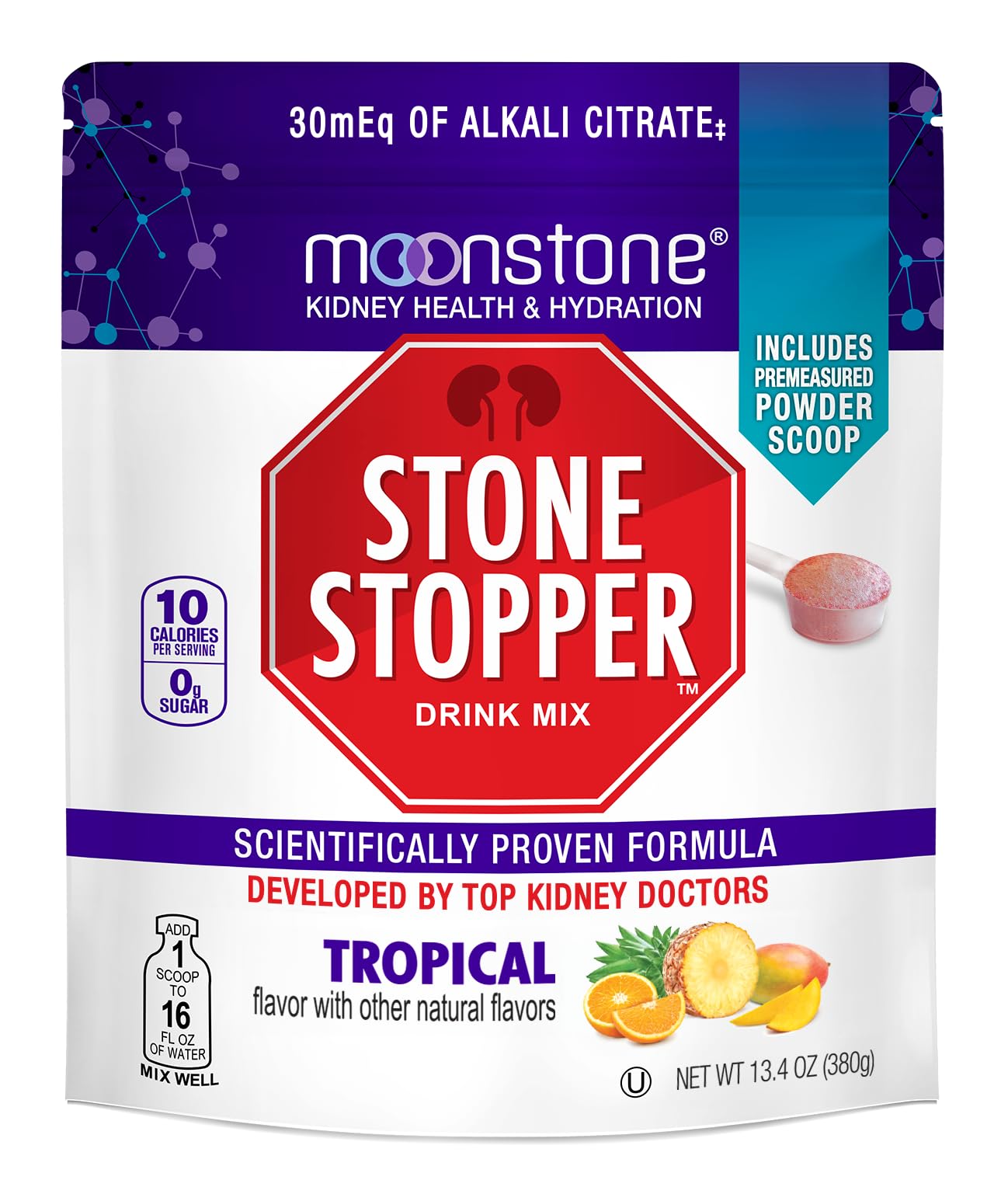
Stone Stopper Drink Mix, Tropical, Kidney Stone Prevention, Calcium Oxalate Protector, Alkali Citrate Support, Developed by Urologists to Improve Hydration and Support Kidney Health, 30 Day Supply
NO ADDED SUGAR TASTY DRINK MIX: ... formula rich in alkali citrate, this drink mix <strong>provides daily support for kidney health by helping manage urine pH and citrate levels</strong>....

pH Test Strips for Urine and Saliva - 150 Litmus Paper pH Test Strips with Ebook, Quick & Easy pH Level Testing from 4.5-9.0, Ultimate Acidity Test Kit from JNW Direct: Amazon.com: Industrial & Scientific
Just Fitter pH Test Strips for Testing Alkaline and Acid Levels in The Body. Track & Monitor Your pH Level Using Saliva and Urine.
Health Disclaimer
This content is for informational purposes only and does not constitute medical advice. Always consult a qualified healthcare provider before starting, stopping, or changing any supplement or medication regimen.