

Chronic Urticaria and Herbal Remedies
Chronic urticaria (CU), often called chronic spontaneous urticaria (CSU), is a skin condition marked by recurrent, itchy wheals (hives) with or without angioedema persisting for more than six weeks. Lesions typically last less than 24 hours in one spot and may migrate. Although infections, physical triggers (pressure, cold, heat), and NSAIDs can aggravate symptoms, many cases are “spontaneous,” with no clear external trigger. Modern research points to mast cells and basophils releasing histamine, leukotrienes, and cytokines. Autoimmune mechanisms—autoantibodies targeting IgE or its high‑affinity receptor—are implicated in a substantial subset. Standard care starts with non‑sedating second‑generation H1 antihistamines, with dose escalation as needed; refractory disease may respond to omalizumab (anti‑IgE) or cyclosporine. Despite these options, itching, sleep disturbance, and quality‑of‑life impacts drive many people to explore herbal remedies for additional relief. Herbal remedies most often discussed for CU include stinging nettle (Urtica dioica), turmeric/curcumin (Curcuma longa), licorice root (Glycyrrhiza glabra), butterbur (Petasites hybridus; only PA‑free extracts), and multi‑herb traditional formulas such as the Chinese medicine Xiao‑Feng‑San. Proposed mechanisms include antihistamine‑like activity (mast‑cell stabilization, histamine receptor effects), anti‑inflammatory actions (NF‑κB and COX/LOX pathway modulation), and broader immunomodulation. The clinical evidence, however, varies markedly: small or indirect trials exist for nettle and turmeric (largely in allergic rhinitis or pruritic dermatoses, not CU specifically), and systematic reviews of Chinese herbal medicine as add‑on therapy suggest symptom improvements but are limited by study size, heterogeneity, and risk of bias. Butterbur has evidence in allergic rhinitis but raises safety concerns without PA‑free manufacturing. Licorice’s benefits are primarily theoretical for CU, with more robust data on
Updated September 8, 2026This content is for informational purposes only and does not constitute medical advice. Always consult a qualified healthcare provider before starting, stopping, or changing any supplement or medication regimen.
Overlapping Treatments
Stinging nettle (Urtica dioica)
Emerging ResearchMay modestly reduce itch and wheal formation via antihistamine‑like and anti‑inflammatory effects (based on in vitro data and small trials in allergic rhinitis; limited CU‑specific data).
A classic botanical aligned with herbal anti‑inflammatory and anti‑allergic strategies.
Potential for allergic reactions (including contact urticaria), GI upset; theoretical interactions with anticoagulants/antiplatelets; safety in pregnancy/lactation not well established.
Turmeric/Curcumin (Curcuma longa)
Emerging ResearchAnti‑inflammatory and possible mast‑cell modulating effects may lessen pruritus; limited direct clinical data in CU.
Well‑studied phytochemical used across herbal systems to down‑regulate NF‑κB and pro‑inflammatory mediators.
May interact with anticoagulants/antiplatelets and some CYP/P‑gp substrates; can aggravate gallbladder disease or cause GI upset; quality and bioavailability vary widely.
Licorice root (Glycyrrhiza glabra)
Emerging ResearchTheoretical benefit via anti‑inflammatory and corticosteroid‑sparing effects; minimal CU‑specific clinical evidence.
Common herbal adjuvant in formulas to harmonize and reduce inflammation.
Can raise blood pressure and lower potassium; interacts with diuretics, digoxin, and corticosteroids; avoid in pregnancy; caution with cardiovascular, renal, or hepatic disease.
Butterbur (Petasites hybridus; PA‑free extract only)
Moderate EvidenceLeukotriene‑modulating activity suggests anti‑allergic potential; no robust CU trials.
Herbal option historically used for allergy/migraine when manufactured to remove hepatotoxic PAs.
Non‑PA‑free products can cause liver toxicity; avoid in pregnancy/children and in ragweed allergy; drug–herb interactions possible with hepatotoxic agents.
Xiao‑Feng‑San (Eliminate Wind Powder; TCM formula)
Moderate EvidenceMeta‑analyses suggest improved urticaria activity scores when added to antihistamines, though trials are small and at risk of bias.
Flagship TCM approach for “wind‑heat/itch,” combining anti‑inflammatory and antihistamine‑like herbs.
Formula variations and quality control issues; possible herb–drug interactions; screen for hepatic/renal risks; professional oversight recommended.
Albizia lebbeck (Shirish)
Emerging ResearchPreclinical mast‑cell stabilizing and anti‑allergic effects suggest symptom relief; limited human data specific to CU.
Ayurvedic anti‑allergic botanical used in “Sheetapitta.”
Potential allergy to Fabaceae; limited pharmacokinetic data; monitor for sedation or GI upset.
Tinospora cordifolia (Guduchi)
Emerging ResearchImmunomodulatory properties may help in autoimmune‑leaning CU phenotypes; clinical CU evidence is lacking.
Ayurvedic rasayana used to modulate immune function.
Case reports of liver injury; caution with concurrent hepatotoxic drugs or immunosuppressants; avoid in pregnancy unless supervised.
Quercetin (plant flavonoid)
Emerging ResearchIn vitro mast‑cell stabilization and antihistamine‑like effects suggest reduced hives/itch; limited clinical CU data.
Widely used in integrative allergy protocols for its anti‑allergic profile.
May interact with certain antibiotics (e.g., fluoroquinolones) and CYP3A4 substrates; occasional headache or GI upset.
Medical Perspectives
Two Ways of Seeing Health

Western
scientific · clinical
Western medicine applies science, technology, and clinical experience to treat symptoms through testing, diagnosis, and targeted intervention.
Surgeons · Pharmaceuticals · Clinical trials · Diagnostics 
Eastern
traditional · alternative
Eastern medicine focuses on treating the body naturally by applying traditional knowledge practiced for thousands of years, emphasizing balance and whole-person wellness.
Acupuncture · Herbal medicine · Yoga · Meditation
Gold Bamboo presents both perspectives side-by-side so you can make informed decisions. We don't advocate for one over the other — your health choices are yours.
Two Ways of Seeing Health
Western
scientific · clinical
Western medicine applies science, technology, and clinical experience to treat symptoms through testing, diagnosis, and targeted intervention.
Eastern
traditional · alternative
Eastern medicine focuses on treating the body naturally by applying traditional knowledge practiced for thousands of years, emphasizing balance and whole-person wellness.
Gold Bamboo presents both perspectives side-by-side so you can make informed decisions. We don't advocate for one over the other — your health choices are yours.
Western Perspective
Western medicine defines chronic urticaria by duration (>6 weeks) and recognizes mast‑cell–mediated pathways, often autoimmune. Antihistamines and biologics are evidence‑based mainstays. Herbal remedies are considered adjuncts with plausible mechanisms but limited, heterogeneous clinical evidence in CU.
Key Insights
- CU pathophysiology centers on mast‑cell degranulation and, in many, functional autoantibodies to IgE/FcεRI.
- Second‑generation H1 antihistamines (up‑dosed as needed) are first‑line; omalizumab and cyclosporine benefit refractory cases.
- Herbal agents may affect histamine signaling or inflammation, but CU‑specific RCTs are scarce; quality control and interactions are key concerns.
- Systematic reviews of Chinese herbal medicine as add‑ons suggest UAS7 improvements but with low‑to‑moderate certainty due to bias and small sample sizes.
Treatments
- Second‑generation H1 antihistamines
- Omalizumab (anti‑IgE)
- Cyclosporine (calcineurin inhibitor)
- Short courses of oral corticosteroids for flares
- Leukotriene receptor antagonists (e.g., montelukast)
Deep Dive
From a western clinical standpoint, chronic spontaneous urticaria (CSU) is defined by recurrent hives and/or angioedema persisting beyond six we... From a western clinical standpoint, chronic spontaneous urticaria (CSU) is defined by recurrent hives and/or angioedema persisting beyond six weeks, with no consistent external trigger. The core biology involves aberrant activation of skin mast cells and basophils, releasing histamine, leukotrienes, and cytokines that drive pruritus and wheal formation. Autoimmunity is common: functional IgG autoantibodies to IgE or its high‑affinity receptor (FcεRI) are detected in many patients, helping explain the disease’s persistence and response to targeted therapies. Evidence‑based management proceeds in steps: non‑sedating H1 antihistamines (often at higher‑than‑standard doses), then add‑on biologic therapy with omalizumab for refractory disease, and cyclosporine in select cases. Short corticosteroid bursts may quell severe flares but are not a maintenance strategy. Where do herbal remedies fit? Mechanistically, several botanicals exhibit properties that could theoretically mitigate CSU: stinging nettle and quercetin show antihistamine‑like or mast‑cell–stabilizing activity in preclinical models; curcumin modulates NF‑κB and eicosanoid pathways; and traditional Chinese formulas such as Xiao‑Feng‑San combine herbs with anti‑inflammatory and antipruritic actions. Clinically, however, robust CSU‑specific randomized trials are scarce. Systematic reviews suggest that Chinese herbal medicine, used alongside antihistamines, may improve symptom scores (e.g., UAS7), but the certainty is limited by small sample sizes, heterogeneity of formulas, and risk of bias. For single‑herb agents, most human data come from related allergic conditions (e.g., allergic rhinitis), leaving efficacy in CSU uncertain. Safety and interaction profiles are crucial: licorice can elevate blood pressure and lower potassium, butterbur requires PA‑free processing to avoid hepatotoxicity, and Tinospora cordifolia has been linked to liver injury. Herbal constituents may also influence CYP enzymes or P‑gp transporters, affecting drugs such as immunosuppressants. In practice, western clinicians may consider select botanicals as adjuncts for symptom relief in motivated patients who are stable on guideline‑directed therapy, with careful monitoring of outcomes (UAS7, itch scores) and adverse effects, and clear criteria for discontinuation if ineffective or harmful.
Sources
- Zuberbier T, et al. EAACI/GA2LEN/EDF/WAO guideline for urticaria. Allergy. 2021.
- DermNet NZ: Chronic spontaneous urticaria
- Maurer M, et al. N Engl J Med. 2013;368:924‑935 (omalizumab in CSU)
Eastern Perspective
Traditional systems frame urticaria as a disturbance of wind, heat, and blood (TCM) or as Sheetapitta, an imbalance of doshas (Ayurveda). Formulas combine anti‑itch, anti‑inflammatory, and harmonizing herbs, tailored to patterns such as wind‑heat or blood deficiency. Integrative practice pairs such formulas with modern monitoring.
Key Insights
- TCM patterns (e.g., wind‑heat, wind‑cold, blood deficiency) guide formula selection; Xiao‑Feng‑San is frequently used for itch and wheals.
- Ayurveda’s Sheetapitta emphasizes pacifying pitta and stabilizing vata; botanicals include Haridra (turmeric), Shirish (Albizia), and Guduchi (Tinospora).
- Traditional goals prioritize reducing itch, frequency, and triggers while strengthening resilience; relapse prevention is emphasized.
- Modern integrative approaches use standardized extracts when available and track outcomes (e.g., UAS7) for accountability.
Treatments
- Xiao‑Feng‑San and variants (TCM)
- Haridra Khand; Haridra (turmeric), Shirish (Albizia), Guduchi (Tinospora) (Ayurveda)
- Individual herbs: Fang Feng, Jing Jie, Niu Bang Zi (TCM)
- Dietary/lifestyle measures to reduce heat and allergens
Deep Dive
Traditional medical systems approach urticaria through pattern recognition and constitutional balance. In Traditional Chinese Medicine (TCM), re... Traditional medical systems approach urticaria through pattern recognition and constitutional balance. In Traditional Chinese Medicine (TCM), recurrent, migrating wheals and intense itch are classically attributed to pathogenic “wind,” often combined with “heat,” “dampness,” or underlying “blood deficiency.” Treatment aims to expel wind, clear heat, resolve dampness, and nourish blood, thereby reducing reactivity and itch. Xiao‑Feng‑San (Eliminate Wind Powder) is a well‑known base formula for pruritic eruptions; depending on the pattern, practitioners add or subtract herbs such as Fang Feng (Saposhnikovia), Jing Jie (Schizonepeta), Niu Bang Zi (Arctium), and Gan Cao (Glycyrrhiza) to balance dispersing and harmonizing actions. Contemporary TCM practice increasingly uses standardized extracts and tracks outcomes such as urticaria activity scores alongside traditional diagnostics. In Ayurveda, urticaria aligns with Sheetapitta/Udarda, where aggravated pitta (heat/inflammation) and destabilized vata (movement/itch) manifest in the skin. Management emphasizes pacifying pitta, stabilizing vata, and supporting agni (digestive/metabolic fire). Haridra (turmeric) is central for its anti‑inflammatory prabhava, while Shirish (Albizia lebbeck) and Guduchi (Tinospora cordifolia) are employed for anti‑allergic and immunomodulating properties. Classical formulations like Haridra Khand combine these principles. Diet and lifestyle measures—cooling foods, adequate sleep, stress regulation—are emphasized to reduce flare triggers. Integrative practitioners bridge these frameworks with modern safety and efficacy standards. They may introduce a well‑reasoned formula or single herb as an adjunct to antihistamines, set realistic goals (e.g., reducing itch intensity or flare frequency), and reassess after a defined interval using UAS7. They also prioritize sourcing (verified identity, contaminant testing) and screen for contraindications (e.g., licorice in hypertension, PA‑free butterbur only, caution with Guduchi in liver disease). Where evidence is preliminary, shared decision‑making and cautious, time‑limited trials with outcome tracking help ensure benefit outweighs risk, while acknowledging the need for rigorous, CSU‑specific randomized studies.
Sources
- Evid Based Complement Alternat Med: Systematic reviews of CHM in chronic urticaria (2020–2022)
- AYU/Journal of Ayurveda: reviews on Sheetapitta management
- WHO/standard TCM pattern frameworks
Evidence Ratings
Second‑generation H1 antihistamines are first‑line and effective for most chronic spontaneous urticaria cases.
EAACI/GA2LEN/EDF/WAO urticaria guideline. Allergy. 2021.
Omalizumab improves symptoms in antihistamine‑refractory chronic urticaria.
Maurer M, et al. N Engl J Med. 2013;368:924‑935.
Chinese herbal medicine added to antihistamines may reduce UAS7 versus antihistamines alone, but evidence quality is low to moderate with risk of bias.
Evid Based Complement Alternat Med. Systematic review/meta‑analysis of CHM for chronic urticaria (2020–2022).
Stinging nettle has antihistamine‑like effects in vitro and small clinical data in allergic rhinitis; CU‑specific evidence is limited.
Mittman P. Planta Med. 1990 (allergic rhinitis trial); in vitro mast‑cell studies.
Butterbur can benefit allergic rhinitis via leukotriene modulation, but PA contamination poses hepatotoxicity risks; CU efficacy is unproven.
NCCIH: Butterbur (safety overview).
Curcumin down‑regulates inflammatory pathways relevant to allergy; clinical evidence for chronic urticaria is limited.
NCCIH: Turmeric; laboratory studies on NF‑κB/COX‑2.
Licorice can cause hypertension and hypokalemia and interact with corticosteroids and diuretics.
FDA Consumer Update: Black Licorice—Trick or Treat?; EFSA glycyrrhizin safety opinions.
Tinospora cordifolia has been associated with cases of drug‑induced liver injury.
NIH LiverTox: Tinospora cordifolia (case reports/series).
Sources
- Zuberbier T, et al. The EAACI/GA2LEN/EDF/WAO guideline for urticaria. Allergy. 2021;76(12):3687‑3731. https://doi.org/10.1111/all.15090
- DermNet NZ: Chronic spontaneous urticaria. https://dermnetnz.org/topics/chronic-spontaneous-urticaria
- Maurer M, et al. Omalizumab for chronic idiopathic urticaria. N Engl J Med. 2013;368:924‑935. https://doi.org/10.1056/NEJMoa1215372
- NCCIH: Turmeric. https://www.nccih.nih.gov/health/turmeric
- NCCIH: Licorice Root. https://www.nccih.nih.gov/health/licorice-root
- NCCIH: Butterbur. https://www.nccih.nih.gov/health/butterbur
- FDA Consumer Update: Black Licorice—Trick or Treat? https://www.fda.gov/consumers/consumer-updates/black-licorice-trick-or-treat
- NIH LiverTox: Tinospora cordifolia. https://www.ncbi.nlm.nih.gov/books/NBK548561/
- Evidence‑Based Complementary and Alternative Medicine: Systematic reviews/meta‑analyses of Chinese herbal medicine for chronic urticaria (2020–2022). https://www.hindawi.com/journals/ecam/
- Mittman P. Randomized, double‑blind study of freeze‑dried Urtica dioica in allergic rhinitis. Planta Med. 1990;56(1):44‑47.
Related Topics
Recommended Products
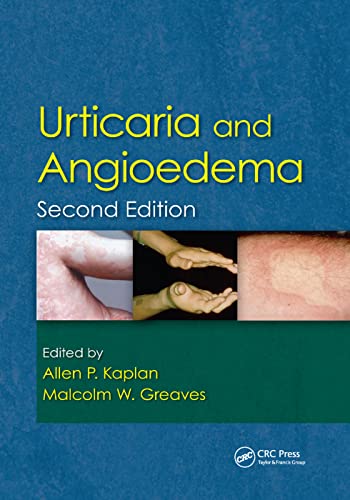
Urticaria and Angioedema
<strong>the latest data on autoimmune mechanisms that initiate chronic urticaria and angioedema in some patients</strong>, and abnormalities of signal transduction that may be found in both the autoim
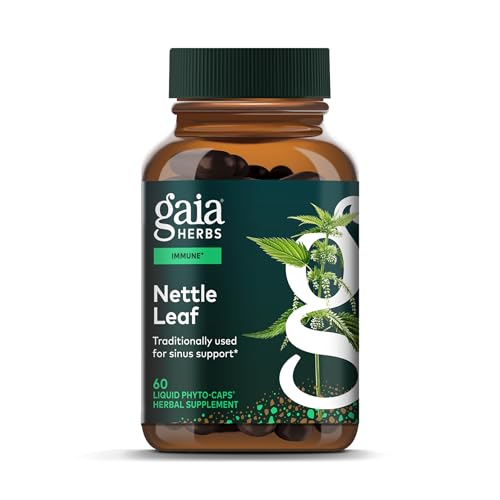
Gaia Herbs Stinging Nettle Leaf - Respiratory & Immune Health Support* - Supplement with Stinging Nettle Leaf Extract - Vegan, Gluten-Free, Soy-Free - 60 Liquid Phyto-Caps (30 Servings)
Nettle Leaf Supplement: <strong>Each supplement serving includes 225mg of organic stinging nettle leaf extract for respiratory health support</strong>* Supports Immunity Health: This supplement is for

THORNE - Curcumin Phytosome 1000 mg (Meriva) - Clinically Studied, High Absorption - Supports Healthy Inflammatory Response in Joints, Muscles, GI Tract, Liver, Brain & Nerves* - 60 Servings
THORNE - Curcumin Phytosome 500 mg (Meriva) - Sustained Release, Clinically Studied - <strong>Supports Healthy Inflammatory Response in Joints, Muscles, GI Tract, Liver, Brain & Nerves</strong>* -
Health Disclaimer
This content is for informational purposes only and does not constitute medical advice. Always consult a qualified healthcare provider before starting, stopping, or changing any supplement or medication regimen.