

Tibetan Medicine
Also known as: Sowa Rigpa, Traditional Tibetan Medicine
Overview
Tibetan Medicine is a traditional medical system, often referred to as Sowa Rigpa (commonly translated as “the science of healing”), that developed over centuries in Tibet and the Himalayan region. It integrates herbal medicine, diet, lifestyle guidance, external therapies, and spiritual-philosophical concepts into a single framework for understanding health and illness. Historically, Tibetan Medicine drew from multiple knowledge streams, including Indigenous Tibetan practices as well as influences from Ayurveda, traditional Chinese medicine, Persian-Arabic medicine, and Buddhist scholarship. Today it remains an important healing tradition in Tibet, India, Nepal, Bhutan, Mongolia, and in diaspora communities worldwide.
At its core, Tibetan Medicine views health as a state of dynamic balance involving the body, mind, behavior, environment, and constitutional tendencies. A central concept is the regulation of three principal functional energies—often translated as wind, bile, and phlegm—which are used to explain patterns of vitality, digestion, mood, sleep, circulation, and disease susceptibility. Assessment traditionally includes detailed questioning, visual observation, pulse reading, urine analysis, and consideration of diet, climate, season, emotional states, and daily habits. Because of this broad lens, people often seek Tibetan Medicine for a holistic understanding of chronic symptoms, prevention, and constitutional balance, particularly when conditions appear multifactorial or difficult to explain through a single organ-based diagnosis.
Tibetan Medicine is also notable for its emphasis on prevention and individualized care. Traditional texts describe how food quality, digestion, seasonal changes, mental states, and ethical or behavioral factors can influence health over time. Therapeutic approaches may include complex polyherbal formulations, mineral preparations in some settings, dietary adjustments, moxibustion-like heat therapies, massage, gentle behavioral modification, and contemplative or spiritual supports. In modern contexts, however, practices vary substantially depending on practitioner training, regional regulation, product quality standards, and whether care is provided within a traditional lineage, an integrative clinic, or a commercial wellness setting.
Interest in Tibetan Medicine has grown internationally as part of broader public interest in whole-person, traditional, and integrative medicine. At the same time, the modern evidence base remains uneven. Some individual herbs, formulas, and diagnostic concepts are being studied, but many core aspects of Tibetan Medicine are difficult to evaluate using standard biomedical trial models because treatment is highly individualized and embedded in a larger philosophical system. As with other traditional modalities, informed evaluation typically includes attention to safety, product quality, practitioner qualifications, and communication with licensed healthcare professionals, especially when Tibetan approaches are used alongside conventional care.
Medical Perspectives
Two Ways of Seeing Health

Western
scientific · clinical
Western medicine applies science, technology, and clinical experience to treat symptoms through testing, diagnosis, and targeted intervention.

Eastern
traditional · alternative
Eastern medicine focuses on treating the body naturally by applying traditional knowledge practiced for thousands of years, emphasizing balance and whole-person wellness.
Gold Bamboo presents both perspectives side-by-side so you can make informed decisions. We don't advocate for one over the other — your health choices are yours.
Western Medicine Perspective
Western Medicine Perspective
From a conventional biomedical perspective, Tibetan Medicine is understood primarily as a traditional whole medical system rather than a single therapy. Western medicine generally evaluates it by separating its components into measurable categories such as herbal pharmacology, external therapies, dietary counseling, mind-body practices, and patient-reported outcomes. Researchers may study whether specific Tibetan herbal formulas affect inflammation, digestion, metabolic function, pain, or quality of life, while clinicians may also consider broader questions about safety, standardization, and potential interactions with prescription drugs.
A major challenge for western evaluation is that Tibetan Medicine is individualized and pattern-based, whereas biomedical research often prefers standardized interventions aimed at narrowly defined diagnoses. This can make it difficult to generate large, high-quality randomized trials that reflect authentic traditional practice. Existing studies suggest there may be areas of potential benefit for symptom management, chronic inflammatory conditions, digestive complaints, stress-related concerns, and general well-being, but the evidence is often limited by small sample sizes, heterogeneity of formulas, inconsistent product characterization, and variable study quality. As a result, western medicine typically regards Tibetan Medicine as an area of emerging or moderate research interest rather than a fully established evidence-based treatment system for most conditions.
Safety is a central concern in biomedical assessment. Some Tibetan formulations contain multiple botanicals and, in certain traditional contexts, may also include processed minerals or metals, which raises questions about contamination, toxicology, manufacturing quality, and regulatory oversight. Studies and public health reports on traditional medicines more broadly have highlighted the importance of verifying ingredient identity, purity, dose consistency, and good manufacturing practices. Conventional clinicians therefore tend to emphasize careful disclosure of all supplements and traditional medicines in order to reduce the risk of herb-drug interactions, delayed diagnosis, or adverse effects, particularly for people with liver, kidney, cardiovascular, or complex chronic conditions.
In integrative medicine settings, Tibetan Medicine may be viewed as part of a broader conversation about patient-centered, culturally informed care. Western clinicians may recognize that traditional systems can provide meaningful explanatory models, support adherence to healthier routines, and address dimensions of illness experience not always captured in biomedical encounters. Even so, conventional medicine generally relies on established diagnostic testing and evidence-based treatments for acute, severe, infectious, malignant, or rapidly progressive disease, while considering traditional modalities as complementary areas requiring case-by-case evaluation.
Eastern & Traditional Perspective
Eastern/Traditional Medicine Perspective
Within Tibetan Medicine itself, illness is understood through an interconnected model of body, mind, environment, and consciousness. Classical theory describes three principal regulating forces—rLung (wind), mKhris-pa (bile), and Bad-kan (phlegm)—whose balance supports normal physiological and psychological function. Disturbance in these forces is traditionally linked to factors such as improper diet, seasonal mismatch, overexertion, emotional strain, poor digestion, aging, and deeper mental-afflictive states. Rather than focusing only on a disease label, Tibetan practitioners often assess the person’s constitution, symptom pattern, strength, digestion, sleep, emotional tone, and environmental context.
Diagnosis in Tibetan Medicine traditionally combines history-taking, observation, pulse assessment, and urine analysis, interpreted within a broader constitutional and seasonal framework. Treatment aims to restore balance using a graduated approach that may include dietary refinement, behavioral and lifestyle adjustments, herbal formulas, and external therapies such as warming techniques, massage, compresses, or moxibustion-related methods. In many traditional settings, the therapeutic process is not purely physical; it may also include attention to mental habits, ethical conduct, and contemplative practices, reflecting the system’s close relationship with Tibetan Buddhist philosophy.
From the perspective of other traditional systems, Tibetan Medicine shares common ground with Ayurveda, East Asian medicine, and naturopathic traditions in its emphasis on prevention, constitutional individuality, and harmony with nature. Like Ayurveda, it places significant importance on digestion, diet, and constitutional tendencies; like traditional Chinese medicine, it recognizes pattern-based imbalance and seasonal/environmental influences. However, Tibetan Medicine retains a distinct textual lineage, pharmacopoeia, diagnostic style, and philosophical structure. Practitioners in traditional settings often regard chronic illness as a cumulative process shaped by long-term patterns rather than an isolated event.
Traditional and integrative practitioners may see Tibetan Medicine as especially relevant for people seeking a meaning-centered and holistic interpretive framework for chronic symptoms, recovery, or health maintenance. At the same time, responsible traditional practice generally recognizes limits: severe trauma, acute infection, advanced organ failure, and other urgent conditions may require modern medical evaluation. In contemporary use, many practitioners emphasize collaboration across systems, cultural respect, and careful attention to medicine sourcing and practitioner training.
Supplements & Products
Recommended Products
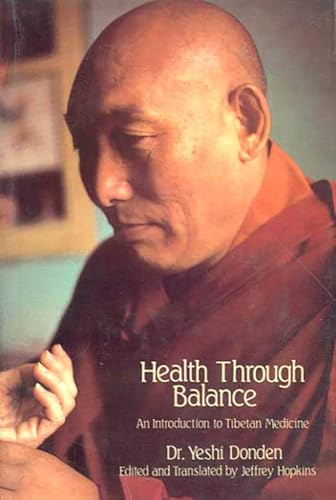
Health Through Balance: An Introduction to Tibetan Medicine: Dhonden, Dr. Yeshi, Hopkins, Jeffrey, Hopkins, Jeffrey
Dr. Donden's book was seen on Dateline NBC during a feature on Tibetan Medicine and Breast Cancer. Dr. Yeshe Dhonden was trained by the Venerable Dr. Khyenrab Norbu (1883–1962), personal physicia

Host Defense Cordyceps Capsules - Immune & Energy Support Supplement - Kidney Health Supplement with Cordyceps - Fitness Support Supplement to Aid Oxygen Uptake - 120 Capsules (60 Servings)*
Cordyceps (Cordyceps militaris) mycelium/fermented brown rice biomass, Pullulan (capsule)

SeabuckWonders Organic Sea Buckthorn Oil Omega-7 Complete,120 Softgels, 60 Day Supply, with Omega 3, 6 & 9, Supports Hair, Skin & Nails, Overall Health & Wellness
Vegan Omega-7 Sea Buckthorn Oil, 240 Vegetarian Softgels | 2-in-1 with Evening Primrose Oil | Plant Based Botanical Oil Blend | Non-GMO, Gluten, & Carrageenan Free · SEABUCKWONDERS Organic Sea Buc
Evidence & Sources
Early-stage research, mostly preclinical or preliminary human studies
- World Health Organization (WHO) Traditional, Complementary and Integrative Medicine materials
- National Center for Complementary and Integrative Health (NCCIH)
- Journal of Ethnopharmacology
- Journal of Alternative and Complementary Medicine
- Integrative Medicine Research
- Planta Medica
- Frontiers in Pharmacology
- Evidence-Based Complementary and Alternative Medicine
- Sowa Rigpa-related publications from the Central Council for Research in Ayurvedic Sciences (CCRAS), Government of India
- The Tibetan Medical System (scholarly texts and reviews on Sowa Rigpa history and theory)
This content is for informational purposes only and does not constitute medical advice. Always consult a qualified healthcare provider before starting, stopping, or changing any supplement or medication regimen.