

Sound Healing
Also known as: Sound Therapy, Sund Healing, Soundheal
Overview
Sound healing is a broad therapeutic modality that uses sound, vibration, rhythm, and resonance with the aim of supporting relaxation, emotional regulation, and a subjective sense of balance or harmony. Practices grouped under this umbrella may include music therapy, chanting, drumming, singing bowls, tuning forks, gongs, mantra recitation, and vibroacoustic methods. While modern interest in sound healing often emphasizes frequencies and energetic balance, the therapeutic use of sound is ancient and appears in many cultures through ritual, prayer, communal singing, and meditative practices.
From a health perspective, sound-based approaches are most often discussed in relation to stress reduction, mood support, sleep quality, pain perception, and overall well-being. Interest has grown alongside broader attention to mind-body medicine, nervous system regulation, and nonpharmacologic approaches to mental health. Some sound-based interventions are highly structured and clinically standardized—such as board-certified music therapy—while others are wellness-oriented and rooted in traditional or spiritual frameworks.
A key distinction in this field is that not all sound healing approaches have the same evidence base. Music therapy has a substantial body of clinical research in settings such as cancer care, dementia care, mental health, rehabilitation, and palliative care. By contrast, claims surrounding specific sound frequencies, crystal singing bowls, or biofield-style resonance models are generally less established in conventional biomedical literature. Research in these areas is growing, but many studies are small, heterogeneous, or difficult to standardize.
Overall, sound healing is best understood as a spectrum of practices ranging from well-studied therapeutic uses of music and vibration to traditional and emerging modalities that may offer perceived benefits for relaxation and emotional well-being. Its significance lies less in a single mechanism and more in the interaction between auditory stimulation, attention, breathing, emotion, social connection, and the body’s stress response. As with other complementary modalities, interpretation varies depending on whether the framework is biomedical, psychological, spiritual, or traditional.
Medical Perspectives
Two Ways of Seeing Health

Western
scientific · clinical
Western medicine applies science, technology, and clinical experience to treat symptoms through testing, diagnosis, and targeted intervention.

Eastern
traditional · alternative
Eastern medicine focuses on treating the body naturally by applying traditional knowledge practiced for thousands of years, emphasizing balance and whole-person wellness.
Gold Bamboo presents both perspectives side-by-side so you can make informed decisions. We don't advocate for one over the other — your health choices are yours.
Western Medicine Perspective
Western Medicine Perspective
In conventional medicine, sound-based therapies are typically understood through neuroscience, psychology, and rehabilitation medicine rather than through concepts of energetic frequency alignment. Researchers have explored how sound and music may influence the autonomic nervous system, limbic emotional circuits, pain processing, attention, and memory networks. Studies suggest that certain forms of music or rhythmic auditory stimulation may reduce perceived stress, support relaxation, improve mood, and in some cases assist with motor coordination or cognitive engagement. Clinical music therapy is the most established form, delivered by trained professionals with defined therapeutic goals.
Western research often focuses on measurable outcomes such as heart rate, blood pressure, cortisol, anxiety scores, pain ratings, sleep metrics, and quality-of-life measures. Evidence is strongest for music-based interventions in reducing anxiety in medical settings, supporting emotional well-being in cancer and palliative care, and helping with agitation or mood symptoms in some neurologic and psychiatric contexts. Vibroacoustic therapy—where low-frequency sound vibration is applied through specialized equipment—has also been studied for pain, spasticity, and relaxation, though the evidence remains more limited and variable.
At the same time, conventional medicine recognizes important limitations. "Sound healing" is not a single standardized intervention, and many popular wellness practices have inconsistent protocols, small sample sizes, and limited replication. Claims that specific frequencies can directly "retune" organs or cure disease are not supported by strong clinical evidence. From a biomedical standpoint, sound-based interventions are more plausibly understood as influencing stress physiology, mood, attention, and subjective symptom experience rather than acting as disease-specific cures.
Within integrative care, sound-based approaches may be viewed as potentially supportive for comfort, relaxation, and coping when used appropriately and with realistic expectations. Healthcare professionals generally emphasize that individuals with significant psychiatric, neurologic, hearing, or sensory conditions may benefit from guidance tailored to their clinical context.
Eastern & Traditional Perspective
Eastern and Traditional Medicine Perspective
In many Eastern and traditional healing systems, sound has long been regarded as more than sensory input; it is often seen as a carrier of intention, rhythm, and vital force. In Traditional Chinese Medicine (TCM), sound may be understood in relation to the movement of qi, the balance of organ systems, and the regulation of emotional states. Practices such as chanting, breath-synchronized vocalization, and tonal exercises have historically been linked with calming the spirit, supporting internal harmony, and influencing the body-mind connection.
In Ayurveda and related yogic traditions, sound is associated with mantra, vibration, and the subtle body. Repetition of sacred syllables, devotional singing, and meditative listening are traditionally used to steady the mind, refine awareness, and support emotional and spiritual balance. The concept of nada (inner or subtle sound) holds an important place in some yogic philosophies, where sound is treated as a pathway for concentration, regulation of consciousness, and alignment of body and mind.
Other traditional and indigenous systems also use drumming, rattles, overtone chanting, communal song, and ceremonial instruments as part of healing, spiritual practice, or restoration of social connection. In these frameworks, sound may be understood not only as affecting the individual nervous system but also as influencing community cohesion, ritual meaning, and connection to the environment or sacred tradition. The therapeutic value is therefore often inseparable from context, relationship, and symbolism.
Naturopathic and holistic practitioners may describe sound healing as a method for encouraging relaxation, grounding, and self-regulation. While these interpretations often differ from biomedical models, they share an emphasis on the idea that rhythmic and tonal experiences can shift mental state and perceived well-being. Traditional systems generally place greater importance on experience, ritual, and holistic balance than on reductionist measurement alone.
Supplements & Products
Recommended Products
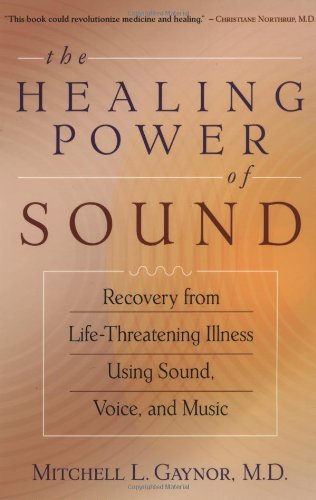
The Healing Power of Sound: Recovery from Life-Threatening Illness Using Sound, Voice, and Music: Gaynor M.D., Mitchell L.
In The Healing Power of Sound, he presents his <strong>sound-based techniques for self-healing</strong>—techniques that anyone can use, whether faced with a life-threatening disease or simply seeking

Handcrafted Tibetan Singing Bowl Set – 3.5” Sound Bowl for Meditation, Sound Healing & Yoga – Healing Instrument with Wooden Striker & Cushion – Authentic Hand-Hammered in Nepal : Musical Instruments
Ohm Store Tibetan Singing Bowl Set - <strong>Authentic Handcrafted Meditation Bowl for Mindfulness, Relaxation and Stress Relief</strong> - Mantra Sound Bowl for Yoga, Reiki, ASMR, Mindfulness, and Da

Body Tuners Beginners Tuning Fork Set of 2 (C & G) by BioSonics : Musical Instruments
Within 30 seconds (the same amount ... your body The Body Tuners consist of two tuning forks, the C and the G, <strong>they create a ratio of 3/2</strong>....
Evidence & Sources
Promising research with growing clinical support from multiple studies
- National Center for Complementary and Integrative Health (NCCIH)
- World Health Organization
- Cochrane Reviews
- Journal of Music Therapy
- The Lancet Oncology
- Frontiers in Psychology
- Arts in Psychotherapy
- Journal of Evidence-Based Integrative Medicine
This content is for informational purposes only and does not constitute medical advice. Always consult a qualified healthcare provider before starting, stopping, or changing any supplement or medication regimen.