

Siddha Medicine
Also known as: Siddha, Sidha, Siddha Vaidyam
Overview
Siddha Medicine is one of the major traditional medical systems of India, with deep roots in South India, especially Tamil culture. It is traditionally attributed to the Siddhars—spiritual adepts and healer-philosophers who described health as a state of balance involving the body, mind, environment, diet, and consciousness. Siddha developed as a comprehensive healing system rather than a single therapy, incorporating herbal preparations, mineral and metal-based formulations, dietary regulation, external therapies, and yogic or meditative disciplines. In this tradition, health is often understood through the balance of fundamental humors or forces, commonly described as Vali, Azhal, and Iyyam, which roughly parallel broader South Asian concepts of movement, heat/metabolism, and structure/lubrication.
Historically, Siddha medicine has been used for a wide range of concerns, including digestive disorders, skin conditions, musculoskeletal complaints, respiratory issues, metabolic disturbances, and general vitality. Classical texts also discuss preventive care, rejuvenation, and spiritual development. A notable feature of Siddha is its sophisticated materia medica, which includes plant-based remedies alongside purified minerals and metals, as well as formulations prepared through elaborate traditional processes. Because of this complexity, Siddha occupies an important place in discussions of both traditional healing knowledge and modern safety evaluation.
Today, Siddha remains a recognized traditional medical system in India, supported through educational institutions, licensed practice frameworks, and governmental bodies within the AYUSH system. Its continued use reflects both cultural continuity and ongoing public interest in holistic approaches to health. At the same time, modern evaluation of Siddha raises important questions about standardization, quality control, pharmacology, and clinical evidence, especially for formulations containing metals or minerals. As with many traditional systems, Siddha is best understood as a broad medical philosophy and practice tradition whose individual remedies and methods vary considerably in composition, purpose, and evidentiary support.
From a contemporary health-information perspective, Siddha medicine is significant because it sits at the intersection of traditional knowledge, integrative care, ethnopharmacology, and public health regulation. Research suggests that some Siddha herbs and polyherbal preparations may have biologically active effects, but the evidence base is uneven across conditions and products. Consultation with qualified healthcare professionals is important, particularly when Siddha remedies are used alongside conventional treatment or when preparations may contain metals, minerals, or potent botanicals.
Medical Perspectives
Two Ways of Seeing Health

Western
scientific · clinical
Western medicine applies science, technology, and clinical experience to treat symptoms through testing, diagnosis, and targeted intervention.

Eastern
traditional · alternative
Eastern medicine focuses on treating the body naturally by applying traditional knowledge practiced for thousands of years, emphasizing balance and whole-person wellness.
Gold Bamboo presents both perspectives side-by-side so you can make informed decisions. We don't advocate for one over the other — your health choices are yours.
Western Medicine Perspective
Western Medicine Perspective
From the standpoint of conventional biomedicine, Siddha medicine is viewed as a traditional whole-system modality containing multiple components that require separate evaluation. Western research typically does not assess Siddha as a single unified intervention; instead, it examines specific formulations, herbs, manufacturing methods, or clinical applications. This means evidence may exist for one ingredient or preparation while remaining limited for the system as a whole. Researchers often focus on questions such as pharmacologic activity, contamination risk, dose consistency, toxicology, and whether controlled clinical studies support use for particular conditions.
A major area of attention in western medicine is safety and quality assurance. Some Siddha preparations use mineral or metal-derived ingredients that are traditionally processed to alter their properties. Modern toxicology, however, emphasizes that heavy metal exposure—including lead, mercury, or arsenic in some traditional products—can pose serious health risks if products are contaminated, improperly prepared, or used without rigorous oversight. For this reason, public health agencies and researchers often call for stronger manufacturing standards, laboratory testing, and pharmacovigilance. Herb-drug interactions are another concern, especially in people taking medications for diabetes, blood pressure, anticoagulation, or immune-related conditions.
Clinical evidence for Siddha remains limited to modest and heterogeneous studies in many areas. Some laboratory and early clinical research suggests anti-inflammatory, antimicrobial, antioxidant, or metabolic effects in selected Siddha ingredients and formulations, but these findings do not automatically establish broad clinical effectiveness. Systematic reviews in traditional Indian medicine frequently conclude that more well-designed randomized trials, standardization studies, and long-term safety data are needed. In integrative settings, Siddha is therefore often discussed as a culturally important and potentially valuable traditional practice that still requires careful scientific validation on a remedy-by-remedy basis.
Conventional healthcare frameworks also emphasize the importance of disclosure and coordinated care. Because traditional medicines can affect liver function, kidney function, coagulation, glucose regulation, or medication metabolism, clinicians generally consider it important for patients to inform their healthcare providers about any Siddha products or therapies being used. This is especially relevant in pregnancy, childhood, older age, and chronic disease management.
Eastern & Traditional Perspective
Eastern and Traditional Medicine Perspective
Within Siddha tradition itself, health is understood as the harmonious functioning of the body's vital principles, tissues, digestion, waste elimination, sensory faculties, and mental-spiritual state. The system commonly describes three governing forces—Vali, Azhal, and Iyyam—whose balance is influenced by food, climate, behavior, emotions, seasonal patterns, and constitution. Disease is traditionally seen as arising when these forces become disturbed, whether through improper diet, lifestyle imbalance, environmental exposure, or accumulated internal impurities. Diagnosis may include observation of symptoms, pulse, tongue, complexion, voice, appetite, sleep, and elimination patterns.
Siddha therapeutics traditionally aim not only to address symptoms but also to restore systemic balance. Its methods include internal medicines such as herbal decoctions, powders, tablets, and complex herbo-mineral preparations; external therapies such as oils, poultices, medicated applications, and physical techniques; and discipline-based practices involving yoga, breathing regulation, and meditative cultivation. Diet and daily routine are often considered central to maintaining equilibrium. In classical thought, prevention and rejuvenation are important themes, and some branches of Siddha place strong emphasis on longevity, vitality, and refinement of body-mind awareness.
In the broader family of Asian traditional medicine, Siddha shares some conceptual similarities with Ayurveda—including humoral balance and the importance of digestion and constitution—while maintaining its own distinct texts, pharmaceutics, language, and regional identity. It also resonates with naturopathic and holistic traditions in its attention to lifestyle, environment, and individualized care. Traditional practitioners often regard Siddha as both a medical science and a spiritual discipline, shaped by generations of empirical observation, lineage transmission, and classical literature.
From an integrative perspective, the eastern view emphasizes that Siddha is not reducible to isolated chemical compounds alone. Its theory considers the preparation method, combination of ingredients, patient constitution, timing, diet, and behavioral context to be meaningful parts of therapeutic action. Even so, contemporary traditional medicine scholars increasingly acknowledge the value of modern quality testing, safety monitoring, and clinical research to help preserve Siddha knowledge while improving public confidence and informed use. Consulting appropriately qualified practitioners and healthcare professionals is widely seen as important when traditional and conventional approaches intersect.
Supplements & Products
Recommended Products
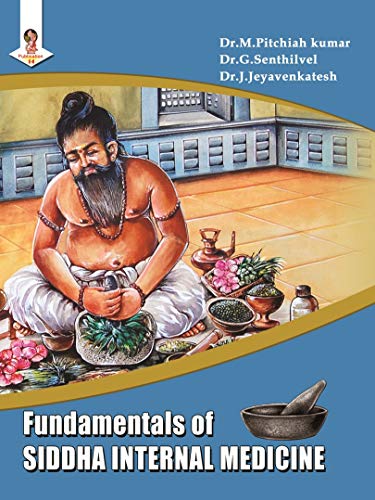
Fundamentals of SIDDHA INTERNAL MEDICINE eBook : M., Pitchiah kumar, G., Senthilvel, J., Jeyavenkatesh: Kindle Store
Siddhars showed their responsibilities and care for a better disease free society with their positive thinking and created different drug delivery system especially Siddha medicine. Read more · Previo

Banyan Botanicals Organic Triphala Tablets - Gentle Daily Digestion & Colon Cleanse Support - Amla, Haritaki, Bibhitaki
PREMIUM ORGANIC GUM GUTS & IMMUNITY: <strong>Made from the highest quality USDA Organic Triphala powder, our tablets offer a convenient foundation for your daily wellness routine</strong>. This tr
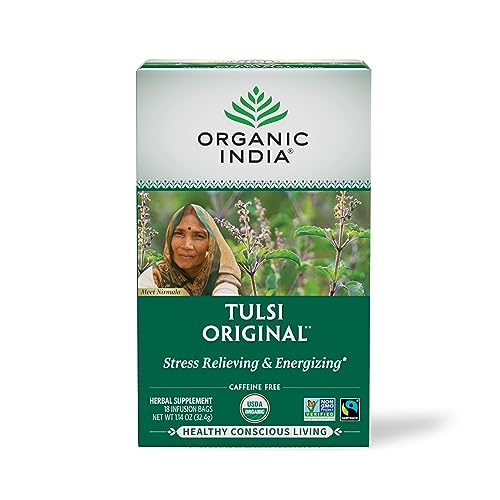
ORGANIC INDIA Tulsi Original Herbal Tea - Holy Basil and African Basil Calming and Stress Relief Tea, Immune Support, USDA Certified Organic, Non-GMO, Caffeine-Free - 18 Infusion Bags, 6 Pack : Green Teas
ORGANIC INDIA Tulsi Original Herbal Tea - Holy Basil and African Basil Calming and Stress Relief Tea, Immune Support, USDA Certified Organic, Non-GMO, Caffeine-Free - 18 Infusion Bags, 3 Pack
Evidence & Sources
Early-stage research, mostly preclinical or preliminary human studies
- Ministry of AYUSH, Government of India
- Central Council for Research in Siddha (CCRS)
- World Health Organization (WHO) Traditional Medicine Strategy
- National Center for Complementary and Integrative Health (NCCIH)
- Journal of Ethnopharmacology
- Journal of Ayurveda and Integrative Medicine
- Indian Journal of Medical Research
- The Lancet (reports on traditional medicine safety and regulation)
This content is for informational purposes only and does not constitute medical advice. Always consult a qualified healthcare provider before starting, stopping, or changing any supplement or medication regimen.