

Rolfing
Also known as: Rolfing Structural Integration, Rolfing Therapy, Rolfng
Overview
Rolfing—also known as Structural Integration—is a form of manual bodywork developed by biochemist Ida P. Rolf in the mid-20th century. It focuses on the body’s fascia, the connective tissue network that surrounds and interpenetrates muscles, bones, nerves, and organs. Practitioners describe the method as an effort to reorganize patterns of tension and movement so the body may function with greater ease, efficiency, and alignment relative to gravity. A classic Rolfing series often involves a sequence of sessions, each emphasizing different regions or movement patterns.
The modality is often sought by people interested in posture, chronic musculoskeletal tension, movement restriction, body awareness, and the physical effects of stress. In complementary and integrative health settings, Rolfing is commonly grouped with other forms of therapeutic bodywork, though it is distinct from standard massage in its emphasis on structural relationships, movement education, and the idea that longstanding strain patterns can be influenced through work on fascial tissues.
Interest in fascia has expanded substantially in recent decades, leading to broader scientific discussion of connective tissue as an active sensory and mechanical system rather than a passive wrapping. This has brought renewed attention to methods like Rolfing, myofascial release, and other fascia-oriented approaches. At the same time, many claims surrounding whole-body “realignment” remain difficult to measure objectively, and the quality of research specific to Rolfing is still limited compared with more established rehabilitative disciplines.
From a balanced health perspective, Rolfing can be understood as a manual and movement-based modality that may influence comfort, mobility, body perception, and stress response for some individuals. Research suggests some bodywork approaches may help with pain and function in selected populations, but evidence specific to Rolfing is still developing. As with many integrative therapies, interpretation varies depending on whether the emphasis is placed on biomechanics, nervous system regulation, fascial properties, or traditional concepts of whole-body balance.
Medical Perspectives
Two Ways of Seeing Health

Western
scientific · clinical
Western medicine applies science, technology, and clinical experience to treat symptoms through testing, diagnosis, and targeted intervention.

Eastern
traditional · alternative
Eastern medicine focuses on treating the body naturally by applying traditional knowledge practiced for thousands of years, emphasizing balance and whole-person wellness.
Gold Bamboo presents both perspectives side-by-side so you can make informed decisions. We don't advocate for one over the other — your health choices are yours.
Western Medicine Perspective
Western Medicine Perspective
From a conventional perspective, Rolfing is usually viewed as a type of manual therapy or complementary bodywork rather than a standard medical treatment. Western clinicians may interpret its effects through several overlapping mechanisms: changes in soft-tissue mobility, altered muscle tone, improved movement variability, heightened interoception and body awareness, and modulation of the nervous system’s perception of pain. The growing field of fascia research has added plausibility to the idea that connective tissue may play a role in force transmission, proprioception, and pain experience, though this does not necessarily validate every structural theory associated with Rolfing.
Research on Rolfing itself is relatively limited, consisting largely of small clinical studies, observational reports, and broader literature on myofascial and manual therapies. Studies indicate that some forms of fascial manipulation and bodywork may be associated with short-term improvements in pain, mobility, or perceived wellbeing in certain groups, particularly those with chronic musculoskeletal complaints. However, there is not yet strong high-quality evidence showing that Rolfing reliably changes objective structural alignment in a way that predicts medical outcomes. Conventional medicine generally calls for more rigorous trials, clearer definitions of treatment protocols, and better comparison with physical therapy, massage, exercise, and usual care.
Safety considerations are similar to those for other hands-on therapies. Rolfing can involve deep pressure, tissue manipulation, and movement work, which may not be appropriate in certain situations such as acute injury, active inflammation, bleeding disorders, severe osteoporosis, or recent surgery. In conventional care settings, bodywork is often regarded as an adjunctive practice that may support comfort or self-awareness, while evaluation by qualified healthcare professionals remains important for persistent pain, neurologic symptoms, unexplained swelling, or other concerning signs.
Eastern & Traditional Perspective
Eastern / Traditional Medicine Perspective
While Rolfing did not arise from classical Asian medical systems, its whole-body orientation has meaningful parallels with many traditional healing frameworks. In Traditional Chinese Medicine (TCM), physical discomfort and restricted movement are often understood in terms of disrupted flow of qi and blood through the channels, combined with local tension, stagnation, or imbalance among organ systems. A fascia-focused bodywork method may be seen as working indirectly on these patterns by helping release constraint, improving movement, and supporting a more integrated relationship between structure and function.
In Ayurveda, chronic holding patterns in the body may be interpreted through the lens of imbalance in the doshas—especially Vata, which is associated with movement, the nervous system, and dryness or constriction when aggravated. Hands-on therapies that cultivate groundedness, circulation, and ease of movement are traditionally valued for restoring coherence between body and mind. Although Rolfing is not a classical Ayurvedic therapy, some integrative practitioners view it as compatible with Ayurvedic goals related to posture, embodied awareness, and freer movement.
In broader naturopathic and holistic traditions, Rolfing is often framed as a modality that supports the body’s self-regulatory capacity by reducing compensatory tension patterns and encouraging more efficient movement. These systems tend to emphasize the interconnectedness of physical structure, breath, emotional experience, and vitality. Traditional and holistic interpretations often place greater value on the subjective experience of increased balance, openness, and ease, even when such outcomes are difficult to quantify using conventional biomedical measures.
At the same time, traditional frameworks do not make Rolfing universally applicable. Integrative practitioners generally stress individualized assessment, constitutional differences, and attention to the person’s overall health picture. In that context, Rolfing is often regarded as one possible tool within a broader landscape of movement practices, touch therapies, and mind-body approaches.
Supplements & Products
Recommended Products
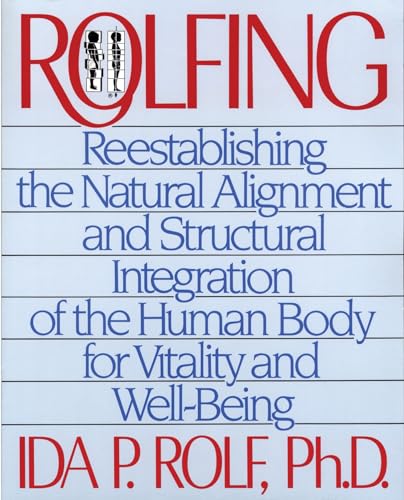
Rolfing: Reestablishing the Natural Alignment and Structural Integration of the Human Body for Vitality and Well-Being: Rolf Ph.D., Ida P.
In this new edition, the late Dr. Rolf <strong>illustrates her theory and practice of Structural Integration, which brings the body into alignment and balance by manipulation of the connective tissue<

YOGA TUNE UP® Therapy Balls in Tote by Tune Up Fitness - Massage Balls for Trigger Point, Pressure Point & Myofascial Release - Use as Single or Peanut Ball for Pain Relief & Relaxation (Aqua Blue)
<strong>Proven Effective for Myofascial Release, Deep Tissue Pressure, Yoga & Trigger Point Treatments</strong>. Set - 2 Extra Firm Balls W/Mesh Bag. Tune Up Fitness – Therapy Ball PLUS Pair in To

TriggerPoint GRID Foam Roller for Exercise, Deep Tissue Massage and Muscle Recovery, Original (13-Inch)
The 13-inch GRID X features <strong>extra dense foam for working the tightest muscles</strong>. Purchase of any TriggerPoint GRID foam roller includes free access to an online instructional video libr
Evidence & Sources
Early-stage research, mostly preclinical or preliminary human studies
- National Center for Complementary and Integrative Health (NCCIH)
- Journal of Bodywork and Movement Therapies
- Frontiers in Physiology
- Journal of Anatomy
- BMC Musculoskeletal Disorders
- The Journal of Alternative and Complementary Medicine
- International Journal of Therapeutic Massage & Bodywork
- World Health Organization (WHO)
This content is for informational purposes only and does not constitute medical advice. Always consult a qualified healthcare provider before starting, stopping, or changing any supplement or medication regimen.