

Reiki
Overview
Reiki is a complementary healing modality that originated in Japan in the early 20th century and is most commonly associated with Mikao Usui. It is generally described by practitioners as a form of biofield or energy-based practice in which a trained practitioner places their hands lightly on or just above the body with the intention of supporting balance, relaxation, and overall well-being. In modern integrative health settings, Reiki is often grouped with other mind-body and touch-based supportive therapies, though its underlying concepts are interpreted differently across traditions and clinical environments.
Reiki is used in a wide range of contexts, especially where people are seeking support for stress, anxiety, emotional distress, pain, fatigue, sleep difficulty, or general quality of life. It is commonly offered in wellness centers, private practices, hospice programs, and some hospitals as an adjunctive service. Sessions are typically noninvasive, quiet, and structured around rest, breathing, and focused attention. Because the modality is gentle and usually low risk, interest in Reiki has expanded alongside broader public interest in integrative and patient-centered care.
From a conceptual standpoint, Reiki sits at the intersection of spiritual tradition, therapeutic ritual, and complementary care. Supporters often describe it as working with a universal life energy, while skeptics note that its effects may be mediated through factors such as relaxation response, therapeutic presence, expectation, and the calming effects of touch or near-touch interaction. This difference in interpretation is central to the ongoing discussion around Reiki: many individuals report subjective benefits, yet the biological mechanisms proposed within traditional Reiki frameworks remain difficult to measure using conventional scientific tools.
Research on Reiki has primarily focused on symptom support rather than disease treatment, with studies exploring outcomes such as perceived stress, anxiety, pain, mood, and well-being. Findings are mixed but suggest that some people may experience short-term improvements in comfort and relaxation. However, study quality varies, sample sizes are often small, and blinding can be challenging. As a result, Reiki is generally regarded as a complementary modality rather than a replacement for standard medical or mental health care, and discussions about its use are best situated within an informed conversation with qualified healthcare professionals.
Medical Perspectives
Two Ways of Seeing Health

Western
scientific · clinical
Western medicine applies science, technology, and clinical experience to treat symptoms through testing, diagnosis, and targeted intervention.

Eastern
traditional · alternative
Eastern medicine focuses on treating the body naturally by applying traditional knowledge practiced for thousands of years, emphasizing balance and whole-person wellness.
Gold Bamboo presents both perspectives side-by-side so you can make informed decisions. We don't advocate for one over the other — your health choices are yours.
Western Medicine Perspective
Western / Conventional Medicine Perspective
In conventional medicine, Reiki is typically understood as a complementary integrative therapy rather than a primary medical treatment. Clinical interest in Reiki centers less on the traditional explanation of energy transfer and more on whether the practice may help reduce subjective symptoms such as stress, anxiety, pain perception, and distress during illness or recovery. Some hospitals and cancer centers include Reiki within supportive care or integrative oncology programs, often alongside massage, meditation, music therapy, and guided relaxation.
From a research perspective, studies on Reiki have produced mixed and often modest findings. Some trials and reviews suggest short-term benefit for relaxation, anxiety reduction, or pain-related outcomes, while others find no clear difference from sham Reiki, attention controls, or other supportive interventions. Methodologic limitations are common, including small sample sizes, inconsistent protocols, variable practitioner training, and difficulty maintaining blinding in touch-based therapies. For these reasons, major evidence reviews generally conclude that Reiki may have value as a comfort-focused adjunct, but evidence is not strong enough to establish it as an effective treatment for specific diseases.
Potential mechanisms discussed in Western literature often focus on nonspecific but clinically meaningful effects: activation of the relaxation response, reduced sympathetic arousal, therapeutic attention, patient expectation, and the emotional impact of a quiet, caring encounter. These explanations do not necessarily invalidate patient-reported benefit; rather, they frame Reiki within the broader understanding that supportive therapeutic experiences can influence symptoms and quality of life. Conventional clinicians generally emphasize that Reiki is best viewed as part of whole-person supportive care, especially when integrated transparently and without replacing evidence-based treatment.
Safety discussions in Western settings usually describe Reiki as low risk because it is noninvasive and involves little or no physical manipulation. The main caution is contextual: reliance on Reiki alone for serious medical or psychiatric conditions may delay diagnosis or appropriate treatment. Accordingly, mainstream medical organizations and integrative medicine programs generally present Reiki as an optional adjunct for comfort and stress reduction, with the expectation that individuals discuss its use with their healthcare team when managing significant health concerns.
Eastern & Traditional Perspective
Eastern / Traditional Medicine Perspective
Within traditional and integrative Eastern-informed frameworks, Reiki is understood as a practice that supports the flow and balance of life energy. In Japanese Reiki traditions, the term is often interpreted as relating to universal or spiritual energy guided through the practitioner with meditative attention and intention. Rather than targeting a disease in a biomedical sense, Reiki is traditionally used to encourage harmony across the physical, emotional, mental, and spiritual dimensions of the person.
This perspective shares conceptual similarities with other traditional systems that describe vital force through different languages, such as qi (or chi) in Traditional Chinese Medicine and prana in Ayurveda, though Reiki remains its own distinct modality with its own lineage and practice methods. In these systems, imbalance, stagnation, or depletion of vital energy may be associated with distress or reduced resilience. A Reiki session is therefore often framed not as symptom suppression, but as an effort to restore a more balanced internal state that may support the body's natural capacity for regulation and recovery.
Traditional Reiki practice also places importance on presence, intention, ritual simplicity, and practitioner cultivation. Breathing, meditative awareness, ethical precepts, and attunement or initiation are often considered integral to the modality. These elements distinguish Reiki from a purely mechanical intervention and help explain why many practitioners describe it as both a healing art and a spiritual discipline. In naturopathic and holistic wellness circles, Reiki is sometimes incorporated into broader care models focused on stress reduction, emotional processing, and support during life transitions.
From an Eastern and traditional viewpoint, the value of Reiki is often judged less by laboratory validation and more by observed experience, lineage, and whole-person outcomes. Even so, many contemporary traditional practitioners acknowledge the importance of collaboration with conventional care, especially for serious or persistent symptoms. In that context, Reiki is often presented as a supportive modality that may complement, but not substitute for, appropriate medical evaluation and treatment.
Supplements & Products
Recommended Products
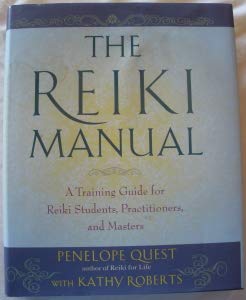
The Reiki Manual: A Training Guide for Reiki Students, Practitioners, and Masters: Quest, Penelope, Roberts, Kathy
The Reiki Manual: A Training Guide for Reiki Students, Practitioners, and Masters [Quest, Penelope, Roberts, Kathy] on Amazon.com. *FREE* shipping on qualifying offers. The Reiki Manual: A Training Gu
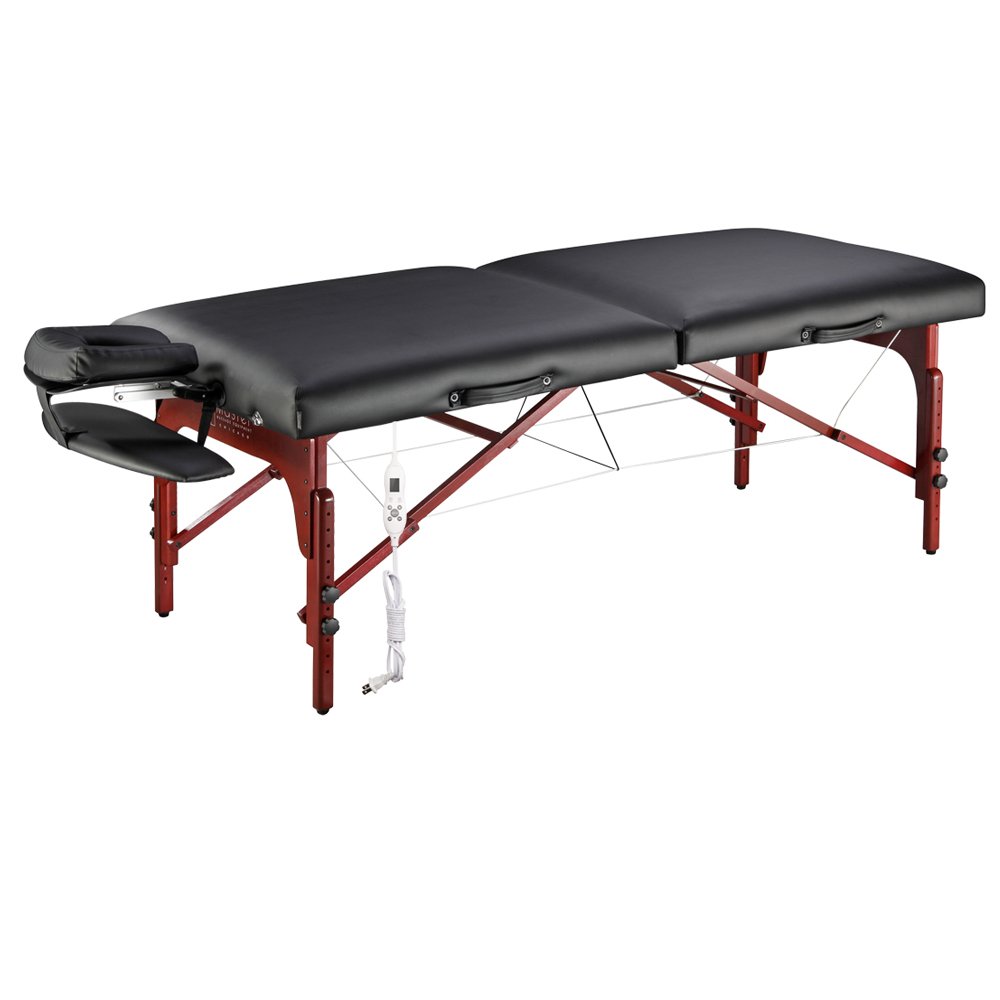
31" Montclair ThermaTopTM Master Massage Portable Massage Table with Memory Foam, Reiki Panels, & Shiatsu Cables(Black& Mahogany) Esthetician Bed- Lash Table
👍【Included Accessories】- The Montclair portable spa bed comes with everything you need to ensure your clients are comfortable and relaxed: Master Innovated Ergonomic DreamTM face cradle, memory foam
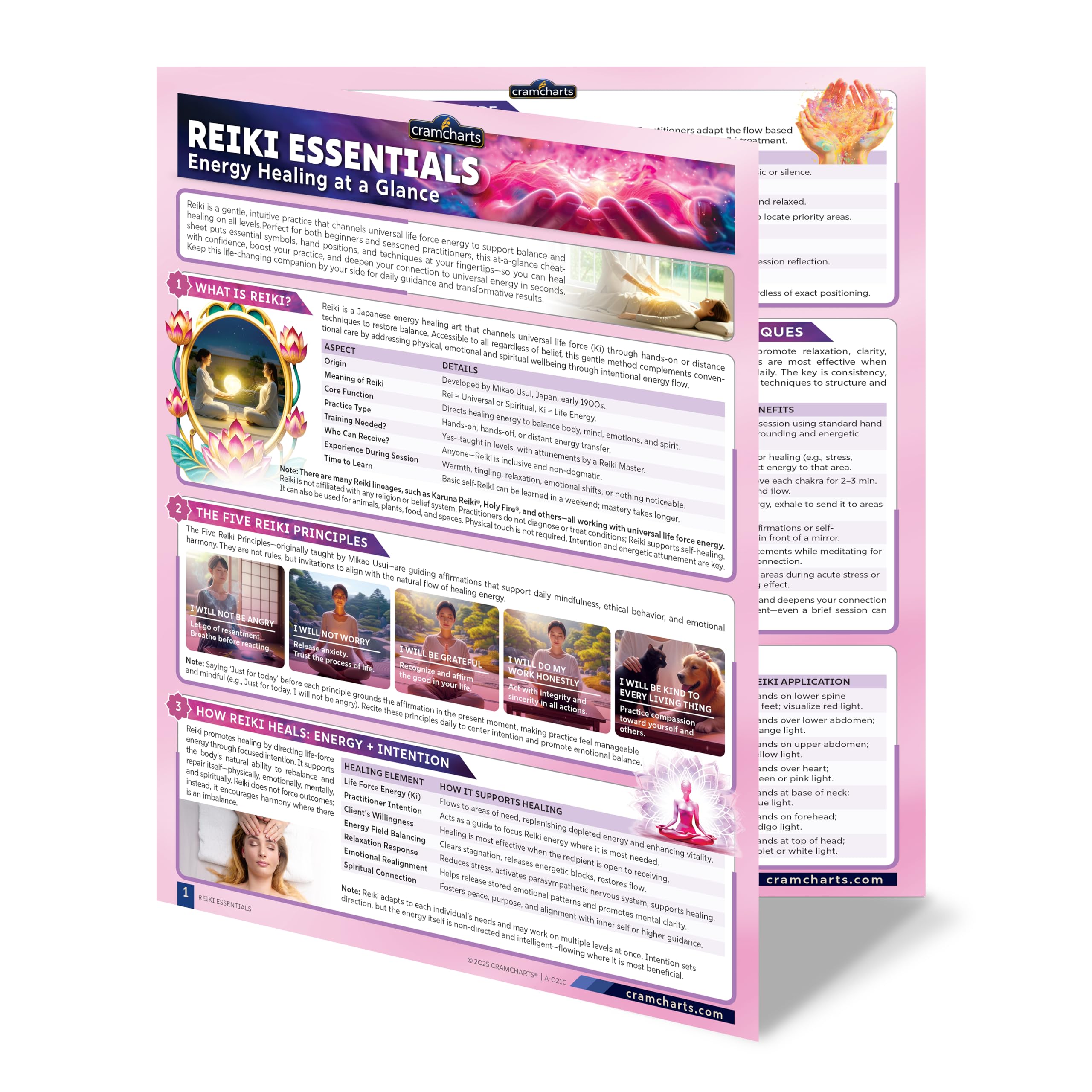
Cramcharts Reiki Essentials Quick Reference Guide with Symbols Hand Positions, Chakra Awareness Practice, Compact, 4-Page Desk Chart or Wall Poster
Sacred Reiki symbols with activation ... (Completion). <strong>Essential hand positions for the crown, third eye, throat, heart, solar plexus, sacral, root, shoulders, lower back, and feet with clear
Evidence & Sources
Promising research with growing clinical support from multiple studies
- National Center for Complementary and Integrative Health (NCCIH)
- Cochrane Library
- Journal of Alternative and Complementary Medicine
- Cancer
- Journal of Evidence-Based Complementary & Alternative Medicine
- International Journal of Behavioral Medicine
- World Health Organization (WHO)
- Academic Medicine
This content is for informational purposes only and does not constitute medical advice. Always consult a qualified healthcare provider before starting, stopping, or changing any supplement or medication regimen.