

Neurofeedback
Also known as: Neurofeedback Therapy, Neuofeedback, Neurofeed
Overview
Neurofeedback is a form of biofeedback focused on brain activity, most commonly using electroencephalography (EEG) to measure patterns of electrical activity in real time. During a neurofeedback session, brain signals are recorded through sensors placed on the scalp, processed by software, and presented back to the individual through visual, auditory, or game-like feedback. The underlying concept is that, by receiving immediate information about certain brainwave patterns, people may learn to influence aspects of attention, arousal, relaxation, or emotional regulation. Neurofeedback is sometimes described as EEG biofeedback, though newer systems may also incorporate other imaging or signal-processing methods.
Interest in neurofeedback has grown across both clinical and wellness settings. It has been studied in relation to attention-deficit/hyperactivity disorder (ADHD), anxiety, insomnia, epilepsy, migraine, post-traumatic stress symptoms, peak performance, and stress regulation, among other uses. At the same time, the field is heterogeneous: protocols differ substantially in the brain signals targeted, the training goals, the equipment used, and the conditions being addressed. This variability has made the evidence base complex, with some applications showing more consistent support than others.
From a scientific perspective, neurofeedback is generally framed as a learning-based intervention. Researchers often compare it to operant conditioning, in which the brain receives reinforcement when activity shifts toward a desired pattern. Proposed mechanisms include improved self-regulation of attention networks, changes in cortical arousal, modulation of sensorimotor rhythms, and support for autonomic balance. However, there remains ongoing debate about how much benefit depends on specific brain-signal training versus non-specific factors such as therapeutic engagement, expectancy, repeated practice, and structured attention training.
Neurofeedback occupies an unusual position in health care because it sits at the intersection of neuroscience, behavioral medicine, psychology, and integrative health. In conventional medicine it is often evaluated through the standards used for devices and behavioral interventions, while in complementary and integrative settings it is often viewed as a non-drug method to support the mind-body connection. For individuals considering neurofeedback, clinicians commonly note the importance of understanding the particular protocol being used, the qualifications of the practitioner, and the fact that neurofeedback is best understood as an evolving modality rather than a universally established treatment across all conditions.
Medical Perspectives
Two Ways of Seeing Health

Western
scientific · clinical
Western medicine applies science, technology, and clinical experience to treat symptoms through testing, diagnosis, and targeted intervention.

Eastern
traditional · alternative
Eastern medicine focuses on treating the body naturally by applying traditional knowledge practiced for thousands of years, emphasizing balance and whole-person wellness.
Gold Bamboo presents both perspectives side-by-side so you can make informed decisions. We don't advocate for one over the other — your health choices are yours.
Western Medicine Perspective
Western Medicine Perspective
In conventional medicine, neurofeedback is understood as a noninvasive brain-training technique that attempts to modify measurable neural activity through feedback and reinforcement. The most established form uses EEG, though related approaches such as real-time functional MRI neurofeedback have also been investigated in research settings. Western clinical interest has focused especially on disorders involving attention regulation, arousal, and symptom self-management, including ADHD, anxiety-related symptoms, insomnia, substance use disorders, and certain neurological conditions.
The strongest body of research has historically centered on ADHD, where some trials and meta-analyses have suggested improvements in attention and impulsivity, particularly when assessed by raters close to treatment. However, the literature is mixed, and blinded assessments have sometimes shown smaller or less consistent effects. For other conditions—such as anxiety, depression, PTSD, chronic pain, and insomnia—early studies and smaller trials have reported promising findings, but many experts note limitations including small sample sizes, inconsistent protocols, inadequate sham controls, and variability in outcome measures. As a result, major medical organizations have generally treated neurofeedback as an area of active but still developing research rather than a standard first-line intervention for most diagnoses.
Safety is usually considered favorable because neurofeedback is noninvasive and does not involve medication, but conventional clinicians still emphasize the importance of appropriate assessment, realistic expectations, and professional oversight. Reported adverse effects are typically mild—such as temporary fatigue, headache, irritability, or overstimulation—but systematic safety data remain less robust than for more established therapies. In mainstream practice, neurofeedback is most often discussed as a potential adjunctive modality within a broader care plan rather than a stand-alone solution, and consultation with qualified healthcare professionals is commonly encouraged when symptoms are significant or complex.
Eastern & Traditional Perspective
Eastern and Traditional Medicine Perspective
Traditional East Asian medicine, Ayurveda, and other long-standing healing systems did not historically use EEG-based technology, so neurofeedback is not a classical traditional therapy in the same sense as acupuncture, herbal medicine, meditation, or pranayama. Even so, many integrative practitioners interpret neurofeedback through traditional frameworks that emphasize balance, regulation, and harmony between mind and body. In this view, the modality may be understood as a modern technological method for cultivating internal awareness and helping the nervous system move away from patterns of excess agitation, depletion, or dysregulation.
From a Traditional Chinese Medicine (TCM) perspective, symptoms often associated with neurofeedback use—such as poor concentration, insomnia, anxiety, restlessness, or emotional volatility—might traditionally be described in terms of disturbances involving the Heart, Liver, Kidney, and Shen rather than isolated brain dysfunction. Neurofeedback may therefore be viewed by some integrative TCM practitioners as conceptually similar to methods that support calming the Shen, regulating qi flow, and improving the body’s adaptive capacity. It is not traditionally categorized as a replacement for acupuncture or herbal medicine, but rather as a modern adjunct that may align with the broader goal of restoring functional balance.
In Ayurvedic and naturopathic interpretations, neurofeedback is sometimes seen as a tool that may help improve self-regulation of the stress response and support more balanced patterns of mental activity. Ayurvedic practitioners may relate this to reducing excess rajas, stabilizing the mind, or supporting a more sattvic state, while naturopathic frameworks may place it alongside biofeedback, breathing practices, sleep regulation, and other non-pharmacologic approaches to nervous-system resilience. These interpretations are largely conceptual and integrative, rather than derived from classical textual tradition or extensive traditional evidence.
Overall, the eastern/traditional perspective tends to value neurofeedback less as a disease-specific intervention and more as a self-regulation modality that may complement broader efforts to cultivate calm, attention, and mind-body coherence. As with other integrative approaches, practitioners commonly emphasize individualized assessment and coordination with appropriate healthcare providers, especially when significant neurological or psychiatric symptoms are present.
Supplements & Products
Recommended Products
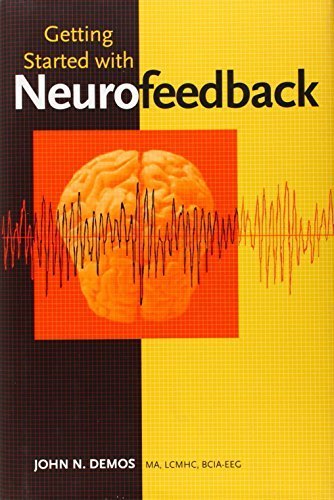
Getting Started with Neurofeedback
"In this very accessible book, Getting Started with Neurofeedback, John N. Demos <strong>goes a long way toward removing the barriers that keep clinicians from implementing an emerging form of co

MUSE 2: Smart Meditation Headband | Mindfulness & Relaxation Aid with Real-Time Sound Feedback | Multi Sensor Biofeedback Devices for Home Use with Responsive Sound Feedback Guidance
4. Tap your Muse ID. To fit your headband properly, <strong>gently extend earpieces, place Muse around your head, tighten evenly until snug, and ensure forehead sensors touch skin without hair interfe

NeuroSky MindWave Mobile 2: Brainwave Starter Kit : Toys & Games
<strong>Detects raw-brainwaves, eeg power spectrums (Alpha, beta, etc.), esense meters for attention, meditation, and future algorithms</strong>. More than 100 brain training games and educational app
Evidence & Sources
Promising research with growing clinical support from multiple studies
- National Center for Complementary and Integrative Health (NCCIH)
- American Academy of Pediatrics
- Journal of Attention Disorders
- European Child & Adolescent Psychiatry
- Applied Psychophysiology and Biofeedback
- Neuroscience & Biobehavioral Reviews
- Clinical EEG and Neuroscience
- Frontiers in Human Neuroscience
This content is for informational purposes only and does not constitute medical advice. Always consult a qualified healthcare provider before starting, stopping, or changing any supplement or medication regimen.