

Hypnotherapy
Also known as: Hypnosis Therapy, Hynotherapy, Hipnotherapy
Overview
Hypnotherapy is a therapeutic modality that uses guided relaxation, focused attention, and suggestive techniques to help a person enter a state of heightened concentration often described as clinical hypnosis. In this state, awareness is typically narrowed and absorbed, while the individual remains responsive to the therapist’s guidance. Contrary to popular portrayals, hypnotherapy is not generally understood as mind control or unconsciousness; rather, it is commonly framed as a collaborative process intended to support changes in perception, behavior, stress response, or symptom experience.
In healthcare settings, hypnotherapy has been explored as an adjunctive approach for a range of concerns, including pain management, anxiety, irritable bowel syndrome, procedural distress, sleep difficulties, habit change, and trauma-related symptoms. Research suggests that hypnotic techniques may influence how sensations are interpreted, how attention is directed, and how strongly emotional and physiological stress responses are experienced. The degree of responsiveness varies among individuals, and the therapeutic outcome often depends on factors such as the practitioner’s training, the clinical context, the condition being addressed, and the patient’s expectations and engagement.
The significance of hypnotherapy lies partly in its position at the intersection of mind-body medicine, psychotherapy, and behavioral medicine. It is of interest because it offers a non-pharmacologic framework for symptom management and may complement conventional care in selected settings. Studies indicate that hypnosis is used in hospitals, dental settings, pain clinics, and integrative medicine programs, particularly where stress modulation and symptom perception play important roles. At the same time, evidence is not equally strong across all uses, and claims about broad healing effects often exceed what current research can support.
As with many integrative modalities, hypnotherapy is best understood as a structured clinical technique rather than a single uniform practice. Methods may include induction, deepening, imagery, post-hypnotic suggestion, ego-strengthening, and self-hypnosis training. Safety and appropriateness depend on the individual’s medical and psychological context, and questions about suitability are best discussed with qualified healthcare professionals, especially when symptoms may reflect underlying medical or psychiatric conditions.
Medical Perspectives
Two Ways of Seeing Health

Western
scientific · clinical
Western medicine applies science, technology, and clinical experience to treat symptoms through testing, diagnosis, and targeted intervention.

Eastern
traditional · alternative
Eastern medicine focuses on treating the body naturally by applying traditional knowledge practiced for thousands of years, emphasizing balance and whole-person wellness.
Gold Bamboo presents both perspectives side-by-side so you can make informed decisions. We don't advocate for one over the other — your health choices are yours.
Western Medicine Perspective
Western Medicine Perspective
From a conventional medical and psychological perspective, hypnotherapy is viewed as a therapeutic technique that may alter attention, expectation, suggestibility, and the subjective experience of symptoms. Neuroimaging and psychophysiology research suggests that hypnosis can be associated with changes in brain networks involved in attention, pain processing, salience, and self-referential awareness. In practical terms, this has made hypnosis of particular interest for conditions in which symptom intensity is influenced by central processing, stress reactivity, or learned behavioral patterns.
Clinical research has been strongest in areas such as pain, procedure-related anxiety, and some functional gastrointestinal disorders, especially irritable bowel syndrome. Studies and professional reviews indicate that hypnosis may reduce acute procedural discomfort in some patients, and gut-directed hypnotherapy has received attention in gastroenterology as a supportive intervention for IBS symptoms. There is also literature on its use in oncology supportive care, obstetrics, dentistry, smoking cessation, and insomnia, although findings are mixed and not always consistent across study designs or populations.
Western medicine generally treats hypnotherapy as an adjunct, not a replacement for diagnosis or standard treatment. Important limitations include variable study quality, differences in hypnotic techniques, inconsistent practitioner training, and the challenge of blinding in hypnosis research. Hypnosis may be inappropriate or require caution in certain psychiatric contexts, particularly where dissociation, psychosis, or complex trauma are present, and clinical screening is considered important. For these reasons, conventional care emphasizes evidence-based integration, qualified practitioners, and coordination with a patient’s broader medical or mental health team.
Eastern & Traditional Perspective
Eastern/Traditional Medicine Perspective
Within Eastern and traditional healing systems, hypnotherapy is not usually part of the classical canon in the same way as acupuncture, herbal medicine, meditation, or Ayurvedic therapies. However, its underlying principles—focused awareness, guided imagery, regulation of breath and attention, and the influence of mind on bodily function—overlap substantially with long-standing traditional concepts. In this sense, hypnotherapy is often interpreted as a modern method that resonates with older frameworks emphasizing the connection between consciousness, emotion, and physical health.
In Traditional Chinese Medicine (TCM), practitioners may conceptually relate hypnotic relaxation and suggestion to the regulation of Shen (spirit or mind), the smoothing of Liver qi, and the calming of stress-related internal imbalance. A TCM-oriented interpretation may view symptoms such as insomnia, anxiety, or functional digestive disturbance as reflecting disharmony in mind-body regulation, with hypnotherapy functioning similarly to meditative or guided awareness practices that help restore internal balance. These parallels are interpretive rather than classical doctrinal equivalencies.
In Ayurveda, comparable ideas may be framed through the effects of mental focus on the manas (mind), the nervous system, and the balance of doshas, especially where agitation, fear, rumination, or stress-related symptoms are prominent. Naturopathic and integrative traditions may also place hypnotherapy alongside other mind-body approaches such as biofeedback, meditation, breathwork, and guided imagery, using it as part of a broader effort to support resilience and self-regulation. Traditional perspectives generally value the modality for its potential to influence the mind-body relationship, though many of these uses rely more on historical or theoretical compatibility than on large modern evidence bases.
Supplements & Products
Recommended Products

Self-Hypnosis For Dummies: Bryant, Mike, Mabbutt, Peter
Improve your outlook use hypnosis to conquer anxiety, phobias and insomnia, manage anger and boost your self-esteem · Stub it out kiss goodbye to unhealthy habits and addictions ... Mike Bryant is an

IBS Audio Program 100 for Irritable Bowel Syndrome Self-Hypnosis - Official Distributor
Program is <strong>the result of over 10 years of clinical research and experience by Michael Mahoney, the UK's leading specialist in gut-specific hypnotherapy for IBS</strong>. Bonus 4th CD, the
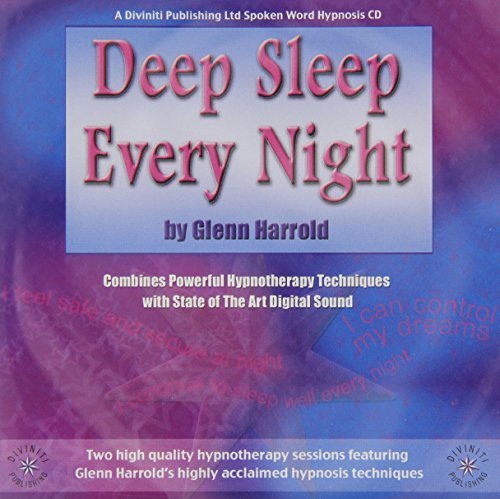
Deep Sleep Every Night: Harrold, Glenn
Hypnotherapy is uniquely effective in solving sleep disorders in a safe and natural way, free of any harmful side effects. <strong>Track 1 utilises skilled hypnotherapy techniques to help guide the li
Evidence & Sources
Promising research with growing clinical support from multiple studies
- National Center for Complementary and Integrative Health (NCCIH)
- American Psychological Association
- International Journal of Clinical and Experimental Hypnosis
- Gut
- The Lancet Gastroenterology & Hepatology
- British Journal of Anaesthesia
- Mayo Clinic Proceedings
- Cochrane Database of Systematic Reviews
This content is for informational purposes only and does not constitute medical advice. Always consult a qualified healthcare provider before starting, stopping, or changing any supplement or medication regimen.