

Homeopathy
Also known as: Homeopathic Medicine, Homeopthy, Homoeopathy
Overview
Homeopathy is a therapeutic system developed in the late 18th century, most closely associated with the German physician Samuel Hahnemann. It is based on two core ideas: “like cures like”—the notion that a substance capable of producing symptoms in a healthy person may, in highly diluted form, be used for similar symptoms in illness—and serial dilution with succussion, a process of repeated dilution and vigorous shaking believed by practitioners to enhance a remedy’s effect. Homeopathic products are often derived from plants, minerals, or animal sources and are prepared in dilutions that may contain little or none of the original material.
Homeopathy remains widely recognized as a distinct medical modality in many parts of the world. It is used in both self-care and practitioner-guided settings, especially for chronic symptom patterns, recurrent minor illnesses, and individualized constitutional care. In some countries it is integrated into broader complementary and integrative medicine frameworks, while in others it is viewed primarily as an alternative system outside mainstream clinical practice. Public interest has persisted because homeopathy emphasizes individualized assessment, patient-practitioner dialogue, and a gentle therapeutic philosophy.
At the same time, homeopathy is among the most debated modalities in modern healthcare. Its principles do not align neatly with conventional pharmacology, chemistry, or dose-response theory, especially at very high dilutions. As a result, debate has centered on whether reported benefits reflect specific effects of remedies, contextual and placebo-related effects, the natural course of illness, regression to the mean, or the therapeutic value of extended consultation. Research findings have been mixed, and major scientific and regulatory bodies have generally concluded that robust evidence for efficacy beyond placebo remains limited or inconsistent for most conditions.
A balanced understanding of homeopathy therefore involves two parallel realities: its historical and cultural importance as a whole medical system, and the ongoing scientific controversy regarding mechanism and clinical effectiveness. For people exploring this topic, it is often discussed not only in terms of remedies themselves, but also in relation to practitioner training, regulatory status, quality control, patient expectations, and the importance of consulting qualified healthcare professionals for serious or persistent symptoms.
Medical Perspectives
Two Ways of Seeing Health

Western
scientific · clinical
Western medicine applies science, technology, and clinical experience to treat symptoms through testing, diagnosis, and targeted intervention.

Eastern
traditional · alternative
Eastern medicine focuses on treating the body naturally by applying traditional knowledge practiced for thousands of years, emphasizing balance and whole-person wellness.
Gold Bamboo presents both perspectives side-by-side so you can make informed decisions. We don't advocate for one over the other — your health choices are yours.
Western Medicine Perspective
Western Medicine Perspective
From a conventional medical perspective, homeopathy is evaluated primarily through the frameworks of pharmacology, clinical trial methodology, and evidence-based medicine. The central challenge is that many homeopathic remedies are diluted beyond Avogadro’s limit, meaning they are unlikely to contain molecules of the original substance. This conflicts with established biomedical understanding of how drugs exert effects in the body. For that reason, proposed mechanisms such as “water memory” or energetic imprinting have not gained broad acceptance within mainstream science.
Clinical research on homeopathy has included randomized trials, observational studies, and systematic reviews. Some individual studies have reported positive findings for certain symptoms or patient populations, but larger reviews and assessments by organizations such as the National Center for Complementary and Integrative Health (NCCIH), the UK House of Commons Science and Technology Committee, and Australia’s National Health and Medical Research Council (NHMRC) have generally found that evidence does not reliably support homeopathy as an effective treatment for any specific health condition. In conventional interpretation, any perceived benefit may relate more to the consultation process, expectancy effects, symptom fluctuation, and nonspecific healing factors than to the remedy’s pharmacologic action.
Western medicine also distinguishes between safety of remedies and safety of relying on homeopathy in place of appropriate medical care. Highly diluted products are often considered low risk in themselves, although safety concerns can arise from manufacturing quality, contamination, inaccurate labeling, or low-dilution products that contain biologically active ingredients. Conventional healthcare bodies commonly emphasize that serious infections, cancer, cardiovascular disease, and other potentially dangerous conditions require timely medical evaluation. Within integrative settings, discussion of homeopathy may focus more on patient-centered communication and complementary use rather than disease substitution.
Eastern & Traditional Perspective
Eastern/Traditional Medicine Perspective
Homeopathy did not originate in East Asia and is not a traditional component of Classical Chinese Medicine, Ayurveda, or most Indigenous healing systems. However, within the broader landscape of traditional, holistic, and integrative medicine, it is often grouped with modalities that emphasize the body’s self-regulatory capacity, individualized treatment, and subtle energetic or constitutional patterns rather than disease categories alone. This philosophical overlap helps explain why homeopathy is sometimes practiced alongside naturopathy, Ayurveda-informed care, herbalism, or other whole-person approaches.
From an integrative and traditional healing perspective, the appeal of homeopathy often lies less in biochemical theory and more in its method of case-taking and pattern recognition. Homeopathic practitioners may consider emotional state, sleep, food preferences, environmental sensitivities, and the unique expression of symptoms when selecting a remedy. This highly individualized approach resembles, in broad principle, the personalized diagnostic traditions seen in systems such as TCM pattern differentiation or Ayurvedic constitution-based assessment, even though the underlying theories and materia medica are distinct.
Some naturopathic and holistic practitioners describe homeopathy as a modality intended to stimulate the organism’s innate healing response. In these circles, it is traditionally used for acute self-limited complaints and long-standing constitutional patterns, often with an emphasis on minimal dosing. Still, even within integrative medicine, views are not uniform. Many practitioners value the patient-centered framework while also acknowledging that modern clinical evidence remains limited and controversial. As with other traditional or complementary systems, responsible discussion generally includes attention to practitioner training, product quality, and collaboration with licensed healthcare professionals when symptoms are severe, unexplained, or persistent.
Supplements & Products
Recommended Products
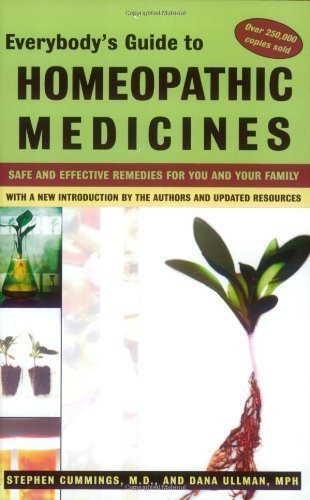
Everybody's Guide to Homeopathic Medicines: Stephen Cummings, Dana Ullman
He is former editor at the Journal of Homeopathic Practice. Dana Ullman, M.P.H., is an <strong>internationally recognized educator on homeopathic medicine and director of Homeopathic Education Service

Helios Homeopathy 36 Homeopathic Remedy Deluxe Family Kit
Our most versatile homeopathic remedy kit. Get the 18 remedies in the Starter kit plus 18 more to help you build a happy, healthy family.

Boiron Arnica Montana 30C Homeopathic Medicine for Relief from Muscle Pain, Muscle Stiffness, Swelling from Injury, and Discoloration from Bruises - 3 Count (240 Pellets)
Boiron Arnica 30C <strong>uses the power of Arnica montana to provide relief from sore muscles, bruises, swelling, and more</strong>.* It’s recommended by doctors and surgeons, and used by professiona
Evidence & Sources
Promising research with growing clinical support from multiple studies
- National Center for Complementary and Integrative Health (NCCIH)
- World Health Organization (WHO)
- National Health and Medical Research Council (NHMRC), Australia
- UK House of Commons Science and Technology Committee
- The Lancet
- BMJ Evidence-Based Medicine
- Cochrane Library
- U.S. Food and Drug Administration (FDA)
This content is for informational purposes only and does not constitute medical advice. Always consult a qualified healthcare provider before starting, stopping, or changing any supplement or medication regimen.